Habits· 10 min read
Best Gratitude Journals 2026: What Actually Works
Tested 5 top gratitude journals for 90 days. Here's which ones actually built the habit — and the science behind why daily gratitude works.
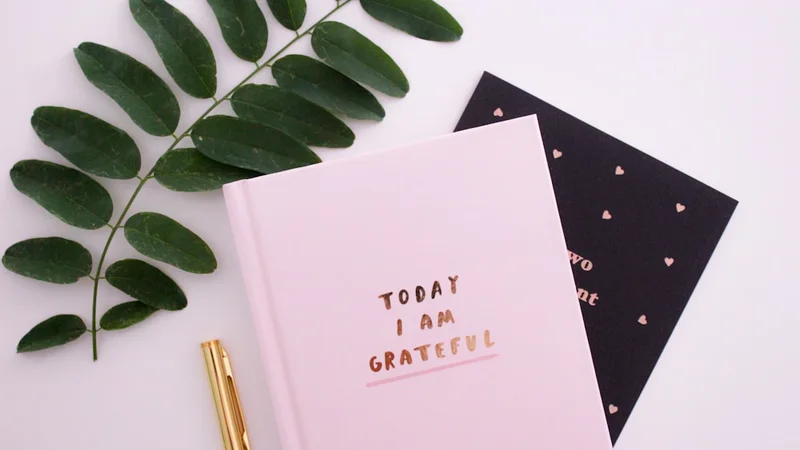
Best Gratitude Journals in 2026: I Tested 5 for 90 Days — Here's What Actually Built the Habit
Three years ago, I had a drawer full of half-filled notebooks and absolutely no gratitude practice to show for it.
Every January, same ritual: blank journal, motivational quote scrawled on the first page, firm intention to finally make this stick. By week three, the notebook was buried under a pile of receipts and charging cables, and I'd moved on to the next experiment. What I didn't understand then — and what took me years to figure out — is that the blank page wasn't an invitation. It was a hurdle. Tell your brain to "write something you're grateful for" with no structure and it responds with a polite shrug. Your threat-detection circuitry is far more active than your appreciation system. Getting from "I should feel grateful" to an actual written insight takes cognitive effort most people don't have at 6:45AM or 10:30PM, which is exactly when they're attempting it.
Structured gratitude journals solve that problem by design. And after ninety days of testing five of the most-recommended options, I can tell you the differences between them are significant enough to matter — and that at least two of them genuinely alter the way you move through your days.
The short answer: The Five Minute Journal is the best gratitude journal for most people in 2026. Its structured prompts prevent blank-page paralysis, and its five-minute format is realistic enough to maintain through a chaotic week. For skeptics who need the science first, Emmons' Thanks! is the better entry point.
The Neuroscience Behind Gratitude Practice (It's Not What You Think)
Gratitude journaling gets lumped in with vision boards and positive affirmations, which is unfortunate — because the science behind it is considerably more interesting and considerably less fluffy.
Robert Emmons, arguably the world's leading scientific authority on gratitude, spent decades studying what happens when people consistently write about what they're thankful for. His research — published in the Journal of Personality and Social Psychology and later synthesized in his book Thanks! — found that people who wrote about gratitude weekly reported higher levels of positive affect, more optimism about the coming week, fewer physical complaints, and significantly more hours of exercise than control groups.
That's not a motivational poster. That's a randomized controlled study.
The mechanism matters. Your brain runs a default feature called the negativity bias — a survival-era preference for threats over pleasures. Evolutionarily brilliant. For navigating modern life, often exhausting. A consistent gratitude practice trains your attention to recalibrate that default. Not by denying the negative, but by building a competing neural habit of noticing what's already available.
UCLA neuroscience research has documented that gratitude activates the medial prefrontal cortex — the region associated with learning, perspective-taking, and reward processing. Martin Seligman, the founder of positive psychology, found in a landmark study that writing three good things each day for just one week produced measurable increases in happiness lasting six months. Six months of benefit from one week of practice. That's serious leverage.
Neuroplasticity research adds the final layer: repetitive thought patterns physically alter neural pathways over time. You're not just journaling. You're, with enough consistency, redesigning how your brain filters reality.
The question then isn't whether you should have a gratitude practice. It's which tool will actually make you keep one.
Why Most Gratitude Practices Collapse Before Day 10
Before the journal reviews, it's worth naming the three failure modes I observed — both in my own testing and in the accounts of people who've tried and quit.
The blank-page problem. Open-ended prompts fail most people. "Write something you're grateful for" sounds simple until you're staring at white space at 6:45AM.
The repetition spiral. After a few days, many people write the same three things — family, health, home. The list stagnates. The practice starts feeling perfunctory. You're checking a box rather than shifting your attention.
The collapsed routine trap. Many people attach gratitude journaling to an elaborate morning system — meditation, cold shower, workout, reading, journal. When any one piece breaks, the whole structure falls. The journal becomes a casualty of the routine's fragility.
The best structured journals address at least one of these by design. Here's a comparison before we get into each one:
| Product | Format | Daily Time | Best For |
|---|---|---|---|
| The Five Minute Journal | Structured prompts, AM + PM | 5 minutes | Most beginners and rebuilding habits |
| Thanks! by Emmons | Science book | 4–6 hrs total | Skeptics, analytical readers |
| The 6-Minute Diary | Deep prompts + evening reflection | 6–10 minutes | Analytical or evening journalers |
| The Gratitude Diaries | Narrative memoir | 5–7 hrs total | Story-driven, narrative learners |
| Dot grid notebook | Freeform with your own prompts | Variable | Writers, creatives, free-thinkers |
Here's what ninety days of testing produced.
The Five Minute Journal: The One Most People Should Start With
I'll say it plainly — for most people, this is the one.
The Five Minute Journal by Intelligent Change has been around since 2013, and it's earned its longevity. The morning structure is deceptively clean: three things you're grateful for, what would make today great, and a daily affirmation. The evening section covers three things that went well and one reflection on how the day could have been better. The prompts rotate in wording week to week, which prevents the repetition spiral from setting in.
What makes it work isn't just the prompts — it's the framing. The journal opens with a brief explanation of the Stoic and psychological origins of gratitude practice. It treats you as someone who wants to understand why they're doing what they're doing, not just someone who needs a worksheet. There are weekly challenges, short quotes, and a structure that respects your time.
The format is also honest about commitment. Five minutes is genuinely sufficient. You don't need a spiritual awakening or an uninterrupted hour. You need a structured five-minute window that's low-friction enough to survive a chaotic Tuesday in March.
In my ninety-day run, I missed eleven days. That's an 88% consistency rate for a daily habit — which, by any behavioral science standard, is remarkable for something I'd previously never maintained past week three.
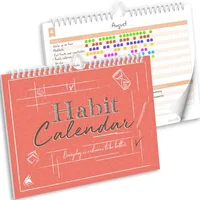
Clever Fox Habit Calendar
A 2-year visual habit calendar that pairs well with any gratitude journal — daily checkboxes create the accountability loop that keeps the practice going past week three.
As an Amazon Associate, we earn from qualifying purchases — at no extra cost to you.
Best for: People who want a proven structure without needing to design it themselves. The ideal starting point for anyone who's failed with a blank notebook before.
The Science Book That Changes How the Practice Feels: Thanks! by Robert Emmons
Here's something counterintuitive: reading the research behind a habit often does more for consistency than the habit itself.
When you understand why something works at a biological and psychological level, the moments when the practice feels pointless — and they will come, usually around day twelve — have a different quality. You're not wondering whether it's worth continuing. You have the answer.
Emmons' Thanks!: How the New Science of Gratitude Can Make You Happier is the most rigorous exploration of gratitude as a psychological phenomenon I've found. It's not a workbook — it's a book. But reading it alongside a structured journal is the equivalent of learning music theory alongside playing an instrument. Emmons draws on his own longitudinal studies, cross-cultural research on gratitude across societies, and the broader positive psychology literature to make a case that is both scientifically credible and, in places, genuinely moving.
He's also careful about distinctions most popular writing ignores: gratitude isn't the same as happiness, isn't the same as optimism, and has nothing to do with toxic positivity. It doesn't require pretending difficulty doesn't exist. It requires deliberately noticing what's already present alongside the difficulty.
For skeptics. For people who've tried and quit. For anyone who needs the "why" before they can sustain the "what" — this is the book.
Atomic Habits — James Clear
The book behind the habit stacking method described in this article. Clear's chapter on implementation intentions explains precisely why attaching a journal to an existing morning anchor works — and how to make the pa…
As an Amazon Associate, we earn from qualifying purchases — at no extra cost to you.
Best for: Analytical readers, skeptics, and anyone whose gratitude practice has lapsed because it stopped feeling meaningful.
The 6-Minute Diary: For the Person Who Wants to Go Deeper
If The Five Minute Journal is intuitive and fast, the 6-Minute Diary by Inna Naber is intellectual and thorough.
Designed in Germany and explicitly grounded in positive psychology research, the 6-Minute Diary adds dimensions that shorter journals don't include: a space for identifying one challenge you're facing, what you could delegate, and a nightly reflection on your emotional state alongside your wins. It's less about quick morning gratitude and more about comprehensive daily review.
The production quality is excellent — thick paper, lay-flat binding, minimalist design that doesn't look or feel self-helpy. If the aesthetic of a journal affects whether you'll actually use it (and for many people, it genuinely does), this one earns its place on a desk.
It takes slightly longer than six minutes once the evening reflection is done properly. But it's more thorough — and for people who process their days in detail, that depth is precisely the point. I found it particularly effective in the evening, when I had more to work with than I do at 6AM.
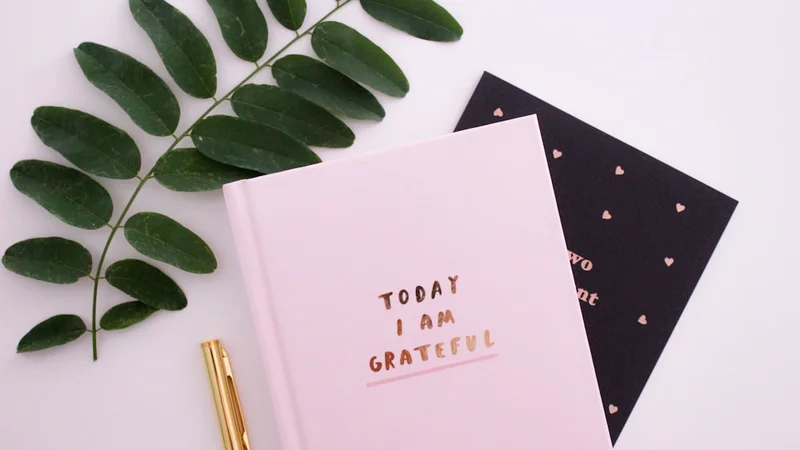
Best for: Questioners and analytical types who want to understand every element of their practice. Also the better option if you journal at night rather than in the morning.
The Gratitude Diaries by Janice Kaplan: A Year-Long Experiment You Can Borrow
If Emmons gives you the science, Janice Kaplan gives you the story.
The Gratitude Diaries chronicles the year Kaplan committed to approaching every domain of her life — marriage, career, money, health, friendship — through the lens of gratitude. It reads like a memoir but functions as an experiment, which gives it a rare quality: you're watching a real person navigate the friction, the skepticism, and the genuine surprises of a sustained practice over twelve months.
What I found most valuable is Kaplan's honesty about resistance. She doesn't begin as a true believer. There are stretches where the practice feels ridiculous, performative, or simply hard to maintain. That honesty makes the eventual evidence of change more persuasive, not less — because it's not the testimony of someone predisposed to succeed.
As a companion to a structured journal, it works particularly well for people who need the human story alongside the daily prompts — who find pure habit mechanics uninspiring but respond to narrative.
Best for: People who learn through story. Also genuinely useful for a partner or friend you want to introduce to the practice — a story is easier to share than a study.
The Tool That Makes Every Journal Better: A Pen Worth Using
This sounds trivial. It isn't.
Writing by hand activates different neural pathways than typing. A 2014 study by Mueller and Oppenheimer in Psychological Science found that handwriting produces better retention and deeper cognitive processing than keyboard note-taking — the physical act of forming letters slows your thinking down in exactly the right way for reflective practice.
The pen also matters because of what it signals. Rituals run on environmental cues. There's a reason people use a particular mug for morning coffee or a specific playlist for focus work — the object triggers the mode. A pen you look forward to holding is a small but genuine nudge toward consistency. It sounds like a trivial thing right up until you notice that you're reaching for the journal more often.
What to look for: A smooth-writing rollerball or fountain pen with enough weight to feel deliberate. The Pilot G2 is an excellent starting point if you want something affordable and reliable. The Lamy Safari is the natural step up if you want something that will outlast the journal by years.
The Free-Writer's Alternative: A Quality Dot Grid Notebook
Not everyone wants structured prompts. Some people — writers, creatives, people who process through narrative — find that prescribed questions break rather than support their flow.
For these people, a high-quality dot grid notebook paired with a loose personal structure can outperform any pre-printed journal. The approach: choose two or three questions you ask yourself every day — What's working? What am I not seeing? What made today worth it? — and write them at the top of each page in your own hand. The result is a practice that's distinctly yours and more likely to last, precisely because you designed it.
The Leuchtturm1917 A5 dot grid notebook has become the standard for this kind of approach — numbered pages, two ribbon bookmarks, a built-in index, and paper thick enough to handle most pens without bleed-through. It doesn't tell you what to write, which is either its fatal flaw or its greatest strength, depending entirely on who you are.
Best for: Writers, creatives, and anyone who's tried structured journals and found the prompts limiting. Also the right tool for people building a more comprehensive morning pages or long-form reflective journaling practice.
How to Start Today (Without Overthinking It)
The research is clear. The journals are reviewed. The only remaining question is what happens in the next twenty-four hours.
Step 1: Pick one journal — not the perfect journal. The gap between starting with The Five Minute Journal today and choosing the ideal option after three weeks of research is twenty-one days of missed practice. Start.
Step 2: Stack it onto something you already do. Don't create a new time slot. Attach the journal to an existing anchor — morning coffee, brushing your teeth, sitting down at your desk. The anchor does the triggering. You just have to show up to the moment after it.
Step 3: Allow sixty seconds on hard days. On a chaotic morning, one sentence is enough. One specific thing you're grateful for, written in full. Seligman's research showed meaningful benefits from three brief entries per day — not essays. The practice doesn't need to be elaborate to be effective.
Step 4: Read back after two weeks. This is the step almost everyone skips, and it's the one that cements the practice. Reading entries from fourteen days ago shows you two things: your life contains more good than your real-time perception suggested, and your attention keeps returning to the same things — which tells you something important about what you actually value.
The Longer Game
Here's the honest account of what ninety days of consistent gratitude journaling produced — not the research-paper version.
My relationship with mornings changed. Not dramatically. I didn't become a joyful 5AM person. But the first twenty minutes changed. Instead of reaching for my phone to see what the algorithm had decided I should be worried about, I had a different default: write first. The phone became second.
My irritation threshold shifted. Small things that used to pull disproportionate focus — the delayed train, the unanswered message — registered differently. Not because I'd trained myself to be uncritically cheerful, but because my attention had been regularly directed toward what was working. The positive didn't drown out the negative. It just got equal time for the first time.
And sleep. The UC Davis research by Emmons and colleagues found that gratitude journal keepers reported longer sleep duration, better sleep quality, and less time lying awake before falling asleep. I can confirm this anecdotally. Writing what went well before bed is the most effective screen-free wind-down practice I've found.
Napoleon Hill wrote that every achievement begins with desire — with a burning awareness of what you want to build. A gratitude practice keeps you in contact with what you already have that's worth protecting while you build it. It grounds the ambition in something real.
That's not spiritual performance. That's calibration.
Every evolution you're working on — in your habits, your relationships, your work — sits on top of a perception of reality. Gratitude journaling recalibrates that perception, slowly and measurably. You can't design your evolution on a distorted map of what you have.
What's one thing you've had for so long that you've stopped actually noticing it?
Was this helpful?