Habits· 10 min read
Why Waiting for Inspiration Kills Your Best Work
Boice's 1983 research found brief, regular writing sessions produce more creative ideas than waiting for inspiration. Here's the science.
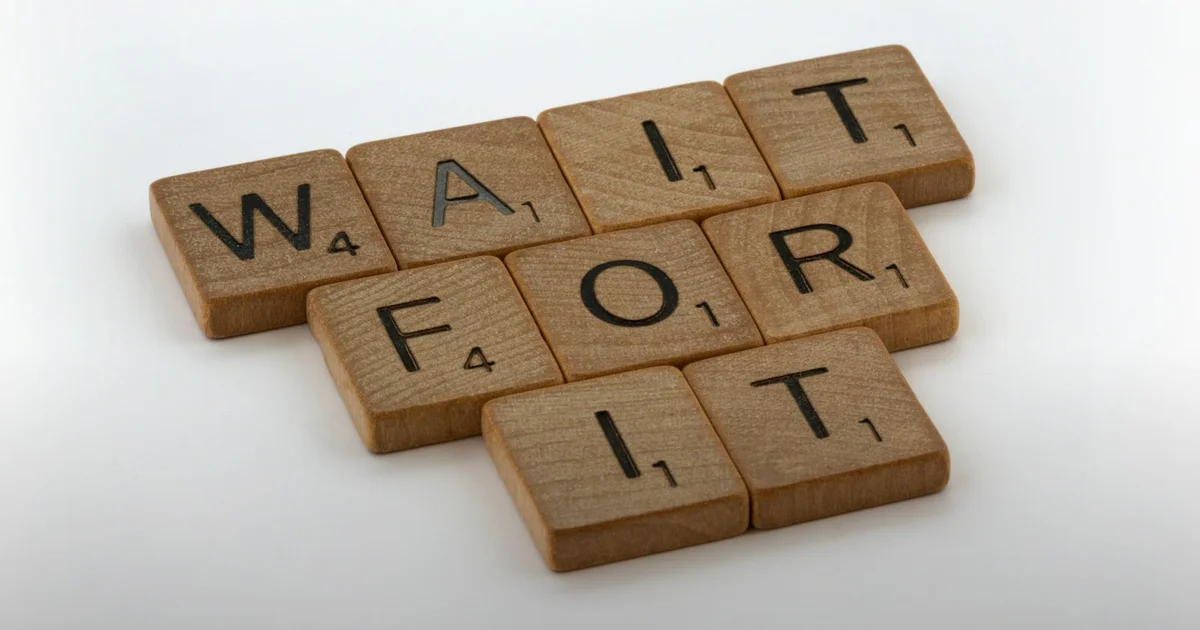
Why Waiting for Inspiration Kills Your Best Work
Three years ago, I had an idea that felt genuinely good.
I was on the train home, standing, one hand on the overhead rail, and this whole argument assembled itself in my head — vivid, specific, almost fully formed. The kind of idea you're certain you'll remember because it feels too interesting to disappear. I told myself I'd write it down properly that weekend, when I'd have a real stretch of time. No distractions. The right kind of morning. A coffee I'd actually let get hot before ignoring it.
Weekend came. The idea had gone soft at the edges. I could still feel its shape, but I couldn't get inside it anymore. I wrote two sentences, decided neither was quite right, and told myself I'd come back when I was sharper. Sharper never came. The idea dissolved the way a dream does by noon — still technically there, untouchable.
The frustrating part isn't that I lost the idea. It's that I thought I was being strategic. I was protecting my best mental state. I was respecting the creative process. I was waiting for the right conditions — waiting for inspiration — because, surely, good work demands the right conditions.
What I didn't know then — and what a 1983 psychology study would have told me, had I been paying attention — is that the waiting itself was the problem. Not the bad days or the distractions or the imperfect Saturday mornings. The waiting.
The Myth That Runs Most Creative Lives
There's a story most of us carry about how creative work happens. Inspiration arrives. You clear a generous block of time to honor it. You go deep. Something real emerges.
It's a romantic story, and it's not entirely wrong — inspiration does arrive, blocks of time do help, and depth does produce things. The problem is the sequence. The story implies that inspiration is the precondition: first the spark, then the work. And that sequence, repeated over a lifetime, turns out to produce far less than we'd expect from people who genuinely care about their work.
Part of why this myth is so durable is that we mostly see the creative work, not the process behind it. We read the finished book, the polished essay, the album that sounds inevitable. We don't see the hundreds of clumsy, uninspired mornings that preceded it. The people whose creative output we most admire are precisely the people least likely to have been waiting for a spark before sitting down.
The other reason it's durable: the moments when you do finally sit down after a long wait can feel productive. The pressure builds. The relief of starting generates its own momentum. Something gets made. And so you attribute the output to the preparation — the waiting, the protecting — when in fact you got there despite those things, not because of them.
Which brings us to a psychologist named Robert Boice, and a study from 1983 that upended everything I thought I knew about this.
What Robert Boice Actually Found
Boice published "Contingency Management in Writing and the Appearance of Creative Ideas: Implications for the Treatment of Writing Blocks" in Behaviour Research and Therapy — not a title likely to trend on social media, but genuinely one of the more practically useful things ever written about creative output.
The study design was straightforward. Boice recruited blocked academic writers and split them into groups. One group wrote under contingency management — brief, externally scheduled sessions, deliberately low-pressure, with regular accountability for showing up. A second group wrote spontaneously, engaging only when they felt genuinely moved to, without a fixed schedule — the approach most of us would recognize as "waiting until the moment feels right." A third group abstained from writing altogether during the study period.
Most people, asked in advance which approach would produce more creative work, would pick spontaneous writing. Those writers were preserving their best cognitive state. They were being intentional about when they engaged. They were refusing to dilute the work with forced effort.
They were also, by the data, wrong.
Boice's results showed that the scheduled, contingency-managed writers produced the highest levels of creative output of the three groups — more total writing and more novel, usable ideas than the writers who waited for spontaneous motivation to strike. The spontaneous group generated only modest creativity once they were writing with any regularity at all, and the writers who abstained entirely generated almost none. Across the study, external structure that got people writing regularly outperformed waiting for the right internal state — spontaneity, on its own, was the least effective route to genuinely creative output.
What contingency management means in plain terms: A writing approach built on brief, externally scheduled sessions and consistent accountability — no waiting for the right internal state required. In Boice's 1983 study, writers in this group outperformed both spontaneous writers and those who abstained, producing more total work and more novel ideas per session. The advantage came not from more hours but from more frequent, low-stakes contact with the material.
Boice extended this line of research into a full framework in his 1990 book, which remains one of the most data-grounded practical guides to writing output ever published.
Professors as Writers: A Self-Help Guide to Productive Writing — Robert Boice
The exact 1990 book the article names one sentence earlier — highest-intent click in the piece
As an Amazon Associate, we earn from qualifying purchases — at no extra cost to you.
Why Your Brain Needs Small Doses, Not Marathon Sessions
Here's what the mechanism actually is, because "brief sessions work better" sounds backwards until you understand why.
When you sit down with a project and work on it for even a short period — twenty minutes, thirty minutes — your mind doesn't fully disengage when you close the file. There's a residue. A low-level, background engagement that keeps the material lightly active while you're doing everything else: making dinner, walking the dog, falling asleep. Your attention keeps loosely circling what you were working on, and in those gaps, incidental connections happen.
Two ideas that looked unrelated during a focused session recognize each other during a Tuesday commute. A framing problem you'd been stuck on dissolves in the shower Wednesday morning. The solution to the second act shows up while you're waiting at a pharmacy.
This background processing isn't magic. It's just what minds do when they're kept in proximity to a problem. And it only works if you were recently in proximity to the problem.
A two-week gap doesn't pause that background processing. It cancels it. When you sit down again after a long absence, you're not resuming — you're restarting from near-zero. The material has gone cold. The low-level engagement your brain was maintaining has been redirected toward whatever you've been living with instead.
This is also why Boice was specific about the sessions being deliberately brief and low-stakes. The mechanism isn't "work more hours." It's "maintain frequent, modest contact so the material stays warm between sittings." You don't need three hours. You need twenty minutes. Then do it again tomorrow.
how to build a daily writing habit that actually sticks
The Hidden Tax of Waiting Too Long
The waiting strategy doesn't feel like a cost because its costs are invisible. You don't see the ideas that didn't arrive because you'd been away too long. You don't notice the creative connections that didn't happen because the background processing had gone quiet. You just see the blank page and assume it's a bad day.
But there's a second, more visible cost that most writers know and don't name correctly.
When you finally sit down after a long absence, you don't just start where you left off. You need to re-enter the material. This usually means re-reading what you previously wrote — not to edit it, but to remember where you were, what you were building toward, what the tone was supposed to feel like. That re-orientation can easily consume the first third of your session before you've added a single new word.
Steven Pressfield named the force that keeps you away from your desk in the first place. He called it Resistance — and one of his central claims is that it doesn't diminish while you wait. Procrastination, in his framing, becomes a habit that compounds: the longer you defer the work, the more familiar the avoidance becomes, and the more comfortable Resistance gets in the space between you and the desk.
The War of Art: Break Through the Blocks and Win Your Inner Creative Battles — Steven Pressfield
The article names Pressfield and Resistance directly in the preceding sentence
As an Amazon Associate, we earn from qualifying purchases — at no extra cost to you.
Whether you find Pressfield's framing useful or Boice's empirical data more convincing, they're pointing at the same thing from different angles: the gap between sessions isn't neutral time. Something is actively lost in it. The myth says waiting builds pressure that then drives better work. The data says it primarily builds distance that then has to be crossed again before the work can resume.
Twenty minutes a day nearly eliminates the re-entry cost. You never really leave. The material stays familiar. You open the file and you're already inside it, which means the twenty minutes are twenty minutes of actual work, not fifteen minutes of re-orientation followed by five minutes of real progress before you have to stop.
What You're Actually Waiting For Doesn't Arrive — It Gets Built
Here's the part that took me longest to accept.
The mental state you've been waiting for — the clarity, the momentum, the sense that the words are coming easily and the ideas feel alive — isn't a precondition for good creative work. It's a consequence of it. You don't find the flow by preparing for it or protecting it. You generate it by showing up before it's there and working your way into it, session by session.
This is genuinely counterintuitive because flow, when it arrives, feels like a discovery. It feels found, not made. And so the obvious strategy is to wait for conditions that seem more likely to produce it.
But Boice's data — and several decades of related research on how creative momentum actually works — suggests the logic is inverted. The session you wait for doesn't produce more flow than the session you show up for anyway. Often it produces less, because the anxiety built up during the waiting makes the blank page feel heavier than it would have felt if you'd just sat down yesterday without ceremony.
James Clear makes a related argument in Atomic Habits: systems consistently outperform goals because a system keeps you in contact with the behavior regardless of how you feel about it that day. The person who trains three days a week whether they feel like it or not will out-progress the person who trains whenever they feel genuinely motivated — not because motivation doesn't matter, but because motivation reliably trails the behavior rather than reliably preceding it.
The same logic applies to creative work with uncomfortable precision. You don't produce your best ideas by waiting until you feel like a person who produces good ideas. You produce your best ideas by working frequently enough that the ideas have somewhere to arrive.
the habit loop that keeps creative momentum alive
How to Start Today
The practical application of Boice's research is almost aggressively simple. You don't need a new system. You don't need to redesign your schedule or find a better notebook or clear the next three Sundays. You need to reduce the interval between sessions, and you need to keep each session modest enough that you'll actually do it.
Here's what that looks like:
Pick the project you've been waiting on longest. Not a new one — the specific one where you've been accumulating reasons to wait. That's the one to start with, because that's the one where the gap has done the most damage.
Set a timer for 20 minutes. Not two hours. Not "as long as it takes." Twenty minutes, deliberately unglamorous. The goal of this session isn't to produce something finished. The goal is to be in contact with the material, so the background processing can resume. A dedicated timer — physical, not a phone — keeps you honest without the temptation to check notifications.
Don't re-read what you've previously written before you start. The impulse to re-read first is a version of waiting in disguise. It's the mind looking for permission. Just open to a new section and write forward. The imperfection will bother you, and that's fine — you can revise it later. You cannot revise a blank page.
Stop when the timer goes off, even if the words are coming. This sounds wrong. It isn't. Stopping mid-session — before you feel finished — means you'll return tomorrow knowing exactly where to pick up. The incompleteness keeps the background processing active between sessions. Boice specifically noted this: the effective brief sessions were ones that ended before the writer felt done, not after.
Do the same thing tomorrow. Same project. Same modest interval. Don't wait until you feel inspired again. That's the loop the research is directly about.
A good journal — one you designate specifically for this project and this process — makes the ritual feel more concrete, which matters more than it sounds. When you can physically see the accumulated entries from consecutive days, the streak becomes part of the motivation. The habit leaves evidence.
None of this requires you to produce brilliant things in those twenty minutes. The research doesn't ask for that. It asks only for the contact. The ideas come from the contact. Not inspiration, then work. Work, then inspiration. That's the sequence the data actually supports.
The Quiet Advantage of Staying Close
The writers in Boice's study who worked briefly and regularly weren't more talented. They probably didn't love the process more than the writers who waited for inspiration did. They didn't have better ideas to begin with, or clearer vision, or more fortuitous circumstances.
They just kept the gap between sessions smaller.
That's the entire structural advantage. Not talent. Not time. Not the right mood. The distance between last session and this one.
And the implication for anyone who has been waiting — for the right stretch of Saturday, for the mood to shift, for the calendar to finally clear, for the energy that feels appropriate to the work — is that the waiting itself is the mechanism that's been working against you. Not the bad days, not the distractions, not the difficult passage you've been putting off. The distance.
Design your evolution means something concrete here: it means deciding to be the person who keeps showing up before they feel ready, because the research says that's where the creative work actually lives. Not in the inspired bursts protected by long gaps of waiting. In the quiet, modest, slightly-annoying-to-execute practice of being back at the desk tomorrow.
The project you've been waiting on the longest is waiting for you.
Twenty minutes. Today. What's stopping you?
What's the creative project you've been putting off until the conditions feel right? Drop it in the comments — and then go open the file for just twenty minutes before you close this tab.
Was this helpful?
Continue Your Evolution
The Frozen Goal Problem: Why Tiny Wins Beat Grand Plans
Rejection Sensitivity: Why You Keep Assuming They're Upset
The Science of Nostalgia: Why Looking Back Helps
Sedikides and Wildschut found nostalgia boosts mood, meaning, and social connection — not mere sentimentality. Here's the science and how to use it.