Mindset· 9 min read
Why Your Last Failure Isn't a Final Verdict

Why Your Last Failure Isn't a Final Verdict
Someone once told Emmanuel Acho he was going to be the next Michael Strahan. It sounded like a compliment. But Acho had already learned something most people take years to grasp: chasing the ceiling of someone else's success isn't ambition — it's a trap dressed up as inspiration. That was precisely the thinking, he later explained on Lewis Howes's The School of Greatness podcast (episode 1934, May 2026), that had kept him playing small.
Martin Seligman, a pioneer of positive psychology, identified what he called "explanatory style" — the habitual way each of us explains adversity to ourselves. The single most powerful dimension: whether you treat failure as permanent or temporary. His 1990 book on the subject
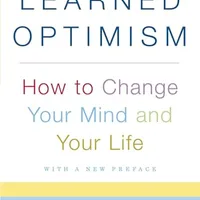
Learned Optimism: How to Change Your Mind and Your Life — Martin E.P. Seligman (Paperback)
As an Amazon Associate, we earn from qualifying purchases — at no extra cost to you.
documents something uncomfortable: people who explain failure as permanent show measurably slower recovery, lower subsequent performance, and higher rates of depression over time.
This isn't motivational-poster optimism, and it's not about pretending the failure didn't happen. It's one cognitive shift: from this is what I am to this is what happened.
When failure starts writing its own story
When you fail publicly — a pitch that bombed, a job you didn't get, a project that unraveled in front of everyone — your brain starts narrating immediately, answering one question that determines almost everything that follows: Is this permanent?
The narrative forms fast — often in the minutes immediately after the failure — and it borrows the shape of the worst interpretation available. Not "that didn't work" but "I can't do this." Not "I missed the moment" but "I always miss moments." Speed and certainty are the narrative's two strongest moves; by the time you notice it running, it already feels like an established fact.
The three dimensions that decide whether failure follows you home
Seligman's model has three dimensions:
-
Permanence — temporary versus permanent. "This failed" versus "I always fail."
-
Pervasiveness — specific versus global. Does the failure stay contained — "I didn't prepare well enough for that specific meeting" — or does it spread — "I'm just bad at this kind of work, period"?
-
Personalization — internal versus external. It feels like humility to accept full blame for everything that went wrong, but Seligman found reflexive personalizers — "it's entirely my fault, always" — are more vulnerable to depression than accurate assessors. The target: acknowledge what you controlled, without loading up what you didn't.

Illogical: Saying Yes to a Life Without Limits — Emmanuel Acho (Hardcover)
As an Amazon Associate, we earn from qualifying purchases — at no extra cost to you.
What Acho's pivot actually demonstrates
In Illogical: Saying Yes to a Life Without Limits, Acho describes decisions that looked disconnected from outside: leaving the NFL, moving into television, then writing, then speaking. What stayed consistent was how he framed each transition's setbacks: never as a permanent, global verdict on who he was.
On the Howes episode, he described a specific change: he stopped setting fixed goals and started working toward open-ended objectives. His reasoning was direct — goals create a ceiling. Miss the goal, and the narrative that follows tends to be permanent and global: you set out to become X, and you're not X.
Are your current goals actually yours — or someone else's ceiling?
The ABCDE method: catching the narrative before it calcifies
Seligman developed a technique for retraining explanatory style called ABCDE: Adversity, Belief, Consequence, Disputation, Energization.
The sequence can run in under thirty seconds; most of us reach the consequence before examining the belief.
The intervention is to catch the belief and dispute it — not with false positivity, but by asking whether it's accurate. Is the permanence claim supported by evidence? Is the pervasiveness claim proportionate to what happened? Is the personalization fraction correct? Accurate disputation produces what Seligman called energization — the signal that action is still available.

Clever Fox Habit Calendar Circle (24-Month Habit & Goal Tracker)
As an Amazon Associate, we earn from qualifying purchases — at no extra cost to you.
Carol Dweck growth mindset research explained
Practiced consistently, this changes the explanatory signature — not overnight, and not universally. A 2016 systematic review and meta-analysis by Bastounis et al., published in the Journal of Adolescence (doi:10.1016/j.adolescence.2016.07.004), examined nine randomized controlled trials of the Penn Resilience Program and found no statistically significant pooled effect on depression, anxiety, or explanatory style. But individual trials have shown meaningful gains: Gillham et al. (2007), in a randomized study of 697 middle-school students, found the program improved explanatory style and reduced depressive symptoms at 12-month follow-up in two of three participating schools.
How to run the audit after your next setback
The next time something goes wrong, write down the first story that attaches to it. Not the cleaned-up version — the automatic one, as it sounds in your head. Then run it through the three lenses.
Permanence check: Does your narrative use "always," "never," or "every time"? Or is it anchored to this specific event? If permanence language showed up, rewrite the sentence to be time-specific. Not "I always freeze in front of people" — "I froze in that meeting on Tuesday."
Pervasiveness check: Is the failure contained to one domain, or is it becoming a verdict about who you are across the board? Name the domain specifically. "I didn't close that client" is containable. "I'm bad at sales" is not.
Personalization check: List every factor involved. What did you control? What was outside your control? What proportion of what went wrong belongs to you — accurately, not generously, not defensively?
None of this requires therapy — a few minutes of focused attention right after the failure, while the narrative is still fluid, is enough.
The verdict that doesn't have to stick
Acho didn't become the next Michael Strahan. He became something for which no one had a template yet — which was the point.
You can't design that trajectory while treating every detour as a permanent verdict.
Seligman called this learned optimism — not because optimism is naive, but because these explanatory habits are trainable skills, not fixed traits.
That's what "Design Your Evolution" actually looks like at the level of a single bad Tuesday: catching the story before it calcifies, disputing the part that's inaccurate, and keeping the door open.

Kindle Paperwhite (2024, 16GB, 7" glare-free, Black, Without Ads)
As an Amazon Associate, we earn from qualifying purchases — at no extra cost to you.
The verdict on your last failure isn't final. It's the story you attached to it that needs examining.
What's a failure you've been treating as permanent that might just be temporary?
Was this helpful?