Habits· 12 min read
Do Rituals Really Work? The Science of Calming Habits

Do Rituals Really Work? The Science of Calming Habits
Before big matches, Rafael Nadal is famous for lining up his water bottles in a precise way and repeating the same small gestures on court. You could call that superstition. Nadal calls it routine. Researchers, including a group at Harvard Business School, call it a ritual — and the evidence suggests it may work for reasons that have little to do with luck.
What is a ritual, exactly? In the psychological literature, a ritual is a fixed sequence of behaviours performed in the same order, treated as meaningful, and done with deliberate attention rather than on autopilot. That last part is easy to miss. Habits tend to become automatic over time, running in the background while your mind wanders elsewhere. Rituals stay conscious — you're present for each step. That deliberate quality is likely part of what makes them useful, because you're actively signalling to your brain that this moment is different from whatever came before it.
The Anxiety Tax on Your Best Work
Here's something that doesn't get acknowledged often enough: anxiety doesn't care how prepared you are.
You can spend a week rehearsing a client presentation and still feel your thoughts scatter the moment you're introduced. You can know your material cold and still stumble when it matters most. That isn't a character flaw. It's your nervous system doing what it was built to do: scanning for threat and flooding your body with stress hormones when it detects one. The problem is that it can't tell the difference between genuine danger and a Zoom call with a difficult stakeholder.
What researchers wanted to know was whether a brief, repeatable sequence of actions — a ritual — could ease that threat response before it hijacked performance. The evidence suggests it can, and the mechanism is simpler and more practical than most articles on the topic suggest.
One note before going further: the research here is real, but it was conducted mostly in lab settings with assigned rituals and controlled conditions. The science points toward a genuine effect, not a guaranteed or universal one.
What the Research Actually Shows
In 2016, Alison Wood Brooks and colleagues published a set of experiments in Organizational Behavior and Human Decision Processes, titled "Don't stop believing: Rituals improve performance by decreasing anxiety." They tested what happened when people performed a ritual before anxiety-inducing tasks, such as singing in front of a stranger and doing maths under pressure.
In one version, participants were given a short sequence to follow: draw a picture of how you feel, sprinkle salt on it, and count aloud. Others went in without a ritual.
The authors reported that people who performed rituals did better, and that this was explained by lower anxiety, measured with both self-report and physiological indicators. Notably, calling the same behaviours a "ritual" helped more than calling them "random behaviours." The benefit appears mainly when anxiety is high; in low-pressure situations, rituals do little.
The researchers weren't claiming the steps themselves did anything magical. A plausible reading is that a fixed sequence occupies your attention during the gap between preparation and performance — the window when many people's minds drift toward worst-case scenarios.
Michael Norton and Francesca Gino, both at Harvard Business School, found a related result in a 2014 paper in the Journal of Experimental Psychology: General, "Rituals alleviate grieving for loved ones, lovers, and lotteries." Across three experiments on losses — from bereavement and ended relationships to lost lotteries — they found that rituals reduced grief, and that a comforting sense of increased control was the shared mechanism.
Here's a quick comparison of what each study found:
| Study | Year | Situation studied | Key finding | Mechanism proposed |
|---|---|---|---|---|
| Brooks et al. | 2016 | Performance under pressure (singing, maths) | Ritual reduced anxiety; improved performance | Attention occupied; ritual framing matters |
| Norton & Gino | 2014 | Grief and personal loss | Ritual reduced grief | Increased sense of control |
Put the two together and you get a useful picture: rituals seem to help because a deliberate, repeated sequence signals that you have a plan — and that this moment isn't throwing you off.
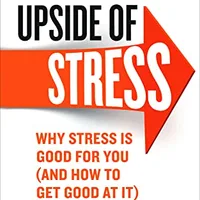
The Upside of Stress — Kelly McGonigal
As an Amazon Associate, we earn from qualifying purchases — at no extra cost to you.
Why Control Is the Likely Active Ingredient
Here's what this research keeps pointing back to: the specific steps don't seem to matter much. In Brooks' experiments the rituals were fairly arbitrary, even odd, yet they still helped. What seemed to matter was performing them as a deliberate ritual rather than as a meaningless task.
One caveat is worth stating plainly. In these studies, the researchers often gave participants the ritual. So the research does not show that a self-designed ritual works better than an assigned one. Choosing your own is a sensible practical move, because you're more likely to repeat something that fits your life — but that part is a suggestion rather than a research finding.
The logic holds together, though. A ritual means you've decided in advance what the first move looks like. That advance decision can interrupt the anxiety cycle before it gets going. Over time, a small repeated action also becomes evidence, to yourself, that you show up in a particular way. The ritual is practice for that trust.
One thing most people underestimate: the transition matters more than the content. The ritual's job is to signal "I am now moving from one mode into another." Whether you brew tea, recite one sentence, or take three slow exhales, what you're installing is a mental gateway between how you were and how you need to be. The particular action is almost incidental — what matters is that you do it deliberately, every time, before the thing that matters.
The Version That Makes Anxiety Worse
There's a failure mode worth naming, though it comes from everyday observation rather than from the studies above.
Rituals become counterproductive when they shift from tools you choose to use into prerequisites you're afraid to skip. You may recognise the pattern. What started as a two-minute settling routine has quietly expanded to forty-five minutes. Miss a single step and the whole day feels derailed. The ritual that was supposed to reduce anxiety has become its own source of it.
The ritual in the research was brief and low-stakes in itself. When a ritual starts to feel compulsive — when you genuinely can't perform without it — that's a signal the relationship has inverted. If that pattern is intense or distressing, it's worth talking to a professional.
A simple test: can you do the thing adequately on a day when the ritual isn't possible? A delayed flight, a power cut, a schedule that left no margin. If the answer is no, the ritual owns you rather than the other way around.
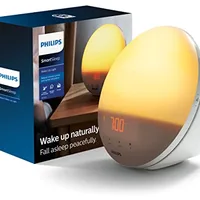
Philips SmartSleep Wake-Up Light HF3520
As an Amazon Associate, we earn from qualifying purchases — at no extra cost to you.
How to Design One That Actually Works
You don't need a sunrise meditation or a two-hour morning sequence. You need something small, consistent, and yours.
Step 1: Find your highest-anxiety moment of the day. Not the ambient stress that runs from morning to night — that's too broad to design around. The specific moment. Opening your inbox. Starting a first draft. Getting on a call you've been quietly dreading. Pick one.
Step 2: Build a 2-to-5 minute sequence that happens just before it. Three to five discrete steps tend to work well — specific enough that you repeat the same thing each time, simple enough that you won't skip it when you're tired. It doesn't need to look meaningful from the outside. What matters is that you do it with intention rather than rushing through it. The ritual is the pause before the thing, not another item to check off.
A few structures to try:
- Physical → intentional → breath: stretch briefly, state one sentence aloud about what you want from the next hour, take three slow exhales
- Sensory anchor: light the same candle, put on a piece of music you've linked to focus, make a hot drink before you open anything
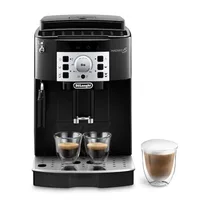
De'Longhi Magnifica S ECAM22.110.B
As an Amazon Associate, we earn from qualifying purchases — at no extra cost to you.
- Write one sentence: open your notebook and write what doing this well looks like today — nothing more
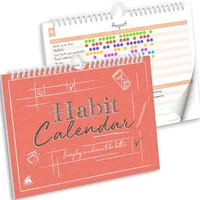
Clever Fox Habit Calendar Circle (2-Year Habit Tracker)
As an Amazon Associate, we earn from qualifying purchases — at no extra cost to you.
Step 3: Repeat it for about ten days before you assess. This number is a practical rule of thumb, not a research threshold. The first few instances won't feel like much. That's normal. You're building an association between the sequence and the state you want to access, and that takes some repetition.
Step 4: Keep it small enough to do on a bad day. A ritual you can sustain on a tired Thursday in November is worth far more than a beautiful morning sequence you manage three times a week. The more elaborate the ritual, the more excuses exist not to do it. Guard against scope creep early — if the ritual has started requiring equipment you don't always have access to, simplify it.
What science says about work-to-home transition rituals
The Design Move
What the ritual research keeps returning to is the matter of control. A ritual gives you something to do with the anxious minutes before a test, and doing something deliberate seems to calm the mind.
When you design a ritual on purpose, you're making a decision about how you want to show up before the moment arrives to test you. You're doing something that anxiety, by definition, cannot do — planning forward from clarity rather than reacting from fear.
There's something quietly powerful about that accumulation. Each time you do the ritual on a morning you don't feel like it, you're adding a data point to your internal file: I'm someone who does this. That identity, built in two-minute increments, tends to show up in higher-stakes moments in ways that surprise people.
That's what "Design Your Evolution" looks like at the smallest scale. Not a transformation. Not a system overhaul. A two-minute sequence that slowly accumulates evidence that you're someone who arrives ready.
The case for a Sunday night reset ritual
What's the one moment in your day where a small ritual might change how it starts? Leave a comment — naming it is usually the first real step.
Was this helpful?