Productivity· 12 min read
How to Give a Talk People Remember, According to Research
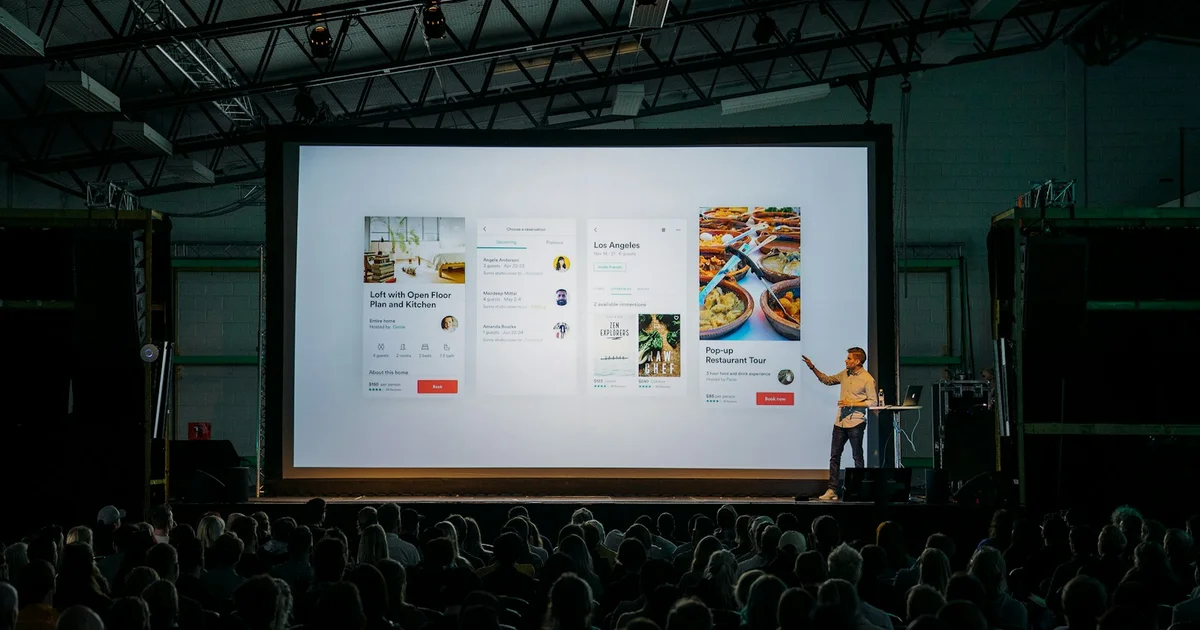
How to Give a Talk People Remember, According to Research
Three days after a well-received conference talk, someone asks the speaker what the main point was.
Blank pause. "Something about... the market? Or was it the new product launch?"
The clicker was smooth. The slides were clean. People shook hands afterward and said "great talk." And still, essentially nothing remained. This happens constantly, and it has less to do with how engaging the speaker was than with one structural problem: the most important content was placed exactly where memory is weakest.
You can be confident, well-prepared, and genuinely knowledgeable, and still build your talk for the wrong constraints. Most people do, because most of what gets repeated about audience attention — including the most cited number — doesn't hold up when you check the source.
The "10-Minute Rule" That Rests on Very Thin Evidence
If you've read about presentations, you've likely encountered the idea that audience attention drops off after about 10 minutes. It's stated in books, referenced in training materials, cited in talks about giving talks. It carries the casual authority of a textbook.
The problem: when you trace it back, the support is thin. A 2016 review by Neil Bradbury in Advances in Physiology Education examined this claim and found that the 10-to-15-minute figure circulates widely in educational literature, yet appears to trace back to a very small number of early reports, and that those reports don't clearly show what the claim says they do. The number was repeated, then cited by people citing people who had cited it, until it acquired the texture of fact.
That doesn't mean attention is limitless. It means that if you've structured your talk around this specific threshold — switching slides every 10 minutes, inserting pauses at the 10-minute mark — you've been leaning on a shaky rule.
Made to Stick — Chip & Dan Heath (Paperback)
As an Amazon Associate, we earn from qualifying purchases — at no extra cost to you.
attention-residue-task-switching-cost
Memory Has a Shape, and Your Talk Should Match It
Two bodies of research give you the structural brief for any presentation.
The first is the serial position effect — specifically two related phenomena called primacy and recency. Across decades of memory studies, one finding is remarkably consistent: people remember items presented first (primacy) and items presented last (recency) much better than items in the middle. This was shown mainly with word lists, and the middle of a list is consistently the least well-recalled section. Whether it transfers cleanly to a 30-minute talk is less settled, but it's a sensible design assumption.
The second framework is levels of processing, proposed by Fergus Craik and Robert Lockhart in a 1972 paper in the Journal of Verbal Learning and Verbal Behavior. Their core argument was that how deeply something is processed determines how well it's remembered. Shallow processing — skimming a word, hearing a statistic in passing — leaves a weak trace. Deeper, meaning-based processing — connecting an idea to something you already know, encountering it as a story, applying it to a real problem you're trying to solve — produces a stronger memory trace.
Put those two together, and they give you a clear design brief: front-load the most important material to benefit from primacy, engineer moments of deeper processing throughout, and make the close count because recency will work in your favour if you give it something worth remembering.
The Middle of Your Talk Is a Memory Trap
Here is where most presentations fail structurally. The opening is spent on context — "let me tell you a bit about myself and what we'll cover today" — the core argument is introduced somewhere around the 15-minute mark, and the ending is logistics and thanks. The middle is where the actual substance lives. It's also the zone where memory performance tends to be at its worst.
This isn't a problem with the audience. It's a problem with placement.
The fix doesn't require a shorter talk. It requires redistribution. Your first two minutes are the highest-value window in the room. If you're using them for warmup, you're leaving primacy on the table. Your final two minutes carry recency advantage. If you're using them to ask if anyone has questions, you're closing on logistics instead of your most important idea.
The core argument belongs near the front. The close belongs to whatever you most need people to carry out the door. Everything else — context, evidence, secondary points — supports those two anchors.
Ticktime Pomodoro Cube Timer
As an Amazon Associate, we earn from qualifying purchases — at no extra cost to you.
What Can Reset Attention Mid-Talk
Attention doesn't switch off at a fixed minute mark. It drifts, returns, drifts again — and it can be deliberately called back. Three things are commonly recommended for this, and they fit with how memory works:
A change in format. You've been speaking in continuous sentences. You display a diagram. You ask a question and let it hang for three full seconds. You tell a brief story with a named person in it. A shift in what's happening at the front of the room tends to pull attention back. You don't need elaborate theatrics. You need something structurally different from what came before.
Concrete specificity. Abstract language slides through working memory and leaves almost nothing. "Engagement improved significantly" is forgettable. "In the second-quarter pilot, response time dropped from 48 hours to four" is an anchor. The number, the timeframe, the specificity make the point easier to connect to something real, which supports deeper, meaning-based processing.
An explicit relevance signal. When a speaker says, "this is the part that changes what you should do next month," the audience moves from passive reception to active application, testing the idea against their own situation. The signal doesn't have to be dramatic. It just needs to be true and placed at the moment it's most accurate.
A 5-Part Structure Built Around How Memory Works
This isn't about design software, slide aesthetics, or coaching yourself out of nerves. It's about where you place things.
1. Lead with the destination. State the conclusion — or something very close to it — before you build the argument. This isn't spoiling the talk. It gives the audience a cognitive frame on which to hang everything that follows.
2. Spend the first two minutes fully. The primacy effect is a gift. Starting with housekeeping or speaker biography wastes it. Use those first two minutes for your most important claim, your most surprising data point, or the problem your audience recognises in their own work. Start where the value is.
3. Interrupt yourself in the middle. Build at least one structural break into the central section — a story, a direct question, a single arresting number that reframes the problem. It doesn't need to be a performance moment. It needs to be different enough in format that it registers as a shift and resets attention.
4. Reserve something real for the end. Because of recency, the last thing you say is likely to outlast much of what came before it. Close on the idea you most need people to carry away, not on logistics. If you can end with a question that makes someone think on the drive home, do that.
5. Repeat the core idea three times, in three different forms. Once near the start as a thesis. Once in the middle as evidence or story. Once at the end as a restatement. Repeating an idea in varied forms gives the listener several chances to process it meaningfully, which is the logic behind levels of processing. This is distinct from mechanical repetition — the variation is what prompts each reprocessing.

Logitech R500s Laser Presentation Remote (Bluetooth + USB)
As an Amazon Associate, we earn from qualifying purchases — at no extra cost to you.
Redesign Your Next Talk in 20 Minutes
You don't need to rebuild everything from scratch. You need to audit once with a sharper lens.
Write your most important point on a single line. It should fit on a Post-it note. If it doesn't, your talk contains two talks, and you should choose one.
Then check your opening two minutes. Is that point present, clearly, before much else has happened? If not, move it forward. The warmup can wait — or disappear entirely.
Find the halfway point. Is there any moment there that shifts format? A story, a question, a diagram, a brief change in pace? If not, add one. It doesn't need to be elaborate. It needs to exist.
Read your closing aloud. Would you remember it if you were one of 40 people in that room? If the answer is no, replace it with the idea you most need to leave behind.
One more thing worth stating plainly: several statistics about presentation memory circulate widely with no traceable primary source — including the claims that audiences retain a fixed percentage of what they see versus hear. These numbers appear in speaker training, published books, and workshops. They don't come from controlled studies. Building your talk around them means layering an unverified rule on top of an accurately diagnosed problem.
The primacy and recency effects are well-documented in memory research. Levels of processing has been influential for decades, though it has also drawn criticism. That's enough of a foundation for a sensible structure.
Design the Listener's Experience
Giving a talk people remember is, at its core, a design problem. You're building a structure inside someone else's mind, and that structure has physics. Memory isn't flat. Attention isn't unlimited. The opening and closing moments tend to carry disproportionate weight, and what gets processed deeply is retained better than what skims the surface.
None of that changes by becoming a more confident speaker. It changes when you redesign where you put things.
The speakers who get remembered aren't always the most polished. They're often the ones who gave the audience the right material at the right moment, in the right order.
Pick one principle from this piece and test it on your next talk. Lead with the conclusion. Add a named story in the middle. Close on the thing you most need to land.
That last step is usually the hardest one to trust. Most speakers feel compelled to close with a summary. Resist it. The summary is for you; the final insight is for them.
What's the most important point you've ever made in a presentation that you wish had actually stuck? Leave it in the comments.

Kindle Paperwhite (12th Gen, 16GB)
As an Amazon Associate, we earn from qualifying purchases — at no extra cost to you.
2026-07-18-you-dont-have-an-information-problem-you-have-an-attention-problem 2026-07-19-why-willpower-isnt-what-builds-habits
Was this helpful?