Mindset· 11 min read
Why You Cling to Beliefs Even After Being Proven Wrong
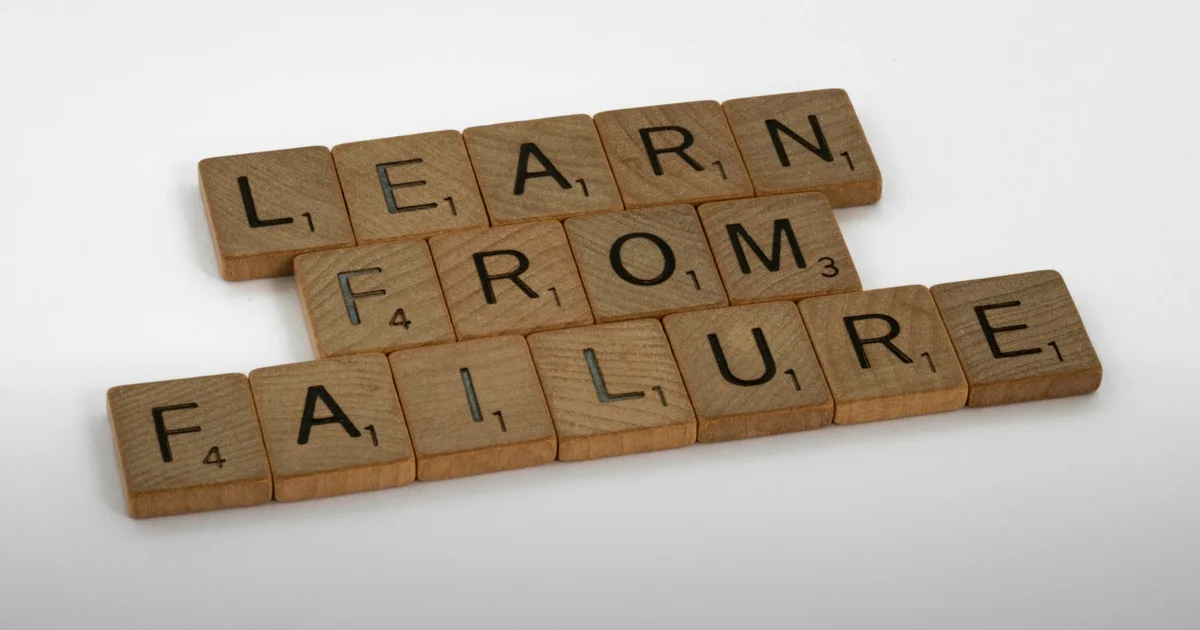
Why You Cling to Beliefs Even After Being Proven Wrong
You were wrong. The evidence was right there. Someone walked you through it patiently, and you couldn't argue with the logic. You said "fair enough." You meant it.
And then, quietly, without really choosing it, you kept believing the same thing anyway.
This isn't stubbornness. It isn't stupidity. It's one of the most reliable findings in social psychology, and it has a name, a mechanism, and — importantly — a way to work against it. The name is belief perseverance. The mechanism is stranger than most people expect. And the way to disrupt it starts with a single question most people never bother to ask before an argument begins.
What Belief Perseverance Actually Is
In 1975, Lee Ross, Mark Lepper, and Michael Hubbard ran experiments that should have surprised no one — and yet still surprise people when they hear them.
Participants were given a discrimination task and received completely fabricated feedback: some were told they had performed well, others that they had performed poorly. Then came the debriefing. The researchers explained that the feedback had been false, predetermined and unrelated to how participants actually did.
Then the researchers asked them to assess their own ability and performance.
The people who'd received positive fake feedback still rated themselves higher than those who'd received negative fake feedback. The belief persisted even after its evidentiary foundation had been removed and explained away.
That's belief perseverance — a well-documented cognitive phenomenon where a person continues to hold a belief even after the evidence that originally produced it is explicitly discredited or withdrawn. The belief persists not because the person is stubborn, but because the mind has already generated supporting explanations that exist independently of the original data. Remove the evidence, and the story it enabled stays behind.
A 1980 study by Craig Anderson, Mark Lepper, and Lee Ross added another layer. It suggested that the persistence is tied to the explanations people generate for the original information. Once you've built a story for why a claim might be true, that story can stay alive in your head after the claim itself is discredited. The original evidence was gone, but the belief had already found other places to live.
Think Again — Adam Grant
As an Amazon Associate, we earn from qualifying purchases — at no extra cost to you.
Why Your Brain Does This (It's Not What You Think)
Here's the uncomfortable truth: your brain isn't malfunctioning when this happens. It's doing what minds routinely do.
When you form a belief, you don't just file away a data point. You tend to start generating reasons why it makes sense. You connect it to existing knowledge, recruit confirming memories, and fit it into your story of how things work. By the time anyone arrives to challenge the original evidence, the belief has already set roots into a dozen other places in your mental architecture.
This is what psychologists call causal theorizing. You've built a mini-explanation around the initial data, and that explanation now has its own internal logic. Remove the data, and the explanation survives — because it was never really about the data alone. It was about the story the data let you tell.
The same cognitive capacity that makes you a fast, effective reasoner — your ability to quickly construct explanatory frameworks — is likely the one that makes you resistant to updating. It's the shadow side of a genuinely useful feature.
Belief perseverance is also worth distinguishing from confirmation bias, a related but different phenomenon. Confirmation bias operates upstream: it shapes which evidence you seek out and notice in the first place. Belief perseverance operates downstream: it describes what happens after disconfirming evidence arrives and is acknowledged — and the belief survives anyway. Both are real. They often operate together, reinforcing each other across the full cycle of a held conviction.
automation bias and why we trust the machine
When the Belief Is Tied to Who You Are
There's a second force that may operate alongside causal theorizing, and it's worth naming separately.
When a belief is connected to your identity — to how you see yourself, which group you belong to, how you think about your own competence — the cost of revising it isn't purely intellectual. It's social and emotional. Letting it go means renegotiating a piece of yourself, not just updating a spreadsheet.
Take someone who has believed for years that they're not good with people. If they navigate a difficult conversation successfully, that result gets explained away: "It was a fluke," or "that one was easy." The identity belief is load-bearing. It organizes too many other things to be easily shifted by a single contradictory event.
This is worth placing carefully against the broader research. The backfire effect — the idea that corrections can actually strengthen a false belief — has weak empirical support in large-scale replication work. In a set of experiments with more than 10,000 participants, Thomas Wood and Ethan Porter (2019) found no case where a correction triggered backfire. Most evidence suggests that corrections do work. Facts land more often than the more pessimistic accounts suggest.
But they may land less reliably when the belief is identity-relevant, when you're under cognitive pressure, or when the correction comes from someone you perceive as an opponent.

Sony WH-1000XM5 Noise Cancelling Headphones
As an Amazon Associate, we earn from qualifying purchases — at no extra cost to you.
A 4-Question Check for Beliefs That Need Updating
If you want to build a mind that actually revises — not just nods and then proceeds as before — it makes sense to do the work before you encounter contradictory evidence, not during the confrontation itself.
Here are the four questions worth running on any belief you hold strongly:
- What would change my mind?
- Am I defending a conclusion, or evaluating evidence?
- What was the original evidence for this belief?
- Can I explain the other side accurately?
What would change my mind?
A belief that cannot, in principle, be revised by any evidence isn't really a belief — it's a commitment. Useful beliefs have conditions under which they'd be abandoned. If you can't name one, that's worth noticing. Before you face a challenge to your position, write down what evidence would cause you to update.
Am I defending a conclusion, or evaluating evidence?
Motivated reasoning starts with a desired verdict and works backward to find supporting evidence. Everyone does it. The habit of asking this question before you dig further into a topic creates a small pause between stimulus and response. It doesn't eliminate bias — nothing does — but it nudges you from lawyer mode into something more like scientist mode. In scientist mode, surprising results are interesting rather than threatening.
What was the original evidence for this belief?
Many beliefs that feel solid were formed in a single moment: one comment from a parent, one failed attempt, one piece of news absorbed at a vulnerable time. Tracing a belief back to its origin doesn't automatically invalidate it. But it reveals whether it's standing on foundations you actually built or foundations you inherited without inspection.
halo effect and why fame feels like quality
Can I explain the other side accurately?
Before you argue against a position, explain it back to the satisfaction of someone who holds it. If you can't, you don't yet understand what you're dismissing. You can't accurately evaluate a view you've only encountered in its weakest version, and belief systems you've never really engaged with have a way of remaining mysteriously undefeated.
Three Places to Start Right Now
Keep a belief inventory. Pick five beliefs you hold about yourself, your work, or other people. For each one, write one sentence about where it originally came from. Not to dismantle anything — just to know what you're actually working with. You may find that some of your most load-bearing beliefs are sitting on surprisingly thin foundations.

Clever Fox Habit Calendar Circle (24-Month)
As an Amazon Associate, we earn from qualifying purchases — at no extra cost to you.
Set an update condition before the conversation. For any position where you might face pushback — at work, in a relationship, in any discussion — write one sentence starting with "I would revise my view if I saw..." before the exchange happens. Deciding your revision condition in advance gives you a fixed point to hold yourself to, so you're less likely to move the goalposts when the moment comes.
Read one book that argues the opposite. Not to change your mind, but to understand what you'd be leaving behind. Encountering the best version of a competing idea, rather than the weakest version you've imagined, recalibrates what you're actually comparing when you make a decision.

Kindle Paperwhite (12th Gen, 16GB)
As an Amazon Associate, we earn from qualifying purchases — at no extra cost to you.
The Rarest Intellectual Move
Here's something most productivity frameworks skip over: changing your mind is an action, not a passive event that happens to you when enough evidence accumulates.
It requires the same kind of intention as forming the belief in the first place.
The belief is a tool. You picked it up at some point because it seemed useful. Some tools outlast their usefulness. When you build the habit of asking "what would change my mind?" — and genuinely meaning it — you're not making yourself more vulnerable to manipulation. You're making your toolkit more accurate.
That's what researchers mean by intellectual humility. It's what the Stoics were gesturing at when Epictetus drew the line between what is and isn't within your control — and placed your judgments, your reactions, your beliefs squarely in the first category. The vocabulary changes across traditions; the underlying habit is the same. And it's trainable.
The question isn't whether you believe that updating your beliefs matters. The question is whether you've built the actual muscle — the real-time practice of running these checks when it costs something to do so.
That's where the design happens.
What's one belief you've been defending longer than you've been examining? Drop it in the comments — not to debate it, just to name it out loud.
Was this helpful?