Mindset· 10 min read
Emotional Intelligence: Your Edge in the Age of AI
Why emotional intelligence — empathy, resilience, self-awareness — is the one skill AI can't replicate, and how to build it deliberately.
Emotional Intelligence: Your Edge in the Age of AI
A friend of mine — sharp, Ivy League degree, the kind of person who could solve a Rubik's Cube while explaining blockchain — got passed over for a promotion last year. The role went to someone who, on paper, had half his credentials. When he told me about it over lunch, he was genuinely confused. "I outperform everyone on the team," he said. "My numbers are right there."
I asked him one question: "Do people actually like working with you?" The silence that followed told me everything.
The Skill That Algorithms Can't Touch
Here's something worth sitting with: ChatGPT can write a legal brief, generate a marketing strategy, and diagnose a skin rash from a photograph. It can do all of that before you finish your morning coffee. But it can't sense that your colleague is about to burn out. It can't read the tension in a room after a difficult meeting. It can't hold space for someone who's grieving — not really.

Kindle Paperwhite (2024)
Goleman's original work and TalentSmart's research that confirmed EQ accounts for 58% of workplace performance are exactly the kind of foundational reading that will shift how you see this — the Kindle Paperwhite make…
As an Amazon Associate, we earn from qualifying purchases — at no extra cost to you.
We're living through the largest skill displacement since the Industrial Revolution. McKinsey estimates that by 2030, up to 375 million workers worldwide may need to switch occupational categories. The jobs most resistant to automation? They're not the ones requiring the highest IQ. They're the ones requiring the highest EQ — emotional intelligence.
Daniel Goleman, the psychologist who brought the term into mainstream consciousness with his 1995 book Emotional Intelligence, identified five core components: self-awareness, self-regulation, motivation, empathy, and social skills. Decades later, TalentSmart's research across more than 42,000 people confirmed what Goleman suspected: emotional intelligence accounts for 58% of performance across all job types. Not some job types. All of them.
Jim Rohn used to say, "Work harder on yourself than you do on your job." He wasn't talking about skill certifications or online courses. He was talking about the inner architecture — the stuff that determines how you show up when things get hard, messy, or unpredictable.
That inner architecture is emotional intelligence. And it's the most durable investment you can make in yourself right now.
how to build better daily habits
EQ vs IQ: The Debate That's Already Been Settled
If you grew up in any Western education system, you were trained to worship IQ. Grades, test scores, class rankings — the entire apparatus was designed to measure how quickly and accurately you could process information. Nobody pulled you aside and asked, "But can you handle rejection without spiraling for three days?"
Atomic Habits — James Clear
The gap between knowing and doing — the exact gap where emotional intelligence lives — is what Atomic Habits is built to close. James Clear's system for making small behaviors automatic is as applicable to the 6-secon…
As an Amazon Associate, we earn from qualifying purchases — at no extra cost to you.
The research has caught up with what most of us intuitively know. A landmark study from TalentSmart, which tested emotional intelligence alongside 33 other workplace skills, found that EQ is the strongest predictor of performance — explaining 58% of success in all types of jobs. People with high emotional intelligence earn an average of $29,000 more per year than their low-EQ counterparts.
But this isn't just about money. It's about the texture of your life.
Think about the last argument you had with someone you care about. Not a disagreement — an actual argument. The kind where someone says something they can't take back. Now ask yourself: was the problem a lack of information, or a lack of emotional regulation?
Almost always, it's the second one. You knew better. You just couldn't do better in that moment.
That gap — between knowing and doing — is exactly where emotional intelligence lives. And closing it changes everything: your relationships, your leadership, your health, even your sleep. Research consistently shows that people with higher emotional intelligence report significantly better sleep quality, largely because they ruminate less at night.
You don't lie awake replaying conversations when you've already processed the emotion behind them.
The Five Muscles You Didn't Know You Had
Emotional intelligence isn't a single trait you either have or you don't. It's a set of skills, more like muscles than like eye color. And muscles, as we know, respond to training.

Sony WH-1000XM5 Noise Cancelling Headphones
Empathy — the fourth muscle Goleman identifies — requires genuinely inhabiting someone else's experience, and that demands real presence, not half-distracted listening over background noise. The Sony WH-1000XM5's nois…
As an Amazon Associate, we earn from qualifying purchases — at no extra cost to you.
Here's what you're actually working with:
1. Self-Awareness — The Foundation of Everything
Self-awareness is your ability to recognize what you're feeling, while you're feeling it, and to understand why. It sounds simple. It's deceptively hard.
Most people operate on emotional autopilot. Something happens, a feeling arises, and they react — all in the span of a heartbeat. Self-awareness is the pause between the feeling and the reaction. Viktor Frankl called it "the last of the human freedoms."
Bob Proctor used to teach something similar. He'd say that most people are living in a "conditioned response" pattern — stimulus comes in, reaction goes out, and they call it their personality. But it's not personality. It's programming. And programming can be rewritten.
A practical way to start: at the end of each day, write down the three strongest emotions you felt and what triggered them. Not to judge yourself — just to notice. After two weeks, patterns emerge that will genuinely surprise you.
2. Self-Regulation — Choosing Your Response
If self-awareness is seeing the wave coming, self-regulation is deciding whether to surf it or let it pass. It's the difference between saying "I'm angry" and saying "I notice anger arising in me." That small shift in language creates an enormous shift in power.
Bruce Lipton's research on cellular biology offers a fascinating lens here. Our cells, he explains, are either in growth mode or protection mode — never both simultaneously. When you react from stress (cortisol flooding your system, amygdala hijacking your prefrontal cortex), you're literally in protection mode. Higher thinking shuts down. Creativity disappears. Empathy goes offline.
Self-regulation is how you stay in growth mode when everything around you is screaming danger.
3. Motivation — The Internal Engine
External motivation — bonuses, promotions, praise — fades. You've felt it. The raise feels amazing for about two weeks, then it's just your new normal.
Intrinsic motivation, the kind that emotional intelligence cultivates, is different. It's driven by curiosity, purpose, and the desire to master something meaningful. Napoleon Hill spent twenty years studying the most successful people of his era and concluded that "desire is the starting point of all achievement." But he was careful to distinguish between fleeting wants and deep, emotionally charged intention.
People with high EQ don't need someone standing behind them with a carrot or a stick. They've connected their daily work to something that matters to them personally. That connection is an emotional skill, not a logical one.
4. Empathy — Reading the Room (and the Person)
Empathy isn't sympathy. Sympathy says, "I feel sorry for you." Empathy says, "I feel with you." The difference matters.
True empathy requires temporarily setting aside your own perspective to genuinely inhabit someone else's experience. It's cognitively demanding. It's also one of the highest-leverage skills you can develop, because people who feel understood become people who trust you. And trust is the currency of every meaningful relationship — personal and professional.
There's a reason the most effective leaders aren't always the smartest ones in the room. They're the ones who make other people feel seen.
5. Social Skills — The Art of Moving With Others
Social skills in the EQ framework aren't about being charming at parties. They're about managing relationships intentionally — resolving conflict, building consensus, inspiring action, and communicating clearly even when the topic is uncomfortable.
T. Harv Eker makes a useful distinction between "rich people" and "poor people" mindsets. One of the differences? Rich thinkers are excellent promoters — not because they're slick, but because they genuinely believe in what they're offering and can communicate that belief in a way others resonate with. That's a social skill rooted in emotional intelligence.
The Counter-Intuitive Truth About Emotional Intelligence
Here's something most personal development content won't tell you: building emotional intelligence sometimes means sitting with discomfort instead of trying to fix it.
We've been sold this idea that growth is always forward motion — always ascending, always optimizing. But some of the most profound emotional growth happens when you stop trying to feel better and simply allow yourself to feel. Period.
A therapist I respect once said, "The emotion you won't feel is the emotion that runs your life." That landed hard. Because most of us have at least one feeling we've been expertly avoiding — shame, loneliness, grief, inadequacy — and that avoidance shapes more of our decisions than we'd ever want to admit.
Emotional intelligence isn't about becoming some unflappable stoic. It's about developing the capacity to experience the full range of human emotion without being destroyed by it. That's a fundamentally different goal than "positive thinking." And honestly, it's a more useful one.
self-awareness vs overthinking how to find the balance
Why This Matters More Right Now Than Ever Before
The World Economic Forum's Future of Jobs Report lists emotional intelligence as one of the top 10 skills for 2025 and beyond. Not coding. Not data analysis. Emotional intelligence.

Clever Fox Habit Tracker Journal
As EQ becomes one of the top 10 skills the World Economic Forum identifies for the future of work, daily tracking of your emotional responses isn't optional — it's the training log for the most durable investment you…
As an Amazon Associate, we earn from qualifying purchases — at no extra cost to you.
And the logic is straightforward: as AI handles more of the analytical and repetitive work, the distinctly human skills become exponentially more valuable. The person who can navigate a difficult conversation with a client, who can sense when a team is losing morale before the numbers show it, who can deliver hard feedback in a way that builds trust instead of breaking it — that person becomes irreplaceable.
Tony Robbins has a phrase I think about often: "The quality of your life is the quality of your relationships." Relationships — with yourself, with others, with your work — are emotional experiences. They run on EQ, not IQ.
If you're building skills for the future, emotional intelligence isn't just on the list. It's at the top.
How to Build Emotional Intelligence Starting This Week
You don't need a retreat in Bali or a six-month coaching program. You need five deliberate practices, repeated consistently. Here's the playbook:
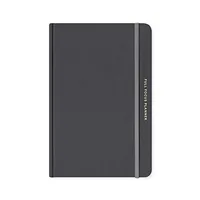
Full Focus Planner by Michael Hyatt
The five practices laid out in this section — evening audit, 6-second pause, labeling, empathy reps, fiction reading — only compound when they're anchored to a consistent daily structure. The Full Focus Planner is bui…
As an Amazon Associate, we earn from qualifying purchases — at no extra cost to you.
1. The Evening Audit (5 minutes) Before bed, write down the strongest emotion you felt that day and what triggered it. No analysis. Just observation. Do this for 21 days and your self-awareness will measurably shift.
2. The 6-Second Pause Neuroscience research shows that the chemical rush of an emotional reaction lasts approximately six seconds. When you feel triggered — by an email, a comment, a situation — count to six before responding. Those six seconds are where emotional intelligence lives.
3. Label It to Tame It UCLA research by Dr. Matthew Lieberman found that simply naming an emotion ("I'm feeling frustrated") reduces activity in the amygdala and increases activity in the prefrontal cortex. Language is a regulation tool. Use it.
4. Empathy Reps Once a day, in any conversation, try to articulate the other person's perspective back to them before sharing your own. "So what I'm hearing is..." This isn't a technique. It's a practice. And it transforms how people experience you.
5. Read Fiction This one surprises people. A study published in Science by Kidd and Castano found that reading literary fiction temporarily enhances Theory of Mind — your ability to understand others' mental states. Turns out, novels are empathy training disguised as entertainment.
morning routine habits for self-improvement
Designing Your Emotional Evolution
There's a pattern I've noticed in people who genuinely transform their lives — not the ones who post about it on social media, but the ones you meet five years later and barely recognize. The change almost never starts with a new job, a new city, or a new relationship. It starts with a new relationship to their own inner life.
Emotional intelligence isn't a destination. It's a design practice. You notice, you adjust, you experiment, you iterate. Some days you'll catch yourself mid-reaction and redirect beautifully. Other days you'll blow it completely and have to circle back with an apology. Both of those are the practice.
Jim Rohn said something that I come back to whenever I'm tempted to skip the inner work: "Your level of success will rarely exceed your level of personal development." He was right. And personal development, stripped of all the packaging and marketing, is fundamentally about learning to work with your own emotions instead of against them.
The machines are getting smarter every quarter. The question isn't whether AI will change the landscape — it already has. The question is whether you'll evolve with it by strengthening the one capacity no algorithm can simulate.
What's the emotion you've been avoiding? And what would change if you stopped running from it?

Was this helpful?