Recommendations· 10 min read
Best Habit Journals 2026: 7 Picks That Actually Work
Most habit journals fail you before you open them. Here are 7 that won't — and how to pick the right one for where you actually are.

As an Amazon Associate, I earn from qualifying purchases. Prices and availability may vary.
The Thing Nobody Tells You When You Buy a Habit Journal
Most habit journals fail you before you even open them. Not because they're badly made — many are genuinely excellent products — but because you chose the wrong one for the stage you're actually in.
Here's what that means in practice. Phillippa Lally's research at University College London found that the average time for a new behavior to reach automaticity is 66 days — not the 21 days you've probably heard. That's a long runway. And the single biggest predictor of whether you'll make it isn't willpower or motivation. It's friction. A habit journal that demands five minutes of structured reflection from someone who needs a 30-second check-in is a journal that gets abandoned by week two. A streak tracker that reduces everything to dots and checkboxes will frustrate someone whose motivation comes from understanding why their behavior patterns shift week to week.
The habit journal market has exploded since James Clear's Atomic Habits mainstreamed paper-based behavior tracking in 2018. Today you can choose from minimalist streak grids, deeply structured reflection systems, hybrid goal-and-habit planners, and journals explicitly engineered around specific behavioral science frameworks — BJ Fogg's Tiny Habits protocol, implementation intentions, identity-statement reinforcement. The options are genuinely good. The challenge is matching the right tool to your current position in the habit formation process.
Get it right and you have a system that compounds. The physical act of writing activates encoding processes that digital apps don't replicate — research by Pam Mueller (Princeton) and Daniel Oppenheimer (UCLA), published in Psychological Science (2014), found that longhand writing produces significantly deeper conceptual processing than typing, which matters enormously for the kind of reflective habit work that produces lasting change. The paper journal also removes the temptation of notifications, app switching, and the dopamine loop that a smartphone habit tracker tends to sit inside.
Get it wrong and you have a $30 bookmark. This review is designed to help you get it right.
We evaluated seven of the most popular and well-regarded habit journals available in 2026 — comparing them across five dimensions that actually predict whether you'll use them consistently: habit capacity, tracking methodology, reflection depth, scientific grounding, and real-world portability. We also flag, for each journal, the evolutionary stage it serves best — because that's the matching criterion that matters most.
How We Evaluated These 7 Journals
We didn't just read the Amazon reviews. We assessed each journal against the behavioral science of habit formation, asking the questions a product marketer typically doesn't:
Habit capacity: How many simultaneous habits does the format comfortably hold? Research from Wendy Wood at USC suggests that trying to build more than 3-4 habits simultaneously produces significantly lower success rates than focusing on one or two. Journals that advertise unlimited habit slots aren't always serving you.
Tracking methodology: Does the journal use binary check tracking (you did it or you didn't), quality ratings, or reflective prompts? Each serves a different stage of the habit formation process. Binary is best for consolidation. Quality ratings work better for habits with graded performance. Reflective prompts are essential for habits where motivation needs regular re-examination.
Reflection architecture: Does the journal include daily, weekly, and monthly review structures? The habit science literature consistently shows that scheduled review — what BJ Fogg calls "celebration" and James Clear frames as the reinforcement of identity — is what converts streaks into durable behavior.
Scientific grounding: Is there an articulated behavioral change framework behind the design, or is it aesthetic packaging around a blank grid? The best habit journals are explicit about the methodology they're built on.
Portability and friction: The best habit journal in the world is the one you actually have with you. We considered size, binding, paper quality, and whether the design encourages daily carry.
What we excluded: We deliberately excluded app-based habit trackers (a different product category), pure productivity planners with token habit sections, and journals whose primary design is decorative rather than functional. We also excluded products that couldn't be meaningfully compared across all five criteria.
The 7 Best Habit Journals of 2026
1. James Clear's Atomic Habits Journal — Best for Identity-Based Habit Formation
For whom: Anyone who has read Atomic Habits — or anyone whose primary motivation for building habits is becoming a specific type of person rather than achieving a specific outcome.
Why we chose it: Clear's framework rests on a single behavioral insight that most habit systems miss: identity precedes behavior. Before you track the habit, you decide who you are. "I am a person who exercises" produces more durable behavior than "I want to lose weight" because it connects each repetition to the self-concept rather than to a distant outcome. The official journal is the only paper product that puts implementation intentions, identity statements, and habit design directly on the same page — building in the three-step habit loop (cue → craving → response → reward) as the architecture for each day's planning. For someone who has internalized Clear's framework, this isn't just a tracker. It's a daily reminder of the identity they're building. Research by Peter Gollwitzer at NYU shows that written implementation intentions ("When X happens, I will do Y") significantly increase follow-through rates — a meta-analysis of 94 studies found a medium-to-large effect size compared to unstructured goal-setting. This journal builds them in.
Pros:
- Identity-based framing turns every check into a vote for who you're becoming, not just a box you ticked
- Implementation intention templates built into the daily structure
- Weekly and quarterly review pages that connect behavior patterns back to the underlying habit loop
- Compact enough for daily carry without being cramped
Cons:
- Works best if you're familiar with Atomic Habits — the methodology is assumed, not explained from scratch
- Limited to 3 featured habits per day, which may feel restrictive for advanced trackers managing 6+
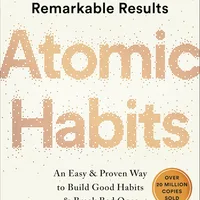
Atomic Habits — James Clear (Paperback)
The #1 journal pick is built on Clear's framework — the book is the source text that makes the journal's identity-based method click.
As an Amazon Associate, we earn from qualifying purchases — at no extra cost to you.
2. The Five Minute Journal — Best for Absolute Beginners

For whom: Anyone starting a habit practice for the first time, or anyone whose previous journals lasted less than two weeks before being abandoned.
Why we chose it: The number-one reason habit journals fail is that they demand too much cognitive load in the early phase, when the neural architecture for the habit hasn't formed yet. The Five Minute Journal solves this with ruthless constraint: morning prompt (3 things you're grateful for, 3 things that would make today great, 1 daily affirmation), evening prompt (3 amazing things that happened, 1 thing you could have done better). That's it. Five minutes. The habit-tracking component is simple enough that the journal functions as a self-contained daily check-in for 1-3 foundational behaviors. What it lacks in depth, it compensates for in the variable that matters most for beginners: near-zero friction. BJ Fogg's Tiny Habits research documents that the most effective strategy for new behavior formation is shrinking the behavior to its smallest viable expression and attaching it to an existing routine. The Five Minute Journal is a tiny habit. It's also the best-selling journal product in this category for a reason: it works for the people it's designed for.
Pros:
- Lowest barrier to daily use of any journal on this list — genuinely five minutes
- Gratitude and intention format produces positive affect framing that supports the broaden-and-build mechanism (Fredrickson)
- Available in hardcover and softcover; quality paper stock
- Weekly challenges provide novelty that sustains early motivation
Cons:
- Not a deep habit tracker — you're tracking overall momentum and emotional state, not specific behavior data
- Outgrown by intermediate-to-advanced habit builders fairly quickly (12-18 months)
3. Commit30 Habit Tracker — Best for Visual Streak Builders

For whom: Someone who thrives on seeing their progress visualized, and who responds strongly to the "don't break the chain" motivation that Jerry Seinfeld famously described as his productivity system.
Why we chose it: The core behavioral mechanism that Commit30 exploits is one of the most robust findings in the habit research: visual momentum. When you can see a chain of 12 consecutive days as a visible grid, the loss aversion that Kahneman documented kicks in on your behalf — you're now loss-motivated to protect your streak, which is a stronger driver of behavior than abstract gain motivation for most people. The large-format monthly grid accommodates up to 10 simultaneous habits, with a 30-day visual overview that makes streaks and gaps immediately apparent. The design is unambiguous: each day is a box, each habit is a row, and the month tells a story you can read in seconds. There's no complex reflection architecture, which is a deliberate choice — Commit30 is optimized for the consolidation phase (days 30-90) when what you need is momentum preservation, not motivation re-examination.
Pros:
- 10-habit capacity on a single monthly spread — highest simultaneous tracking on this list
- Large-format design makes streak visualization compelling and clear
- Monthly reflection prompts help contextualize patterns without demanding daily narrative
- Undated format means no guilt pages from weeks you missed
Cons:
- Binary check-only tracking — no space for quality ratings or daily notes
- Large format (full 8.5x11") makes it a desk journal rather than a carry journal
4. Passion Planner — Best for Goal-to-Habit Thinkers
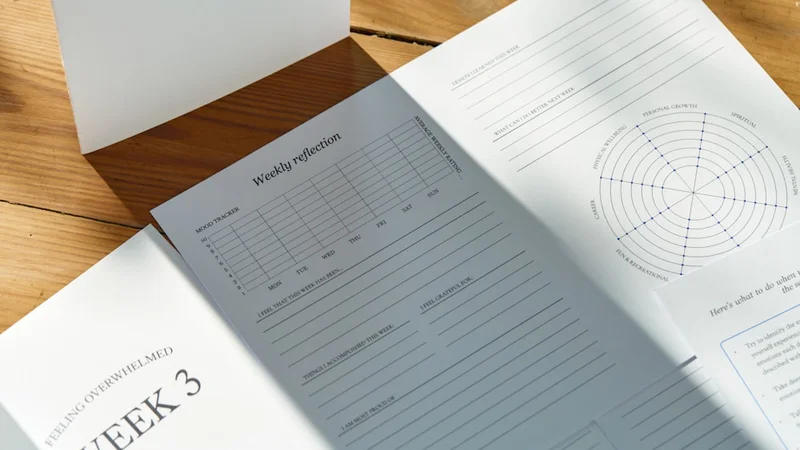
For whom: The person who can't maintain a habit unless they understand exactly how it connects to a specific goal — and who needs their planning, scheduling, and habit tracking in one integrated system.
Why we chose it: Most habit journals assume you already know what habits to build. The Passion Planner works backwards from goals, using a structured decomposition process (your 3-year vision → 1-year milestones → monthly targets → weekly priorities → daily habits) that makes the relationship between each behavior and each outcome explicit. This architectural approach maps directly onto what motivational psychology calls "goal commitment" — the research by Edwin Locke (University of Maryland) and Gary Latham (University of Toronto) showing that specific, challenging goals produce significantly higher performance than vague ones, when the actor understands the connection between their behavior and the goal. For the person who abandoned previous habit journals because they felt arbitrary — habits without a narrative — the Passion Planner provides the narrative. The weekly spreads include scheduled time blocks alongside habit tracking, which produces the time-blocking benefit that Cal Newport's deep work research identifies as essential for intentional behavior.
Pros:
- Complete planning ecosystem from vision to daily action — the most integrated system on this list
- Weekly reflection prompts are genuinely thought-provoking, not boilerplate
- Goal decomposition structure creates intrinsic motivation that carries through dry periods
- Community of users and free digital resources extend the experience well beyond the physical product
Cons:
- Heavy (the full-year version is substantial for daily carry) — the pocket edition sacrifices some of the spread quality
- Goal-mapping sections demand real upfront investment; users who skip them lose much of the journal's value
5. Ink+Volt Habit Tracker — Best for Minimalists and One-Thing Focus
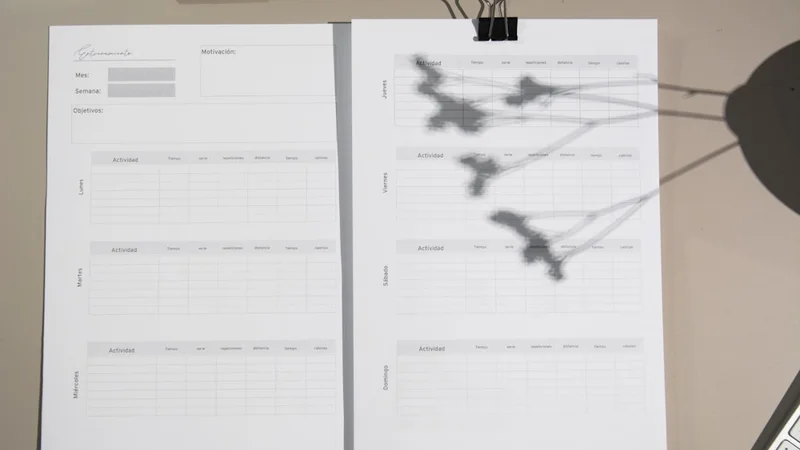
For whom: The professional who wants a clean, distraction-free habit system — preferably one that fits in a jacket pocket and doesn't announce itself as a personal development product at a client meeting.
Why we chose it: The Ink+Volt Habit Tracker is the best-designed journal on this list if you value visual clarity above all else. The monthly overview is elegant — a clean grid with space for 8 habits, set against Ink+Volt's characteristically spare, high-contrast typography. There are no inspirational quotes, no colored spreads, no design choices that compete with the function. The paper quality is exceptional (90gsm paper, Tombow-friendly) and the binding lies completely flat, which matters more than it sounds when you're doing a 60-second daily check-in standing up before your commute. The behavioral science case for minimalism in habit design comes from Roy Baumeister's ego depletion research (and its subsequent extensions): every design decision you have to navigate in your habit journal costs a small amount of cognitive resource. A journal that removes all unnecessary decisions is one that gets used on the mornings when your willpower budget is already spent before 7am.
Pros:
- Best paper quality and binding on this list — the tactile experience of writing in it is genuinely pleasurable
- Monthly habit overview plus weekly planner in one compact (A5) format
- Design is professional enough to use in any environment without self-consciousness
- Undated format with 6-month capacity per volume
Cons:
- No daily reflection prompts — if you need motivational scaffolding, this journal won't provide it
- 8-habit limit per monthly spread; heavy trackers may find this constraining
6. The Habit Journal by Productive Flourishing — Best for Reflective Habit Builders
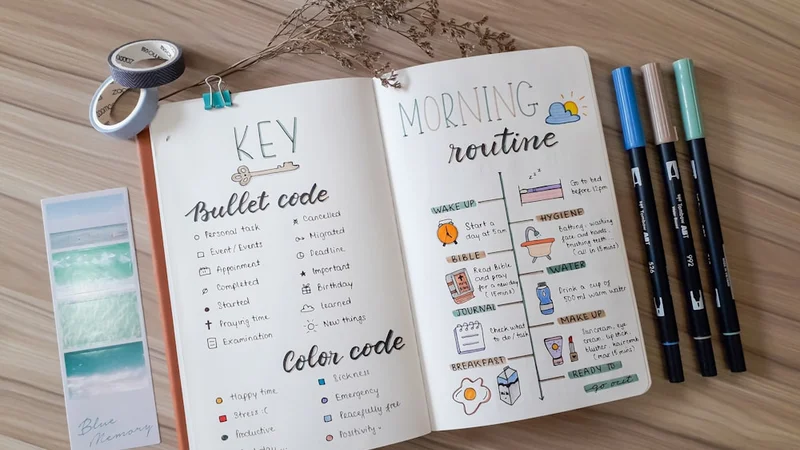
For whom: The person who doesn't just want to track habits but wants to understand why some weeks work and others don't — and who is willing to invest 10-15 minutes in daily reflection to get that understanding.
Why we chose it: Charlie Gilkey built the Productive Flourishing ecosystem around a specific behavioral insight: most habit failures aren't execution failures, they're design failures. The person who misses their workout 4 times in a week hasn't failed at discipline — they've likely designed a habit that doesn't fit their actual energy architecture, their actual schedule, or their actual identity. The Habit Journal is the most reflection-intensive product on this list, with daily check-ins that include not just whether you did the habit but how it went (quality ratings), what interfered (friction logging), and what you want to adjust (design iteration). This is applied behavioral science: the write-up-why-you-missed-it practice that habit researchers call "failure analysis" is precisely the metacognitive process that separates people who build lasting habits from people who cycle through fresh starts. This journal is designed for someone who has already built the foundation — who has habits they care about and wants to optimize them, not just count them.
Pros:
- Quality ratings and friction logging produce genuine insight into habit patterns over time
- Weekly review architecture is the most thorough of any journal on this list
- Prompts are designed around behavioral science frameworks, not generic motivation
- Connects individual habits to identity and values through monthly reflection
Cons:
- 10-15 minutes daily is a meaningful commitment — this journal requires the habit of journaling itself
- Not a beginner product; the reflection depth overwhelms people who are still in the early formation stage
7. Leuchtturm1917 A5 Bullet Journal — Best for Advanced Customizers

For whom: The person who has tried structured journals and consistently found that the pre-designed format doesn't fit the specific way their mind works — and who wants to build a habit system from scratch, exactly to specification.
Why we chose it: The Leuchtturm1917 isn't a habit journal in the conventional sense — it's the raw material for one. The Bullet Journal method, developed by Ryder Carroll, turns a blank dotted notebook into a fully modular planning and tracking system through a syntax of rapid logging, migrations, and custom collections. For habit tracking specifically, the BuJo setup allows you to design exactly the tracking module your habits require: a monthly habit grid with custom columns, a habit heatmap, a mood tracker that runs in parallel with behavior data, or a full-page weekly spread that integrates habit tracking with time-blocking and reflection. The research case for the DIY approach: self-determination theory (Deci and Ryan) identifies autonomy — the sense that you're choosing your system rather than complying with someone else's — as one of the three fundamental psychological needs that drive intrinsic motivation. A tracker you designed yourself activates ownership in a way that a pre-printed format can't. The Leuchtturm1917 specifically is chosen over generic dotted notebooks for its numbered pages, table of contents, and thread-stitched binding that genuinely lasts years rather than months.
Pros:
- Unlimited customization — your tracking system fits your habits rather than forcing habits into a pre-built structure
- Numbered pages and built-in table of contents make the notebook navigable across months
- Exceptional build quality — A5 Leuchtturm1917 notebooks are designed to withstand daily carry for 12+ months
- The most cost-effective option per year of use on this list
Cons:
- Setup investment is real — you need to design your tracking modules before you can start using them, which creates friction for anyone not already comfortable with the Bullet Journal method
- The creative freedom is genuinely paralyzing for some people; without constraints, the blank page produces procrastination rather than clarity

Kindle Paperwhite (2024, 16GB)
Directly answers the 'paper journal vs app' FAQ and the Bullet-Journal/reading angle — a distraction-free reading device for readers who want the habit-science books without smartphone notification loops. High-ticket…
As an Amazon Associate, we earn from qualifying purchases — at no extra cost to you.
FAQ
Is a paper habit journal actually better than a habit tracker app?
It depends on what "better" means for you. Apps like Habitica, Streaks, and Notion databases offer auto-syncing across devices, reminders, and the ability to analyze months of data in seconds. Paper journals offer something apps consistently fail to produce: the encoding advantage of physical writing, the absence of notifications and context-switching, and the tactile ritual that many people find essential to showing up consistently. The honest answer is that the best habit tracker is the one you'll actually use. If you've abandoned three apps, try paper. If you've abandoned three paper journals, try an app with a gentle daily reminder at a fixed time.
How many habits should I track in my journal at once?
Fewer than you think. Wendy Wood's research at USC and BJ Fogg's Tiny Habits work both point toward the same uncomfortable truth: trying to build more than 2-3 habits simultaneously produces significantly lower success rates than focusing on one at a time. The journals on this list that accommodate 8-10 simultaneous habits are best used by people who are maintaining existing habits — tracking them for accountability — rather than actively forming new ones. If you're building from scratch, pick one. Get it to automaticity. Then add the next one.
Do I need to use the journal every single day for it to work?
Missing one day is normal and expected — the research is clear on this. Phillippa Lally's habit formation study found that single missed days had no measurable impact on the overall automaticity trajectory. What does derail habit formation is missing two days in a row, which is the pattern that breaks momentum. The most useful practice: never miss twice. One miss is an anomaly. Two in a row is the start of a new pattern. Choose a journal format that makes it easy enough to come back after a miss that you can do it the same day you realize you slipped.
What's the difference between a habit journal and a planner?
A habit journal focuses on behavioral repetition — tracking whether you did specific behaviors and sometimes why or how they went. A planner focuses on scheduling — allocating time to tasks and events. Several products on this list (the Passion Planner, the Ink+Volt) are hybrids that combine both functions, which makes them better for people whose habit formation is tightly linked to time management. If your habits are tied to a specific time of day (7am workout, 9pm wind-down routine), an integrated planner-tracker makes more sense than a pure habit journal. If your habits are more outcome-based (3 liters of water, 30 minutes of reading at any point in the day), a dedicated tracker is simpler and less prone to unused spread guilt.
The Bottom Line
If you could only pick one journal from this list, the right answer genuinely depends on your stage. For most people starting fresh in 2026, The Five Minute Journal produces the highest probability of still being used at day 66 — because it removes every possible source of friction. For someone who has the foundation and wants to build on it, James Clear's Atomic Habits Journal provides the behavioral science scaffolding that converts repetition into identity. For the person who's tried five journals and abandoned all of them because no pre-designed format fit the way they think, the Leuchtturm1917 Bullet Journal is the investment that finally sticks.
The real insight here isn't which journal is objectively best. It's that choosing the right journal for the right stage is itself an act of good behavioral design — the same principle that makes the habits you're tracking more likely to last.
For a deeper look at what's happening in your brain when you build a habit — and why willpower is the wrong tool for the job — read Why Willpower Never Breaks a Bad Habit (And What Actually Does).
And if you're building a morning habit practice around your journal, How to Build a Morning Routine That Actually Sticks covers the sequencing science that makes the first 60 minutes of your day the highest-leverage behavioral design window you have.
Design your evolution — one page at a time.
Which of these journals are you starting with — and what's the one habit you're finally committing to build? Leave a comment below.
Related read: Emotional Hygiene: Treating Psychological Wounds
Was this helpful?