Mindset· 10 min read
Why Facts Don't Change Minds: Identity-Protective Cognition
Dan Kahan's Yale research: higher analytical skill increases polarization on identity-linked topics. Here's how identity-protective cognition works.

Why Facts Don't Change Minds: Identity-Protective Cognition
You've been in this conversation before. Someone intelligent — genuinely, demonstrably intelligent — hears an argument that should, by any logical standard, shift their position. Instead of updating, they double down. Their counter-argument gets sharper, their tone more certain, their defense of the position they already held somehow more sophisticated than it was five minutes ago.
The more evidence you offer, the more entrenched they become.
Your brain reaches for the comfortable explanations: denial, stubbornness, arrogance, a refusal to engage with inconvenient facts. But this pattern — what researchers now call identity-protective cognition — has been documented with precision. Dan Kahan, a professor of law and psychology at Yale Law School, spent the better part of fifteen years designing experiments specifically to answer this question. What he found is harder to sit with than any of those explanations — because it doesn't just describe them. It describes you, too.
The Study That Changed the Conversation
In 2013, Kahan and his colleagues ran an experiment that looks, on the surface, like a simple test of math ability. They gave participants a genuinely difficult numeracy problem — the kind where most people arrive at the wrong answer unless they actually run through the arithmetic carefully rather than trusting their gut.
The twist: everyone received the same mathematical structure twice, with only the context changed.
Version one described a skin-cream trial. The question was whether the cream reduced rashes. The data was deliberately arranged so that the correct answer required overriding an intuitive but wrong reading of the numbers.
Version two described a gun-control policy. The question was whether the law reduced crime. Same mathematical structure, same correct answer, same intuitive trap — but now the conclusion the data pointed toward was politically charged.
Here's what happened. Participants with the highest math skills solved the skin-cream version correctly at high rates regardless of their political affiliation. Expected. Reassuring. That's what you'd hope intelligence does.
On the gun-control version, those same high-skill participants split sharply along ideological lines. And the more mathematically capable they were, the more confidently they arrived at the wrong answer when the correct answer conflicted with their group's political position.
More skill. More polarization. Not less.
Kahan calls this identity-protective cognition. The core idea is this: when a topic has become fused with group membership — with who you are and which team you belong to — the brain's operating goal quietly shifts from "find the right answer" to "protect my standing within my tribe." And if you happen to have strong analytical ability, those skills don't evaporate. They get redirected. You become better at building sophisticated defenses of the answer your identity already requires — better at spotting flaws in evidence that threatens your position, better at generating alternative explanations for data that doesn't go your way.
Intelligence, in other words, can make you a better rationalizer. Not inevitably. Not on every topic. But on the topics where the social stakes of being wrong feel the highest, the data consistently shows this is what happens.
Why This Is Not the Same as Confirmation Bias
Confirmation bias gets invoked constantly in conversations about motivated reasoning, and it's a real phenomenon. But it's not what Kahan identified, and the distinction matters more than it might seem at first glance.
Confirmation bias describes the tendency to favor information that supports what you already believe, regardless of how you came to hold that belief. You notice confirming evidence more readily, you remember it longer, you weight it more heavily. That's a specific, well-documented pattern in how people evaluate information in general.
Identity-protective cognition is about something more structural. It's not that a belief happens to be one you hold — it's that the topic itself has become a marker of group belonging. The belief isn't just yours. It's tied to your tribe, your community, your sense of who you are and where you belong in the social world.
Practically, the difference is this: confirmation bias means you're biased toward evidence that aligns with your existing position. Identity-protective cognition means you process evidence about this particular topic through a completely different goal than truth-seeking — the goal of maintaining standing within the group that matters to you. The sophistication of your reasoning is hijacked in service of that goal.
Kahan's cultural cognition research extended this further, finding that the worldview dimensions most predictive of this effect are a person's orientation toward hierarchy versus egalitarianism, and individualism versus communitarianism. These aren't the contested beliefs themselves — they're the deeper identity frames that shape which experts a person is even willing to learn from, long before any specific evidence appears.
Which means the bias doesn't start when you see the data. It starts earlier, at the level of whose data you're willing to consider legitimate.
How Confirmation Bias Warps Your Best Decisions
The Tell-Tale Sign a Belief Has Become an Identity Marker
Here's the question Kahan's research points toward — and it's more useful than asking whether someone else is being irrational.
Ask yourself: what would it cost you to update?
Not intellectually. Socially. If you reconsidered a specific position you hold strongly — not in private, but publicly, in front of the people who matter to you — would there be social consequences? Would it read as disloyalty? Would it put you outside the circle?
If yes, that's the signal that the belief has migrated from "a position I arrived at through evidence and reasoning" to "a membership credential I maintain to stay in good standing." Those are very different things, and conflating them is what the research shows leads smart people to become confidently, sophisticatedly wrong.
Seth Godin made a related observation on his blog: the key element of something being genuinely controversial is possibility — a real chance either side could be right. Without that, it's an empty argument, not a real one. What looks like controversy but is actually manufactured division works differently — its goal is to shut dialogue down, not advance it, because the function of the debate is to sort people into groups, not to find an answer.
Kahan's research gives that observation a precise psychological mechanism. Once a topic becomes a tribal signal, it stops functioning as a genuine open question for the people on both sides — not because the evidence is settled, but because the social cost of being the one who updates has grown too high. At that point, no argument, however sound, is actually being processed on its merits. It's being processed through the filter of: what does agreeing with this say about which team I'm on?
You can audit this in yourself right now. Think of three to five beliefs you hold with strong conviction. For each one, ask honestly: would you be comfortable sitting alone with a genuinely rigorous argument on the other side, with no one watching, and giving it real consideration? Or does even the idea of that feel like a small act of betrayal?
If it's the latter, that flicker isn't necessarily evidence you're wrong. The research doesn't say you should abandon everything your community holds. But it is evidence the belief has become something other than purely evidence-responsive. And that's worth knowing clearly.

Clever Fox Habit Calendar Circle (Belief & Goal Audit Journal)
The article asks you to write down your high-conviction beliefs and audit which have become identity markers — a dedicated journal makes that audit a repeatable habit instead of a one-off thought.
As an Amazon Associate, we earn from qualifying purchases — at no extra cost to you.
The Scout Mindset: The Mental Shift That Changes What You Notice
Julia Galef, co-founder of the Center for Applied Rationality, wrote about this problem in The Scout Mindset using a distinction that maps precisely onto Kahan's framework. Galef contrasts the soldier mindset — in which your goal is to defend your position against all challengers — with the scout mindset, in which your goal is to accurately map the terrain, even when that means finding something you didn't want to find.
The soldier works hard. The soldier gathers evidence. The soldier builds thorough cases. But the soldier is building a case to win, not to understand. And if you have high analytical skill, the soldier mindset just means you build more sophisticated cases.
The scout's emotional investment is different. The scout doesn't need to be right — the scout needs to know what's true. And the research suggests this isn't just a philosophical nicety. It's a different cognitive posture that changes what evidence you notice before you're even consciously aware of evaluating it.
What makes the scout mindset genuinely difficult to sustain isn't intellectual disagreement. Most people believe they value truth. The problem is that on specific topics where truth and belonging are in tension — where the correct answer would put you outside your group — belonging tends to win at a low-level, automatic, pre-reflective cognitive stage. The rationalization comes after.
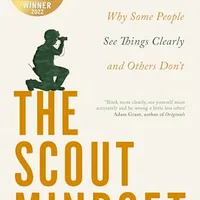
The Scout Mindset — Julia Galef
The book Galef wrote on exactly this soldier-vs-scout distinction — the primary reference the whole section is built on.
As an Amazon Associate, we earn from qualifying purchases — at no extra cost to you.
Adam Grant's research into the metacognitive skill of rethinking covers adjacent ground: the capacity to treat updating a belief as a sign of intellectual quality rather than as weakness or inconsistency. That reframe doesn't come automatically for most people. It has to be deliberately built. But both Galef and Grant's work, read alongside Kahan's, makes a strong case that it's genuinely cultivatable — and that the return on building it compounds across every domain where you're trying to learn something difficult.
How to Actually Use This Research
The mistake most people make when they first encounter Kahan's findings is to use them entirely as a lens for observing other people's irrationality. That's understandable. It also happens to be a textbook example of identity-protective cognition in action.
The more useful application is internal, and it's specific.
Step 1: Map your high-stakes beliefs. List five to eight positions you hold with strong conviction — positions where being wrong would feel like more than just a factual correction. Not "I was wrong about what year that film came out." Something where updating publicly would feel like crossing a line, like saying something your people don't say, like becoming a different kind of person.
Step 2: Separate the intellectual question from the social question. For each belief on that list, ask explicitly: Is the primary reason I hold this position evidential, or is it also social? Would I feel comfortable genuinely engaging with the best available arguments on the other side, privately, with no social audience? If the answer is no, flag it.
Step 3: Write down what it would take to change your mind. This is the diagnostic step the research specifically supports. Before engaging with evidence on a topic you already feel strongly about, write down in advance the conditions under which you would update your position. What would the evidence need to look like? If you find you genuinely cannot name those conditions — if every possible counter-evidence already has a pre-built rebuttal — that's important information about the nature of the belief.
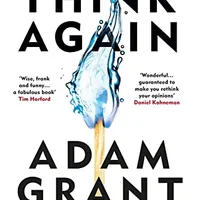
Think Again: The Power of Knowing What You Don't Know — Adam Grant
Grant's rethinking research — reframing 'changing your mind' as intellectual strength — is the exact skill Step 3 asks you to practise.
As an Amazon Associate, we earn from qualifying purchases — at no extra cost to you.
Step 4: Find the sharpest version of the opposing view. Not the weakest, most convenient version. The actual best argument from the most credible source on the other side. This is what Kahan found scouts do naturally — they seek out the strongest challenge to their current position rather than the most comfortable confirmation of it.
Step 5: Build a reading habit around intellectual updating. The research on motivated reasoning, cultural cognition, and identity-linked belief is substantial and publicly available. Kahan's work through the Cultural Cognition Project at Yale is accessible online. Books built directly on this research give you the vocabulary to recognize the bias when it's operating in real time, which is the first and necessary condition for doing anything about it.

Kindle Paperwhite 2024 (12th Gen, 16GB)
Step 5 is 'build a reading habit around intellectual updating' — a dedicated e-reader lowers the friction of getting the source books into your hands. High-ticket anchor of the set.
As an Amazon Associate, we earn from qualifying purchases — at no extra cost to you.
The Cognitive Biases That Secretly Run Your Life
The Uncomfortable Thing That "Design Your Evolution" Actually Requires
The phrase "Design Your Evolution" can sound encouraging right up until you run it against research like Kahan's. Because designing your own evolution presupposes something most self-improvement frameworks quietly skip: you're willing to look at evidence about where you currently are — and who you currently are — even when that evidence conflicts with how you'd prefer to see yourself.
That's not the same as being wishy-washy. It's not the same as having no convictions. There's an old truth in personal development circles: growth stops the moment you stop challenging the ideas you're most certain about. The research now has a specific mechanism for why.
The people in Kahan's studies who showed the strongest identity-protective cognition weren't intellectually lazy. They were smart, careful, analytically capable — and those very capabilities were being deployed in service of a goal they weren't consciously aware of. They genuinely thought they were following the evidence. The bias didn't announce itself. It operated quietly, below the threshold of notice, doing its work in the gap between the data arriving and the conclusion being formed.
Designing your evolution means narrowing that gap. Not with more information — the research is explicit that more information alone doesn't fix it — but with a different orientation toward what you're doing when you evaluate evidence on the things that matter most to you.
So here's the question worth sitting with after you close this article: which of your most strongly held convictions would you feel safe reconsidering — privately, alone, with good evidence on the table — and which ones wouldn't you?
The gap between those two lists is where the most interesting work happens.
Was this helpful?