Mindset· 9 min read
Why Feeling Controlled Makes You Want Out
Deci and Ryan's research found controlling environments kill motivation and loyalty. Here's the science of autonomy — and why free agents stay longer.

Why Feeling Controlled Makes You Want Out
My colleague Sara had the best salary of her career. The work was genuinely interesting. She liked her manager — at first.
Then the monitoring software appeared. Then a new policy requiring approval before any external communication. Then mandatory check-ins twice a day to confirm she was at her desk. Each restriction had a reasonable-sounding justification. Each one made her feel, a little more each week, like someone who wasn't trusted. Like someone who wasn't really choosing to be there anymore. When she finally submitted her resignation, she didn't have another job lined up. She just needed to leave.
Sara's story isn't unusual. What's unusual is how cleanly it maps to a predictable research finding — not as anecdote, but as a measurable, replicable consequence of a specific type of environment. One built on the assumption that people need to be managed in order to stay.
They don't. In fact, the research shows something more specific: they leave faster.
The Three Things Every Human Being Actually Needs
Edward Deci and Richard Ryan spent decades building what became one of the most widely cited frameworks in motivational psychology: self-determination theory. Their core model, documented across hundreds of studies and synthesized at selfdeterminationtheory.org, wasn't originally trying to explain why people quit jobs or abandon gym memberships. They were trying to answer something more fundamental: why does motivation for the exact same activity sometimes compound over time and sometimes evaporate, with no obvious change in the activity itself?
Their answer came down to three basic psychological needs. When these three are met, motivation becomes intrinsic — the kind that doesn't require external surveillance, rewards, or constant pressure to sustain. When they're chronically thwarted, motivation hollows out from the inside, often without any identifiable single cause.
The three needs are: autonomy — the sense that your actions reflect genuine choice rather than coercion or obligation; competence — the experience of being genuinely effective at what you're doing; and relatedness — feeling meaningfully connected to the people and purpose around you.
Thwart any one and motivation weakens. Thwart autonomy specifically — the sense that you're here because you want to be, not because leaving is too costly — and you get something more particular: the slow, quiet disengagement that eventually looks like Sara's resignation letter.
That matters whether you're managing a team, designing your own daily habits, or building a relationship of any kind. And the research connecting it all is far more applied — and surprising — than most people expect.
Daniel Pink brought Deci and Ryan's decades of research to a mainstream audience in Drive, translating the same core finding — that autonomy fuels genuine engagement — into his own framework of autonomy, mastery, and purpose, and tracking it across software companies, creative studios, and education systems worldwide.
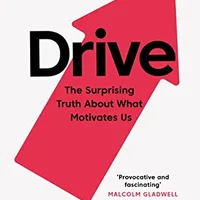
Drive: The Surprising Truth About What Motivates Us — Daniel H. Pink
Daniel Pink's Drive popularised Deci and Ryan's autonomy research for a mainstream audience — the natural first read for anyone gripped by the article's opening.
As an Amazon Associate, we earn from qualifying purchases — at no extra cost to you.
What a Children's Puzzle Toy Taught Us in 1971
Before self-determination theory had a formal name, Deci ran an experiment that would become one of the most replicated findings in all of motivational psychology.
He brought university students into a lab and had them work with Soma cubes — geometric puzzle pieces that could be assembled into a range of shapes. In the first session, both groups engaged with the puzzles simply because they were asked. Then, in a second session, one group was told they'd receive a payment for each puzzle they completed correctly. The other group continued with no external reward attached.
In the third session, Deci removed the payment from the group that had been receiving it. He then left each participant alone in the room with some puzzles and some magazines, telling them he'd return shortly. The key measure was what participants voluntarily chose to do with their unstructured time.
The result was clear. The group that had been paid spent significantly less free time on the puzzles after the reward was removed — less, in fact, than they'd spent before the payment was ever introduced. Something had shifted in how they understood their own engagement. I do this because they pay me to. When the payment disappeared, so did the internal rationale.
The group that was never paid showed no such decline. Their engagement held steady throughout.
The interpretation Deci drew — and refined across decades of follow-up research — is precise: introducing a controlling external mechanism had quietly shifted participants' perceived reason for engaging. The intrinsic motivation that existed before the reward was introduced wasn't merely supplemented by the reward. It was actively undercut. External control had changed the meaning of the activity itself.
This matters well beyond a lab with puzzle cubes. The same mechanism appears in parenting, in healthcare, in organizational design, and in the daily habits most people swear they care about but keep abandoning.

The Structural Message That Does the Most Damage
The Soma experiment used a fairly blunt mechanism — payment for performance. In real life, autonomy gets thwarted more subtly.
It's rarely someone announcing: you don't have a choice here. It's that the environment sends that message structurally, through accumulating rules, monitoring systems, rigid processes, and consequences for deviation that make any alternative look increasingly costly. The message isn't spoken. It's embedded in how the system is built.
The cumulative effect on motivation is the same whether the message is explicit or architectural. And it's often worse when it's architectural, because there's no single moment to point to, no obvious grievance to name. The person subject to it can't always explain why they feel the way they do — they just feel less invested. Less willing to bring their full attention. Less inclined to stay.
A 2017 review by Deci, Olafsen, and Ryan in the Annual Review of Organizational Psychology and Organizational Behavior traced consistent patterns across dozens of workplace studies: employees in autonomy-supportive environments — where managers explained the rationale behind decisions rather than issuing mandates, offered flexibility in how work was done, and treated concerns as worthy of actual engagement — showed not just higher job satisfaction but measurably better performance, lower absenteeism, and significantly lower turnover. In many of these studies, the material conditions across groups were broadly comparable. The difference was the structural signal about whether people were trusted to choose.
The same effect has shown up in studies on healthcare adherence, where patients in autonomy-supportive relationships with clinicians were more likely to follow through on treatment regimens over time — not because of better instructions, but because following through felt like their decision. It shows up in education, where students in controlling classrooms perform narrowly on tests but show steeper declines in genuine curiosity. It shows up in how customer relationships actually function, where customers who stay because leaving is deliberately made difficult are not loyal customers. They're captive ones. And captive people leave the first time the door looks slightly open.
Deci explored the full implications of this in Why We Do What We Do, which remains one of the most direct accounts of how controlling versus autonomy-supportive environments produce genuinely different human beings over time — not just different behaviors, but different levels of investment in their own lives.
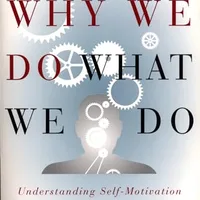
Why We Do What We Do: Understanding Self-Motivation — Edward L. Deci with Richard Flaste
Deci's own account of controlling vs. autonomy-supportive environments — the primary-source companion to the article's central argument.
As an Amazon Associate, we earn from qualifying purchases — at no extra cost to you.
This Isn't the Same as Rebellion
It's worth being precise here, because self-determination theory gets conflated with a different psychological mechanism that operates completely differently.
Jack Brehm's psychological reactance theory, developed in the 1960s, describes what happens when a specific freedom is visibly and directly threatened: tell me I can't do something, and I suddenly want it more. Reactance is acute, fast, and proportional to how visible the threat is. It's why heavy-handed sales language backfires, why explicitly forbidding something in certain contexts makes it more appealing, and why the phrasing "you have to" reliably triggers more resistance than "you might want to."
What Deci and Ryan documented operates on an entirely different timescale and through a different mechanism. Self-determination theory describes the motivational architecture that builds — or erodes — over weeks, months, and years in an environment that's consistently autonomy-supportive or consistently controlling.
The person in a controlling environment doesn't necessarily feel dramatic resistance. They might show compliance for a while. Then something flatter. Then a kind of adaptive disengagement where they do what's asked and nothing more. The last stage is the exit — which often looks, to whoever built the controlling environment, like it came from nowhere.
That's the specific danger of confusing the two. A manager who provokes reactance gets obvious pushback, which is uncomfortable but at least legible. A manager who slowly, structurally removes autonomy might not notice anything unusual until half the team has quietly updated their LinkedIn profiles.
Reactance and genuine motivation can coexist — you can be energized precisely because you're pushing against something. The SDT dynamic produces something different: a person who doesn't care enough to rebel and, eventually, not enough to stay.
If you want the fuller research picture on why external rewards can backfire, the science of motivation explains why rewards kill drive.
When You're Doing It to Yourself
Here's the part of this research that most people don't think to apply.
Self-determination theory was built largely on studies of interpersonal and institutional contexts — teachers and students, managers and employees, parents and children. But the same mechanism operates when you're alone, in the daily structure of how you design your own goals, habits, and routines.
Think about a habit you've tried repeatedly and never sustained beyond six or eight weeks. The standard explanation is motivation: you didn't want it badly enough, or you lost focus. But consider a different question first: was the habit structured in a way that preserved your sense of genuine choice? Or did it function like a rule you imposed on yourself — a binary machine that delivered a verdict of "on track" or "failing" every morning?
Habits built around rigid compliance tend to position you as your own surveillance system. You check whether you performed. You mark the streak. You feel the shame of the broken one. That's a controlling environment. And the SDT research predicts exactly what most people experience: motivation that looks reasonable for a few weeks, then quietly fades, then stops entirely — often right around the first unavoidable miss.
A habit built around genuine intention behaves differently. One you've designed rather than been told to follow. One with enough flexibility to survive an imperfect week. One tied to what you actually value rather than what you think you should value. Not because it requires more willpower — but because it doesn't put you in the position of policing yourself from the outside.
A well-designed autonomy-first habit journal — one that invites reflection on why you're doing something rather than just whether you did it — makes the difference between the two approaches concrete and sustainable.

Clever Fox Habit Calendar Circle (2-Year Inspirational Habit Tracker, Dark Blue & Red)
The article argues rigid streak-based habits turn you into your own surveillance system; an autonomy-first, reflection-based habit tool makes the alternative concrete.
As an Amazon Associate, we earn from qualifying purchases — at no extra cost to you.
If your own habit system tends to collapse the moment life gets hard, here's the science of why consistency is so difficult — and how to stay on track anyway.
How to Start Today
You don't need to redesign everything at once. But self-determination theory gives you a few precise places to look.
1. Audit what you're actually doing and why. For each significant commitment — the job, the habit, the relationship, the routine — ask honestly: would I still be here if leaving were frictionless? If the answer is no, or genuinely uncertain, that's not a verdict on your character. It's diagnostic information about where genuine motivation actually stands.
2. Notice the structure, not just the stated values. You might not be explicitly controlling anything. But does the architecture of what you've built — your team's processes, your personal habit system, your expectations of yourself — implicitly assume compliance rather than invite participation? Systems that require justification to deviate, rather than genuine invitation to engage, quietly erode autonomy regardless of how good the surrounding culture looks.
3. Reduce the minimum before you increase the pressure. When a habit or commitment is losing momentum, the instinct is to apply more force: stricter accountability, bigger consequences for missing. But if the issue is autonomy rather than motivation, adding pressure makes things worse. Instead, shrink the required version until choosing in costs almost nothing on your worst day. Compliance-based habits break when life gets hard; choice-based habits adapt.
4. Identify which of the three needs is most depleted. Autonomy, competence, relatedness. When motivation is low in a specific area, these three give you a diagnostic frame. Am I losing confidence that I'm actually effective here — that's competence. Am I disconnected from the people or purpose this is for — that's relatedness. Or does it feel like I'm here because I have to be rather than because I want to be — that's autonomy. Different deficits call for genuinely different repairs, and confusing one for another is how most effort gets wasted.
5. Choose to stay — consciously and periodically. This is the most counterintuitive one. If you're in a situation that's actually working — a job, a habit, a relationship — it helps to remind yourself, at intervals, that you're there by genuine choice. Deci's research suggests that consciously affirming your own agency within a context, rather than simply taking it for granted, measurably sustains the autonomy experience even when external conditions don't change. The exercise isn't positive thinking. It's accurate perception.
For a deeper dive into the three needs behind all of this, see self-determination theory and the three needs that drive lasting change.
The Environment You're Building
Sara found a new team about eight months after leaving the old one. Same industry, roughly comparable pay. But her new manager explained the reasoning behind decisions rather than announcing them. She had real flexibility in when and how she structured her week. When she raised a concern, it went somewhere instead of disappearing into a process designed to absorb feedback without acting on it. She was still accountable to the same kinds of outcomes — deadlines, quality, results. What was different was whether she felt like someone who was choosing to produce them.
Six months in, she was working harder than she had anywhere in her career. Not because anyone was checking. Because she didn't want to leave.
That's what Deci and Ryan's research maps out. Not a world without structure, expectations, or accountability — those things coexist perfectly well with genuine autonomy, and Deci's research never suggested otherwise. What reliably destroys motivation isn't being held to a standard. It's the structural message, delivered consistently enough through the architecture of a system, that you're here because you have no real alternative.
Designing your evolution means examining every system you inhabit and build — your daily routines, your team's culture, your own framework for self-management — and asking an honest question: does this treat the people inside it, yourself included, as free agents who are actively choosing to be here?
A structured workbook built around SDT's three needs can make this audit practical rather than abstract, giving you a repeatable process for diagnosing where autonomy, competence, or relatedness has quietly gone missing.
Because the research is fairly clear about what eventually happens to people who feel they're not choosing.
They leave. And they're usually the ones you wanted to keep.
What's one area of your life — a habit, a job, a relationship — where you suspect you're staying more because leaving is costly than because you genuinely want to be there? The distinction matters more than most people realize.
Was this helpful?