Mindset· 10 min read
The Science of Motivation: Why Rewards Kill Drive
Carrots and sticks work — briefly. Here's the science of intrinsic motivation and why it outlasts every reward system you've ever tried.

The Science of Motivation: Why Rewards Kill Drive
I set up a reward system once that I was genuinely proud of — a whole architecture, I thought, for keeping motivation alive. Finish the chapter, get thirty minutes of TV. Hit the weekly writing target, order from my favorite restaurant. Complete the big project, book the weekend away. A friend heard about it and said it sounded like training a golden retriever. I laughed it off.
Six weeks later, the system had completely collapsed — not because I stopped caring about the work, but because the work itself had started to feel hollow in a way I couldn't name. The writing that once genuinely absorbed me now felt like something I was doing to earn something else. The reward had quietly moved the goalposts, and I hadn't noticed until the motivation was already gone.
That feeling has a name. Edward Deci found it in 1971 at the University of Rochester, in a study so elegant in its simplicity that it seems almost too small to matter. He gave two groups of people the same spatial puzzles to work on. One group was paid to solve them. The other wasn't. Then both groups were given free time in the same room — no requirements, no instructions, just unstructured minutes in which they could do whatever they chose. The unpaid group kept playing with the puzzles voluntarily. The paid group stopped.
The reward had killed something that was functioning perfectly well before it arrived.

What Deci had stumbled into was a direct challenge to the dominant theory of human motivation — a theory so embedded in workplaces, schools, and parenting cultures that it had become nearly invisible as a theory at all. The idea is simple and intuitive: people do things because of consequences. Reward a behavior and you'll get more of it. Punish it and you'll get less. This is Skinnerian behaviorism, built from B.F. Skinner's operant conditioning research on pigeons and rats, then scaled upward to human beings with remarkably few questions asked about whether the same logic applied.
Businesses built bonus structures on it. Schools built grades and gold stars on it. Parents built sticker charts and dessert privileges on it. Self-help culture built its entire reward-yourself scaffold on it. And the approach works — in the short term, for simple mechanical tasks, in tightly controlled conditions. The problem is what happens next.
When you add an external reward to a behavior that was already intrinsically interesting, the brain does something it was never supposed to do. It re-attributes the reason for the behavior. Before the reward, the implicit answer to "why am I doing this?" was genuine: because it's interesting, because I care about this, because it engages something real in me. After the reward, the brain recalibrates: because I get compensated for it. The intrinsic motivation — re-categorized as instrumental behavior — quietly evaporates.
Psychologists call this the overjustification effect. Over the 50 years since Deci's puzzle study, it's been replicated across dozens of domains. Children who were initially enthusiastic about drawing became significantly less likely to draw voluntarily after receiving expected rewards for it. Richard Titmuss argued in The Gift Relationship (1970) that blood donation rates decline when financial compensation is introduced — because the act of donating, previously a genuine expression of altruism, gets reclassified by the brain as a transaction. Some subsequent studies have documented exactly this crowding-out effect, though the broader empirical evidence remains mixed. The implications are uncomfortable: many of the systems we use to keep ourselves motivated are actively undermining the very thing they're designed to support.
Daniel Pink synthesized this body of research in Drive, which remains one of the most practically useful distillations of motivation science available.
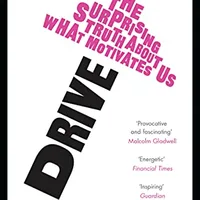
Drive — Daniel Pink
The direct synthesis this article is built on — Pink's distillation of Deci and Ryan's research into autonomy, mastery, and purpose. If the overjustification effect persuaded you, this is the first source to read.
As an Amazon Associate, we earn from qualifying purchases — at no extra cost to you.
His argument is stark: the carrot-and-stick model works for 20th-century mechanical tasks and fails — often dramatically — for the creative, conceptual, problem-solving work that defines most of what matters in a modern life.
The three needs your motivation actually runs on
Over the decades following his initial finding, Deci and his colleague Richard Ryan at the University of Rochester developed Self-Determination Theory — the most comprehensive and empirically supported framework for human motivation in existence. Its central claim is this: human beings have three basic psychological needs, and when those needs are satisfied, intrinsic motivation flourishes. When they're frustrated, motivation deteriorates — regardless of how many external rewards you layer on top.
The first need is autonomy — not independence from other people, but the experience of volition. The sense that you are acting from genuine choice rather than external pressure or internal compulsion. Autonomy doesn't mean doing whatever you want whenever you feel like it. It means that whatever you're doing, you've genuinely chosen it — that you can find a real thread from the activity back to something you actually care about. Research across healthcare, education, and workplace performance consistently shows that people who experience their actions as self-chosen significantly outperform people doing identical tasks under external control. The behavior looks the same from the outside. The internal experience — and the sustained performance — is entirely different.
The second need is competence — the experience of effectiveness. Not being the best at something, but feeling genuinely capable, feeling your skill being stretched and developed, seeing direct evidence that you're improving. This need maps precisely onto what Mihaly Csikszentmihalyi spent decades researching in his work on flow — the state of complete absorption in an appropriately challenging activity that represents perhaps the most reliably fulfilling human experience available. When you're in flow, motivation isn't something you're generating or maintaining. It's something happening to you. The work pulls you forward rather than you pushing yourself through it.
The third need is relatedness — the experience of genuine connection. Feeling that the people around you care about what happens to you, and that you care about them. This might seem less obviously tied to motivation than autonomy and competence, but the research is consistent: solo motivation is structurally harder to sustain than social motivation. The most durable motivational contexts in human experience — sports teams, tight professional units, accountability partnerships, communities organized around shared practice — all provide the interpersonal foundation that makes continued engagement feel meaningful rather than optional.
When all three needs are satisfied regularly, intrinsic motivation isn't something you have to manufacture. It's a natural output of conditions you've built.
how to build a morning routine that actually sticks
Why the challenge-skill edge is the variable nobody talks about
Most motivation advice focuses on why — your purpose, your vision, your compelling reasons. SDT research suggests that while the why matters, the how of your daily experience is equally determinative. Specifically: whether what you're doing each day is calibrated to the genuine edge of your current capacity, or safely within your comfort zone.
This is where intrinsic motivation most often dies without anyone identifying what happened. You learn a skill to moderate competence. The task that once stretched you now feels routine. The competence need is no longer meaningfully served. Boredom sets in — and rather than recognizing boredom as a calibration signal, most people interpret it as a motivation failure. They respond by adding external rewards rather than adjusting the difficulty level. And the rewards, as Deci's research showed, accelerate the decline.

Lev Vygotsky called the critical calibration point the "zone of proximal development" — the region between what you can do independently and what you can't yet do at all. Csikszentmihalyi called it the flow channel. Both describe the same phenomenon: development and intrinsic motivation concentrate at the calibrated edge of current capacity. Too easy, and the brain produces boredom. Too difficult, and it produces anxiety. The narrow band between them is where engagement is most reliably sustained.
If you want to understand this concept at depth — and it genuinely rewards that — Csikszentmihalyi's original Flow: The Psychology of Optimal Experience is still the definitive work.
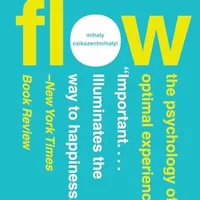
Flow — Mihaly Csikszentmihalyi
Csikszentmihalyi's original — still the definitive treatment of the flow channel and how challenge-skill calibration produces intrinsic engagement. The deeper source for everything the flow diagram section covers.
As an Amazon Associate, we earn from qualifying purchases — at no extra cost to you.
Anders Ericsson spent 30 years documenting what separated elite performers from experienced non-elite performers in his deliberate practice research. The single most consistent finding: elite performers consistently worked at the boundary of their current capacity — with specific attention to their weakest dimensions and immediate, meaningful feedback on performance. Non-elite performers practiced inside their comfort zone, executing what they already did well. After comparable amounts of total practice time, the performance difference wasn't about hours. It was about whether each hour was spent at the competence edge or safely inside it.
The practical implication is simple and persistently ignored: you should probably make what you're doing harder. Not dramatically — the calibration has to be precise. But when something that once energized you now feels flat, the first hypothesis shouldn't be "I've lost interest." It should be "I've grown past the challenge this currently offers."
how constraints unlock your best work
What happens when organizations actually apply this
The three SDT needs aren't abstract theory. When organizations have deliberately structured work to satisfy autonomy, competence, and relatedness, the results have been documented and striking enough to examine closely.
Google's 20% time — the policy that allowed engineers to spend one day a week on entirely self-directed projects — was a pure autonomy intervention. The explicit message: we trust you to identify work worth doing. Gmail was built during 20% time. So was Google News, and the early version of Google Maps. The policy's operational form has evolved, but the principle it demonstrated is durable: giving people genuine autonomy over how they work produces the kind of intrinsic engagement that generates breakthrough contributions — not the threat of performance review.
Atlassian's ShipIt Days — 24-hour periods where engineers could build anything they chose, with the constraint that they had to ship something before the period ended — combined autonomy (self-selected project) with competence (a real deadline, a real challenge) and relatedness (teams formed voluntarily, results presented together). The creative output from these sessions consistently exceeded comparable amounts of directed engineering time. Not occasionally. Consistently.
Best Buy's ROWE — Results Only Work Environment — eliminated schedules, meeting requirements, and presence obligations entirely, judging people only on output. In the pilot division, productivity increased by 41%. Not because people worked more hours. Because autonomy restored the intrinsic engagement that external control had been systematically suppressing.
The pattern isn't complicated. Remove controlling management, give people genuine choice in how they contribute, ensure the challenge is real, and build the social connections that make the work feel like it matters to more than one person. Intrinsic motivation does the rest — at a level of consistency and depth that no incentive structure has ever matched.
How to build the conditions for motivation that doesn't run out
Here's the conclusion that 50 years of SDT research delivers, and it's mildly uncomfortable: you can't motivate yourself through willpower or reward systems over the long term. You can only design the conditions in which your intrinsic motivation naturally emerges. To design your evolution — in the most literal sense — is to design those conditions deliberately, one by one. The question isn't "how do I push myself harder?" It's "what conditions does my motivation actually require — and am I building them?"
This is a practical shift. Here's how it works.
Audit your autonomy. For each area of your life where motivation is consistently thin, ask one honest question: do I experience myself as choosing this, or as doing it because I feel I have to? If the answer is the latter, motivation problems are predictable and aren't a character flaw. Either reconnect the activity to a genuine internal value — something you actually care about, not something you think you should — or restructure the how of engagement so that even if you can't choose the what, you've genuinely chosen something about the approach.
Raise the challenge level. If something that once engaged you now feels flat, boredom is almost never a signal that the activity has become irrelevant. It's almost always a signal that you've grown past the challenge it currently offers. Increase the difficulty. Add a constraint. Find the harder version of the same problem.
Track your competence edge deliberately. Keep a record — weekly, specific — of what you're doing that genuinely requires effort. Not what you completed. What stretched you. There's a meaningful difference between logging tasks done and logging the growth edge you actually contacted. A good structured journal makes this practice concrete rather than aspirational.

Full Focus Planner — Michael Hyatt
Built around 90-day cycles with weekly previews and structured reflection — the kind of planner that makes tracking your competence edge concrete rather than aspirational.
As an Amazon Associate, we earn from qualifying purchases — at no extra cost to you.
Design for relatedness, not just accountability. There's a difference between someone who checks whether you did the thing (accountability) and someone who is genuinely engaged in the same practice (relatedness). The latter satisfies the third SDT need. Find one person not to report to, but to practice alongside — someone whose engagement in the work is as real as yours.

Kindle Paperwhite (2024, 16GB)
The practice-alongside device — shared reading lists across an accountability partnership satisfy SDT's relatedness need while giving you near-zero-friction access to the motivation literature this article draws on.
As an Amazon Associate, we earn from qualifying purchases — at no extra cost to you.
Protect your intrinsic interest from unnecessary external rewards. Before setting up a reward system for something you already find meaningful, ask whether you actually need it. The research is unusually clear on this: adding expected external rewards to already-intrinsically-motivated behavior is among the fastest methods for undermining it. Let the work be enough, when the work is enough.

how to build a morning routine that actually sticks
The hardest truth in five decades of motivation research
The most motivated people aren't the ones who've found the best reward systems or built the most sophisticated accountability structures. They're the people who've designed their days so that what they do most frequently satisfies the three needs their motivation actually runs on — autonomy, competence, and relatedness — at a frequency that makes external incentives largely irrelevant.
That sounds simple. It isn't easy to build. It requires a level of deliberate structuring — of your work, your relationships, and your daily practices — that most people never attempt. Not because they don't want sustained motivation, but because nobody told them that conditions, not willpower and not rewards, were the variable that mattered most all along.
Deci's puzzles are still sitting on that desk. The unpaid group is still playing with them. They don't need to be rewarded to continue. The work itself is enough — because the conditions in which they're engaging it satisfy something that a reward never could.
Which of the three needs — autonomy, competence, or relatedness — is most underserved in your daily practice right now? Your answer is probably pointing directly at where your motivation keeps running dry.
Was this helpful?