Mindset· 10 min read
How to Build Confidence That Doesn't Depend on Success
The confidence that crumbles when things go wrong was never real confidence. Here's what psychology says about building the kind that actually lasts.

How to Build Confidence That Doesn't Depend on Success
There's a specific kind of confidence collapse that almost no one warns you about.
You walk into a room — a job interview, a pitch, a first date — feeling solid. You've prepared. The last few weeks have gone well. You genuinely believe, in that particular moment, that you're capable of this.
Then something goes sideways. A question you didn't anticipate. A flat reaction where you expected warmth. One bad exchange in a sequence you'd planned to be clean. And the confidence doesn't just dip — it evaporates. You spend the rest of the encounter performing while simultaneously managing the internal wreckage of having lost the ground you walked in with.
If you've experienced this, the instinct is to conclude that you don't have enough confidence. That's the wrong diagnosis. The actual problem is that what you'd built wasn't confidence — it was approval. And approval, by its very nature, is borrowed. The moment the external signal shifts, it goes back.
That distinction sounds subtle. The practical implications are enormous.
Almost everything popular confidence advice gets wrong traces back to a single conceptual error: treating confidence as a feeling rather than a judgment.
Feelings fluctuate with circumstances. Judgments can be built on evidence. And the specific evidence base that produces durable self-confidence — the kind that doesn't collapse when a presentation goes badly or a relationship ends or a project fails — is categorically different from the evidence base that produces the pleasant-but-fragile version most people spend their energy chasing.
Albert Bandura at Stanford spent the better part of four decades documenting this distinction through what he called self-efficacy theory. Self-efficacy isn't a global feeling of self-worth. It's a domain-specific judgment about your capacity to execute a particular behavior in a particular context. It's not built from outcomes alone, and it doesn't require external validation to persist. It's built from specific inputs — the most powerful of which is the direct, personal experience of doing something difficult and succeeding through your own effort and strategy.
This is, on its face, not that different from what most confidence advice says. The difference is in what counts as success, and whose assessment of it matters. That's where most people's approach to building confidence quietly goes off the rails.
Why Success-Based Confidence Has an Expiry Date
The most culturally reinforced model of confidence runs like this: you succeed at something, you feel capable, that sense of capability motivates you to attempt more, you succeed again. Upward spiral.
The problem isn't that this doesn't work. It does — until it doesn't.
Success-based confidence has three structural vulnerabilities that eventually expose it.
The most immediate: it requires continued success to maintain itself. Its baseline is set by your most recent performance, not by your accumulated capacity. One bad quarter resets it. One failed pitch deflates it. The foundation is only as stable as your last result — which means it's never truly stable at all.
There's a second crack that takes longer to appear: what researchers sometimes call the impostor syndrome loop. The more external success you accumulate, the more your confidence becomes contingent on maintaining that success. This is counterintuitive — high achievers often report lower baseline confidence than people who've struggled and failed more — but the mechanism is consistent: they've built an identity on a track record they feel they don't fully control. Every new success raises the bar for what counts as evidence of capability.
The third vulnerability runs the deepest: success-based confidence doesn't transfer. Confidence built through success in one domain doesn't reliably cross into a new one. Accomplished executives feel suddenly fragile starting a creative project. Senior engineers feel anxious in their first management role. They're not lacking confidence as a general trait — they're lacking domain-specific behavioral evidence. And that can only be built by doing the new thing, which requires tolerating the discomfort of not yet being good at it.
None of this is a personal failing. It's the natural consequence of building on the wrong foundation.
| Success/Approval-Based | Process-Based (Self-Efficacy) | |
|---|---|---|
| Built from | External outcomes and feedback | Internal behavioral evidence |
| Stability under failure | Resets with each new result | Persists through failure |
| Cross-domain transfer | Rarely | Yes, by design |
| Produces impostor syndrome | Common | Uncommon |
| Required input | Continued success | Consistent, honest effort |
The Approval Trap (and Why It's Getting Worse)
Approval-based confidence takes success-dependence and adds a second variable: other people's reactions.
You don't just need to succeed — you need an audience to register the success. Without the feedback, the recognition, the visible response, the result doesn't fully count. You find yourself doing good work and then waiting to see how it lands before deciding how to feel about having done it.
This dynamic is getting significantly worse. Social media has created a feedback architecture that delivers approval in precisely the most psychologically activating format: variable ratio reinforcement. The same schedule that makes slot machines addictive. Sometimes the post gets a strong response, sometimes it doesn't, and the unpredictability keeps the reward-seeking behavior running at higher and higher frequency. The dopaminergic system that evolved to drive social belonging is now being driven by engagement metrics it was never designed to interpret.
The practical outcome: people who primarily derive confidence from social feedback have made their sense of capability contingent on something they don't control, that fluctuates with factors entirely unrelated to the quality of what they're producing, and that becomes less satisfying over time as the baseline social comparison level rises. More followers, less certainty. More validation, less genuine confidence.
Amy Cuddy's research on what she calls presence — two decades of work that got largely lost in the power-posing controversy — makes the diagnostic clear. Presence, in Cuddy's framework, is not confidence in the conventional sense. It's the state of being fully committed to your own values and standards in a given moment, regardless of how others receive you. You're not performing. You're not seeking approval. You're expressing what you actually think, in alignment with what you actually care about.
That's a categorically different experience from the approval-seeking state. And it survives failure in ways that approval-seeking simply cannot.
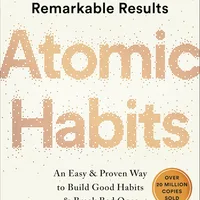
Atomic Habits — James Clear
Bandura's self-efficacy loop, Dweck's growth mindset, and Manson's process argument all reach the same conclusion — and Clear maps the behavioral mechanics step by step. The most practical companion to everything this…
As an Amazon Associate, we earn from qualifying purchases — at no extra cost to you.
The Confidence That Survives Failure
Here's the mechanism that most confidence frameworks miss: your sense of capability is most durable when it's built on evidence that doesn't depend on outcome.
This sounds paradoxical. How do you build evidence of capability without outcomes?
The answer is process alignment: tracking whether you took the actions you committed to, at the quality and integrity you committed to, regardless of the result. A writer who finishes the chapter — even when they think it's bad — has evidence that they're a person who finishes chapters. An entrepreneur who makes the difficult call even when they dread it has evidence that they're a person who acts under discomfort. An athlete who completes the session at the committed intensity has evidence that they honor commitments to themselves under fatigue.
Mark Manson's core argument in The Subtle Art of Not Giving a F*ck is fundamentally about this distinction: the person who requires success to feel capable is at the mercy of results they don't fully control. The person who requires only aligned effort to feel capable has a portable, conditions-independent source of self-efficacy. Not detachment from outcomes — you still care about results — but a source of self-trust that doesn't live in the result.
This is what Bob Proctor spent decades teaching, often more bluntly: that external conditions are terrible feedback about internal capacity. The world's assessment of your capability in any given moment is too noisy, too political, too contingent on timing to be reliable data about what you're actually capable of. The reliable data comes from your own behavioral record, accumulated over time, in conditions that required genuine effort.
T. Harv Eker makes a version of the same point specifically about the financial domain: people who build wealth act in spite of fear and discomfort; people stuck in scarcity wait for confidence before acting. The waiting is the trap. Confidence is the output of action, not its prerequisite.
The Confidence-Competence Loop and How to Enter It

Albert Bandura's most practically significant finding is about the structure of the loop that produces genuine self-efficacy: competence (demonstrated ability through practice) produces legitimate self-efficacy (the accurate judgment that you can execute this); self-efficacy produces more behavioral engagement (more practice, fewer avoidances, greater sustained effort); which produces further competence; which produces stronger self-efficacy.
The loop is real. The question is how you enter it.
Most people try to enter it from the confidence side: "I'll attempt this once I feel ready." The research is unambiguous that this is backwards. The action precedes the confidence — not the other way around. There is no shortcut across that sequence, and waiting for confidence before acting is the mechanism by which confidence is reliably prevented from developing.
The entry point is what the research calls calibrated challenge: not a task well within your demonstrated capacity (which produces no new evidence of capability), and not one so far beyond it that failure is near-certain (which produces discouraging evidence). A challenge at the actual edge of your current demonstrated ability — where success requires genuine effort and remains uncertain, but is possible.
Carol Dweck's growth mindset research documents why calibrated challenge specifically is the correct input. It's not success at easy tasks that produces a durable sense of capability. It's the experience of growing through difficulty — of attempting something genuinely hard, struggling, and ultimately finding a way through. The person who has done that repeatedly in many different contexts has a fundamentally different relationship to new challenges than the person who has primarily succeeded at comfortable things.
The crucial corollary: what counts as calibrated challenge changes as your competence develops. The challenge level that built confidence in year one should feel manageable in year two. If it doesn't — if the same challenges continue to feel difficult indefinitely — the problem is usually that practice isn't being structured to produce learning, not that the person lacks innate capacity.

Clever Fox Habit Calendar (24-Month Tracker)
A 24-month wall calendar built for tracking one daily habit per row. Bandura's evidence-accumulation loop needs something concrete to build on — this makes the behavioral record visible and physical.
As an Amazon Associate, we earn from qualifying purchases — at no extra cost to you.
How to Build Lasting Confidence This Week
The research converges on a protocol that's simpler than most confidence programs — but requires a specific kind of honesty with yourself that most people find uncomfortable.
Step 1: Pick one calibrated challenge. Not a life overhaul. One specific action that's at the edge of your current demonstrated capacity — a conversation you've been avoiding, a skill you've been practicing privately but haven't performed in front of others, a commitment you've been making to yourself but not yet honoring consistently. The specificity matters. "Be more confident" is not a calibrated challenge. "Send the pitch email I've been drafting for three weeks" is.
Step 2: Separate the process goal from the outcome goal. You want the pitch to land. But the confidence-building evidence lives in whether you researched carefully, wrote clearly, and sent it when you said you would — not in whether you get a response. Define what success looks like at the behavioral level before you attempt the challenge. This isn't lowering the bar. It's building the evidence base that will still be standing whether or not the outcome goes your way.
Step 3: Document the behavioral evidence. After the challenge, write down specifically what you did that was consistent with the person you're working to become — not what went well or badly in outcome terms, but what you did that you committed to doing. This documentation is the raw material of values-based self-efficacy. It accumulates into something that external validation never can: a first-person record of your own behavioral capacity.

The Five Minute Journal — Intelligent Change
A structured five-minute daily format covering gratitude, intention, and reflection. Step 3 calls for documenting behavioral evidence daily — this is the designed instrument for exactly that practice.
As an Amazon Associate, we earn from qualifying purchases — at no extra cost to you.

Step 4: Raise the challenge level deliberately. Confidence built through calibrated challenge has a specific growth requirement: as the current challenge level becomes demonstrably manageable, the next level needs to be selected. This is not optional. Staying at challenge levels you've already mastered maintains confidence but doesn't build it. The loop only runs in one direction — toward greater difficulty — and it only runs if you keep entering it at the appropriate level.
Step 5: Curate the comparison set. Your sense of capability is partly socially calibrated — you compare your progress against others'. That's unavoidable. What's avoidable is comparing against people whose evidence base is in a fundamentally different context or stage. Bandura's research on vicarious modeling shows that observing people similar to you succeed at challenges you're considering produces a significant self-efficacy boost. Comparing yourself to people at a completely different level — earlier or later — produces noise, not signal. One is useful data. The other is just a mood destabilizer wearing the costume of information.

Kindle Paperwhite (2024, 16GB)
The library for everything Step 5 points to: Bandura, Dweck, Manson, Cuddy, and Holiday — all referenced or cited in this article. The Kindle catalog in psychology and mindset is extensive; this is the device for work…
As an Amazon Associate, we earn from qualifying purchases — at no extra cost to you.
How to build self-confidence as an adult
Imposter syndrome: why high achievers feel like frauds
Jim Rohn had a line he returned to often: "Success is not to be pursued; it is to be attracted by the person you become." He wasn't describing a mystical law of attraction. He was describing the behavioral logic of self-efficacy: the person who has consistently done hard things, honored commitments to themselves under discomfort, and generated evidence of their own capacity through action — that person moves through the world differently. Not because external circumstances have blessed them, but because their internal record is unambiguous.
This is, in the truest sense, designing your own evolution: not waiting for the conditions that feel right, but building the behavioral architecture that makes confidence an output rather than a prerequisite.
The confidence that doesn't depend on success is built from exactly that kind of record. One calibrated challenge at a time. One behavioral commitment honored under pressure at a time. One action taken before the feeling of readiness arrived.
You build it not by waiting to feel ready, but by collecting evidence that you act whether or not you feel ready.
What's the one challenge you've been postponing until you felt ready enough? Start there this week — and notice what the behavioral evidence tells you about yourself.
Was this helpful?