Habits· 10 min read
Why You Can't Outwork Bad Sleep
Sleep isn't recovery time — it's when your brain consolidates memory, resets decisions, and processes emotion. Here's what the science actually prescribes.

Why You Can't Outwork Bad Sleep
There's a particular kind of pride that comes with running on five hours. Maybe you've felt it — or you've been it. The person who wears tiredness like a credential. Who answers "how are you?" with "exhausted, but grinding." The 5:47 AM Instagram story: laptop open, coffee steaming, some variation of while you were sleeping stamped beneath it like a productivity receipt.
Sleep deprivation has been wearing the costume of ambition so long that most people can't tell them apart anymore.
Here's what that story leaves out: after 17 consecutive hours of wakefulness, your cognitive performance is equivalent to a blood alcohol level of 0.05%. At 24 hours, you're legally impaired by the standards of most jurisdictions. And the most specifically dangerous part of this? You don't feel it. The sleep-deprived brain loses the metacognitive capacity to notice it's failing — which means you're making measurably worse decisions while feeling completely confident about them.
That's not grinding. That's running a high-performance machine with no oil in the engine, wondering why it sounds different.
The culture of high performance has made a quiet villain out of rest. You can trace the mythology through tech founder profiles, military biographies, and the 4-Hour Workweek generation — the 4-hours-a-night legend applied to everyone from Thomas Edison (who apparently napped constantly and refused to count them) to contemporary startup founders who are, by every available measure, performing worse than they believe they are.
Matthew Walker, a neuroscience professor at UC Berkeley who has spent three decades studying sleep, is unusually blunt about this: "No aspect of our biology is left unscathed by sleep deprivation." His foundational text is the most comprehensive synthesis of sleep science written for a general reader, and its central argument isn't nuanced. Every cognitive and physical function you care about is actively enhanced by adequate sleep — and systematically degraded without it. Not marginally. Systematically.
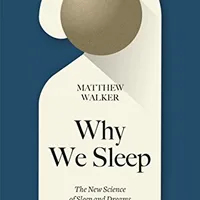
Why We Sleep — Matthew Walker
Walker's foundational text on sleep science — the most comprehensive synthesis of three decades of research written for a general reader. The book that put sleep back at the centre of performance, health, and longevit…
As an Amazon Associate, we earn from qualifying purchases — at no extra cost to you.
This isn't about feeling groggy in the morning. It's about the structured dismantling of the capacities that make everything else work.

Sleep Isn't Rest — It's the Work Your Brain Can Only Do at Night
The most persistent misunderstanding about sleep is baked into how we talk about it. "Recovering." "Resting up." "Shutting down." Sleep is none of these things. It is the most neurologically active period of your 24-hour cycle — the window in which your brain performs functions that have no equivalent during wakefulness, and that cannot be postponed or repaid.
Sleep architecture has a specific structure. NREM sleep — which occupies roughly 75% of total sleep time — moves through three stages. Stage 2 generates bursts of rapid neural activity called sleep spindles: the mechanism by which newly encoded information migrates from the hippocampus (your short-term memory buffer) to the cortex (long-term storage). If you've ever understood something better the morning after studying it than you did the night before, that's Stage 2 NREM. The knowledge literally wasn't in permanent storage yet.
Stage 3, slow-wave sleep, performs what Walker calls "memory filing" — the overnight consolidation of procedural knowledge, motor skills, and factual learning into durable neural traces. This is partly why elite athletes prioritize 9-10 hours during heavy training blocks. The physical adaptation to training doesn't happen on the track or in the gym. It happens during slow-wave sleep. The training is the stimulus. Sleep is the adaptation.
REM sleep operates on an entirely different register. During REM, your brain reactivates emotionally charged memories — but does so in a neurochemical environment depleted of noradrenaline, the stress-associated neurotransmitter. Walker describes this process as "overnight therapy": the emotional weight of a difficult experience is processed and integrated without the full physiological arousal of the original event. The memory stays. The acute charge diminishes.
This is why insufficient REM sleep produces such a specific emotional signature: heightened reactivity, difficulty tolerating frustration, a persistent tendency to catastrophize that feels exactly like realism. You're not having a bad day. You're carrying yesterday's unprocessed emotional content into today, because your brain didn't get the processing window it needed.
How to regulate your emotions without suppressing them
The Impairment That Doesn't Feel Like Impairment
This is the finding that should genuinely shift something in how you think about this.
Sleep-deprived people consistently rate their own cognitive performance as unimpaired.
Walker documented this across multiple studies. Participants showed measurable degradation in reaction time, working memory, creative problem-solving, and decision quality. They reported feeling fine. The gap between objective performance and subjective confidence grew wider with each successive under-slept night — because among the first faculties eroded by sleep loss is the metacognitive capacity to notice that erosion.
This is specifically different from alcohol intoxication, where people typically feel impaired. Sleep deprivation produces confident impairment — the particular danger of operating a complex system while being genuinely unaware the system is degraded. You don't know what you don't know.
The mechanism is the prefrontal cortex, which is disproportionately sensitive to sleep insufficiency. The prefrontal cortex manages planning, impulse control, emotional regulation, and the executive override of the brain's more reactive subcortical systems. Under insufficient sleep, it's the first thing that goes.
Without that regulation, the amygdala — your threat-detection and emotional-reactivity center — becomes 60% more reactive, according to Walker's neuroimaging research. Not because the world has genuinely become more threatening. Because the system that normally moderates its response is offline.
That feeling of shortened patience, of problems seeming larger than they probably are, of irritability that feels completely justified in the moment — that's not a personality issue or a stress response. That's a sleep deficit presenting as a mood state.
The corollary: you can't track what you can't see. Most people managing their performance have no real visibility into their sleep architecture — their actual REM percentage, their deep sleep duration, how often they're waking through the night.
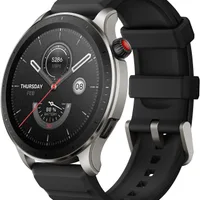
Amazfit GTR 4 Smartwatch — Sleep Tracking
Tracks REM percentage, deep sleep duration, and overnight wake frequency automatically. If you can't see what's actually happening in your sleep architecture, you can't optimise it.
As an Amazon Associate, we earn from qualifying purchases — at no extra cost to you.
Your Morning Light Is Setting a Timer You Don't Know About
Andrew Huberman's research at Stanford added something Walker's work implies but doesn't fully develop: the circadian dimension — and why timing matters as much as duration.
The suprachiasmatic nucleus, your brain's circadian pacemaker, runs on a roughly 24-hour cycle that requires daily recalibration from environmental inputs. Light is the primary input. Specifically: the spectral quality and intensity of morning light reaching your retinas within the first 30 minutes of waking.
This light triggers the cortisol awakening response — a specific cortisol pulse that mobilizes morning alertness, sets the body's temperature rhythm, and starts the adenosine timer that will generate your natural sleep drive approximately 14-16 hours later. Your morning light exposure isn't an optional wellness ritual. It's the biological input that determines when your body will be physiologically ready to sleep tonight.
Evening light runs the opposite process. Bright artificial light in the two hours before bed suppresses melatonin by up to 50%, according to Walker's research. Melatonin isn't a sedative — it's a darkness signal that initiates the biological transition toward sleep. Suppress it with overhead lighting, a phone screen, or a laptop at 9 PM, and you delay sleep onset, reduce total sleep time, and disproportionately shorten the REM window that sits at the back end of the night.
Most people who struggle with sleep focus on what they do in the last 30 minutes before bed. The higher-leverage intervention is the light environment across the full evening.
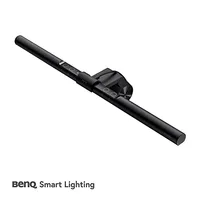
BenQ ScreenBar LED Monitor Light Bar
Adjustable warm light down to 2700K, positioned at monitor level. The exact low, warm, below-eye-line setup the evening light protocol prescribes — no rewiring, runs off USB.
As an Amazon Associate, we earn from qualifying purchases — at no extra cost to you.

The Body Temperature Detail Most People Miss
Your core body temperature must drop 1-3 degrees Fahrenheit for sleep initiation to occur. This isn't a preference. It's a physiological prerequisite. Your body actively dumps heat through vasodilation of surface blood vessels in your hands, feet, and face before and during sleep.
The research-optimal bedroom temperature is 65-68°F (18-20°C). Most UK and Northern European bedrooms run 4-6 degrees warmer than this across the year. Which means a significant proportion of people are sleeping in thermal environments that directly prevent the temperature drop sleep requires — and attributing their sleep problems to stress, screens, or racing thoughts, when the floor temperature is literally the issue.
The counterintuitive intervention: a warm bath or shower taken 90 minutes before bed actually accelerates sleep onset. A 2019 systematic review in Sleep Medicine Reviews found this approach reduces the time taken to fall asleep by around 36% — not because heat is relaxing in a vague sense, but because warm water rapidly vasodilates surface blood vessels, releasing core heat efficiently. By the time you're in bed, your core temperature has dropped faster than it would have on its own.
If your climate, building, or living situation doesn't allow adequate bedroom cooling, a targeted sleep surface solution makes a measurable difference without requiring any structural changes.
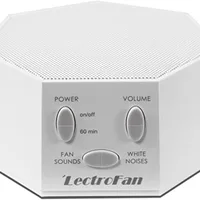
LectroFan Classic White Noise Machine
Consistent white noise to mask external disruptions — traffic, building acoustics, a partner's movements — that interrupt deep sleep maintenance once your temperature environment is right. Set once, runs all night.
As an Amazon Associate, we earn from qualifying purchases — at no extra cost to you.
This is exactly the kind of mechanism that makes sleep optimization feel less like discipline and more like engineering.
The Caffeine Calculation Nobody Runs
Caffeine's average half-life is 5-7 hours. For slow metabolizers — a genetic variation that's more common than most people assume — the half-life extends to 9-10 hours.
A coffee at 2 PM still has 50% of its caffeine in your bloodstream at 9 PM.
The mechanism matters here. Caffeine doesn't clear adenosine — the sleepiness-inducing neurotransmitter that accumulates throughout your waking hours, creating the natural pressure toward sleep. Caffeine blocks adenosine receptors. The adenosine keeps accumulating while you don't feel it. When the caffeine clears, that accumulated adenosine hits all at once. The afternoon crash isn't new tiredness appearing from nowhere. It's the tiredness that was there all along, suddenly unblocked.
The practical consequence: for measurable improvement in deep sleep and REM duration, your last caffeine intake needs to be no later than noon. That sounds extreme. Try it for two weeks while tracking sleep data, and the difference in Stage 3 and REM duration tends to become immediately visible in the numbers.
The micro-progressions that actually compound over time
How to Actually Change This, Starting Tonight
None of this requires a dramatic overhaul or an expensive intervention. The research converges on a small set of sequenced changes that produce measurable results for most people:
1. Fix your wake time before anything else. Don't start by trying to get to bed earlier. Start by choosing a consistent wake time — seven days a week, within a 30-minute window — and holding it regardless of how you slept the night before. The circadian clock is more sensitive to wake time consistency than to total sleep hours. Hold this single change for two weeks before adjusting anything else.
2. Get morning light within 30 minutes of waking. Outdoors is optimal — even an overcast day delivers far more lux than indoor lighting. If your schedule or location makes outdoor morning light impractical, a clinical-grade light therapy lamp delivers the circadian signal effectively.
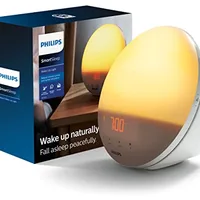
Philips SmartSleep Wake-Up Light HF3520
Clinical-grade sunrise simulation and light therapy in one device. Gradually brightening light over 20–30 minutes before your wake time triggers the cortisol response Huberman's circadian research prescribes — and mos…
As an Amazon Associate, we earn from qualifying purchases — at no extra cost to you.
3. Target a bedroom temperature below 68°F (20°C). If your heating system or climate doesn't allow this, a mattress cooling pad that regulates sleep surface temperature throughout the night is the most direct intervention available — more leveraged than a new pillow, a new mattress, or most supplements.
4. Establish your caffeine cutoff. Take your target sleep time. Subtract 10 hours. Don't consume caffeine after that point. Adjust based on your actual metabolism — you'll have useful data within two weeks of consistent tracking.
5. Redesign your evening light environment. Replace overhead lighting after 8 PM with low, warm light sources positioned below eye level. If screen use before bed is genuinely unavoidable in your schedule, use blue-light blocking glasses with actual amber or red lenses — not the nominal-percentage "computer glasses" that block a fraction of the relevant spectrum.
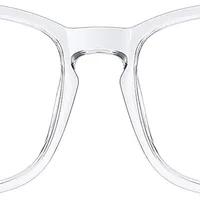
TIJN Blue Light Blocking Glasses
Amber-tinted lenses that meaningfully block the blue-light spectrum — not the clear-lens versions that block a cosmetic fraction. For the pre-bed window when screen use is unavoidable.
As an Amazon Associate, we earn from qualifying purchases — at no extra cost to you.
6. Consider magnesium glycinate. Of all the sleep supplements with credible research behind them, this one consistently earns its place. Magnesium plays a direct role in GABA activation — the primary inhibitory neurotransmitter that supports sleep onset — and in regulating NMDA receptors involved in sleep quality. Specifically the glycinate form, which has superior absorption and significantly less gastrointestinal disruption than the oxide form found in most generic supplements.
7. Replace the alarm clock with a wake-up light. Waking abruptly to a loud alarm in a dark room produces a sharp cortisol spike and the reactive, groggy start that often sets the tone for the entire morning. A sunrise alarm that simulates dawn over 20-30 minutes before your target wake time produces a more biologically appropriate arousal — and most people notice the difference in morning mood within the first week of switching.
How to build a morning routine that actually sticks
Jim Rohn had a line that I've returned to more than almost anything else he wrote: "You can't change your destination overnight, but you can change your direction overnight."
Sleep is direction. Not one good night, not a perfect week — the consistent nightly decision to give your brain the biological environment it requires to consolidate what you've learned, regulate what you've felt, and rebuild the executive architecture that makes every subsequent decision possible.
Every productivity habit in your toolkit, every morning ritual, every focus strategy, every goal you're working toward — all of it runs on the same hardware. And the quality of that hardware's operation is determined, more than any other single variable, by the quality of your sleep.
The person who sleeps 8 hours and starts at 5 AM will outperform the person who slept 5 hours and started at 4 AM. Not because of the extra hour at the beginning. Because everything they do in that hour — every decision, every creative connection, every moment of sustained concentration — is running on a fully operational prefrontal cortex.
You can't outwork a degraded biological system. You can only run it well or run it down.
Designing your evolution has to start here: not with the morning strategy, not with the ambitious goal, not with the carefully curated routine — but with the eight hours before all of it begins.
What's the one sleep habit you've been telling yourself doesn't really matter?
Was this helpful?