Books· 10 min read
Best Self-Help Books Worth Reading in 2026: 8 That Deliver
Not all self-help books are created equal. Here are 8 rigorously selected, science-backed personal development books that actually deliver in 2026.

Best Self-Help Books Worth Reading in 2026: 8 That Deliver
As an Amazon Associate, I earn from qualifying purchases. Prices and availability may vary.
The Real Cost of Choosing the Wrong Book
There are roughly 85,000 self-help books published in the United States each year. About 80 of them are worth your time.
That's not cynicism — it's a signal-to-noise problem. Most bestselling personal development books run on a formula: find one insight with genuine research behind it, pad it with 200 pages of illustrative anecdotes, and package it under a title that promises transformation. The insight is often real. The book built around it rarely is.
Here's what gets underestimated about that: bad self-help is more expensive than you think. The average person reads 12 to 15 books a year. If four of those are low-signal — inspiring on Sunday, forgotten by Tuesday, no lasting behavioral change — that's 40 to 60 hours of your reading life producing nothing. Worse, it installs a defective framework. You apply the advice, it doesn't work, you conclude you're the problem. You're not.
The books that actually work share a specific quality: they don't just explain why you should change. They give you a precise, research-grounded model of how change happens — one that's actionable rather than merely agreeable. Each of the eight books on this list has that quality. They cover the full architecture of an intentional life: how habits form and break, how your brain makes and distorts decisions, what sleep actually does to cognitive performance, why finite time is a design constraint and not a productivity problem, and where meaning comes from when you've achieved all the goals you were supposed to want.
Together, they're the books Farnam Street, Tim Ferriss, and serious behavioral scientists keep recommending — because the frameworks inside them don't expire.
If you read only one this year, start with number one. But most of them belong on the same shelf.
How We Selected These 8 Books
Choosing from a category this crowded requires criteria more specific than "I liked it." Here's what drove every decision.
Research depth. We distinguished between books that cite research and books that are built on it. A book can gesture at neuroscience in its chapter headers while making claims no study supports. We prioritized authors who are themselves active researchers (Kahneman, Walker, Dweck) or who built their frameworks directly on named, traceable primary research (Clear, Newport, Duhigg).
Actionability within the first week. A book earns its place on this list if you can finish it and immediately redesign something — a habit, a schedule, a conversation, a decision-making process. Inspiration that doesn't produce a behavioral output in the first seven days rarely ever does.
Shelf life. We deliberately skipped titles tied to a specific cultural moment or a single trending idea. Every book here is as useful in 2026 as it was at publication — in most cases, more so, because the conditions it diagnoses have only intensified.
Best-in-class on its topic. We cut books where something more rigorous, more accessible, or more current covered the same ground. If a newer book rendered an older one redundant, the older one didn't make the list.
What we deliberately excluded: Books that rehash existing ideas in more engaging packaging (readable but redundant). Books whose main insight is fully captured in a single article or TED Talk. Books that provide inspiration without a behavioral protocol. And books where the "science" is really just a handful of cherry-picked studies supporting a predetermined conclusion.
Eight made the cut. They span habits and behavioral design, cognitive architecture, focus and deep work, the philosophy of finite time, and the foundational psychology of meaning as resilience.
Top 8 Self-Help Books Worth Reading in 2026
1. Atomic Habits — James Clear
The Most Actionable Habits Framework Available
For whom it is: Anyone who has started and stalled on the same habit more than twice — not because they lack discipline, but because they've been using a behavioral model that doesn't match how change actually works in the human brain.
Why we chose it: Clear synthesized two decades of behavioral science research into a framework that removes willpower from the equation almost entirely. The core insight — that lasting behavior change is driven by identity, not goals — is backed by decades of work on implementation intentions (Gollwitzer at NYU), self-concept theory (Oyserman), and environmental design research (Wendy Wood at USC). The four laws of behavior change (make it obvious, make it attractive, make it easy, make it satisfying) aren't a creative framework. They're a distillation of the actual mechanisms the brain uses to automate behavior.
The behavioral payoff is immediate and cumulative. Clear's habit stacking protocol — anchoring a new behavior to an existing cue — and his two-minute rule can be implemented the same day you read the chapter. Not as motivational fuel that burns off by Thursday, but as structural design changes that make the desired behavior the path of least resistance. A 1% improvement compounded daily produces a 37x improvement over a year. That's not a metaphor. That's the math of habit architecture actually working.
Pros:
- The most immediately actionable habit framework in any single book
- Identity-based model outperforms goal-based model in long-term compliance research
- The core framework reads in a weekend; the implementation compounds for years
- Exceptional audiobook — Clear narrates it himself and the material translates perfectly to repeated listening
- Every claim is traceable to named, published research — this is a synthesis, not an opinion
Cons:
- Assumes motivation is already present — lighter on the why change at all question
- If you've already read The Power of Habit (Duhigg), the habit loop mechanics will feel familiar; Clear's value is in the implementation layer
- Some business case studies in the later chapters pad a book that could end sooner
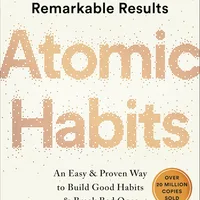
Atomic Habits — James Clear
Get the paperback edition of Atomic Habits — James Clear via Amazon. Affiliate link — your price is unchanged.
As an Amazon Associate, we earn from qualifying purchases — at no extra cost to you.
2. Deep Work — Cal Newport
The Most Rigorous Case for What Actually Creates Professional Value
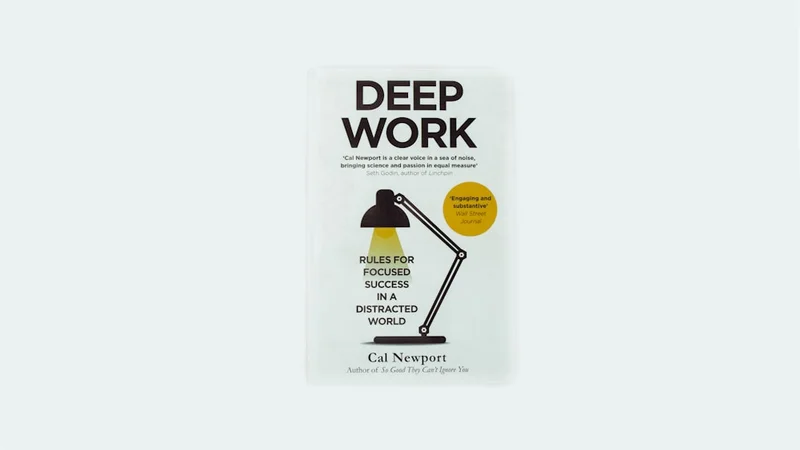
For whom it is: Anyone whose most valuable work requires extended, uninterrupted concentration — and whose actual calendar doesn't reflect that by even 20%.
Why we chose it: Newport's central argument is economic and empirical: the capacity to focus without distraction on cognitively demanding work is becoming both increasingly rare and increasingly valuable. The knowledge workers who can do this consistently will produce professionally irreplaceable output that hours of shallow task-switching cannot replicate at any volume. This isn't a productivity tip. It's a structural argument about how intellectual value gets created — backed by deliberate practice research (Anders Ericsson), attention residue studies (Sophie Leroy at the University of Washington), and the economics of cognitive labor.
The behavioral framework Newport provides is concrete enough to implement in week one. His four scheduling philosophies (monastic, bimodal, rhythmic, journalistic) allow you to choose the architecture that fits your actual work structure rather than forcing a single prescription onto every professional context. The shutdown ritual alone — a 15-minute protocol that fully closes the workday — measurably reduces evening rumination and improves both cognitive recovery and sleep onset.
Pros:
- The philosophical case for deep focus is built alongside the practical implementation; most focus books give you one or the other
- Newport lives what he prescribes — no social media, prolific academic and popular output, evidence that the philosophy works
- The four scheduling philosophies are specific enough to work across vastly different professional contexts
- Pairs directly with Four Thousand Weeks on this list as the tactical-to-philosophical counterpart
- Well-suited to re-reading; the arguments reward returning to them as work contexts evolve
Cons:
- Some examples feel dated relative to the distributed, asynchronous work environment that normalized after 2020
- Works less cleanly for roles that are inherently collaborative or interrupt-driven — the prescriptions require adaptation, not direct adoption
- Newport's tone is unapologetically prescriptive; useful if you want clarity, grating if you prefer options
Deep Work — Cal Newport
Get the paperback edition of Deep Work — Cal Newport via Amazon. Affiliate link — your price is unchanged.
As an Amazon Associate, we earn from qualifying purchases — at no extra cost to you.
3. Why We Sleep — Matthew Walker
The Most Important Performance Book You Haven't Been Treating as a Performance Book

For whom it is: Anyone who treats sleep as the variable they compress when life gets busy — and who hasn't yet been confronted with the specific numbers on what that compression costs.
Why we chose it: Walker's argument is not that more sleep is nice. It's that virtually every mental and physical function — memory consolidation, emotional regulation, hormonal balance, cardiovascular health, immune response, decision quality — is actively performed during sleep and actively degraded by insufficient sleep. The data he draws from his own research at UC Berkeley and from converging sleep science is specific enough to change behavior, which is the only metric that matters for a book on this list.
The most practically disorienting finding: people who are chronically under-slept lose the metacognitive capacity to notice they're impaired. After 17 consecutive waking hours, cognitive performance degrades to the equivalent of a blood alcohol level of 0.05% (Williamson & Feyer, 2000). The person feeling fine is the person most compromised. You can't trust your self-assessment when you haven't slept enough — and that specific finding alone reframes every decision you've made after a bad night. Walker doesn't ask you to value sleep. He shows you, in clinical detail, what you're paying each time you don't.
Pros:
- The most comprehensive synthesis of sleep science available in popular form — nothing else gets close
- Every mechanism is paired with a practical prescription; the book is as actionable as it is alarming
- Permanently and durably changes how most readers think about every night's sleep
- Excellent audiobook narrated with the conviction of someone who knows the data cold
- Pairs directly with every other book on this list — sleep is the biological foundation that makes all of them work better
Cons:
- Some specific statistics in earlier editions have been challenged by subsequent research; Walker's central claims stand, but read this as a persuasive synthesis rather than a precise scientific reference
- The cumulative weight of consequences Walker presents can produce sleep anxiety in readers who are already stressed about their sleep — note the irony, manage accordingly
Why We Sleep — Matthew Walker
Get the paperback edition of Why We Sleep — Matthew Walker via Amazon. Affiliate link — your price is unchanged.
As an Amazon Associate, we earn from qualifying purchases — at no extra cost to you.
4. Thinking, Fast and Slow — Daniel Kahneman
The Book That Explains Every Decision You've Ever Made — and Every Mistake
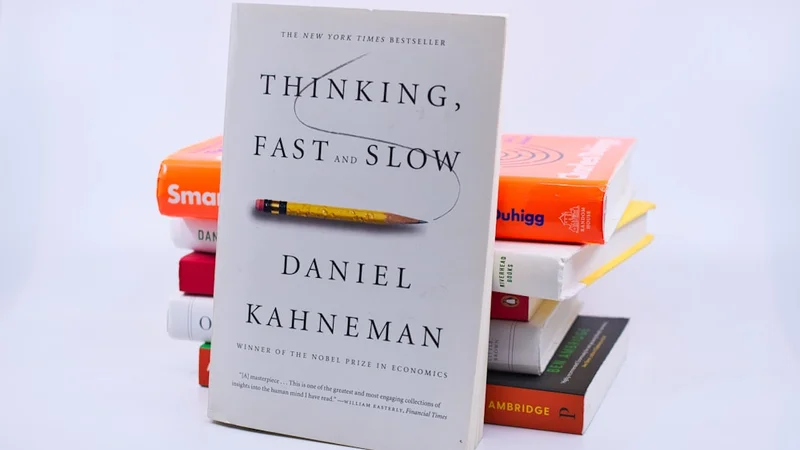
For whom it is: Anyone who makes consequential decisions regularly and wants to understand why smart, well-intentioned people still make the same predictable errors — including you, including right now.
Why we chose it: Kahneman won the Nobel Prize in Economic Sciences for the research this book synthesizes. It's the most comprehensive account of human cognitive bias available in any single volume, written for general readers without sacrificing precision. System 1 (fast, automatic, associative, emotionally driven) and System 2 (slow, deliberate, effortful, logical) aren't a metaphor or a productivity framework. They're the actual operating architecture of human judgment, derived from decades of experimental research.
Once you've read it, you'll catch yourself mid-bias in real time. The anchoring effect, the availability heuristic, the planning fallacy, loss aversion, the WYSIATI principle ("what you see is all there is") — each chapter doesn't just name the pattern, it presents the experimental evidence in enough detail to be convincing. The loss aversion chapter alone explains a significant percentage of all financial, career, and relationship decisions that people later regret. The planning fallacy chapter explains why every major project in your life has taken twice as long as you expected. This is the mental model library that everything else builds on.
Pros:
- Every chapter genuinely expands your mental model toolkit — this is a book that changes how you perceive situations you haven't encountered yet
- The research is presented in enough detail to be persuasive, not just cited as a credential
- Holds up across multiple re-reads at different life stages — different applications emerge each time
- Pairs exceptionally well with Atomic Habits — one maps the bugs in the decision system, the other designs environments around them
- Several core findings are among the most robustly replicated results in all of social science
Cons:
- The most demanding read on this list — not a book for passive absorption; requires active reading and patience through the denser middle sections
- Not immediately actionable in the way Atomic Habits is — this is a mental model library that compounds over years, not a week-one protocol
- Some adjacent research has been touched by the replication crisis; Kahneman's core findings remain well-supported, individual examples vary
Thinking, Fast and Slow — Daniel Kahneman
Get the paperback edition of Thinking, Fast and Slow — Daniel Kahneman via Amazon. Affiliate link — your price is unchanged.
As an Amazon Associate, we earn from qualifying purchases — at no extra cost to you.
5. Mindset — Carol Dweck
The 200 Pages That Reshaped Educational Psychology

For whom it is: Anyone who secretly believes certain abilities are fixed — that they're either a creative person or they're not, a natural athlete or they're not — and who has quietly let that belief limit what they attempt.
Why we chose it: Dweck spent over five decades running controlled studies on how the way people think about ability shapes their capacity to develop it. The growth versus fixed mindset framework isn't a motivational metaphor. It's a measurable psychological variable that predicts performance, resilience after setbacks, responsiveness to feedback, and willingness to attempt challenging goals better than aptitude tests do in many populations.
The behavioral implication most readers miss: growth mindset isn't optimism. It isn't telling yourself you can do anything. It's specifically the belief that this particular capacity can be developed through the right kind of effort — which produces fundamentally different behavioral responses to difficulty and criticism than the belief that performance reveals a fixed underlying trait. The fixed-mindset reader who struggles with a chapter closes the book. The growth-mindset reader who struggles with the same chapter reads it again with a different approach. Same difficulty. Categorically different outcomes over time.
Pros:
- Slim, accessible, and readable in a weekend — the research density is high but the writing doesn't show it
- The feedback and praise research is directly applicable to parenting and management within a single conversation
- Among the most frequently replicated findings in educational psychology
- Applies across every context: parenting, coaching, sports, leadership, personal development
- Dweck's specific language for recognizing fixed-mindset reactions is immediately usable — you can catch yourself the same day you finish the book
Cons:
- The second half loses some focus applying the framework to sports teams and corporate culture where the prescriptions feel thinner than the foundational research
- Provides strong diagnosis of mindset but a less specific protocol for changing it — readers wanting a behavioral workbook will need to translate the framework themselves
- Some replication questions exist around effect size in school-based mindset interventions; the individual psychology remains well-supported
Mindset — Carol Dweck
Get the paperback edition of Mindset — Carol Dweck via Amazon. Affiliate link — your price is unchanged.
As an Amazon Associate, we earn from qualifying purchases — at no extra cost to you.
6. The Subtle Art of Not Giving a F*ck — Mark Manson
The Best Entry Point for Everyone Who Is Allergic to Self-Help
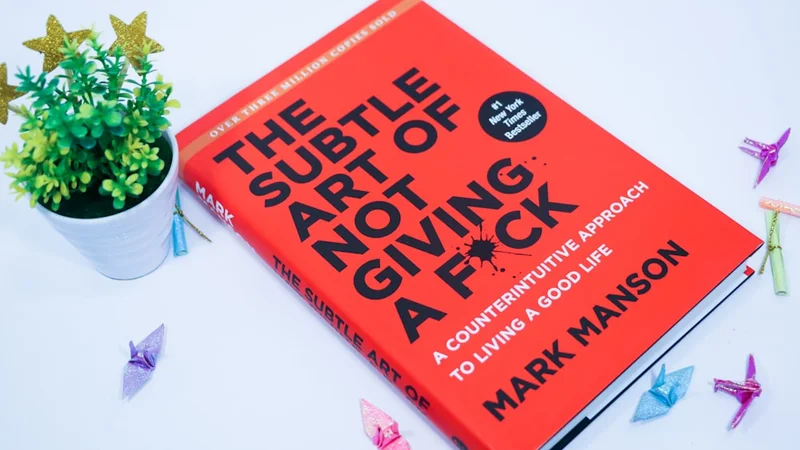
For whom it is: Anyone who is tired of being told to think positively, wants honest acknowledgment that life is genuinely difficult, and needs a practical framework for choosing what actually deserves their energy.
Why we chose it: Manson's central insight — that the quality of your life is determined by the quality of the problems you're willing to solve, not by the elimination of problems — is philosophically accurate and behaviorally actionable. The book reframes the self-improvement project from "optimize your life until everything is easy" to "choose better things to struggle with," which is both more honest and more sustainable than most positive-psychology prescriptions.
The values chapter is what earns this book its place on a serious list. The question Manson poses — "What are you willing to struggle for?" rather than "What do you want?" — cuts through the wish-list approach to goal-setting and points directly to the values-based prioritization that determines whether effort is sustainable. Philosophers from the Stoics to Frankl (also on this list) arrived at similar conclusions. Manson delivers it in language that people who have never finished a self-help book actually finish.
Pros:
- The most readable book on this list — Manson's voice is direct, honest, and genuinely funny
- The values chapter alone is worth more than most full-length personal development books
- Accessible to readers who find traditional self-help culturally foreign or motivationally exhausting
- Consistently the first self-help book that skeptical readers actually complete and recommend
- The "responsibility vs fault" distinction in chapter four has immediate application to how you process setbacks
Cons:
- Lighter on research than the other books on this list — Manson draws on philosophical frameworks more than original science; this is a persuasive argument, not a scientific synthesis
- Some chapters repeat the central thesis more than they extend it; the core ideas could be delivered more concisely
- Not the right book if you're looking for a behavioral protocol — this is values clarification, not habit architecture
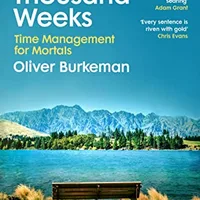
7. Four Thousand Weeks — Oliver Burkeman
The Antidote to a Decade of Productivity Culture — and Its Necessary Counterpart

For whom it is: Anyone who has read every productivity book, implemented every system, and still feels chronically behind — and suspects that the problem might not be their system.
Why we chose it: Burkeman's premise is direct: the average human life is approximately four thousand weeks long. No productivity system makes it longer. The self-improvement industry's implicit promise — that with the right tools you can eventually do everything, be everywhere, clear every inbox, and tick every ambition — is a structural lie. Believing it produces a specific, recognizable suffering: the permanent feeling of inadequacy against a list that can never, in principle, be completed.
The alternative Burkeman proposes draws from Heidegger's concept of finitude, research on how constraining choices actually increases meaning and satisfaction (Schwartz's work on choice and regret), and his own years spent reporting on the productivity frameworks that ultimately failed him. It's a book about choosing rather than optimizing — about accepting that a meaningful finite life requires actively and definitively saying no to almost everything, in order to fully inhabit the things you say yes to. Read it directly after Deep Work on this list: Newport tells you how to use your hours with maximum cognitive output; Burkeman tells you why choosing which hours to give to what matters more than squeezing output from all of them.
Pros:
- Philosophically rich in a way that makes the practical prescriptions feel earned rather than imposed
- The "limit your work-in-progress" chapter is among the most useful 30 pages on prioritization in any productivity book
- Burkeman's writing is precise, warm, and genuinely funny — philosophy delivered without jargon
- Directly challenges the productivity-culture assumptions that make you feel behind on everything — and does so with evidence
- Short enough (288 pages) to read in a weekend; dense enough that it takes weeks to fully process
Cons:
- The least immediately actionable book on this list — the prescriptions are philosophical and orienting rather than behavioral and specific
- Readers who came for a system will find Burkeman deliberately unhelpful; this is the point, but it frustrates readers expecting a to-do list
- A few chapters in the second half revisit the central thesis more than they extend it
Four Thousand Weeks — Oliver Burkeman
Get the paperback edition of Four Thousand Weeks — Oliver Burkeman via Amazon. Affiliate link — your price is unchanged.
As an Amazon Associate, we earn from qualifying purchases — at no extra cost to you.
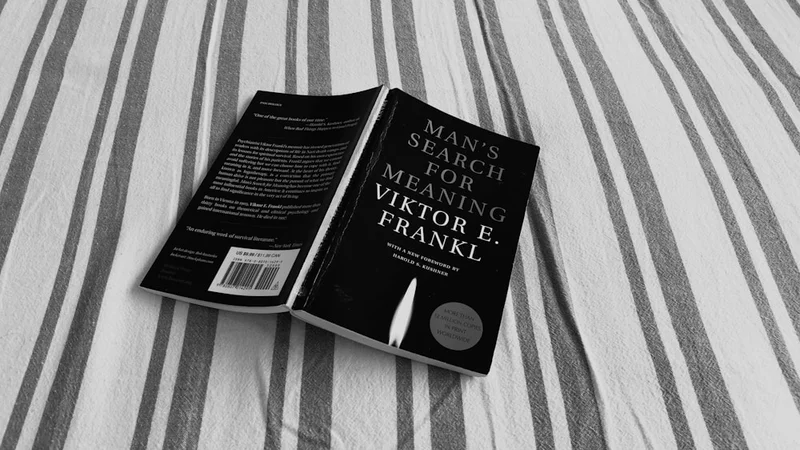
8. Man's Search for Meaning — Viktor Frankl
The Book Every Other Book on This List Points Toward
For whom it is: Anyone navigating a genuinely difficult period — loss, uncertainty, the creeping feeling that effort isn't connecting to anything that matters — or anyone who wants the deepest available foundation for why personal development works at all.
Why we chose it: Viktor Frankl was a psychiatrist and neurologist who survived three years in Nazi concentration camps, including Auschwitz. The first half of this 165-page book is his clinical memoir of that experience. The second half is the logotherapy framework — meaning-centered psychotherapy — that he developed from it. His core argument, documented with clinical precision across co-prisoners in conditions of near-total external constraint: suffering is not inherently destructive. What destroys people is suffering without meaning. The same objective circumstances produced survival and even psychological growth in people who found meaning in them, and dissolution in people who didn't.
This isn't an inspiration story. Frankl is a psychiatrist analyzing what is effectively a natural experiment that no ethics board would permit. His conclusions about the role of meaning, chosen attitude, and purpose in human resilience are among the most empirically grounded propositions in all of psychology — and they're the philosophical foundation that makes every other behavioral framework on this list worth building. The habits, the deep work, the cognitive architecture, the finite time — they're all in service of something. Frankl is where you find out what.
At 165 pages, it's the shortest book on this list. Most readers finish it in a single sitting and spend weeks thinking about it.
Pros:
- The highest insight-per-page ratio on this list — 165 pages that never waste a sentence
- The logotherapy framework directly informs positive psychology (Seligman's PERMA model), CBT, and acceptance and commitment therapy; reading Frankl makes every downstream book make more sense
- Accessible and emotionally precise — Frankl writes with clinical clarity, not sentimentality
- Published in 1946 and taught in psychology and philosophy programs worldwide; the shelf life is permanent
- Excellent companion to Four Thousand Weeks — both address the question of what your finite time is actually for
Cons:
- The logotherapy theory section (second half) is presented in an academic register that can feel denser than the memoir section
- This is a philosophical foundation, not a behavioral workbook — specific protocols for applying logotherapy require a supplementary resource
- Readers used to the extended scaffolding of modern self-help may feel it ends before they're ready; at 165 pages, it does
Man's Search for Meaning — Viktor Frankl
Get the paperback edition of Man's Search for Meaning — Viktor Frankl via Amazon. Affiliate link — your price is unchanged.
As an Amazon Associate, we earn from qualifying purchases — at no extra cost to you.
FAQ
Which book should I read first?
Start with Atomic Habits. It's not the most philosophically deep book on this list, but it gives you the most immediately applicable behavioral framework — and it makes every other book's lessons easier to act on. Once you've read it, you'll approach Mindset, Deep Work, and Why We Sleep with a clear model for turning insights into designed routines. After Atomic Habits, read Four Thousand Weeks — Burkeman's philosophy of finite time reframes why you're designing habits in the first place, which is the question that eventually makes the habits stick.
Should I read Atomic Habits or The Power of Habit first?
They're complementary, not duplicates. The Power of Habit goes deeper on the mechanism — why habits form and persist in the brain. Atomic Habits goes deeper on the implementation — how to deliberately build and break them. Start with Atomic Habits for faster practical return; add The Power of Habit when you want to understand the underlying neural architecture that explains why the prescriptions work.
Some of these books have been criticized for shaky science. Should I be concerned?
Worth distinguishing by book. For Thinking, Fast and Slow: some individual studies have failed replication, and Kahneman himself has publicly acknowledged this. The System 1/System 2 framework remains among the most robustly supported models in cognitive psychology. Read it for the architecture, hold the individual examples loosely. For Why We Sleep: similar situation — some specific statistics have been challenged, Walker's core case for sleep as a performance foundation is backed by converging research across multiple independent labs. The directional conclusions are well-supported even where individual figures have been contested.
If I only have time for three books this year, which three?
Atomic Habits for the behavioral framework. Thinking, Fast and Slow for the cognitive operating system. Man's Search for Meaning for the philosophical foundation. Those three, thoroughly applied, cover the most essential ground with the least redundancy. Every other book on this list builds on one of those three.
Is there a meaningful difference between formats — physical, Kindle, or audiobook?
Yes, and it matters more for this category than most. For books you intend to apply — Atomic Habits, Mindset, Deep Work — physical or Kindle editions are better because active annotation and re-reading specific sections is part of how the knowledge becomes behavioral. For books you want to absorb narratively — Man's Search for Meaning, Why We Sleep, The Subtle Art — audiobooks work extremely well. Thinking, Fast and Slow specifically benefits from a physical copy you can mark and return to; the density of the material rewards the kind of navigation that's harder to do efficiently in audio.
Conclusion
If you had to read one book from this list this year, read Atomic Habits. Not because it's the deepest — Man's Search for Meaning goes further philosophically, Thinking, Fast and Slow goes further cognitively — but because it gives you the clearest behavioral framework for making everything else here actionable. Clear's identity-based change principle is the container into which Frankl's meaning, Dweck's growth mindset, Newport's deep focus, and Burkeman's finite time all fit.
The honest framework for using this list: one book, thoroughly applied, until the behavior it prescribes runs automatically — then the next. Eight books in eight weeks produces eight competing frameworks that interfere with each other and zero lasting behavioral change. One book, fully digested and immediately applied, reshapes how you operate. That compounding is what designing your evolution actually looks like in practice.
If the books keep piling up but nothing from them is changing how you move through your days, the problem usually isn't the books — it's the retention and application layer. How to Remember What You Read (And Actually Use It) covers the specific systems — spaced repetition, elaborative interrogation, application journaling — that turn reading into behavioral change rather than information you forget by next month.
And if Atomic Habits has you wondering why willpower alone has never been enough — why you've known what to do for years and still haven't done it — that question has a specific neuroscientific answer. Why Willpower Never Breaks a Bad Habit goes deeper on the mechanism: why discipline is the wrong tool and what environmental and identity design actually accomplish instead.
Which of these eight is the one you keep meaning to read — and what's actually been stopping you?
Was this helpful?