Habits· 11 min read
Why Willpower Never Breaks a Bad Habit
Bad habits don't break through willpower — they break through design. Here's the neuroscience and a step-by-step system to rewire your routines.

Why Willpower Never Breaks a Bad Habit (And What the Neuroscience Says to Do Instead)
It's 9:47 PM. You've been scrolling for forty minutes. You told yourself — explicitly, maybe even out loud — that you were done by nine. And yet here you are, thumb still moving, some distant part of your brain watching the whole thing happen like a passenger in the back seat.
Or maybe it's not the phone. Maybe it's the cigarette you swore off in March, the afternoon sugar spiral that reappears regardless of how many times you clear your desk of it, the late-night eating that has survived every Monday fresh-start since 2023. The specific habit matters less than the feeling that comes with it: that quiet, exhausting moment of watching yourself do the exact thing you decided not to do. Again.
Here's what almost nobody tells you. That feeling isn't evidence of weakness. It's evidence that you've been using the wrong tool.
Willpower is a scalpel. Your habit is a structural beam. No amount of disciplined scalpel work moves the beam — you need a different lever entirely.
The Real Reason 88% of Resolutions Fail (It's Not Motivation)
The conventional model of habit-breaking treats it as a moral and motivational problem. If you want it badly enough, you'll stop. If you're still doing it, you must not want it badly enough. This framework has the appealing simplicity of most wrong ideas.
A 2007 study by psychologist Richard Wiseman at the University of Bristol, involving 3,000 participants, found that 88% of people who set New Year's resolutions fail to achieve them — despite most participants starting with genuine confidence. And a landmark 2006 study by Wendy Wood and David Neal found that approximately 45% of daily behaviors are habitual: automatic responses to familiar contextual cues, not consciously chosen actions.
That last number is the important one.
Nearly half of what you did today wasn't a decision. It was a replay.
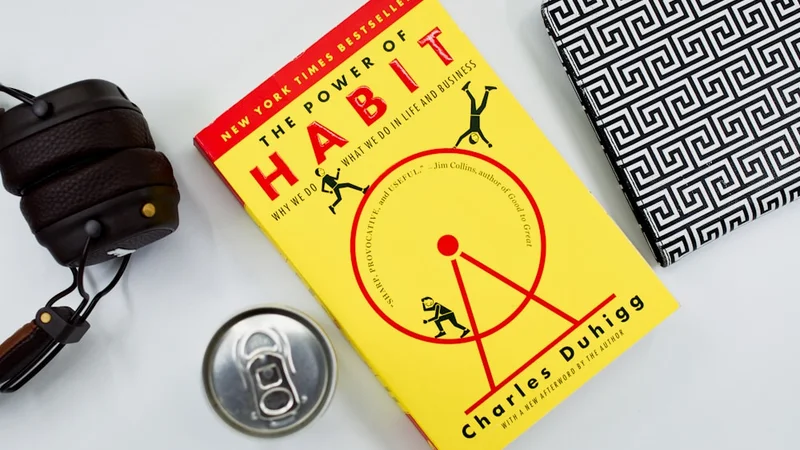
Charles Duhigg's research, compiled in The Power of Habit, gave this mechanism a name most people now recognize: the habit loop. Every habit — constructive or destructive — runs on a three-part cycle. Cue: the contextual trigger that activates the behavior. Routine: the behavior itself. Reward: the neurological payoff that reinforces the cycle. The habit doesn't run because you want it to. It runs because the cue fires, the routine activates below conscious awareness, and the reward system says: yes, that worked again.
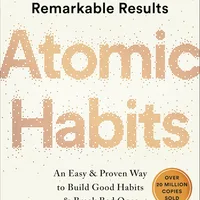
Atomic Habits — James Clear
The book that operationalized the habit loop — Clear's identity-based system alongside Duhigg's cue-routine-reward framework, in one essential read on lasting behavior change.
As an Amazon Associate, we earn from qualifying purchases — at no extra cost to you.
The counterintuitive insight hiding inside all of this? Bad habits survive not because you're weak. They survive because your brain built exactly the circuit it was designed to build — an efficient, low-effort response to a recurring context that reliably delivers a reward.
Your brain did its job perfectly. The problem is that the job description is outdated.
What Your Brain Actually Does When a Behavior Becomes Automatic
Your brain contains a region called the basal ganglia — a cluster of neurons deep beneath the cortex whose primary function is automating behavioral sequences so your conscious mind doesn't have to supervise every action.
Ann Graybiel's research at MIT's McGovern Institute has been mapping this region's role in habit formation for decades. Her team found something that should have rewritten the popular conversation about willpower, but mostly hasn't. As a behavior is repeated, the neural activity required to execute it migrates. It shifts away from the prefrontal cortex — the slow, deliberate, conscious reasoning system — and into the basal ganglia, the fast, automatic, subconscious pattern-execution system. Neuroscientists call this chunking: the brain packages a sequence of individual actions into a single automated routine, freeing cognitive resources for other tasks.
Think about the first time you drove a car. You consciously managed every micro-action: foot pressure, mirror checks, steering angle, following distance. Now you hold a full conversation while doing all of it, because driving has been chunked into a single automated response that runs below awareness.
Your bad habits work exactly the same way.
The routine is encoded. The cue is mapped. The reward is associated. The more often the cycle completes, the more deeply automatic it becomes. And here's the finding that changes everything: once a habit is encoded in the basal ganglia, it doesn't disappear. Not through motivation. Not through resolution. Not through willpower. The neural circuit persists.
Understanding that changes what you're actually trying to accomplish.
Why "Quitting" Is the Wrong Frame — and What to Replace It With
Graybiel's team ran an experiment that quietly reframed how neuroscientists think about behavior change. They trained rats to run a maze reliably, then used behavioral conditioning to extinguish the habit — removing the reward until the maze-running stopped. By all standard metrics, the behavior was gone.
Then they reintroduced the original context.
The old behavior returned almost immediately, as if the extinction period had never happened. The circuit hadn't been deleted. It had been suppressed. And under the right conditions — specifically, the original cue in the original environment — the original routine reasserted itself with full force.
This is the neurological explanation for every relapse story you've ever heard. Someone quits smoking for six months, attends a party where they used to smoke, stands in the same spot on the same patio, and the craving hits with a power that six months of abstinence did nothing to diminish. The basal ganglia circuit doesn't know about the resolution. It only knows that this cue has reliably produced this reward hundreds of times before.
You're not trying to delete a program. You're trying to install a better one that runs on the same hardware.

Kindle Paperwhite (12th Gen, 16GB)
A literal competing response for the 9:47 PM scroll habit — same device-in-hand context, same reward of stimulation and escape, without the infinite feed. Install a better program on the same hardware.
As an Amazon Associate, we earn from qualifying purchases — at no extra cost to you.
James Clear's framing in Atomic Habits captures this with precision: the goal isn't to overpower the old habit. It's to redesign the conditions under which it fires. Make the cue invisible. Make the routine structurally harder. Make the reward less immediate. Meanwhile, make the competing behavior easier to access, more automatic, and more rewarding in that specific context.
The habit that wins isn't the one you want most. It's the one that fires most reliably when the cue appears.
Why Willpower Fails (Especially When You Actually Need It)
Here's the most important pattern Wendy Wood found across decades of behavior-change research: willpower is a point-solution applied to a systems problem.
When you try to break a bad habit through willpower, you're relying on the prefrontal cortex — the brain's conscious, deliberate reasoning system — to override the basal ganglia's automatic response. This occasionally works, under ideal conditions: rested, unstressed, emotionally regulated, with full cognitive resources available.
The problem? Bad habits are most likely to activate under exactly the opposite conditions.
Stress selectively impairs the prefrontal cortex's inhibitory function. This isn't a motivational metaphor — it's what fMRI imaging shows. When cortisol spikes, the basal ganglia's automatic patterns become relatively dominant while conscious inhibition weakens. The habit runs because the only system capable of stopping it is temporarily offline. Every person who has held a commitment for months and then cracked during a difficult week has experienced this exact mechanism firsthand.
This explains what serious behavior change research consistently finds: environmental restructuring predicts lasting habit change far more reliably than self-reported motivation or commitment. Wood's field experiments found that people who successfully changed a behavior long-term had almost universally changed their physical environment, daily structure, or both. Not their resolve. Their architecture.
The practical translation is direct. If your bad habit is eating after dinner, the most powerful decision point isn't standing in front of the open fridge at 11:45 PM. It's at the grocery store that morning. Or the moment in the evening before the cue fires at all. Willpower works worst precisely when the cue is live and the habit is pulling hardest. Environment works before the cue even appears.
Habit Reversal Training: The Evidence-Based Method Nobody Talks About
While popular self-help cycles through techniques, clinical psychology has had a validated protocol for breaking habitual behaviors since the 1970s. Nathan Azrin and R.G. Nunn's Habit Reversal Training (HRT) — originally developed for repetitive behaviors like nail-biting, hair-pulling, and tics — has since been validated across a far wider range of unwanted habitual behaviors. It's among the most rigorously tested behavioral interventions in the literature. And almost no mainstream productivity content covers it with adequate depth.
The model has three core components.
Awareness Training. Most people engaging in a bad habit are only partially conscious of when, where, and how often it actually occurs. Awareness training means tracking the behavior in precise detail: the exact context where it fires (time of day, location, emotional state, what you were doing or actively avoiding), the earliest observable signal that the routine is beginning, and the specific reward it delivers. The objective is to shift the behavior from the automatic background to the conscious foreground — where it becomes interruptible.
Competing Response Training. Once the cue is clearly identified, you design an alternative routine that meets three criteria: it can be executed in the same context where the cue fires; it delivers a comparable neurological reward (stress reduction, stimulation, comfort, belonging — whatever the original habit was providing); and it's physically incompatible with the old behavior. The competing response doesn't need to be virtuous. It needs to be functional in the right context and deliver a comparable payoff.
Social Support. Azrin's original research found that having a person aware of the practice and checking in on it significantly increased success rates. This isn't surprising given everything the broader behavior change literature shows about the social architecture of habit formation. Accountability isn't a nice addition — it's load-bearing.
BJ Fogg's Tiny Habits adds a crucial refinement: the competing response should be as small as possible in its initial form, anchored to an existing reliable behavior to maximize execution probability in the target context. A competing response you actually run 40% of the time beats a theoretically perfect one you run 8% of the time. Every time.
The Environmental Upgrade: Making the Old Habit Structurally Harder
The final lever — and arguably the highest-impact one — is architectural.
Once you've identified your cue and designed a competing response, the work becomes structural: increase friction between you and the old routine while decreasing friction between you and the new one. This is the difference between relying on in-the-moment willpower to say no and engineering an environment where the path of least resistance already leads where you want to go.
The principle is consistent across every serious framework. Remove the cue wherever possible. Introduce physical or digital obstacles between you and the habit. Create meaningful distance between the trigger and the opportunity to act on it.
If the habit is checking social media during work hours, the phone doesn't go on silent. It goes in another room — or in a dedicated lockbox with a time-release mechanism that makes access require a non-trivial, non-automatic action. Not a metaphor: an actual physical device that removes the in-the-moment decision entirely. If it's late-night eating, the specific food that activates the habit in that state simply doesn't come home. If it's reflexive browser tab-opening during focus periods, a structural blocker removes the option — not through willpower but through architecture.
Every additional step between you and a bad habit is disproportionately more effective than an equivalent amount of willpower. The reason is structural: when a cue fires, the brain's default mode reaches for the path of least resistance. You're not fighting the habit when it's strongest. You're redefining what "least resistance" means before the moment arrives.
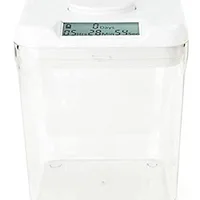
Kitchen Safe kSafe Time Locking Container
The exact device this article describes: a physical lockbox for your phone during work hours that removes the in-the-moment decision entirely. Architecture over willpower.
As an Amazon Associate, we earn from qualifying purchases — at no extra cost to you.
The identity layer completes this architecture. Research on identity-based behavior change — from Carol Dweck's work on mindset to James Clear's framework in Atomic Habits — converges on the same point: lasting change requires a shift not just in behavior but in the narrative you hold about who you are. When you begin to identify as someone who has already changed (not someone who is trying to change), the structural choices you make support an identity that's actively consolidating rather than merely suppressing the old circuit.
You don't have to believe it fully at the start. You just have to act consistently enough that the evidence accumulates.
How to Break Bad Habits and Replace Them with Good Ones — Starting This Week
You don't need a complete life overhaul. You need one system, executed with enough precision that the old habit doesn't get the environmental conditions it needs to fire reliably.
Here's the exact sequence.
Step 1 — Track without changing, for 72 hours. Before you modify anything, observe. Every time the habit occurs: write down the time, location, emotional state, and what you were doing or avoiding when the cue appeared. Don't try to stop yet. The pattern in the cue is almost always more specific than "I was stressed" or "I was bored" — and you need to see it clearly before you design a response to it.
Step 2 — Name the actual reward. Ask one honest question: what does this habit actually deliver? Stress relief? Stimulation? A momentary sense of control? Emotional numbing? The specific reward tells you exactly what the competing response needs to provide. Skipping this step is why most competing responses eventually fail — they deliver the wrong payoff in the right context.
Step 3 — Build structural friction between you and the cue. Don't rely on in-the-moment resistance. Remove the cue from your environment wherever possible. If the habit requires a specific device, food, or digital trigger, create architectural distance. A physical lockbox for your phone during work hours, an app blocker that removes options during focus time, a kitchen cleared of the specific foods that activate the evening habit — these aren't extreme measures. They're the infrastructure that makes willpower unnecessary.
Step 4 — Start the competing response smaller than feels sufficient. Identify the smallest version of the alternative behavior that can execute in the exact context where the cue fires. Anchor it to an existing reliable behavior in your routine. The goal in the first two weeks isn't transformation — it's consistent repetition of the new cue-routine-reward cycle, at whatever scale reliably fires. Shrink it until it's too small to skip.
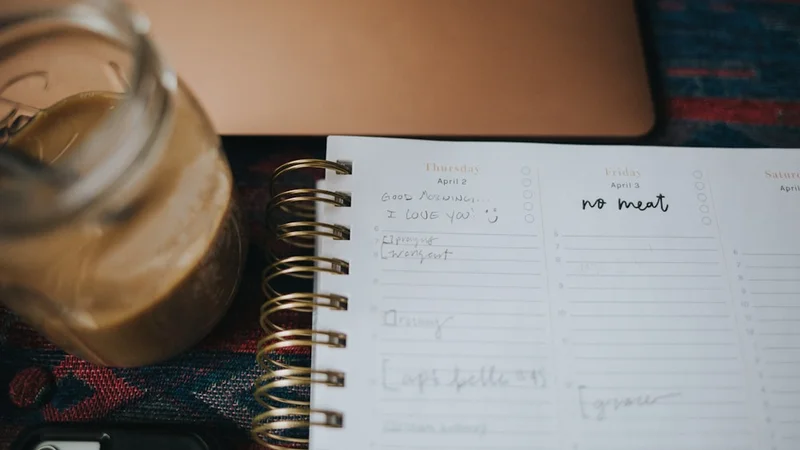
Step 5 — Install an accountability layer with a specific check-in. Tell one person what you're doing and ask them to follow up at a defined time. Then track the pattern: not to celebrate streaks, but to identify exactly when the old habit reasserts and under what conditions the competing response fails. That pattern contains your next structural fix. A habit journal that tracks your competing response execution alongside your emotional state at the moment of the cue is one of the most underused tools in this entire process — and one of the most revealing.

Clever Fox Habit Calendar Circle (2-Year)
Tracks your competing response execution alongside your emotional state at the moment of the cue — exactly the tool Step 5 recommends. Two years of habit data on one wall-mounted circle.
As an Amazon Associate, we earn from qualifying purchases — at no extra cost to you.
You're Not Fighting a Flaw — You're Upgrading a System
The bad habit you've been trying to break isn't evidence of a character deficiency.
It's a functional response to a specific set of conditions, encoded in neural hardware your brain built because it was supposed to — because that's exactly what brains do with repeated behaviors in consistent contexts. The circuit did its job. The job description just hasn't been updated yet.
The goal isn't to become strong enough to override it on demand. The goal is to design the conditions under which the old circuit has no room to run — and the new one runs instead, because it's structurally easier and delivers a comparable reward in the same context.
That's what "Design Your Evolution" looks like in practice. Not motivation as a substitute for structure. Not the behavioral equivalent of holding your breath and hoping it lasts. A deliberate, systematic redesign of your behavioral architecture — starting with an honest assessment of what the current system is actually doing, and building a better one with the precision and patience the problem genuinely requires.
The old circuit ran for months, maybe years. Give the competing one at least thirty days of architectural support before you evaluate whether it's working. Not because change is slow — but because the brain needs enough repeated exposures to the new cue-routine-reward cycle before the new circuit starts to run automatically.
One question worth sitting with: what's the one habit you've tried to break more than twice — and if you had to name the actual cue (not "stress" but the specific trigger), what would it be?
See also: Decision Fatigue: Why Your Morning Wrecks Deep Work
Was this helpful?