Habits· 10 min read
Breathwork for Beginners: Your Free Performance Tool
Your breathing pattern affects your sleep, stress, focus, and athletic performance. Here's the science of breathwork and how to start practicing today.

Breathwork for Beginners: The Free Performance Tool You've Been Ignoring
James Nestor went ten days without breathing through his nose. This wasn't breathwork gone sideways — it was science, carefully controlled.
Not by accident. He volunteered for a Stanford study that involved having silicone plugs inserted in both nostrils and sealed with surgical tape. He'd wear them around the clock — sleeping, working, commuting — while researchers measured what happened to his body.
What happened was not subtle.
His blood pressure shot up 13 points in the first few days. He began snoring so severely his partner moved to another room. His sleep quality tanked. His mental performance degraded. Low-grade dread crept into his mornings. When the plugs came out on day ten and nasal breathing resumed, the reversal was almost immediate — within hours, not days.
Nestor spent the next three years tracing that physiological shift across centuries of anatomical records, mummified skulls, breathing clinics in São Paulo, and the notebooks of a 19th-century painter who spent decades documenting Indigenous tribes in the American West. What he found — and published in Breath: The New Science of a Lost Art — is that breathing isn't just background noise. It's a lever. And most people have never once touched it deliberately.
![Person sitting at a desk with eyes gently closed, practicing conscious slow nasal breathing, soft natural light through a window | breathwork techniques for beginners]
The Hidden Cost of How You've Been Breathing
Do something right now. Notice how you're breathing. Nose or mouth? Chest or belly? Fast or slow?
If you're like a significant portion of Western adults, there's a reasonable chance you're a habitual mouth breather — especially at night, especially during stress, possibly right now without realizing it. And it's costing you in ways that are measurable but almost entirely invisible.
Here's the basic physiology. Nasal breathing filters and humidifies incoming air, warms it to the correct temperature for optimal lung absorption, and activates nitric oxide production in the sinuses. That nitric oxide — which you bypass entirely when you mouth breathe — improves oxygen delivery efficiency to the body's tissues by up to 18 percent. More quietly, nasal breathing engages the diaphragm more fully, slows the breathing rate, and consistently activates the parasympathetic nervous system: the branch responsible for rest, recovery, digestion, and clear executive thinking.
Mouth breathing does the opposite on almost every front. It keeps the sympathetic nervous system slightly elevated — the "low-grade alert" state — not because you're in danger, but because that's the physiological message the brain receives from the pattern. Over years, that persistent mild activation contributes to elevated baseline anxiety, fragmented sleep, and a narrower range of stress tolerance. It's not dramatic. It accumulates.
Nestor's Breath is the definitive popular account of where this went wrong and what the research shows about fixing it.
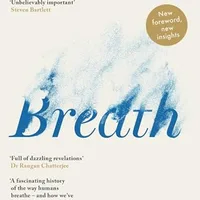
Breath: The New Science of a Lost Art
The definitive account of where breathing went wrong and what the research shows about fixing it — required reading for anyone who wants to understand the mechanism beneath the performance.
As an Amazon Associate, we earn from qualifying purchases — at no extra cost to you.
The book is equal parts history, science, and self-experiment — and it's the most persuasive case I've encountered for treating your breathing pattern as a serious performance variable rather than an involuntary background process.
If you want to go deeper into the athletic and CO2 tolerance dimensions specifically, Patrick McKeown's The Oxygen Advantage builds on similar research with a particular focus on endurance performance. The counterintuitive finding McKeown documents: habitual over-breathing — too much air, too fast, even through the nose — actually reduces oxygen delivery to muscles by keeping CO2 levels artificially low. The remedy is to breathe less, not more. Slower. Lighter. Nasal.
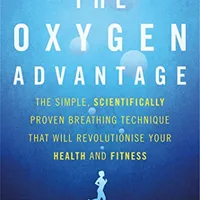
The Oxygen Advantage — Patrick McKeown
The athletic counterpart to Nestor's work — McKeown documents the counterintuitive finding that habitual over-breathing reduces oxygen delivery to muscles. Breathe less, not more.
As an Amazon Associate, we earn from qualifying purchases — at no extra cost to you.
The entry point for all of it is the same: close your mouth.
Three Breathwork Techniques That Actually Work (And When to Use Each)
Breathwork is not one thing — that's the source of most confusion around it. It's a category of practices, each producing a distinct physiological effect, useful at different moments for different purposes. Here are the three most evidence-backed techniques, in order of the situational demand they address.
Box Breathing — For Performance Under Pressure
You've probably heard of this one. Navy SEALs use it before high-stakes operations. Surgeons use it before complex procedures. Athletes use it in the tunnel before competition. If something has earned that kind of cross-domain adoption, it's usually worth paying attention to.
The mechanic is clean: inhale for four counts, hold for four, exhale for four, hold for four. Repeat for four to six cycles.
What's actually happening during those counts? The extended exhale activates the vagus nerve — the primary driver of parasympathetic response, running from the brainstem through the torso. The breath-hold phases create a mild, voluntary CO2 increase that improves oxygen delivery efficiency. The rhythmic cycle produces heart rate variability coherence: a state in which heart rate speeds and slows in synchronized rhythm with the breath, shown in multiple studies to improve prefrontal cortex function under stress — which is to say, your ability to think clearly and regulate your reactions when the pressure is highest.
Four minutes before a difficult conversation, a deadline, or a decision you've been circling for days. That's the use case. — learn how to enter a flow state.
The Physiological Sigh — For Immediate Stress Relief
This one comes from Andrew Huberman's lab at Stanford, and it deserves considerably more attention than it gets in most breathwork conversations.
The physiological sigh is the fastest known hardwired way to reduce acute stress in real time — outperforming mindfulness meditation in head-to-head research. The mechanism: during sustained stress or concentrated focus, the small air sacs in your lungs (alveoli) partially collapse, reducing gas exchange efficiency and contributing to the building sensation of chest tightness. The physiological sigh immediately re-inflates them.
The technique: inhale through your nose as deeply as you can. At the top of that inhale — when it feels full — take a second, shorter sniff to push in the final available air. Then exhale completely through your mouth. Slowly. All the way.
One repetition. Roughly eight seconds. Measurable shift in heart rate and perceived stress level.
You can do this in a meeting. In traffic. Before an email you've been dreading. The barrier to entry is so low that most people assume it can't possibly work that quickly. It does.
Cyclic Hyperventilation (Wim Hof Method) — For Controlled Resilience Training
This sits at the more advanced end of the breathwork spectrum, and I want to be direct about that. The Wim Hof Method uses repeated cycles of deep, rapid breaths followed by a breath-hold after a full exhale. The effect is deliberate, controlled activation of the sympathetic nervous system — a temporary, voluntary stress response that trains the body's resilience systems.
The research on this is genuinely remarkable. A 2014 study published in PNAS showed that practitioners who learned the Wim Hof technique were able to voluntarily modulate their immune response to an injected bacterial endotoxin — producing significantly fewer inflammatory symptoms than untrained controls. Prior to that study, voluntary immune modulation was considered physiologically impossible.
Two important caveats. First: this technique causes transient hypocapnia (low CO2) that can produce brief dizziness or, in rare cases, loss of consciousness. Never practice it near water, in a moving vehicle, or standing unsupported. Second: learn it properly before you start. The book and app provide structured protocols with the necessary context. This isn't a technique to improvise from a two-sentence description.
Done correctly and consistently, it's one of the most potent biological resilience practices available. But treat it with the respect you'd give any high-yield, high-stakes tool.
![Person sitting in easy pose on a yoga mat outdoors, relaxed expression, early morning light, mid-breathwork practice | what is breathwork and why does it work neuroscience]
The Two Tools Worth Having When You're Starting Out
The practice itself costs nothing. These tools don't create the benefit — your lungs do. But they remove the two most common friction points that stop people from sustaining the habit past week two.
Mouth tape for sleep. If you mouth breathe habitually, nighttime is when it does the most damage — sustained hours of sympathetic activation, fragmented sleep architecture, elevated cortisol in the morning. You can't consciously control your breathing pattern while you're unconscious. Dedicated mouth taping products — SomniFix strips or MyoTape are the most commonly used — are specifically designed for sleep: skin-safe, comfortable enough not to disturb you, and shaped so that the lips can part in an emergency without restriction. This is the highest-leverage single change for anyone whose sleep quality is poor and whose morning energy is consistently flat.

MyoTape — 30 Nights Mouth Tape
Designed by Patrick McKeown — a sleep-specific mouth tape that keeps your lips closed without restricting emergency airflow. The highest-leverage single change for poor sleep quality.
As an Amazon Associate, we earn from qualifying purchases — at no extra cost to you.
An HRV biofeedback sensor. Heart rate variability is the most direct real-time proxy for your nervous system's current state — and it responds measurably to breath practice within minutes. The HeartMath Inner Balance Coherence Sensor connects to a smartphone app and shows you, in real time, whether your breathing pattern is producing the coherence state associated with improved executive function and reduced stress response. The value of this isn't the gadget — it's the feedback loop. Most people can't tell from subjective experience whether their four-minute practice actually shifted their physiology. This tells you. And once you see the correlation between specific techniques and coherence response, the motivation to practice stops depending on willpower.
How to Build a Daily Breathwork Practice From Scratch
The most consistent mistake people make with breathwork is using it only in emergencies — reaching for the physiological sigh when they're already three hours into a stress spiral. That's like only using a seatbelt after you've already hit the dashboard.
A minimal sustainable daily structure looks like this:
Morning (five minutes). Two rounds of the physiological sigh immediately after waking, before you pick up your phone. Follow with three to four minutes of slow nasal breathing — inhale for four counts, exhale for six. This sets a parasympathetic baseline before the day's demands begin. It takes less time than checking email and produces a measurably better cognitive starting point than coffee alone.
Transitions (thirty seconds to two minutes). Before any high-stakes interaction — a difficult meeting, a creative work block you keep procrastinating on, a hard conversation — use box breathing as a deliberate state-change transition. Four cycles. This is one of those practices that sounds almost insultingly simple until you do it consistently for two weeks and notice the difference in how you walk into difficult moments.
Evening (five to ten minutes). Extended-exhale breathing in the hour before bed. Inhale for four counts, exhale for seven or eight. The longer exhale is the key mechanism — it's the signal that shifts the nervous system from active engagement to recovery mode. If you're using mouth tape, apply it as part of your wind-down ritual. Make it as automatic as brushing your teeth. — why you still feel tired after 8 hours of sleep.
Weekly (twenty to thirty minutes). One dedicated cyclic breathing session — either a guided Wim Hof protocol or a breathwork app session. Think of this as the strength-training component: you're not managing your state, you're building the physiological capacity that makes state management easier during the rest of the week.
What to Expect — and When to Expect It
This won't feel transformative after one session. Breathwork changes are cumulative and quiet until, suddenly, they're not — and you realize your baseline has shifted.
Here's what consistent practice typically produces across a thirty-day window:
Week one to two: Improved sleep onset and reduced morning dryness. The first noticeable sign that nighttime breathing has shifted. A subtle reduction in the background hum of afternoon anxiety.
Week two to three: Measurable improvement in CO2 tolerance — you can track this with the BOLT score, a simple breath-hold test McKeown describes in detail. Easier recovery from high-stress moments. The physiological sigh starts working faster, which itself tells you something important about nervous system training.
Week three to four: Performance differences become apparent. Sustained focus holds longer. You're less reactive under social pressure. Situations that previously consumed significant cognitive bandwidth feel more manageable — not because the situations have changed, but because you're meeting them from a different physiological starting point.
None of this requires belief in anything. It's physiology. You're changing an input and observing the output.
How to Start Today
Here's a minimum viable practice you can begin before closing this tab:
-
Right now: Take one physiological sigh. Full nasal inhale, top-off sniff, long complete exhale. Notice the shift. That's not placebo — that's the alveoli reinflating.
-
Tonight: Before sleep, spend five minutes breathing with a four-count inhale and six-count exhale through your nose only. Apply mouth tape if you have it. If not, it takes roughly thirty seconds to order.
-
This week: Use box breathing for four minutes before your most cognitively demanding daily block. Do it every day for seven consecutive days. By day seven, you'll have direct data from your own experience.
-
This month: Add one weekly Wim Hof session. The book provides the most structured entry point with the physiological context that makes the practice make sense — not just instructions, but the reasoning that keeps you consistent.

The Wim Hof Method — Wim Hof
The official entry point for cyclic hyperventilation practice — provides the structured protocol and physiological context that makes the technique safe and sustainable.
As an Amazon Associate, we earn from qualifying purchases — at no extra cost to you.
- Ongoing: Track your BOLT score weekly. A rising score is the clearest objective signal that your daily breathing quality is improving. It takes thirty seconds and requires no equipment.
![Person doing gentle breathwork journaling at a wooden desk, notebook open, calm expression, morning light | nasal breathing daily practice guide]
The irony of breathwork is this: the highest-leverage performance variable you have access to is the one you're already doing 23,000 times a day. You haven't been ignoring it because it doesn't work. You've been ignoring it because no one ever told you the dial was adjustable.
It is. And the adjustment costs nothing.
"Design Your Evolution" isn't a philosophy reserved for major life decisions. It's the daily practice of noticing which biological levers you're operating unconsciously — and choosing, deliberately, to operate them differently. Sleep, movement, nutrition, and thought patterns all get attention. Breathing, somehow, almost never does.
Start with one physiological sigh today. That's not nothing. That's the beginning of a practice that compounds quietly until the results are impossible to ignore.
What's the one moment in your day where your stress response spikes most predictably — and what would it be worth to walk into that moment from a different physiological state? Drop it in the comments.
Was this helpful?