Productivity· 10 min read
How to Enter Flow State: The Science of Peak Performance
Flow isn't luck — it's a state you can engineer deliberately. Learn what triggers flow, what kills it, and how to enter flow state on demand.
How to Enter Flow State: The Science of Peak Performance
There was a Tuesday in early November — grey outside, heater just starting to tick — when something happened that I've been trying to explain ever since. A report I'd been avoiding for three weeks. The kind of task that accumulates psychic weight the longer you leave it. I sat down at 10 AM without much conviction.
I looked up at 12:40 PM. The report was finished. Not just finished — it was the most coherent, well-structured piece of thinking I'd produced in months. And I couldn't fully account for the time between sitting and looking up. There was no struggle. No clock-watching. No negotiating with myself for one more paragraph. I'd simply been in it, completely, until it was done.
If you've experienced something like this — even once — you already know what flow feels like. You may also have spent time trying to figure out how to enter flow state deliberately, only to find the answer frustratingly inconsistent. Some days it happens. Most days it doesn't. When it does, you're never entirely sure why.
Here's what the research says: flow has architecture. It is not luck, and it is not a personality trait reserved for artists and athletes. It is a specific psychological state with identifiable preconditions — and once you understand what those are, you can engineer them far more reliably than most people ever do.
Mihaly Csikszentmihalyi — pronounced, as he apparently enjoyed telling audiences, "cheeks-sent-me-high" — was a Hungarian-American psychologist who survived World War II as a young child and came out of it with a single, driving question: what actually makes a human life feel worth living?
He didn't study dysfunction or pathology, as much of the psychology in his era did. He studied people at their best. Artists absorbed in a canvas. Surgeons deep in a procedure. Rock climbers navigating a difficult face. Chess grandmasters three hours into a match. He conducted thousands of interviews, developed the Experience Sampling Method to capture real-time psychological states in everyday people, and spent thirty years mapping the territory of what he called optimal experience.
His finding was counterintuitive. The moments people described as most satisfying, most alive, most meaningful weren't the leisure hours — the vacations, the passive entertainment, the quiet rest. They were moments of deep engagement with tasks that challenged them precisely at the edge of their capability.
His 1990 book Flow: The Psychology of Optimal Experience synthesized this research into a framework that became one of the most widely cited works in positive psychology.
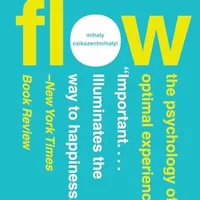
Flow: The Psychology of Optimal Experience
The original 1990 book that named the concept — Csikszentmihalyi's definitive account of how peak experience works and why some people access it more reliably than others.
As an Amazon Associate, we earn from qualifying purchases — at no extra cost to you.
But more importantly, it gave a name — and a set of specifications — to the state that most serious performers sense but struggle to describe or reproduce on demand.
The neuroscience has since filled in what the psychology described. During flow, the brain does something counterintuitive: the prefrontal cortex — the seat of self-monitoring, self-criticism, second-guessing, and performance anxiety — dramatically reduces its activity. Researchers call this transient hypofrontality. Your inner critic doesn't just get quieter; it essentially stands down. The default mode network, which generates mind-wandering and self-referential noise ("should I check my phone? am I doing this right? what are people thinking?"), also quiets. What remains is focused, generative processing, undistracted by the continuous chatter of your own self-observation.
This is why flow feels qualitatively different from ordinary concentrated effort. In regular focused work, you can feel yourself concentrating — the strain, the metacognitive monitoring, the awareness of your own performance running in the background. In flow, that layer dissolves. The gap between you and the work closes. You're not watching yourself work. You're simply working.
Steven Kotler spent years documenting these states across extreme athletes, elite performers, and military units for Stealing Fire, co-written with Jamie Wheal. Their argument — drawn from neuroscience, performance research, and documented data across fields — is that the deliberate access of states like flow is one of the most underleveraged performance tools available.
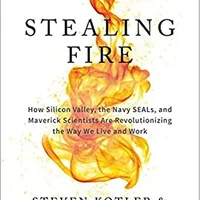
Stealing Fire
How elite performers — from Navy SEALs to Silicon Valley engineers — deliberately access altered states for extraordinary output. The best investigation of what flow looks like at scale.
As an Amazon Associate, we earn from qualifying purchases — at no extra cost to you.
The word they use is ecstasis, from the Greek for "standing outside oneself." Which is, if you've been there, exactly what it feels like.
What Flow Actually Is — and What It Isn't
The most persistent misconception about flow is that it requires ease. People imagine it as a frictionless glide — the work just flowing out of you without resistance. This is almost exactly wrong.
Flow requires calibrated difficulty.
Csikszentmihalyi described it as a narrow channel between two failure modes: boredom on one side, anxiety on the other. When a task is significantly below your current skill level, your brain gets no real engagement signal and drifts — toward distraction, toward daydreaming, toward anything more stimulating. When a task significantly exceeds your current skill level, the prefrontal cortex activates in alert mode rather than productive mode, and performance degrades under the weight of perceived threat.
Flow lives in the corridor between them. The task must be at or slightly above the edge of your current capability — hard enough to fully engage your cognitive resources, achievable enough that the brain perceives it as winnable.
Think about Whiplash. Fletcher's entire method — brutal and morally questionable as it was — operated on one principle: push the challenge to the absolute limit of the performer's current capability and hold it there. The musicians he pushed weren't in comfort; they were on the knife-edge between "I can do this" and "I'm not certain I can do this." That tension, when it's held with skill rather than fear, is precisely the ignition condition for flow.
You don't need a Fletcher. But you do need to find your edge — and work there deliberately, rather than defaulting to the comfortable tasks that sit well below it.
The Three Conditions That Trigger Flow State
Csikszentmihalyi identified three core preconditions for flow. Think of them not as suggestions but as engineering specifications. Meet all three, and the probability of entering flow rises substantially. Miss any one of them, and it won't matter how motivated you are.
Clear, immediate goals. Not "make progress on the project." Not "work on the document." Something specific and verifiable: Draft the introduction and the first two supporting arguments before noon. The brain cannot fully commit to a task when the target is undefined. Ambiguity triggers the default mode network — the system responsible for distraction and background self-questioning — because the mind is still in search mode, still scanning for the actual objective. A precise goal eliminates that searching and lets processing organize itself around a single direction.
Immediate feedback. You need to know, in real time, whether you're succeeding. This is why flow is so reliably available in sports, music, and video games — feedback is unambiguous and instant. Knowledge workers have to build this in deliberately: a word count reached, a section completed, a problem solved, a decision made. Without a feedback signal, the brain exits the focused processing loop and starts scanning for external cues about performance. Build those signals directly into the structure of the work.
Challenge-skill balance. This is the cornerstone. The task must sit at the edge of your current competence — neither below it nor substantially above it. And this is a moving target. As your skill level grows, the challenge must grow with it. This is precisely why creative professionals, engineers, and athletes who've been doing the same work for a decade often stop experiencing flow in it: the challenge has silently fallen beneath their skill level, and nobody noticed.
When all three conditions align, something shifts. The brain's resources commit fully. The monitoring layer quiets. Time starts to behave differently.
If you struggle to sustain attention on a single task long enough to reach flow, learning to eliminate multitasking is the prerequisite skill that makes everything else possible.
What Kills Flow Before It Starts
You can satisfy all three internal conditions and still not enter flow if your environment is working against you. For most people, it is — quietly and continuously.
Gloria Mark, a researcher at UC Irvine, spent years studying how digital interruptions affect knowledge work. Her findings are uncomfortable to sit with. After a digital interruption — an email notification, a Slack ping, a brief phone check — the average person takes 23 minutes and 15 seconds to fully restore their previous level of focused attention to the original task, according to Mark's published research at UC Irvine. Not a few seconds. Not a few minutes. Twenty-three minutes.
This is what researchers call attention residue. When you switch contexts, part of your cognitive load stays anchored to the previous task. You're physically present in the new context while your processing is still partially occupied with the previous one. Flow — which requires total cognitive commitment — is structurally impossible in that condition. You're not failing to focus because you lack discipline. You're failing because you're asking your brain to do something it literally cannot do while attention residue is active.
There's also the presence effect to reckon with. A 2017 University of Texas study found that having your phone on your desk — even face-down, even silenced — measurably reduces cognitive capacity. Not dramatically. But consistently, across the entire session. The mere awareness of its presence occupies a background thread of attention that never fully releases.
Physical discomfort works the same way, more subtly. The chair that's slightly wrong, the screen at the wrong height, the temperature that's two degrees off — these generate persistent low-grade sensory signals that never quite stop competing for your attention. You don't consciously register them. But your focus budget does, across every minute of a 90-minute session.
And perhaps the least-discussed flow killer: working on tasks that are clearly below your actual capability. People assume they're being productive because they're busy. Efficiency and flow are not the same thing. A morning of emails and administrative tasks can feel industrious while being neurologically incompatible with the deep engagement that flow requires. The boredom side of the channel is as much of a blocker as the anxiety side — it just feels less like a problem.
Engineering Your Flow State: How to Enter It on Demand

The pre-flow ritual matters more than most people realize, and the reason is neurological. Flow doesn't begin the moment you sit down. There's a ramp — a transition period that typically takes 10–20 minutes before the brain fully commits to deep processing. The goal of a consistent pre-flow ritual is to condition that transition so it starts earlier and runs faster. Done consistently over weeks, the ritual itself becomes a conditioned trigger: your brain begins shifting toward the focused state in response to the sequence, before the work has properly begun. Pavlov's bell didn't come with instructions; it just needed to be consistent.
The ritual doesn't need to be complicated. It needs to be repeatable. Close every browser tab. Write your specific goal for this block at the top of a physical page — handwritten, not typed. Put on headphones. Set a timer. Begin.
Your auditory environment is the first variable to control. Noise-cancelling headphones don't just block sound — they eliminate the pattern interruptions that your nervous system is evolutionarily wired to respond to. Every unexpected sound is a potential threat signal, and your brain hasn't updated that firmware since roughly 10,000 BC. A consistent auditory backdrop, whether that's silence, brown noise, or instrumental music at a fixed volume, removes that stimulus entirely and allows your attention to stay inside the work.
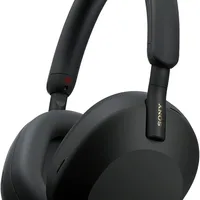
Sony WH-1000XM5 Noise Cancelling Headphones
The benchmark for noise cancellation. Removes the ambient threat-detection signals your nervous system would otherwise respond to — the single most effective environmental tool for uninterrupted deep work.
As an Amazon Associate, we earn from qualifying purchases — at no extra cost to you.
Session length architecture is the second variable. The most common mistake is booking too-short work blocks and wondering why flow never quite arrives. The ramp-in period alone consumes 15–20 minutes. A 45-minute window gives you maybe 25 productive minutes — not enough runway to enter and sustain a real flow state. Ninety minutes is the practical minimum. Many practitioners prefer a physical, analog timer rather than a phone app, because checking a phone — even to look at the timer — is itself a micro context-switch. A visual cube timer or interval clock you can glance at peripherally, without picking anything up, keeps you inside the session.
Challenge calibration is an active practice, not a passive one. Before each session, assess the task honestly: is this at or slightly above my current capability? If it's below it, deliberately elevate the standard — add a constraint, tighten the quality bar, increase the scope. If it's substantially above your level, decompose it until you find the entry point that sits at your edge. That's where you begin, not at the easiest available component.
Physical workspace is the final variable most people underestimate. Being able to alternate between sitting and standing during long work blocks maintains the physiological activation that flow requires — the body needs enough arousal to stay engaged — without tipping into the low-grade physical discomfort that bleeds attention away from the work. A standing desk converter or a well-configured adjustable arrangement removes the ergonomic tax your focus has been quietly paying every single session.
Flow vs Deep Work: The Distinction That Changes Your Practice
Cal Newport's concept of deep work is the most actionable framework available for knowledge workers who want to produce consistently high-quality output. But flow and deep work are not synonymous, and conflating them creates a real blind spot in how you practice.
Deep work is a practice — a scheduled, disciplined habit of working without distraction for extended periods. Flow is a state — a specific psychological condition your brain can enter during those deep work sessions when the three conditions are present and the environment supports them.
You can do deep work without entering flow. It happens constantly: the session is focused and uninterrupted, but the challenge level is slightly miscalibrated, or the goal wasn't specific enough before you started, and you produce competent work without ever reaching the qualitatively different state where your best output emerges. You cannot, however, enter flow without the conditions deep work practice creates. Uninterrupted time isn't a preference — it's a structural prerequisite.
Think of deep work as the training ground and the container. Flow is what becomes available inside it when everything else is aligned.
This is the distinction that elite performers seem to understand intuitively. They don't rely on inspiration. They don't trust motivation to carry them through. They design the mental and physical conditions under which their best thinking emerges as a natural byproduct — not by force of will, but by force of architecture.
The output is downstream of the state. The state is downstream of the conditions. The conditions are entirely designable.
How to Start Today
You don't need to overhaul your schedule to test this. The minimum viable experiment takes one work session.
Step 1: Choose a task that genuinely challenges you. Not email. Not admin. Something at or slightly above your current capability level — work that requires your actual best thinking.
Step 2: Write a specific goal before you begin. One sentence, physically on paper: "By the end of this 90-minute block, I will have [concrete, verifiable output]." Not a direction. A destination.
Step 3: Eliminate interruptions at the structural level. Phone in another room. All notifications off. Browser tabs closed. This is not optional. You cannot willpower through attention residue. Twenty-three minutes of recovery cost per interruption is a structural constraint, not a motivational failure.
Step 4: Build your auditory environment, set a 90-minute timer, and begin immediately. Don't prepare to begin. Begin. The ritual signals the brain; the immediate start uses the momentum before your prefrontal cortex has time to generate objections.
Step 5: Debrief after the session. Three questions: Were your goals specific enough? Was the challenge calibrated correctly? Did you have enough feedback signal to know how you were doing? Adjust one variable for your next session.
For the deeper architecture behind this practice — the full framework for protecting uninterrupted time, designing your cognitive environment, and building the rituals that make this sustainable — Cal Newport's Deep Work is the most practically useful starting point on the market.
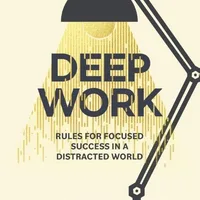
Deep Work: Rules for Focused Success in a Distracted World
The practical framework for protecting the uninterrupted time that flow requires. Newport's most widely applicable book — the best starting point for anyone building a deliberate deep work practice from scratch.
As an Amazon Associate, we earn from qualifying purchases — at no extra cost to you.
The point isn't a perfect flow state on day one. The point is to start accumulating personal data — because flow conditions vary by individual, by time of day, by task type, and by current skill level. You're building a practice and learning what works for your brain, not executing a universal formula.
What emerges from this work, done consistently, is something genuinely worth organizing a life around. Not just higher output — though that comes. Not just better quality work — though that comes too. What you get from a deliberate flow practice is repeated experience of your own capability at full expression. The felt knowledge that you were not scattered, not operating at 40%, not performing under a cloud of distraction and fragmented attention — but fully present, fully committed, producing at the level you're actually capable of.
That is what it means to learn how to enter flow state on purpose. Not waiting for it to happen to you. Engineering the conditions that make it available — consistently, deliberately, as a designed feature of how you work.
That is what designing your evolution looks like when you stop leaving your best thinking to chance.
What's the single factor that most reliably pulls you out of deep focus before flow can take hold? I'd genuinely like to know — leave it in the comments below.
See also: Decision Fatigue: Why Your Morning Wrecks Deep Work
Was this helpful?