Mindset· 10 min read
How to Build Self-Confidence as an Adult
Confidence isn't something you have or don't — it's something you build through specific actions. Here's the evidence-based method that actually works.

How to Build Self-Confidence as an Adult (The Approach Most People Get Backwards)
For three years, Marcus did exactly what you're probably doing right now.
He watched the promotion list. He watched a colleague with fewer years and arguably fewer results step into the role he'd been telling himself he'd claim — once he felt confident enough. His track record was solid. People genuinely respected his work. His manager had mentioned more than once that he was performing above his grade. And yet every time the moment came to step forward, something inside him said the same quiet, convincing thing it always said: not yet. You're not quite there.
The third year, the promotion went to someone who'd been in the organization for eighteen months.
That afternoon, Marcus finally asked himself the right question: What exactly am I waiting for?
The cultural story about confidence sounds reasonable from the outside. It tells you that confidence is something you accumulate over time — through reflection, through affirmations, through building up a reserve of self-belief until it's large enough to justify action. Once you feel ready, you step forward. The confidence comes first; the action follows.
This gets the equation exactly backwards.
Albert Bandura spent decades studying why some people persist in the face of uncertainty while others don't. His framework — self-efficacy theory, arguably the most rigorously tested model in all of psychology for understanding confidence — arrived at a conclusion that should change how you think about every area of your life where you're waiting to feel ready.
The most powerful driver of genuine confidence isn't positive self-talk. It isn't visualization. It isn't accumulating enough mental certainty to feel adequate for the challenge ahead.
It's evidence. Generated through action. In that order.
Bandura identified four sources of self-efficacy — the specific belief that you can execute a particular behavior to produce a particular outcome. Mastery experiences ranked first by a significant margin: direct evidence, from directly doing something, that your choices create intended outcomes. Vicarious experiences (social modeling) ranked second. Verbal persuasion — being told you can do it, the mechanism of affirmations and pep talks — ranked third. Physiological states ranked last.
Most confidence advice focuses almost entirely on the bottom two.
If you want to understand the research foundation here before we get into the practice, Amy Cuddy's Presence and Katty Kay and Claire Shipman's The Confidence Code both translate the academic evidence into immediately useful territory.
The Confidence Myth That's Keeping You Stuck
Here's the specific way the myth fails you.
When you tell yourself you'll act after you feel confident, you've designed a loop with no entry point. Confidence requires evidence. Evidence requires action. Action requires the willingness to act without certainty. But the myth positions certainty as the prerequisite. So you wait. The waiting produces no evidence. The absence of evidence reinforces the sense that you're not quite ready. And the loop runs in the wrong direction, invisibly, for years.
Psychologists call this the confidence-competence cycle. It can run in two directions. In the negative loop — the one most people are trapped in without realizing it — low confidence reduces action, which reduces evidence of competence, which further reduces confidence. In the positive loop, a single small action produces a small piece of evidence, which produces a fractional increase in confidence, which makes the next action slightly less threatening.
The entire game is getting that cycle running the right way.
And there's only one way to do that: put action before confidence, not after it.
Carol Dweck's work on growth versus fixed mindsets maps directly onto this. People who believe confidence is a fixed trait — something you either have or don't, like eye color — stay trapped in the negative loop because every failure feels like confirmation of permanent inadequacy. People who believe confidence is a skill built through experience use every action, including failures, as data that feeds the positive loop. The distinction sounds philosophical. In practice, it determines everything about whether you improve or stay stuck.
What Albert Bandura Actually Found About How to Build Self-Confidence
Bandura's research began with a question that sounds unremarkable: why do some people persist when others give up?
What he found was that the determining variable wasn't past performance directly. It was the interpretation of past performance — specifically, the belief it created about future capability. High-efficacy individuals used their past successes as evidence they could navigate future challenges. Low-efficacy individuals either dismissed successes ("that was easier than I expected — doesn't really count") or allowed failures to become predictive ("that's just the kind of person I am").
Same results. Completely different internal narratives. Completely different futures.
Mastery experiences — the successful completion of a genuinely challenging task — were the most reliable way to update self-efficacy upward. But the task had to be calibrated. Too easy, and it produces no real evidence of capability. The brain knows the difference between performing well on something trivial and performing well on something that actually required something of you. Too difficult, and failure arrives before the confidence has built enough foundation to survive it.
The calibration question is one of the most useful in personal development: what challenge level creates genuine mastery experiences without triggering collapse? Roughly: just beyond what you can do with certainty, but not so far beyond that failure is the most likely outcome. Think 80% probability of success — not 50%.
Which means the right question isn't "How do I become confident?" It's: What is the smallest genuine challenge I could complete today that gives me real evidence of a capability I currently doubt?
Carol Dweck's Mindset is the most important single book for understanding what makes confidence buildable rather than fixed — and it's more practically specific than its title suggests.
The Small Win Architecture: How Mastery Actually Accumulates
A classic example from behavioral coaching illustrates how mastery experiences accumulate: a competitive swimmer had completely lost confidence in her ability. Her performance data said she was capable. Her internal model said otherwise. She couldn't bring herself to get in the pool.
The breakthrough came when her coach stopped asking her to swim laps.
Step one: walk to the pool deck. Just that.
She did it. Nothing catastrophic happened. Next session: walk to the pool edge. Then stand in the shallow end. Then push off from the wall. Each step was calibrated to be just enough of a challenge to constitute real action — and therefore real evidence — without being large enough that failure was the likely outcome. The wins were genuine. Small, but genuine.
Within six weeks, she was swimming again.
This is the architecture of mastery experiences in practice. Not the dramatic leap that requires more courage than you currently have. Not waiting for the surge of confidence that will make the hard thing feel easy. A deliberate, incremental sequence of progressively more demanding actions, each one generating a small piece of evidence, each piece of evidence shifting the internal model upward by a fraction.
Think of it as deposits into a confidence account. The individual deposits are modest. What they compound into isn't.
Napoleon Hill understood this long before the psychology caught up — his insistence on definite, specific action toward a definite chief aim was less about ambition than about the mechanism of self-belief: you cannot build genuine confidence in the abstract, only in the particular. Every domain, every skill, every role requires its own specific evidence base. There's no shortcut around building it.
habit-stacking-and-small-daily-wins-that-compound-over-time

Why Most "Confidence Hacks" Actually Make Things Worse
Here's the counter-intuitive finding most confidence advice quietly ignores.
In 2009, psychologist Joanne Wood at the University of Waterloo published research in Psychological Science showing that positive self-statements — the "I am confident and capable" variety — can actually decrease self-esteem in people who already have low self-esteem. The mechanism is uncomfortable but logical: when someone with a fundamentally negative self-image repeats a positive statement that contradicts their current internal model, the contrast effect intensifies the gap rather than closing it. The affirmation makes the discrepancy more visible, not less.
Tony Robbins might tell you to act as if — and for people with moderate confidence in a specific domain, priming effects are real and documented. But for people with chronic self-doubt, the research consistently shows that positive self-talk without an evidence base to support it doesn't just fail to help. For a meaningful portion of the population, it actively reinforces the exact pattern it's supposed to dissolve.
The alternative isn't harsh self-criticism. It's honest accounting.
When you complete something genuinely challenging, make it real: this was hard for me, and I did it. Write it down. Not in a vague, generic way — specifically. What was hard. What you managed. What you now know about yourself that you didn't before. When you fail, be equally specific: this particular skill needs more practice — not this is evidence I'm fundamentally not capable.
This is where a structured journal becomes genuinely useful — not as a gratitude list, but as an evidence ledger. The regular practice of recording specific evidence of your own capability, and reviewing that record periodically, trains the internal narrator to code your experience accurately rather than through a systematically negative filter. Most people with low confidence aren't bad at doing things. They're bad at crediting themselves for doing things.
A journal designed specifically for daily wins and progress tracking turns that practice into a system.
The Confidence Compound Curve (And Why the Early Stages Feel Invisible)
Here's the honest truth about learning how to build self-confidence as an adult after years of running the negative loop: the early stages feel almost identical to not working.
You take the small action. You complete the calibrated challenge. You record the evidence. And your sense of yourself — the internal model you've been operating with for twenty or thirty years — doesn't visibly shift.
This is completely normal. And it's temporary.
Confidence, like most things worth building, follows a compound curve with a lag. The deposits you're making in the first sixty days are invisible against the backdrop of a deeply entrenched model. But they're accumulating. Every action builds neural circuitry for the next action. Every piece of evidence updates, however imperceptibly, the belief about what's possible.
James Clear describes what he calls the Plateau of Latent Potential — the period during which real change is accumulating beneath the surface, invisible to any external measure, until it crosses a threshold and becomes suddenly and significantly visible. Ice doesn't melt at -1°C. The water warms degree by degree and nothing visible happens. Then it crosses 0°C and everything changes at once. Every degree of warming contributed to the phase transition; none was visible until the threshold was crossed.
why-your-habits-arent-working-yet-the-plateau-of-latent-potential
Confidence builds the same way. The people who develop unshakeable self-belief aren't those who had more natural ability or stronger willpower during comfortable periods. They're the ones who understood what a plateau actually represents — and kept making deposits because they understood the compound curve was running beneath the surface, whether or not they could yet see it.
The most dangerous moment in any confidence-building journey isn't when it's hard. It's when it appears pointless. That's the plateau. Keep going.
How to Build Self-Confidence Step by Step: Starting Today
You don't need a personality change. You need a different architecture.
Step 1: Name the specific gap. "I lack confidence in general" is too diffuse to act on. Pick one domain: presentations, difficult conversations, creative expression, athletic performance, asking for what you want. The more specific you are, the more precisely you can calibrate your first action.
Step 2: Design your entry point. Using Bandura's calibration principle — what's the smallest genuinely challenging action in this domain that you have roughly an 80% chance of completing successfully? Not trivial. Not terrifying. Requiring something real from you while keeping failure as the less likely outcome.
Step 3: Complete it and record the evidence explicitly. Not just "did the thing." Write: what was hard, what you managed, what you now know about your capability that you didn't know before. This trains the narrator.
Susan Jeffers' Feel the Fear and Do It Anyway remains the most practically specific guide to this process I've encountered — less about eliminating fear than about building a working relationship with it that doesn't require waiting for it to disappear before you act.
Step 4: Raise the floor every two to three weeks. Each time the previous level stops feeling challenging, move the calibration one increment. Not a leap — the next step on the staircase. The cumulative trajectory over six months looks nothing like the individual steps that built it.
Step 5: Commit to 90 days before evaluating. The compound curve cannot be honestly assessed at the 30-day mark. Neither can a garden in early spring. Give the foundation time to form before you judge the growth.

Marcus got his promotion.
Not through a sudden surge of self-belief that arrived one morning and changed everything. Not through affirmations. He started a deliberate practice of calibrated actions — small genuine challenges, recorded evidence, an increasingly honest narrator who stopped reflexively dismissing his own competence. It took about eight months before he noticed the shift. One afternoon he realized he'd volunteered for the high-stakes presentation rather than quietly hoping no one would ask him. Not because he'd white-knuckled his way through the fear. Because the evidence had compounded, over eight months of small deposits, into a genuinely different internal model of who he was.
That's what real confidence feels like when it arrives: not an announcement, but a quiet recognition that the person you've been building has already crossed the threshold.
You design your evolution by making the deposits — patiently, specifically, and with enough understanding of the compound curve to keep going when the account balance isn't yet visible.
What's one specific area where you've been waiting to feel confident before you act? Name it in the comments. The specificity of naming it is already the first step.
morning-routine-for-mindset-building-and-daily-confidence-habits
Tools mentioned in this article
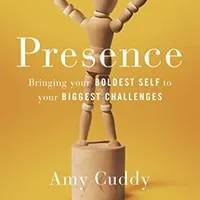
Presence: Bringing Your Boldest Self to Your Biggest Challenges — Amy Cuddy
Translates the academic confidence research (Bandura, body language, embodied cognition) into immediately useful territory — directly named in the article paragraph that introduces self-efficacy theory.
As an Amazon Associate, we earn from qualifying purchases — at no extra cost to you.
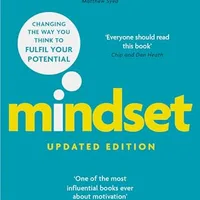
Mindset — Updated Edition: Changing The Way You Think To Fulfil Your Potential — Carol Dweck
The single most important book for understanding why confidence is buildable rather than fixed — directly named in the article as the key reference for the growth-vs-fixed mindset distinction that determines whether t…
As an Amazon Associate, we earn from qualifying purchases — at no extra cost to you.

Clever Fox Habit Calendar Circle (24-Month Habit & Goal Tracker Journal)
The evidence ledger in physical form — a structured journal designed specifically for daily wins and progress tracking, training the internal narrator to code experience accurately rather than through a systematically…
As an Amazon Associate, we earn from qualifying purchases — at no extra cost to you.
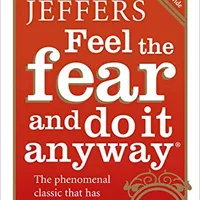
Feel the Fear and Do It Anyway — Susan Jeffers
The most practically specific guide to building a working relationship with fear that doesn't require waiting for it to disappear before acting — directly named in the article's Step 3 as the operational manual for th…
As an Amazon Associate, we earn from qualifying purchases — at no extra cost to you.

Full Focus Planner by Michael Hyatt (Linen Hardcover, 90-Day Cycle)
Step 5 explicitly states '90 days before evaluating' — the Full Focus Planner is purpose-built around a 90-day execution cycle, making the cognitive bridge from 'commit to 90 days' to 'here is the system that operates…
As an Amazon Associate, we earn from qualifying purchases — at no extra cost to you.
Related read: Why two people who saw the same event walk away with different stories
Related read: Self-Compassion Science: Why Kindness Builds Resilience
Was this helpful?