Habits· 10 min read
Why You're Still Tired After 8 Hours of Sleep
Getting 8 hours but still exhausted? Sleep science reveals why duration isn't enough — and the exact protocol to fix it tonight.

Why You Still Feel Tired After 8 Hours of Sleep (And the Exact Protocol That Fixed It)
I tracked my sleep for three months. Seven to eight hours, every night, with the disciplined consistency of someone who'd read enough productivity content to know better. Lights out at 10:30 PM. Alarm at 6:30 AM. Eight hours on paper, every single morning.
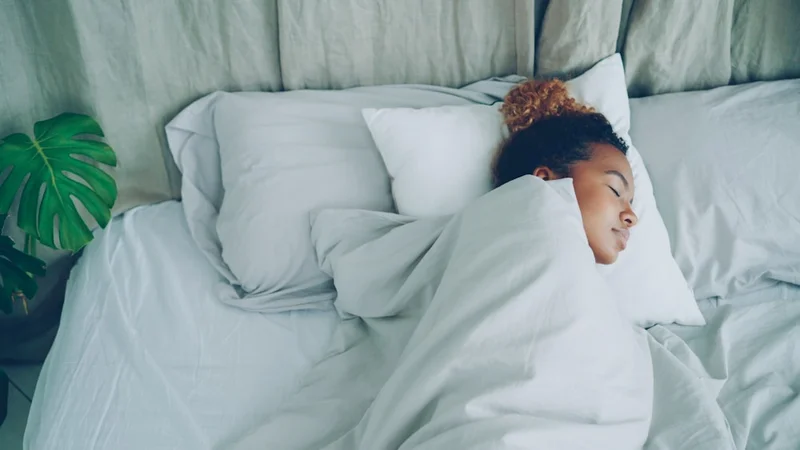
And every single morning I woke up still tired after eight hours — feeling like I'd spent the night in a tumble dryer.
I blamed stress. Then my mattress. Then my neighbour's dog. I tried the chamomile tea, the phone-off-before-midnight rule, a white noise app that turned my bedroom into a rainforest. Still groggy. Still slow. Still reaching for the fourth coffee by 11 AM. It was only when I stopped treating sleep as a tank to fill — and started treating it as an architecture to design — that anything actually changed.
The Duration Myth That's Keeping You Exhausted
Most of us inherited a simple model of sleep: pour in eight hours, wake up restored. The science tells a far more interesting story. Sleep isn't storage. It's a cascading sequence of biological events — a precise architecture of stages and cycles — that has to run in the right order, at the right times, for the right durations to deliver the cognitive and physical restoration you actually need.
Why do you still feel tired after 8 hours of sleep? Because duration is not the same as architecture. Eight hours of fragmented, poorly-timed, or environmentally disrupted sleep delivers mostly light Stage 2 while barely touching the deep-wave and REM phases where actual recovery happens. You hit the number. You don't get the function.
Matthew Walker, professor of neuroscience and psychology at UC Berkeley, laid this out in what remains the most thorough single-volume account of sleep science available. His central argument: while you're unconscious, your brain is actively clearing metabolic waste through the glymphatic system, filing and consolidating memories, regulating cortisol and growth hormone, and rebuilding the emotional processing capacity you'll need tomorrow. None of this happens on a timer you set. It happens across specific sleep stages — stages that can be cut short, disrupted, or skipped based on when you sleep, how your environment is configured, and what your chronotype actually requires.

Kindle Paperwhite (16GB, 2024)
If you want to read Matthew Walker's Why We Sleep — or any sleep-science book — without re-injecting the blue light you're trying to escape, an e-ink reader is the only honest option. Kindle Paperwhite uses no backlit…
As an Amazon Associate, we earn from qualifying purchases — at no extra cost to you.
You've probably felt the mismatch without having a name for it. Seven hours on a Wednesday and you wake up sharp. Nine hours on a Saturday and you wake up thick-headed and sluggish. The duration was more. The outcome was worse. That's architecture at work — specifically, the wrong stages being prioritised or cycles being cut off before they complete.
What's Actually Happening While You Sleep
Sleep runs in approximately 90-minute cycles. Four to six of these cycles make up a full night. Within each cycle, you pass through four distinct stages:
Stage 1 is the threshold — light, easily disrupted, just a few minutes. The first footstep into sleep.
Stage 2 is where your body temperature drops and your heart rate slows. Sleep spindles — rapid bursts of neural activity — consolidate motor memories here. You'll spend roughly 20–25 minutes in Stage 2 per cycle; it accounts for about half your total sleep time across the night.
Stages 3 and 4 (slow-wave deep sleep) are where the physiological repair happens. Human growth hormone is released. The glymphatic system flushes cerebrospinal fluid through brain tissue, clearing the beta-amyloid plaques associated with long-term cognitive decline. Your muscles repair. Your immune system reinforces. This is where you're physically rebuilt. And most of your deep slow-wave sleep is front-loaded into the first half of the night.
REM sleep is emotionally and cognitively restorative. Dreams aren't the point — what matters is the processing that happens beneath them. REM strips the emotional charge from difficult experiences (Walker calls this "overnight therapy"), and it's the phase where creative associations form between disparate ideas. REM concentrates heavily in the second half of the night — precisely the half most people sacrifice with early alarms and late bedtimes.
The structural implication: cut your sleep short at hour seven instead of eight and you lose disproportionately more REM than any other stage. Eight hours of fragmented, poorly-timed, or environmentally disrupted sleep can deliver plenty of light Stage 2 while barely touching your deep-wave or REM quotas. You hit the number. You don't get the function. That's why you still feel tired after 8 hours — the architecture is incomplete.
Why Timing Matters as Much as Duration
There's a word that explains most people's chronic exhaustion: chronotype. It's your genetically encoded preference for when your body wants to sleep and wake — and it's as biologically real as height.
Till Roenneberg at Ludwig Maximilian University of Munich studied the sleep patterns of more than 300,000 people and found that chronotype is largely fixed by genetics. About 25% of people are genuine morning types. About 25% are genuine evening types. The remaining 50% fall somewhere on the spectrum between them. None of this is a personality trait. It isn't discipline or laziness. It's wiring.
The problem is that modern work schedules are architected almost entirely for morning chronotypes. If you're a confirmed evening type — someone whose natural melatonin onset arrives closer to midnight — then a 6:30 AM alarm doesn't give you eight hours of restorative sleep. It gives you eight hours of socially jet-lagged sleep, where your melatonin hasn't finished its cycle, your core temperature hasn't begun its pre-waking rise, and you're being pulled from deep sleep before your biology signed off on it.
Roenneberg coined the term "social jet lag" for this misalignment. His research suggests that the majority of the working population carries at least one hour of it on weekdays. Every single Monday, for most people, is a minor act of chronobiological violence.
You can't always restructure your work schedule around your chronotype. But partial adjustments compound: protecting weekend sleep consistency so your circadian clock doesn't shift dramatically between Friday and Monday, finding the 30–45 minutes of alignment your schedule may allow, and — critically — getting actual data on what your sleep architecture looks like so you're not optimising blind. A sleep tracker won't tell you what to do, but it shows you what's actually happening: your cycle durations, your deep sleep percentages, your HRV, and exactly how a late meal or an extra glass of wine shows up in your recovery scores the next morning. Two weeks of data reveals patterns you'd never find by feel alone.

Amazfit GTR 4 Smart Watch
Two weeks of objective sleep data — cycle durations, deep sleep percentages, HRV trend — reveals patterns you'd never find by feel. The Amazfit GTR 4 logs sleep stages and recovery scores at a price that doesn't gate…
As an Amazon Associate, we earn from qualifying purchases — at no extra cost to you.
The Environment Your Brain Needs to Actually Recover
Once you're in bed, three variables dominate the quality of what happens next: temperature, light, and sound.
Temperature: Your body needs to drop its core temperature by roughly 1–1.5°C to initiate and sustain deep slow-wave sleep. This is why you instinctively push the duvet off or sleep with one foot out — your body is trying to shed heat. Research from the National Sleep Foundation places the optimal bedroom temperature for most adults at 15.5–19.4°C (60–67°F). If you regularly sleep warm, this is the highest-leverage physical change you can make tonight. Drop it 2–3 degrees and note what the morning feels like.
Light: Even small amounts of ambient light in the sleeping environment — a phone charging LED, streetlight bleeding through thin curtains, the standby glow of a TV — suppress melatonin production and fragment sleep architecture. The effect is strongest in the final hours of sleep, which are the hours richest in REM. Blackout curtains aren't an indulgence; they're a precision intervention for the most cognitively valuable part of your night.
Sound: Unpredictable noise — a partner's snoring, intermittent traffic, a phone buzzing at 3 AM — triggers micro-arousals throughout the night. You won't remember them in the morning. But they're there in your data, cutting cycles short and shallowing your recovery. Consistent ambient sound, whether brown noise, white noise, or a fan, smooths over those sudden spikes and keeps you in deeper cycle phases longer. It's not about filling your room with sound. It's about removing the irregular peaks that your sleeping brain can't ignore.
The 60-Minute Pre-Sleep Protocol That Changes Everything
The biggest single lever most people have never touched is what happens in the hour before they attempt to sleep. Not the sleep itself — the runway into it.
The problem, specifically, is light. Short-wavelength blue light emitted by phones, laptops, and full-brightness LED overhead lighting signals your circadian system that it's still mid-afternoon. Research published in PNAS by researchers at Harvard Medical School found that evening blue light exposure can delay melatonin onset by 90 minutes or more. Which means the person checking their phone at 9:30 PM and expecting to sleep smoothly by 10:30 PM is, hormonally speaking, trying to fall asleep at 9 AM. The chemistry simply isn't ready.
Blue-light blocking glasses worn from one to two hours before bed filter the specific wavelengths that suppress melatonin without requiring you to sit in darkness or stop doing anything you'd normally do in the evening. Put them on, continue your evening, and let your body's natural hormonal cue for sleep build without interference.
The second pre-sleep intervention with the most consistent evidence behind it is magnesium glycinate. Magnesium is a cofactor in the regulation of GABA — the primary inhibitory neurotransmitter that quiets neural activity and shifts the nervous system toward rest. A randomised controlled trial published in the Journal of Research in Medical Sciences found that magnesium supplementation significantly improved sleep quality, sleep onset latency, and early morning awakening. The glycinate form is notably better absorbed and gentler on the digestive system than magnesium oxide or citrate. 200–400mg taken 30–60 minutes before bed gives your nervous system a nudge toward parasympathetic dominance — the physiological state sleep requires.
Beyond those two: dim your lights progressively through the evening. Your overhead LEDs at full brightness at 9 PM are telling your biology it's noon. Dimming them — warm-toned, low — mimics the natural light trajectory your circadian rhythm evolved tracking. It costs nothing. It compounds with everything else.
How to Wake Up Without Hating the Alarm
Here's the part most sleep content skips: the waking experience itself.
You can execute a near-perfect sleep protocol and still undermine the investment by waking mid-deep-sleep-cycle. Waking from Stage 3 or 4 produces a state called sleep inertia — a groggy, cognitively impaired condition that can persist for 30 to 60 minutes. Your brain is rebooting from the deepest phase of shutdown. The standard phone alarm fires at whatever time you've set, without any reference to where you are in your current cycle. That's structural bad luck built into the device.
Sunrise alarm clocks address this by mimicking natural dawn light, gradually brightening over 20–30 minutes before your target wake time. The light triggers a gentle cortisol rise and begins shifting you from deep sleep toward lighter stages, so when the sound eventually activates you're being called from Stage 1 or early REM rather than wrenched from the restoration floor. The difference in your first hour — cognitively and in how your body feels — is not minor.
How to Start Tonight
You don't need to overhaul all of this at once. Sleep optimisation compounds exactly like any other behaviour design — small consistent changes accumulate into fundamentally different results over weeks.
Here's the sequence I'd follow:
1. Lock your wake time first. Choose one time and hold it regardless of when you went to bed. Consistency in wake time is the single most powerful regulator of circadian rhythm. Everything else builds on this anchor.
2. Drop your bedroom temperature 2–3 degrees tonight. This is the lowest-cost, highest-impact experiment available to you right now. No gear required.
3. Remove your phone from the bedroom entirely. Not face-down — outside the room. Buy a basic alarm clock if you need one, or invest in a sunrise alarm that also makes the waking experience worth looking forward to.
4. Add consistent ambient sound. Particularly useful in urban environments or if you're a light sleeper. A brown noise or white noise machine running through the night smooths the sonic spikes that fragment your cycles without you ever knowing it's happening.
5. Try magnesium glycinate for two weeks. Track informally: how quickly you fell asleep, whether you woke at night, how you felt in the first 30 minutes after the alarm. Two weeks is enough to see a pattern.
6. Get one week of data. Even a basic sleep log — bedtime, wake time, first-morning subjective rating — shows you more than guesswork ever will. If you have a tracker, review your deep sleep percentage and HRV trend over the week.
Jim Rohn used to say that you can't change your destination overnight, but you can change your direction overnight. Sleep is one of those rare domains where designing your evolution starts at the foundation — and where the direction change pays compound dividends almost immediately, because every other system you're trying to build runs on the foundation of what happens in those dark hours.
Your mood, your memory, your creative capacity, your ability to regulate emotion under pressure, your physical recovery — none of it performs at the level your waking efforts deserve without properly architected sleep. You've been optimising the duration. Start optimising the design.
The upgrade isn't complicated. It's just been mis-categorised as optional.
What's the one sleep variable you know you've been neglecting — the one you've kept meaning to address but haven't? Drop it in the comments. Let's figure out the right intervention together.
Was this helpful?