Productivity· 9 min read
My Second Brain Setup: Stop Losing Every Good Idea
A second brain is a knowledge system that captures ideas before they evaporate. Here's the exact PKM setup I use — and how to start building yours.
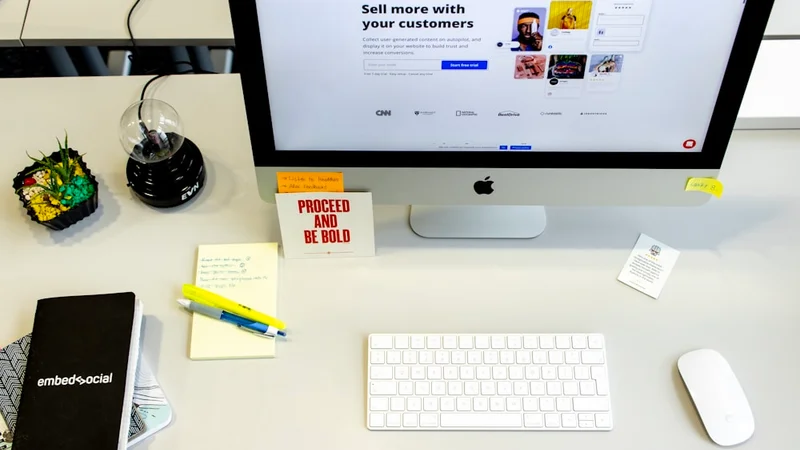
My Complete Second Brain Setup: How I Stopped Losing Every Good Idea I Had
Somewhere between mile four and mile six of a long run three years ago, I solved a problem I'd been stuck on for weeks. It would be almost a year before I learned the concept — the second brain — that explained why I kept losing solutions exactly like that one.
The structure of a complicated project — one I'd been wrestling with through about forty open browser tabs and three months of half-formed thinking — just materialized. Clearly. Completely. The kind of wordless clarity that only arrives when your legs are moving, your phone is silent, and there's nothing to interrupt the thought. I ran through the whole thing in my head. I told myself I'd remember. I got home, showered, made coffee, sat down.
Gone. Every last piece of it. Not a pale outline. Not a vague impression. Gone in the way that things go when you never wrote them down — completely, with no trace that they were ever there.
That wasn't a one-time failure of memory. It was a daily one.
The same thing was happening to every book I read. Every podcast insight I nodded along to in the car. Every conversation where someone said something sharp and I thought I need to hold onto that. I had a notebook graveyard on my shelf — five different journals started with real intention and abandoned after thirty pages. I had a phone camera roll full of whiteboard photos I'd never opened again. I had a "saved" folder on social media that had accumulated years of content I intended to revisit and didn't. I'd read maybe sixty nonfiction books in four years, genuinely enjoyed most of them, and couldn't meaningfully summarize a quarter of them.
None of it was connected. None of it was findable. None of it was usable.
Here's what I hadn't understood: I didn't have an information problem. I had a system problem. And the system problem had both a name and a solution.
Cognitive science has had a working explanation for this for decades. Your working memory — the active mental workspace where you hold and manipulate information in real time — can handle roughly four things simultaneously. Not forty. Four. That's Miller's Law, updated by more recent research: the real capacity of working memory is approximately four chunks, give or take one. The research is consistent across dozens of replications.
This isn't a personal deficiency. It's your brain's architectural constraint. Your brain was built for rapid pattern recognition, social navigation, and immediate threat response — not for holding the key insights from seventeen books in retrievable form across a six-month period.
Tiago Forte, who codified this problem more precisely than anyone before him, puts it simply: your mind is for having ideas, not holding them. His framework — refined over years of teaching it to tens of thousands of people — is what he calls a "second brain": a trusted external system that handles the storing so your biological brain can keep doing the thing it's actually good at.
Atomic Habits — James Clear
Building a second brain isn't a one-weekend project — it's a habit. The capture, the weekly harvest, the 'so what?' note: each one is a tiny behaviour that has to compound. James Clear's framework on stacking small at…
As an Amazon Associate, we earn from qualifying purchases — at no extra cost to you.
I spent two weeks building a version of that system. It's changed how I work more than almost anything else I've tried.
Here's the exact setup.
What Is a Second Brain (and Why Your Current "System" Probably Isn't One)
A second brain is an external, trusted system for capturing, organizing, and retrieving your knowledge and thinking on demand. Unlike a folder full of bookmarks or a pile of half-read books, it stores ideas in a way that stays findable and usable — sometimes years after you first encountered them. The word trusted is doing most of the heavy lifting in that definition.
Most people's knowledge "system" fails one simple test: when you need a specific thing you know you encountered — a study on decision fatigue, a framework your mentor described two years ago, that line from the book you read last spring — can you find it in under three minutes? If the honest answer is "probably not," you don't have a system. You have a collection of intentions.
The notebook graveyard is the most common version of this. Several journals, each started with real momentum, each containing genuinely sharp thinking, none of which you can locate without flipping through the entire volume. There's also the browser tab variant: the person running forty-seven open tabs "because I need to come back to those." And the screenshot archive version — thousands of saved images that function as a monument to things you intended to think about and never did.
What makes a system work isn't the volume of what you capture. It's retrievability. Can you move from a half-remembered idea to the original note in three minutes? Build toward that standard, and most of the other decisions — what tool to use, how to label things, how to organize — fall into place on their own.
The First Pillar: Capture Only What Resonates
Here is the trap almost everyone falls into when they start building a second brain: they try to capture everything.
Every highlight. Every paragraph that might be useful someday. Every article that's tangentially related to something they care about. The system floods with noise inside a week and becomes exactly as overwhelming as the chaos they were trying to escape from. I made this mistake for the first three months. My Notion database had 400 notes. I could tell you almost nothing that was in it.
The rule that fixed it: capture only what genuinely surprises you, moves you, or changes your mind.
Not what seems important in the abstract. Not what you feel you should find interesting. What actually resonates — the idea that makes you pause mid-sentence, the example that makes something abstract suddenly real, the claim that challenges something you've held as true for years without examining it. That friction — the moment of slight resistance or electric recognition — is your filter.
In practice, I capture from four sources: books and articles (notes as I read, in my own words), podcasts and talks (a voice memo or typed note immediately after, not during — the act of recall is part of the value), conversations (a short note within an hour, while the texture of the exchange is still present), and my own thinking (the one most people skip — original synthesis is often more valuable than the content that triggered it).
For analog capture — still where my best first-pass thinking happens — I use a dotted A5 notebook that lives on my desk and travels with me most places. The dotted grid is a minor thing that turns out to matter a lot: it's flexible enough for both structured lists and loose, spatial thinking without the tyranny of ruled lines.

Moleskine Classic Notebook — Hardcover, Large, Black
The notebook the article describes is, in practice, this notebook. Hardcover so it survives a backpack. Large enough for spatial thinking, small enough to actually carry. The expandable back pocket is the unsung featu…
As an Amazon Associate, we earn from qualifying purchases — at no extra cost to you.
For digital capture and long-term storage, I use Obsidian — free, offline-first, built on plain text files that will be readable in twenty years regardless of what the company does. The barrier to entry is slightly higher than Notion, but the ownership model is worth it.
Pick one tool to start. Not both. The system lives or dies on consistency, not on features.
The Second Pillar: Organize for Retrieval, Not for Filing
This is where most note-taking systems quietly fail, and where the most common productivity advice actively misleads you.
The instinct when organizing notes is to sort by subject: a personal development folder, a health folder, a business folder, a psychology folder. Hierarchical, neat, logical. It's also how you build a beautifully organized archive you never actually use — because when you're working on a specific project, you don't want a broad topic folder. You want the specific things relevant to what you're doing right now.
Forte's PARA method reframes the organizing question entirely. Instead of asking "what is this note?" ask "where am I actually going to use this?"
PARA stands for: Projects (active things with a deadline and a clear outcome), Areas (ongoing responsibilities with no end date — health, finances, relationships), Resources (topics you're interested in for future reference), and Archives (everything inactive). When a note lands, you ask which of those four categories it belongs to.
The logic is simple and the payoff is real: when you sit down to work on a specific project, everything relevant to it is in one place. Not scattered across subject folders. Not buried under three years of tangentially related content. Right there, filterable by context.
A note on the "Resources" folder: this is where the majority of your reading and learning goes, loosely organized by topic area. The difference between a useful Resources section and a digital landfill is that Resources gets consulted regularly — not just grown. Every few months, archive whatever you haven't touched. Keep only what you're actively thinking about.
The Third Pillar: Make Your Notes Progressively Distillable

A note that's captured but never actionable is just slightly better-organized clutter.
The goal isn't notes you can find. It's notes you can use — often months after you wrote them, in a context you couldn't have predicted. That requires a specific structure.
Sönke Ahrens, writing about the Zettelkasten method (German for 'slip-box') developed by sociologist Niklas Luhmann (who used an analog index card system to produce over seventy books and 400 academic articles in his lifetime), argues that a working note system doesn't just store information — it stores ideas in relation to other ideas, with enough context that future-you can immediately grasp what was important and why.

Kindle Paperwhite (12th Generation, 2024)
Luhmann produced his slip-box from a desk and an enormous amount of reading. The modern equivalent — for those of us who don't have a personal library — is a device that lowers friction between you and the next idea w…
As an Amazon Associate, we earn from qualifying purchases — at no extra cost to you.
The practical version I've settled on: every note gets a "so what?" — one or two sentences at the top answering why this matters in my own words. Not a transcription of the original text. My interpretation. My application. The thought that was actually triggered.
Then, once a week, I do what I call a harvest pass: fifteen minutes, skim recent notes, bold anything that still feels important, archive or delete anything that doesn't hold up. The notes that survive multiple harvest passes are the ones worth connecting to other notes, pulling into active projects, or eventually writing about.
The weekly review is the maintenance cost of the whole system. Fifteen minutes, once a week. That's the entire investment that keeps the second brain alive rather than becoming the sixth notebook graveyard.
The Fourth Pillar: Express — Knowledge Only Grows When You Use It
Here's the opinion people push back on when I share it: a second brain that you never create anything with is just a graveyard with better organization.
The whole point of capturing and organizing knowledge isn't to build a comprehensive archive. It's to produce better output — better decisions, better writing, clearer thinking, more useful conversations. A second brain without an expression habit is like building an incredible kitchen and never cooking a single meal in it. Impressive, maybe. Useful, no.
Forte calls the building blocks of this "intermediate packets" — small, reusable chunks of thinking that you accumulate over time and remix into new work. A sharp paragraph you wrote in your notes three months ago that becomes the opening section of a report. A framework you assembled from four different books that becomes the structure for a presentation. A cluster of connected ideas you've been quietly building that surfaces immediately when someone asks for your take on something.
This is where the system starts to work for you rather than requiring constant feeding. Ideas you've captured and connected start generating new thinking you didn't plan. Your second brain begins to feel less like a filing cabinet and more like a thinking partner.
Related: Daily Writing Habit for Clearer Thinking
How to Build Your Second Brain This Week
You don't need a weekend project. You don't need to port three years of scattered notes into a new system before you start. Here's the minimum viable version — running in under an hour.
Step 1: Choose one capture tool. A notebook on your desk
Clever Fox Habit Calendar Circle — 2-Year Habit Tracker
Three notes captured today won't survive contact with next week if the habit doesn't take root. A visible habit tracker on the wall does what a forgotten note app cannot: it makes the streak embarrassing to break. Tra…
As an Amazon Associate, we earn from qualifying purchases — at no extra cost to you.
or a free Obsidian download on your laptop. Not both to start. Pick whichever creates less friction for how you most commonly think — reading at a desk means digital is fine; ideas that arrive on walks or in the shower means analog wins, every time.
Step 2: Set up PARA in ten minutes. Four folders. Four labels. Projects, Areas, Resources, Archives. Don't overthink the taxonomy. The folders exist to route notes, not to express your personality.
Step 3: Add three notes today. Go through your memory. What's one thing you read in the last two weeks that genuinely stuck? One insight from a recent conversation? One idea you've had more than once but never written down? Three notes, in your own words. Add a "so what?" to each one. You now have a second brain.
Step 4: Schedule a weekly review. Fifteen minutes. Sunday evening, Monday morning, Friday afternoon — wherever it fits. Put it in your calendar as a recurring event. The weekly review is what separates a living system from the fifth abandoned notebook. Without it, you'll be back to a graveyard within a month.
Step 5: Create something with it this week. A paragraph in a journal. A message to a friend explaining an idea you captured. A decision informed by a note from last month. The system only proves its value when knowledge moves from storage into the world.
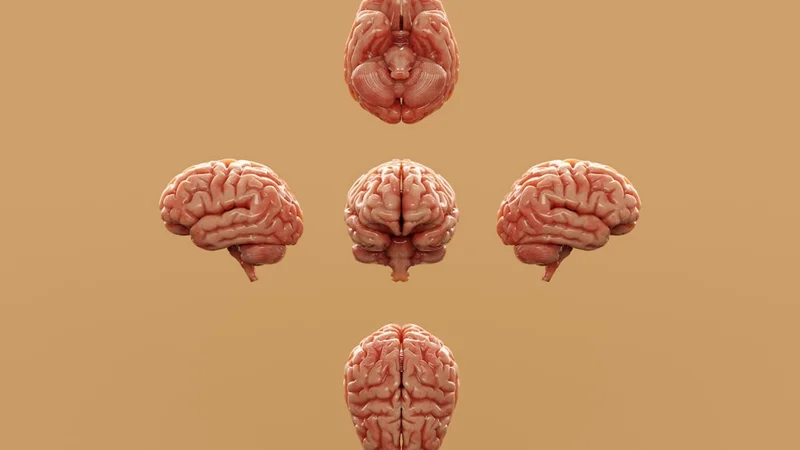
Related: How to Remember What You Read (And Actually Use It)
Jim Rohn used to say the mind is like a garden — it will grow whatever you plant and tend. What he didn't add, but what I'd put on the next line: the garden also needs somewhere to keep the seeds between seasons.
Every good idea you've had and lost. Every insight you read and forgot within a week. Every framework you half-assembled and abandoned because you couldn't remember where you'd left the pieces. Those aren't failures of intelligence. They're the cost of not having a system.
When your best thinking is cumulative — when every book you read connects to something you encountered three years ago, when every conversation adds a layer to a structure you've been quietly building, when your ideas don't evaporate but compound — you're not just more productive. You're designing your evolution rather than just experiencing it.
What's the idea you've had most often and never built anything with? That's exactly where to start.
Related: How to Keep Your Brain Sharp: Science-Backed Protocol
Was this helpful?