Mindset· 10 min read
The Cognitive Biases That Secretly Run Your Life
You're not as rational as you think. Here are the most influential cognitive biases shaping your decisions daily — and how to think around them.

The Cognitive Biases That Secretly Run Your Life
It was a Tuesday afternoon. I read the email once, twice, three times — and each reading made me more certain: my colleague was being deliberately dismissive. The tone was off. The missing greeting. The one-sentence reply to what had taken me 45 minutes to write.
I spent the better part of an hour composing a response that was, I told myself, measured and professional. My manager happened to be cc'd on the thread. The next morning she stopped by my desk.
"He was apologizing," she said. "He sent that from the hospital parking lot. His father had just been admitted."
The embarrassing part wasn't being wrong. It was how certain I'd felt — that feeling of absolute certainty is the most reliable signature of a cognitive bias at work. I hadn't noticed an absence of evidence against my interpretation — I'd actively collected evidence for it. Every short word and missing comma had been filed neatly under hostile, reinforcing what I'd already decided before I'd finished the first paragraph.
This isn't a story about being a bad person. It's a story about a brain doing exactly what it was built to do. The problem is that what it was built to do and what we actually need it to do are two very different things.
Your Brain Evolved to Survive, Not to Think Clearly
Your brain didn't evolve to perceive reality accurately. It evolved to perceive it efficiently — to generate fast, low-cost approximations that are good enough to survive in an environment where slow, careful judgment was often fatal.
In the ancestral environment, this worked brilliantly. The person who paused to carefully evaluate whether the rustling in the grass was actually a predator didn't pass on many genes. The person who flinched first and evaluated later did.
The result is a cognitive architecture that is spectacularly capable and systematically distorted in the same moment. Nobel laureate Daniel Kahneman spent four decades mapping this with his research partner Amos Tversky. Their foundational 1974 paper in Science established a framework that's become one of the most influential in all of psychology: your brain operates in two modes. System 1 — fast, automatic, effortless, heuristic-driven — generates outputs before System 2, the slow deliberate analytical process, has even been consulted. Most judgments you make throughout the day don't involve System 2 at all. You feel certain you've reasoned something through. In many cases, you haven't. System 1 delivered a verdict and System 2 wrote the press release.
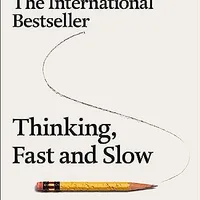
Thinking, Fast and Slow
The source text behind everything this article covers. Kahneman's own account of System 1, System 2, and the full landscape of cognitive bias — the book that started the field as we know it.
As an Amazon Associate, we earn from qualifying purchases — at no extra cost to you.
The practical consequence is that most of your daily judgments — about people, about risk, about your own capabilities, about what happened and why — are filtered through a set of reliable distortions that psychologists call cognitive biases. Knowing they exist isn't enough to neutralize them. The biases operate in System 1. You can't decide to stop being biased any more than you can decide to stop having a blink reflex. But you can learn to recognize their signatures — and build protocols that interrupt them at the moments that matter most.
What is a cognitive bias? A cognitive bias is a systematic deviation from rational judgment — a predictable error arising from the brain's reliance on mental shortcuts when processing information. Most operate entirely below conscious awareness. You often feel most certain precisely when one is most active.
Here are the five that most reliably shape your daily experience — not in abstract philosophical ways, but in the actual texture of your decisions, your relationships, and the story you tell yourself about who you are.
Confirmation Bias: The Loop That Makes Real Growth Impossible
Of all the most common cognitive biases affecting your daily decisions and judgments, confirmation bias is probably doing the most damage, most quietly.
It works like this: once you've formed a belief — about a person, a situation, your own abilities, or the world — your brain automatically filters incoming information to favor evidence that confirms it. Contradicting evidence gets noticed less, weighted less, and remembered less. This isn't a choice. It's the default.
The research documents this across an uncomfortable range of domains. People with low self-esteem remember more critical feedback than positive feedback — not because they receive more of it, but because the confirmation filter records negative data with greater fidelity. Investors hold losing positions longer than winning ones, selectively attending to signals that suggest recovery is coming. Political partisans exposed to genuinely ambiguous evidence interpret it, reliably, as confirming their prior position.
The most expensive version of confirmation bias is the one you carry about yourself. The belief "I'm not a person who finishes things" generates a filter that records every abandoned project and discounts every completed one. The belief "I'm not creative" files away every moment of genuine originality under something else. The identity you've assembled is a greatest-hits compilation curated by a very partisan archivist.
The debiasing move here is specific: keep a decision journal. Not a diary of feelings, but a record of predictions and the reasoning behind them. Before a significant judgment — about a person, a plan, an expected outcome — write down what you expect to happen and why. Come back to it three months later. The gap between what you predicted and what actually occurred, read honestly over time, is one of the most direct windows into the specific patterns of your own confirmation bias.

Clever Fox Habit Calendar Circle (24-Month)
The closest physical product to the predictions-vs-outcomes decision log the article prescribes. Two-year circular format — built for exactly this kind of structured self-tracking.
As an Amazon Associate, we earn from qualifying purchases — at no extra cost to you.
Why you make your worst decisions when it matters most
The Availability Heuristic: Why Your Risk Radar Is Broken
How does your assessment of dying in a plane crash compare with dying in a car accident?
Most people vastly overestimate the former. In the United States, your lifetime odds of dying in a motor vehicle crash are approximately 1 in 95, according to the National Safety Council. Your odds in any aviation accident — commercial, charter, or private: roughly 1 in 205,000. Yet fear of flying is far more common than fear of driving.
The reason is the availability heuristic — one of Kahneman and Tversky's most replicated findings. Your brain judges the probability of something by how easily an example comes to mind. Plane crashes make the news. Car accidents are ordinary. So the dramatic, emotionally vivid, highly retrievable example inflates the perceived probability of the event.
This distortion operates well beyond air travel. After a layoff gets covered in the business press, you overestimate your own probability of being next. After a friend is diagnosed with a serious illness, your subjective risk estimate climbs even if your actual risk hasn't changed. After you've personally witnessed a public failure, you underestimate your probability of success in a similar situation — not because the base rate has changed, but because the emotionally loaded memory is now highly available.
The corrective is deliberate base-rate thinking. When assessing any risk or probability, ask: what actually happens to most people in this situation? Not the memorable exceptions. Not the dramatic cases you've heard about. The statistical majority. The answer is almost never as extreme as the available example sitting in the front of your mind.
The Fundamental Attribution Error: How We Misjudge Each Other Every Day
Here's the cognitive bias that quietly shapes your relationships more than almost any other.
When other people do something wrong or disappointing, you tend to attribute it to who they are — their character, their values, some fixed feature of their nature. When you do something wrong or disappointing, you tend to attribute it to circumstances — the pressure you were under, the information you lacked, the unusual conditions of that specific day.
Social psychologist Lee Ross named this the fundamental attribution error, and the asymmetry is well-documented. We judge others by their behavior and ourselves by our intentions.
The colleague who misses a deadline is disorganized. When you miss a deadline, it's the unreasonable workload and the miscommunicated priorities. The driver who cuts you off is aggressive. When you cut someone off, you were distracted by something genuinely important. The friend who cancels last-minute is unreliable. When you cancel, there really was no other option.
Full Focus Planner — Michael Hyatt
Daily reflection prompts that encode the contextual-generosity discipline the article calls for — structured self-attribution review built into a 90-day quarterly format.
As an Amazon Associate, we earn from qualifying purchases — at no extra cost to you.
This isn't hypocrisy — it's cognitive architecture. You have access to the full context of your own behavior: the backstory, the competing pressures, the intentions you started with. You have almost none of that for anyone else. You're working with radically different information sets, which produces systematically different attributions.
The practical implication runs in two directions. For self-judgment: when you're building a character narrative about another person based on a single behavior, ask what you'd need to know about their circumstances to explain the same behavior compassionately. For your own development: notice how liberally you apply contextual explanations to yourself, and consider extending that same generosity as a discipline rather than an entitlement.
The Sunk Cost Fallacy: Paying for the Past With Your Future
You're an hour into a movie that isn't working for you. The rational question is simple: do you want to spend the next 90 minutes watching this film? But the question most people actually ask is different: I've already spent an hour on this, shouldn't I finish it?
The sunk cost fallacy is the compulsion to factor past, irrecoverable investments — money, time, effort, emotional energy — into decisions about the future, even though that past investment is gone regardless of what you decide next.
This bias is responsible for a remarkable amount of quiet human suffering. People stay in wrong careers because of the decade already spent building credentials. They stay in wrong relationships because of the years already given. They continue funding failing projects because of the capital already committed. The exit always feels like a loss, even when continued investment costs more than leaving.
The debiasing move is what the business world calls a sunk cost audit. For any major ongoing investment of your time and attention, ask the question you'd ask if you were encountering it for the first time today, with zero prior investment on the table. Given only what I know now about this path, with no history attached, would I choose to begin here today?
When the honest answer is no — you have your information.
Optimism Bias: The Confidence That Quietly Overestimates You
Approximately 80% of drivers believe they are above average. Mathematically, this cannot be true. And yet the belief persists with remarkable consistency across cultures and demographics — not because people are deluded but because optimism bias is one of the most universal findings in all of cognitive science.
Tali Sharot at University College London has studied this extensively: most people believe they are less likely than the average person to experience negative life events (illness, job loss, divorce, accident) and more likely to experience positive ones. The practical consequences show up everywhere. Projects routinely take twice as long and cost twice as much as estimated. Most people consistently overestimate what they'll accomplish in a given day, week, and year — while dramatically underestimating what's possible in a decade of sustained small actions.
The corrective isn't pessimism. It's what researchers call the "outside view" — the practice of asking, before committing to any timeline or outcome estimate, what actually happens to most people attempting something similar. Planners who incorporate base rates from analogous past projects produce estimates that are significantly more accurate than those who only reason about the specific project in front of them. The outside view is a simple check that takes about three minutes and consistently improves prediction quality.
How to set SMART goals that actually work
How to Start Debiasing Yourself Today
Understanding cognitive biases intellectually and actually catching them in real time are two different skills. Here's what the research shows works.
-
Run a pre-mortem before committing. Before locking in a plan, spend ten minutes imagining it has already failed. Work backward to identify the most plausible causes. This activates different neural retrieval pathways than forward-looking optimism and reliably surfaces risks that forward planning misses — Kahneman calls it one of the most useful debiasing practices available.
-
Actively seek disconfirming evidence. For any belief you hold with strong conviction, ask: what would I need to see to genuinely update my view? Then look for it. If you can't imagine evidence that would change your mind, you're not reasoning — you're confirming.
-
Name the bias before you act. When you notice an emotionally charged judgment forming, name the distortion you suspect is operating. "This looks like confirmation bias." "This feels like sunk cost thinking." The labeling itself activates System 2 review and introduces a beat of deliberate evaluation before the automatic verdict becomes action.

Moleskine Classic Notebook (Large, Ruled)
The labeling protocol is itself a writing practice. The canonical notebook for the decision record the article recommends — hardcover, large, ruled, 240 pages.
As an Amazon Associate, we earn from qualifying purchases — at no extra cost to you.
- Build a decision record. Write down significant decisions with your reasoning at the time. Review them in three to six months. The patterns of your specific biases — the situations where you reliably overestimate, the people you consistently misjudge, the risks you habitually get wrong — become visible quickly.
For a broader thinking toolkit that builds on cognitive bias theory and extends it into practical mental frameworks, Shane Parrish's The Great Mental Models series is the most useful collection of thinking tools I've found in book form. It bridges Kahneman's research with a latticework of multi-disciplinary frameworks you can actually apply.
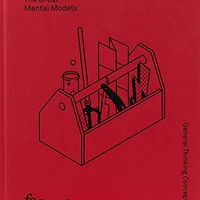
The Great Mental Models, Vol. 1 — Shane Parrish
Explicitly recommended in this article. The most useful collection of thinking tools available in book form — bridges Kahneman's research with practical multi-disciplinary frameworks you can actually apply.
As an Amazon Associate, we earn from qualifying purchases — at no extra cost to you.
If you want these concepts to stick past the first week — to actually modify your behavior rather than produce a vague nodding familiarity — Anki's free spaced-repetition system lets you build a personal bias deck: the name of the bias, its signature in daily life, and the specific debiasing question that interrupts it. Daily five-minute review sessions compound this knowledge in a way that reading alone never does.

Kindle Paperwhite (2024, 16GB)
The natural companion for building the personal bias review system the article prescribes — keep Kahneman, Parrish, and the full cognitive-bias canon in pocket for daily five-minute sessions.
As an Amazon Associate, we earn from qualifying purchases — at no extra cost to you.
Building a daily writing habit for clearer thinking
You Cannot Be Unbiased — But You Can Be Deliberately Less Biased
Here's the counter-intuitive takeaway that most articles on this topic avoid: the goal is not to eliminate System 1. It's fast, energy-efficient, and mostly accurate in low-stakes daily situations. Trying to run System 2 analysis on every judgment would be both impossible and exhausting.
The goal is to know when System 1 is operating in high-stakes situations where accuracy matters more than speed — and to have specific protocols that create a pause between the automatic verdict and the consequential action.
You will still be biased tomorrow. So will I. The difference between someone whose decisions consistently move their life in better directions and someone whose don't is rarely intelligence. It's almost never willpower. It is, reliably, the presence or absence of deliberate thinking systems that create checkpoints between the reflexive reaction and the decision that actually shapes something.
Designing your evolution isn't about becoming a perfect reasoning machine. It's about becoming a careful student of your own mind — not to judge what you find there, but to understand it well enough to stop being governed by it in silence.
What bias do you most clearly recognize in your own decision-making? That's not a rhetorical question — it's the most useful place to start. Related read: Why you stop seeing warning signs: normalization of deviance
Related read: Why imagining their view makes you less judgmental
Related read: Why two people who saw the same event walk away with different stories
Related read: The effort heuristic — why hard work feels more valuable
Related read: The Winner's Curse: Why Winning Bidders Overpay
Related read: Why We Lie Most When Trying to Impress
Related read: When to Trust Your Snap Judgments, According to Science
Was this helpful?