Mindset· 10 min read
What 90-Year-Olds Know That Most People Learn Too Late
Deathbed regrets are surprisingly consistent. Here's what research on elder wisdom reveals — and how to apply it to design your life right now.

What 90-Year-Olds Know That Most People Learn Too Late
My grandfather had eleven songs that would never be heard.
He'd been writing music his whole adult life — nothing professional, just a beat-up acoustic guitar propped in the corner of his study and a drawer stuffed with handwritten sheet music. When we cleaned out his house after he died, we found every piece meticulously notated, none of it ever recorded. He had always planned to "do something with them." When things slowed down. When retirement finally arrived. When the kids were properly grown.
Things never slowed down. They rarely do. It's one of the most consistent things 90-year-olds report when researchers finally ask them.
I think about those songs more often than I expect to. Not as a tragedy — he lived a full life, was genuinely loved, did meaningful work. But as a data point. One data point in a pattern that researchers have been documenting for decades with uncomfortable consistency: the things people wish they'd done differently are almost never the things they spent most of their time pursuing.
If you want to understand what a well-lived life actually looks like — not theoretically, but empirically, from the vantage point of people who have nearly completed one — the life wisdom from 90-year-olds is one of the most reliable datasets available. And what it reveals might reorganize your priorities faster than any productivity framework ever could.
The Researcher Who Sat With the Dying
Bronnie Ware didn't set out to change how anyone thought about life. She was an Australian palliative care worker who spent years working with patients in the final weeks of theirs. She started writing down what they said — not their medical data, but their regrets, their wishes, the things they most needed someone to hear before they couldn't say them anymore.
What she found became The Top Five Regrets of the Dying — one of those books you read in an afternoon and spend years thinking about.
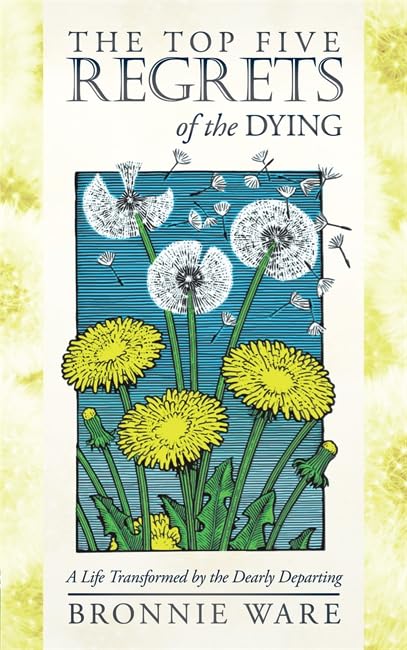
The Top Five Regrets of the Dying
Bronnie Ware spent years sitting with patients in their final weeks, writing down what they actually said when there was nothing left to perform — not their medical history, but their regrets. The five patterns she do…
As an Amazon Associate, we earn from qualifying purchases — at no extra cost to you.
The five most common regrets, documented across hundreds of patients:
- Not having had the courage to live a life true to themselves, rather than what others expected
- Working too hard
- Not having had the courage to express their feelings
- Not having stayed in touch with friends
- Not having let themselves be happier
Read that list again. Slowly this time.
Notice what's on it. Then notice what isn't.
Nobody said they wished they'd earned more. Nobody regretted the vacation they took instead of staying late at the office. Nobody wished they'd worried more about what their colleagues thought of their presentation. The regrets are almost entirely relational, emotional, and identity-based — the gap between who people knew themselves to be and who they actually allowed themselves to become, across a lifetime of small accommodations and cautious choices.
The striking feature of this list is that none of the five regrets involve things left unachieved. They involve things left unlived. The person who spent 40 years being agreeable rather than honest. The father who was genuinely important at work but barely present at home. The woman who laughed at the right moments and said the expected things and quietly never let anyone see the life she was actually living inside.
These aren't failures of ambition. They're failures of courage.
What 1,200 Americans Said After Living 70+ Years
Karl Pillemer at Cornell University wanted to be more systematic about this. He spent seven years conducting in-depth structured interviews with more than 1,200 Americans between the ages of 70 and 100+, asking them directly what they'd tell younger generations about how to live well. He called it the Cornell Legacy Project, and his book 30 Lessons for Living collects the findings in a form that's both rigorously grounded and immediately practical.
Three themes appear in virtually every conversation, across income levels, educational backgrounds, and life circumstances:
On worry: Almost unanimously, the people Pillemer interviewed said they would worry less. Not "a bit less." Dramatically less. They reported that the vast majority of what they had spent years anxious about either never happened or happened and didn't matter nearly as much as they'd feared. One woman in her 80s told him: "I wasted years on things that dissolved the moment I stopped paying attention to them." The compound interest on worry is anxiety — and the ROI, these people reported, was essentially zero.
On relationships: Every single person, without exception, said they would invest more deliberately in close relationships. Not networking. Not LinkedIn connections. The handful of people who genuinely know you — the ones you'd call at 2am if something fell apart. The Harvard Study of Adult Development, which tracked the same group of men for 80+ years, found the same thing independently: the quality of close relationships in midlife was the single strongest predictor of health and happiness in old age. Not income. Not career achievement. Not physical health at 50.
On work: Almost everyone said they would choose meaningful work over prestigious or financially superior work, even at lower compensation. This wasn't naivety from people who'd never experienced financial hardship — many had. It was a retrospective calculation, run over a lifetime, about what the trade-off had actually cost them versus what it had actually bought.
Building habits that actually last is how you close this gap before it becomes a regret.
Lars Tornstam, a Swedish gerontologist, documented a companion phenomenon he called "gerotranscendence" — a consistent psychological shift that the oldest, most contented adults tend to undergo. They become less interested in superfluous social interaction and more selective about who they spend finite time with. More genuinely grateful for small daily pleasures they previously rushed past. More at peace with their own history — the good and the difficult alike — as elements of a coherent story rather than a verdict on their worth.
This isn't a personality change. It's a perspective that becomes available when you finally stop pretending time is unlimited.
The Invisible Trade-Off You're Making Right Now

Arthur Brooks, Harvard professor and Atlantic contributor, offers a framework for why this wisdom takes so long to arrive — and why it doesn't have to.
In From Strength to Strength, he documents a well-established but rarely discussed pattern: "fluid intelligence" — the rapid analytical processing, abstract reasoning, and creative synthesis that drives most high-achievement careers — peaks in the 20s and early 30s and naturally declines afterward. This is not pathology. It's biology.
But something else rises in its place. "Crystallized intelligence" — the accumulated wisdom, nuanced pattern recognition, interpersonal depth, and judgment that can only be built through decades of experience — continues growing well into old age. It's a different kind of intelligence. In many ways a more valuable one.
The people who age most flourishingly, Brooks finds, make a deliberate identity shift: from leading with achievement and competition to leading with wisdom-sharing, relational investment, and genuine meaning-making. The people who resist this shift spend the second half of life fighting to maintain relevance in a domain where they're biologically designed to fade — and experience what should be a rich season as a long, slow defeat.
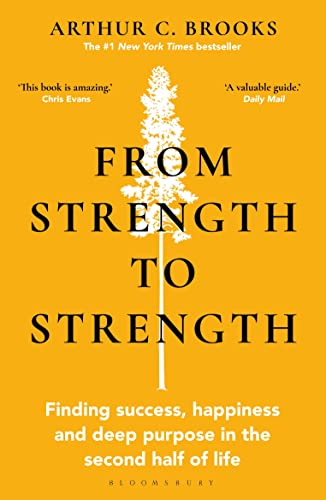
From Strength to Strength
Arthur Brooks documents the shift from 'fluid intelligence' — which peaks in your 20s and declines — to 'crystallized intelligence,' which grows with age and experience. The book describes the specific identity shift…
As an Amazon Associate, we earn from qualifying purchases — at no extra cost to you.
The uncomfortable implication: if you're in your 30s or 40s and still organizing your self-worth almost entirely around professional status and income trajectory, you're optimizing for the form of intelligence you're slowly losing and neglecting the one you're slowly gaining.
You're also running what psychologist Tal Ben-Shahar calls the "arrival fallacy" — the specific cognitive error of believing that achieving a goal will produce the sustained happiness you're currently attributing to it. The research is extensive: people consistently and significantly overestimate how good the promotion will feel, how liberating a certain income level will be, how transformed they'll feel once they've finished the degree or bought the house.
And they consistently underestimate how fast they'll adapt to new circumstances and return to their emotional baseline.
The 90-year-olds have had time to run this experiment. They know what the arrival actually felt like. They're almost unanimously reporting that the gap between how they imagined it and how it actually felt was larger than they'd anticipated.
The Vantage Point You Don't Have to Wait For
Here's the counterintuitive part: you don't need to be 90 to access this perspective. You just need to borrow it deliberately.
Jeff Bezos described a version of this as his "regret minimization framework": project yourself to age 80, looking back at the decision you're currently circling. Which choice will you regret? In his case it was leaving a stable Wall Street career to start an internet company most people thought was insane. He already knew the answer from that imagined vantage point. The 90-year-olds didn't have to imagine it.
Bill Perkins, in Die With Zero, builds this into a whole life philosophy — the case for deliberately investing your finite life energy in experiences and relationships while you actually have the physical and psychological capacity to do so, rather than deferring indefinitely on the assumption that later is guaranteed and accumulation is the point. He uses the phrase "memory dividend": experiences compound through the pleasure of remembering them, while money unspent on experiences pays nothing.
The Stoics understood something similar. Marcus Aurelius spent decades practicing memento mori — the deliberate contemplation of his own mortality. Not morbidly. Practically. The awareness of finitude doesn't depress; it clarifies. It cuts through the noise and makes the signal visible. When you know that today is finite and irreplaceable, every ordinary Tuesday becomes a resource you're either spending or wasting.
Being fully present in your everyday life is the practice that makes this awareness actionable, not just theoretical.

How to Start Today
None of this requires a dramatic life overhaul. It requires a recalibration — small, specific, and made deliberately.
1. Run the Regret Minimization Exercise
Pick one decision you've been circling for months. Project yourself to 80 and look back. Which choice produces the regret? You probably already know the answer. The bottleneck isn't knowledge — it's permission. Die With Zero is worth reading not for the financial philosophy but for the specific permission structure it gives you to stop deferring on the things that only become more expensive the longer you wait.
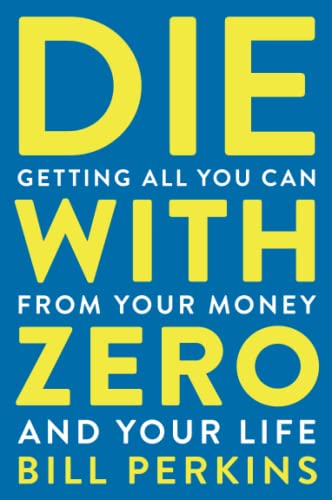
Die With Zero
Experiences compound through 'memory dividends' — pleasure that pays out for decades through the act of remembering — while money saved for an experience you never take pays nothing. It gives you the permission struct…
As an Amazon Associate, we earn from qualifying purchases — at no extra cost to you.
2. Audit your relationship ratio
Pillemer's research is specific: most people have far more acquaintances than they realize and far fewer deep friendships. And the gap widens with age unless it's actively addressed. Identify your three to five people — the ones who genuinely know you. Put time with them in your calendar the same way you'd schedule a client meeting. This isn't soft advice. It's the highest-ROI investment the research identifies for long-term wellbeing and health.
3. Build a life inventory — not a bucket list
A bucket list is about things. An inventory is about the self you're becoming or failing to become. What relationships are quietly atrophying because you're always going to call "next week"? What creative work is sitting in a drawer, waiting for things to slow down? What version of yourself have you been indefinitely postponing? Write it down — actually write it down.
A structured life design framework transforms this exercise from vague reflection into concrete choices. Designing Your Life by Bill Burnett and Dave Evans (a Stanford design course turned into a book) walks you through activity tracking, energy auditing, and values clarification in a way that produces actual decisions rather than just insight.

Designing Your Life
Burnett and Evans run the Designing Your Life course at Stanford and this book turns those exercises into a self-directed process: activity tracking, energy auditing, values clarification, three alternative five-year…
As an Amazon Associate, we earn from qualifying purchases — at no extra cost to you.
4. Start a five-minute memento mori practice
One question, each morning: Given that today is finite and not guaranteed to be followed by tomorrow, how would I spend it differently? Ryan Holiday's The Daily Stoic makes this ancient practice accessible as a modern daily ritual — 366 short entries, each grounded in Stoic philosophy, many circling back to exactly this question. It sounds grim until you try it. In practice, it's one of the most clarifying things you can do before your first meeting.
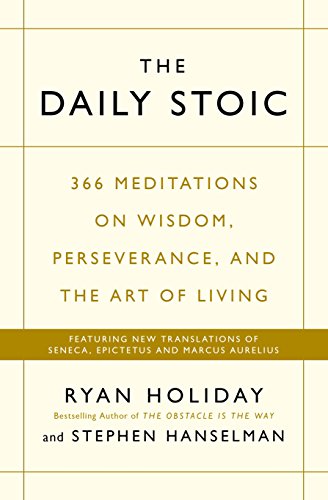
The Daily Stoic
Holiday and Hanselman built The Daily Stoic as a 366-entry calendar so you don't have to assemble the memento mori practice yourself: one passage from Marcus Aurelius, Seneca or Epictetus, one short modern reflection,…
As an Amazon Associate, we earn from qualifying purchases — at no extra cost to you.
A daily writing habit for clearer thinking is one of the simplest ways to make this practice sustainable.
Design Your Life From the End
Here's what strikes me most about the elder wisdom research, taken together: the pattern isn't complicated. The people who report the highest life satisfaction at 90 aren't the ones who achieved the most or accumulated the most. They're the ones who stayed connected to what they actually valued, kept the people they loved genuinely close, and allowed themselves to be fully present to the life they were living — rather than perpetually preparing for the one they were planning to live someday.
None of that requires a particular income level or a carefully curated set of circumstances. It requires choices. Ordinary choices, made on an ordinary Tuesday. The only real question is whether you make them deliberately — designing your evolution — or let them be made for you by default.
The life wisdom from 90-year-olds is the closest thing we have to a peer-reviewed answer to the question of what actually matters. Their deathbed regrets are a dataset. Their lives are the evidence. And the gap between what they wished they'd done and what most of us are currently doing isn't a mystery — it's visible, it's documented, and it's correctable.
My grandfather's eleven songs won't ever be recorded. But you still have time to open the drawer.
What's the one thing — the relationship you've been meaning to revive, the project collecting dust, the version of yourself you keep deferring — that you'd most regret leaving unlived?
Was this helpful?