Habits· 11 min read
The Science of Gratitude (And Why Most People Do It Wrong)
The science of gratitude is solid — most people just practice the weakest version of it. Here's what research actually shows works.
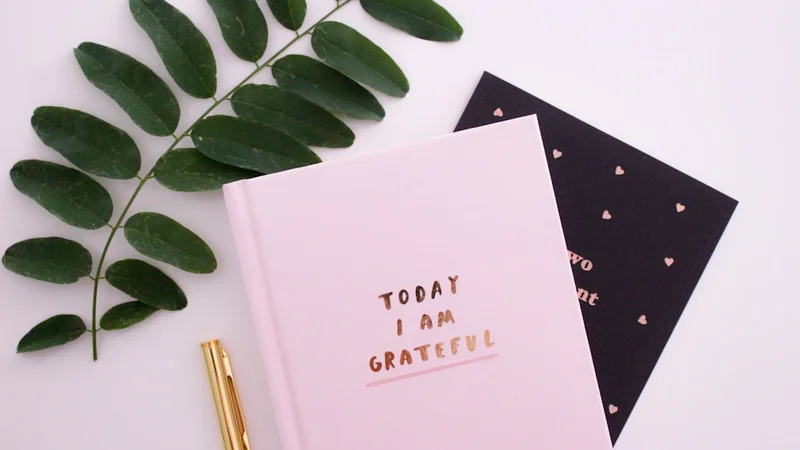
The Science of Gratitude (And Why Most People Do It Wrong)
For fourteen months, I kept what you'd charitably call a gratitude practice. Every morning — coffee still cooling, notebook already open — I wrote down three things. My health. My family. The fact that I hadn't missed my train.
By month three, the entries were nearly identical. By month six, I was filling them in the way you sign a form at the dentist: technically present, barely there. Somewhere around month eight, the notebook quietly migrated to a drawer. I told myself I just wasn't the grateful type.
What I know now — and what most people who've silently abandoned a gratitude practice have never been told — is that I wasn't failing the exercise. I was practicing the weakest possible version of it. And the frustrating part is that almost everyone is.
Gratitude has become one of the most recommended and least effectively practiced interventions in all of personal development. Open any morning routine guide. Flip to the first chapter of nearly any wellbeing book published since 2000. Somewhere before page fifty, you'll find a version of the same instruction: write down three things you're grateful for each morning.
The advice isn't wrong. The implementation nearly always is.
Robert Emmons at UC Davis has spent more than twenty years as the world's leading scientific researcher on gratitude. His conclusion is unambiguous: gratitude is one of the most robustly validated wellbeing interventions in positive psychology, with consistent effects on positive affect, life satisfaction, sleep quality, and physical health markers across dozens of controlled studies. A credible case can be made that it's the most cost-effective mental health tool available to anyone with a notebook and fifteen minutes.
But here's his equally consistent observation: the specific format most people practice — the generic daily list of broad blessings — produces the weakest effects in the literature. Not because people are insincere. Because the brain adapts.
Psychologists call this hedonic adaptation: the same mechanism that returns lottery winners to their baseline happiness within a year of their windfall. When your gratitude practice becomes predictable and automatic — health, family, coffee, repeat — your brain categorises it as background noise rather than genuine reflection. The attentional reorientation that makes gratitude work stops happening entirely.

The Five Minute Journal
The structured daily gratitude journal with guided prompts that require explaining why something matters — the specificity Emmons' research validates most. One of the most sold gratitude journals globally.
As an Amazon Associate, we earn from qualifying purchases — at no extra cost to you.
Understanding this shifts the entire question. Not "am I consistent enough?" but "am I doing this in a way the brain actually responds to?" Those are very different questions, and they lead to very different practices.
Why Your Gratitude List Feels Hollow (The Adaptation Problem)
Gratitude journaling stops working because of hedonic adaptation — your brain classifies repeated stimuli as background noise. When the same broad blessings appear daily, genuine reflection stops. The practices with the strongest research-backed effects share three qualities — specificity, novelty, and real attention — that generic list-making systematically lacks.
The most common failure mode in a gratitude practice isn't insincerity. It's automaticity.
Emmons and Michael McCullough's landmark 2003 controlled study — the research that first established gratitude journaling as a clinically meaningful wellbeing intervention — compared three conditions across ten weeks: writing about five things to be grateful for, writing about five daily hassles, and writing about neutral events. The gratitude group showed significantly higher wellbeing, more optimism, fewer physical complaints, and more hours of exercise. These effects are real. They've been replicated across cultures and contexts.
But almost no popular gratitude guide mentions the detail that matters most for your actual practice: the protocol used weekly writing, not daily. When Emmons and McCullough tested daily frequency in follow-up work, the effects were consistently smaller. More frequent practice accelerated the exact hedonic adaptation they were trying to counter.
The counterintuitive implication: writing three times a week, with genuine attention each time, outperforms a daily checkbox habit running on autopilot.
The "why" question matters as much as the "what." "I'm grateful for my morning walk" lands in your brain as information it already has. "I'm grateful for my morning walk because for 45 minutes I'm not answerable to anyone, and I keep forgetting how much I need that silence until I'm already in it" — that's a different cognitive event. The specificity forces real reflection. The reflection produces the attentional reorientation the practice is supposed to create.
This is where most gratitude instruction stops. But the research goes considerably further.
The Practice That Actually Works (Most People Have Never Tried It)
Here's an opinion that might push back against conventional gratitude advice: writing in a journal, while useful, is not the highest-leverage gratitude practice available to you. It isn't even close.
Martin Seligman, founder of positive psychology at the University of Pennsylvania, has tested more happiness interventions than arguably anyone alive. When he ranked them by effect size — by how much they actually moved the needle on sustained wellbeing — one practice stood clearly above everything else: the gratitude letter.
The protocol is simple. Write a detailed, specific letter to someone who has positively shaped your life and whom you've never fully thanked. Then read it to them in person.
Seligman and colleagues' 2005 study in the American Psychologist found that the measurable wellbeing improvements showed an immediate and substantial increase — among the strongest initial effects of any intervention tested — with documented happiness benefits maintained at the one-month follow-up. Not a daily habit. One letter. One conversation, producing effects that outperformed every other intervention in the study.
The format works because it solves every problem that generic list-making creates. It's specific — you're describing exactly what this person did and why it mattered. It's rare enough to feel genuinely novel to the brain. And it's socially directed, which — as we'll get to shortly — turns out to matter enormously at the neurological level.
The letter doesn't need to be literary. It needs to be honest. Write about the teacher who noticed something in you before you noticed it in yourself. The friend who stayed when leaving would have been easier. The mentor whose specific words you've carried for years without ever saying so out loud.
Then read it to them. The discomfort you feel anticipating that conversation is exactly the friction that makes the practice powerful.

Moleskine Classic Notebook (Large, Ruled, Hardcover)
The classic notebook for writing the gratitude letter — Seligman's top-ranked wellbeing intervention. Flat-opening hardcover with 240 acid-free pages and an elastic closure.
As an Amazon Associate, we earn from qualifying purchases — at no extra cost to you.
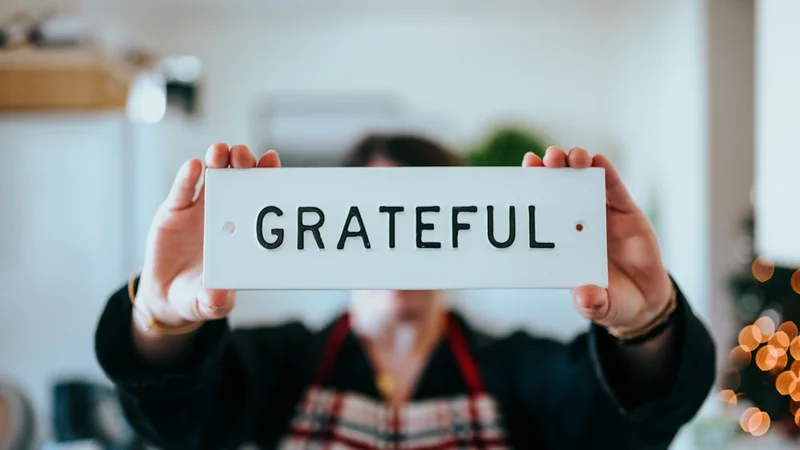
What Gratitude Actually Does to Your Brain
The neuroscience here is worth understanding, because it explains precisely why the generic list fails and why the socially directed practice consistently succeeds.
Neuroimaging studies of gratitude reliably activate three regions: the medial prefrontal cortex (self-referential processing and social cognition), the anterior cingulate cortex (reward and emotional regulation), and the limbic system's reward circuitry. The neural signature of gratitude looks, functionally, like the signature of a social reward.
That's not incidental. Gratitude appears to have evolved as a mechanism for reinforcing reciprocal cooperation — marking the receipt of genuine help from another person as meaningful and worth acknowledging. At its evolutionary roots, it's a social emotion with a social neural architecture. Which explains why it fires most strongly when it's directed toward someone specific.
This is why gratitude toward specific people, for specific acts, produces the strongest neurological response in every imaging study done on it. The practice wasn't designed — at the level of evolutionary function — to make you feel good about your morning coffee. It was designed to strengthen the social bonds that kept human groups coherent.
Fred Bryant's savoring research contributes a related and immediately practical dimension. Savoring is the deliberate extension and amplification of a positive experience in the present moment: mentally photographing a view before you leave it, slowing down a conversation that's going well, immediately sharing something good with someone who would genuinely appreciate it. It operates through the same basic mechanism as gratitude — redirecting attention toward positive experience — but activates in real time rather than retrospect.
You can practice something in the savoring family right now, without any tools, simply by pausing in the middle of something you already know is good and actually noticing it before it passes.
The Variability Fix: Keeping Your Practice Neurologically Alive
Research on the Hedonic Adaptation Prevention (HAP) model — developed by Kennon Sheldon and Sonja Lyubomirsky — offers a specific counter-strategy to hedonic adaptation: deliberate variability. Introducing meaningful variation into a repeated practice — different format, different target, different framing question — maintains the attentional novelty that keeps the brain genuinely engaged. Without it, any repeated behaviour eventually becomes automatic. That's excellent for brushing your teeth and counterproductive for any practice that depends on genuine reflection.
For gratitude, this translates into three concrete design decisions.
Switch your format. Alternate between journal entries, pre-sleep mental reflection, verbal expression to someone directly, and written letters. The format shift alone is often enough to interrupt automaticity and force the brain to process the practice freshly.
Switch your targets. This week: a specific person and what they actually did. Next week: a capability or skill you've built that you normally treat as furniture. The following week: something that was genuinely difficult when it happened and turned out to contain something valuable in retrospect.
Make the "why" non-negotiable. For each item you identify, add two sentences: what specifically am I grateful for, and why does it matter to me right now? The practice changes completely when you require genuine reasoning rather than just identification.
Lyubomirsky's research at UC Riverside confirmed, across multiple studies, that the highest wellbeing benefits from gratitude practice went to people who varied their approach — not to those who practiced most frequently. Consistency alone doesn't produce the effect. Quality of attention does.
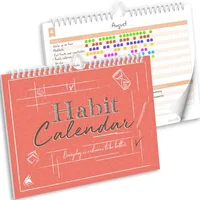
Clever Fox Habit Calendar Circle (24-Month Habit Tracker)
A 24-month undated habit tracker built for rotating formats and targets — the visual structure that prevents automaticity without restricting the variation the HAP model requires.
As an Amazon Associate, we earn from qualifying purchases — at no extra cost to you.
How to Redesign Your Practice Starting This Week
Based on what the research actually supports — as opposed to what sounds satisfying in a morning routine listicle — here is a redesigned weekly routine:
-
Drop to three times a week. Choose consistent days — Monday, Wednesday, Friday, for instance — and write one specific thing per session rather than a list of three. One genuinely observed, specific item with real reasoning attached will outperform three vague entries every time.
-
Write one gratitude letter per month. Identify someone. Give yourself twenty minutes. Write honestly about what they did and why it mattered. Then — if the relationship makes it possible — read it to them in person. If not, send it. Even an unmailed letter produces measurable effects, because the writing itself does most of the neurological work.
-
Add one savoring pause daily. No journal required. When something genuinely good is happening — a meal, a conversation, a moment of physical comfort — stop for thirty seconds and notice it before it ends.
-
Rotate your targets weekly. People, capabilities you've developed, difficult experiences that contained something valuable, small daily pleasures you normally walk straight past. Keep your brain looking at different domains of your life so no single domain becomes automatic.

Full Focus Planner — Michael Hyatt
Michael Hyatt's 90-day quarterly planner with built-in weekly review pages — the architecture for a three-times-weekly practice that stays varied without losing structure. Used by over 100,000 high-performers.
As an Amazon Associate, we earn from qualifying purchases — at no extra cost to you.
A structured journal format helps during the early period of rebuilding because it removes the blank-page friction of deciding what to write and prompts the specificity that free-form writing tends to skip. What matters more than the specific format is whether you actually engage with it — or fill it in the way I was filling in my notebook by month six: body present, attention completely elsewhere.

Florensi Meditation Cushion (Traditional Tibetan Zafu)
A traditional buckwheat-filled zafu for the savoring pauses Fred Bryant's research recommends — the low-friction environment where deliberate stillness and genuine gratitude naturally overlap.
As an Amazon Associate, we earn from qualifying purchases — at no extra cost to you.

The Compound Effect of Getting This Right
Here's what the research actually promises if you practice gratitude the way it was designed to work: a slow, cumulative recalibration of your default attentional filters.
Not a mood shift after a week. Not a transformation by the end of the month. Across sustained practice — varied, specific, occasionally socially expressed — the brain that spent its background cycles cataloguing what was wrong, missing, or threatened begins spending more of those cycles registering what is present, sustaining, and genuinely worth acknowledging. It's not a personality transplant. It's closer to what Rick Hanson calls "taking in the good" — the deliberate installation of positive experience into long-term neural structure through repeated, intentional attention.
Shawn Achor's research at Harvard on positive psychology in high-performance environments found that a brief, specific gratitude practice was one of the five daily habits most predictive of sustained performance and wellbeing. Not despite the difficulty of those conditions. Within them. Which is arguably when it matters most.
Stillness Is the Key — Ryan Holiday
Ryan Holiday's synthesis of Stoic and Eastern wisdom on attention and stillness — the thinking companion that fits the compound-effect arc of every well-designed gratitude practice. #1 NYT Bestseller.
As an Amazon Associate, we earn from qualifying purchases — at no extra cost to you.
This is what Jim Rohn was pointing at when he talked about the discipline of paying attention to what you already have. The practice is ancient. The fMRI data confirming why it works is new. But the mechanism has always been the same: where you consistently direct your attention shapes — slowly, measurably, and at the level of actual synaptic architecture — what you experience as real.
The notebook in my drawer wasn't wrong. My approach to it was. The difference between those two things is the gap between a tool that gradually changes how you see the world and one you quietly abandon by month eight.
You don't need more discipline. You need a better design.
Designing your evolution means taking the practices that genuinely work seriously enough to understand why they work — and then building the specific version that fits your actual life, rather than the generic version that fits a bulleted list. Gratitude is one of the most validated tools in positive psychology. But only in the forms the research actually tested. The generic version is like taking a quarter dose of a medicine that works at full dose and concluding the medicine doesn't work.
So here's the question worth sitting with today: is there someone in your life to whom an honest gratitude letter is long overdue? And what is actually stopping you from writing it?
Was this helpful?
Continue Your Evolution
The Frozen Goal Problem: Why Tiny Wins Beat Grand Plans
Rejection Sensitivity: Why You Keep Assuming They're Upset
The Science of Nostalgia: Why Looking Back Helps
Sedikides and Wildschut found nostalgia boosts mood, meaning, and social connection — not mere sentimentality. Here's the science and how to use it.