Habits· 9 min read
Why Procrastination Tips Fail (And What Actually Works)
Willpower and to-do lists don't fix procrastination. Here's what the procrastination equation research says actually works — and why it's surprising.
Why Procrastination Tips Fail (And the Science That Actually Fixes It)
You've read the articles. You've made the lists, downloaded the apps, tried the accountability partner, built the morning routine — or at least you built it for eleven days until that too became a thing you were procrastinating on.
And you still have a document that hasn't been opened in a week. A task that you technically have time to do right now, this afternoon, today — and you're reading this instead.
If that loop sounds familiar, I'm not going to tell you to "just start." I'm not going to suggest you need a stronger why or a better system or more discipline. Those diagnoses are well-intentioned, and for most people, they're the wrong prescription.
What's actually happening is more specific than that. And the fix is more specific too.
Why the Tips You've Already Tried Haven't Stuck
Here's the problem with most procrastination advice: it addresses the surface behavior while leaving the underlying mechanism untouched. You feel bad about not starting. You look for a tip that helps you start. The tip works once — sometimes twice. Then the pattern returns, often within a week.
Piers Steel spent two decades synthesizing the procrastination research literature. His conclusion, laid out in exhaustive empirical detail, is direct: the interventions most commonly recommended for procrastination — time-management techniques, motivational reframes, accountability systems — tend to underperform because they don't touch the four variables that actually drive whether someone procrastinates on a given task. They're operating at the wrong level.
Understanding those variables is what changes the equation. Not metaphorically — there's an actual equation.
Atomic Habits — James Clear
If the four-variable equation reframed how you think about procrastination, James Clear's Atomic Habits goes one layer deeper into the design problem — how the cues, environments and identities you build determine whe…
As an Amazon Associate, we earn from qualifying purchases — at no extra cost to you.
Before we get to what works, you also need to understand why your brain actively rewards you for the pattern you're trying to break. That's not a small detail. It's the whole reason standard advice keeps failing.
The Four-Variable Formula Behind Every Procrastination Episode
Steel's Temporal Motivation Theory identifies four variables that predict, with uncomfortable accuracy, whether you'll procrastinate on any given task.
Expectancy. How confident are you that working on this task will eventually produce the outcome you want? If some part of you genuinely believes the effort won't matter — the outcome feels too uncertain, too dependent on other people's decisions, or too far outside your control — your brain will quietly deprioritize it regardless of how objectively important it is. Low expectancy functions as a motivation drain that no to-do list can counteract.
Value. How genuinely rewarding is this task, to you, intrinsically, right now? Not how important it is in the abstract. Not how much you know you should care. How much do you actually feel the pull of it? Obligation is not value. Externally assigned priority is not value. The task your boss flagged as urgent carries urgency but often carries very little personal value — and the equation registers that distinction precisely.
Impulsiveness. Your baseline tendency to prefer immediate relief over future reward. This has a significant heritable component. Some nervous systems are wired to discount future rewards more steeply than others — to feel the pull of the present moment far more strongly than the pull of a distant payoff. This is not a character flaw. It's neurobiology. And it's the variable most resistant to willpower-based interventions, which matters enormously for how you approach the fix.
Delay. How far in the future is the payoff? A deadline six weeks away barely registers in the emotional brain. The same task with a deadline tomorrow produces a completely different motivational state. Distance in time functions almost like distance in space — the further away, the smaller it seems, even when the actual stakes are identical.
Procrastination probability climbs when expectancy is low, value is low, impulsiveness is high, and the reward is distant. What the research consistently shows is that you cannot override this equation with sustained effort or motivational self-talk. But you can redesign the variables themselves — and that's what the effective interventions actually do.
Why Your Brain Rewards You for Procrastinating
Before the interventions make sense, this part needs to be clear.
Fuschia Sirois at the University of Sheffield has documented something that explains an enormous amount: procrastination reliably reduces negative affect in the moment it occurs. When you avoid a task that's generating anxiety or dread, you feel better. The relief is real. The emotional reward is immediate and genuine.
This is why the pattern persists even when you know, with full intellectual clarity, that it's costing you. The reinforcement loop operates at the level of the limbic system, not the prefrontal cortex. Every time you put something off and feel that small exhale — the sense that you don't have to face that right now — your nervous system registers a successful outcome. It learned that avoidance works.
This also explains why willpower-based strategies eventually collapse. Willpower is a finite cognitive resource, operating at the prefrontal cortex level, pitted against a reinforcement loop running at a deeper level. You can override it short-term. You cannot sustain that override indefinitely without addressing the loop itself.
The interventions that actually shift things work with the way your nervous system operates. Not by overpowering it — by changing what it's responding to.
The Tool That Doubles Your Follow-Through Rate
The most consistently supported anti-procrastination intervention in the research literature isn't a new productivity method or a mindset reframe. It's a specific form of planning developed by psychologist Peter Gollwitzer at NYU, called implementation intentions.
Here's the difference between a regular intention and an implementation intention:
Regular intention: "I'll work on the proposal this week."
Implementation intention: "When I sit down at my desk with my coffee on Thursday morning, I'll open the document and write for 30 minutes before I check anything else."
The specificity matters for a precise mechanical reason. The decision of when, where, and how to begin has been made in advance — at a moment when some motivation is available — rather than in the moment itself, when avoidance is fully active. When Thursday arrives, there's no decision left to make. You simply follow the instruction your past self already gave you.
Gollwitzer's research across hundreds of studies shows that implementation intentions improve follow-through rates by approximately two to three times compared to regular intentions alone. That's a substantial effect. It doesn't require more motivation or discipline. Just more specificity, applied at the right moment.
The Pomodoro Technique works through a closely related mechanism. You're not committing to finishing the project. You're committing to 25 minutes. Your nervous system can accept 25 minutes even when it would flatly refuse the whole thing. The commitment feels finite and reversible, which substantially reduces the emotional cost of beginning — the moment in the procrastination sequence where avoidance is most powerful.
A physical timer is meaningfully better than a phone timer for this. It keeps your hands away from the screen and makes the interval concrete in a way that digital countdowns don't.
There's one more tool worth knowing here, from philosopher John Perry, who won an Ig Nobel Prize for his concept of structured procrastination. His counterintuitive observation: procrastinators can be highly productive people, as long as the task they're most avoiding sits at the top of their priority list. Put the highest-aversion task first, and suddenly every other task — answering emails, organizing your workspace, doing lighter work — counts as productive avoidance. You get things done while avoiding the hard thing. It's not a trick you'll encounter on most productivity blogs. It works anyway.
A physical planning notebook — separate from your phone, visible on your desk, with your implementation intentions written out in ink — makes this kind of structured approach concrete and significantly harder to unconsciously slide past.

Moleskine Classic Notebook — Hardcover, Large, Ruled
A physical notebook — separate from your phone, visible on your desk — makes structured procrastination concrete and harder to unconsciously slide past.
As an Amazon Associate, we earn from qualifying purchases — at no extra cost to you.
The Counterintuitive Fix Nobody Wants to Hear
Here is the finding that most productivity advice avoids because it sounds too gentle to be useful: self-compassionate responses to procrastination episodes produce less future procrastination than self-critical responses.
Kristin Neff and colleagues at the University of Texas at Austin have documented this across multiple studies. It consistently surprises people — because most of us operate on the opposite assumption.
The standard logic: if I'm harsh with myself after procrastinating, the discomfort of that self-criticism will motivate me to avoid the same mistake next time. This is the wrong model. What self-criticism actually does is amplify the negative emotional state that triggered the avoidance in the first place. You've added shame and contempt on top of whatever anxiety or boredom caused the original avoidance. The next time that task surfaces, it carries the original emotional charge and the memory of how badly you felt about yourself afterward. The emotional barrier to approaching it has gotten higher — not lower.
Self-compassion — not excusing yourself, not pretending the procrastination didn't matter, but treating yourself the way you'd treat a close friend who was struggling with the same thing — interrupts this loop. It restores the psychological safety required to approach the task without the additional weight of self-condemnation.
This is also why external accountability without emotional support underperforms so reliably as a procrastination solution. You're adding more emotional cost to a task that's already generating more than you can comfortably tolerate. What you actually need is less emotional cost — not more pressure.
One More Tool Worth Knowing
One of the most practically effective anti-procrastination interventions has nothing to do with planning or emotional regulation. It changes your social context.
Body doubling — working in the physical or virtual presence of another person who is also working — substantially lowers the activation energy required to begin for a meaningful number of people. You don't need to be doing the same task. You don't need to interact. The mere presence of another person in focused work seems to create sufficient context to shift your own state.
Libraries, coffee shops, and co-working spaces work this way. So do virtual working sessions on platforms designed specifically for this: you show up, briefly state what you're committing to work on, and spend the session working in parallel while your partner does the same. No coaching, no performance review — just parallel presence with mutual accountability at the entry point.
If you've never tried this, it might sound unlikely. Try it before you decide. For a significant proportion of people — particularly those who find that social context reliably changes their focus state — it's the most effective single tool in the toolkit. And it requires no planning system, no emotional reframing, and no special discipline.
How to Start Today
None of what's above is useful if it stays theoretical. Here are the specific moves, in order of execution.
1. Name the emotion attached to the task you're avoiding. Before anything else, identify what feeling is actually driving the avoidance. Anxiety about the outcome? Boredom? Resentment about who assigned it? Uncertainty about how to even begin? Just naming the specific emotion activates the prefrontal cortex's regulatory circuitry and creates a genuine, if small, reduction in its intensity.
2. Write one implementation intention — on paper, with a pen. Take the task you've been avoiding the longest. Write: "When [specific time and situation], I will [the specific first action] for [a short, specific duration]." Keep the duration under 30 minutes for high-aversion tasks. The goal is to lower the activation barrier to starting, not to plan the whole project. A proper planning journal makes these intentions visible and far harder to unconsciously skip past.
3. Set a physical timer for 25 minutes and work until it rings. Have the work already open before the timer starts. Put your phone in another room — not on silent, in another room. Run one interval. Then take a genuine break, not a "quick check" that becomes 20 minutes. After the break, decide whether to run another interval.

Sony WH-1000XM5 Noise Cancelling Headphones
If body doubling isn't an option, premium noise cancellation creates a portable focus container — useful for the 25-minute interval the article walks through, especially in a busy home or open office.
As an Amazon Associate, we earn from qualifying purchases — at no extra cost to you.
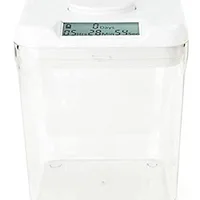
Kitchen Safe kSafe Time Locking Container
If putting the phone in another room is unrealistic — open-plan flat, kids, work calls — a time-lock box does the same job without requiring the willpower the article warns will fail.
As an Amazon Associate, we earn from qualifying purchases — at no extra cost to you.
4. After the session — whatever happened — say one accurate, kind thing to yourself. "That was hard to start and I did it anyway." "I ran one interval when I would have avoided the whole thing before." This isn't performative positivity. It's interrupting the shame-avoidance loop at the precise moment it would normally form and compound into tomorrow's procrastination. A guided self-compassion practice, even a short one, can make this response more automatic over time.
5. Remove one obstacle from tomorrow's start tonight. Open the document before you close your laptop. Put the notebook on your desk, already open to a fresh page. Set the timer near the desk where you'll work. The less activation energy tomorrow's beginning requires, the more likely tomorrow is to go differently than today did.

Clever Fox Habit Calendar Circle (24-Month)
Tracking each completed Pomodoro interval visually compounds the small wins the article asks you to acknowledge — the visible streak interrupts the shame-avoidance loop.
As an Amazon Associate, we earn from qualifying purchases — at no extra cost to you.
The Gap Is a Design Problem, Not a Character Problem
Here's what most people never get to the other side of: procrastination doesn't resolve because you finally develop enough discipline to power through it. It resolves because you gradually redesign the conditions — the expectancy, the value alignment, the social context, the emotional safety — under which you approach your most avoided work.
Jim Rohn used to say that the things that are easy to do are also easy not to do. The implementation intention written in a notebook, the physical timer, the kind word to yourself after one completed session — none of these are difficult acts. They're just not yet automatic.
Designing your evolution means being precise about which variable is actually failing. Not "I need more motivation." Not "I need to be more disciplined." But: which of the four variables — expectancy, value, impulsiveness, delay — is making this task feel impossible? And what specific change would shift it?
One session at a time. One compassionate response at a time.
What's the task you've been avoiding the longest right now — and when you sit with it honestly, which of the four variables do you think is most responsible? Drop it in the comments. Sometimes naming it is enough to change the next thirty minutes.
Was this helpful?
Continue Your Evolution
The Frozen Goal Problem: Why Tiny Wins Beat Grand Plans
Rejection Sensitivity: Why You Keep Assuming They're Upset
The Science of Nostalgia: Why Looking Back Helps
Sedikides and Wildschut found nostalgia boosts mood, meaning, and social connection — not mere sentimentality. Here's the science and how to use it.