Habits· 10 min read
You're Not Fully Present — And Everyone Around You Already Knows It
Continuous partial attention is costing you more than you realize. Here's the neuroscience of presence — and my practical system for actually showing up.

You're Not Fully Present — And Everyone Around You Already Knows It
My friend had been talking for three minutes before I realized I hadn't heard a single word.
Not a distracted half-listen. Nothing. I was holding my coffee, nodding at what felt like appropriate intervals, maintaining the approximate geometry of eye contact — but my actual mind was still processing an email I'd glanced at before we sat down. When she paused and looked at me with that specific patience people reserve for when they've caught you out, I said, "Sorry — say that again?" But we both knew the problem wasn't that I'd missed her sentence. The problem was that I'd missed the entire conversation.
That moment stayed with me in a way that was uncomfortable and clarifying all at once. She didn't say anything sharp. She just waited. And in that small silence, I understood something I'd been avoiding: I had been physically present in countless important moments over the past several years, and genuinely present in almost none of them. Learning to be more present in everyday life had never, at any point, been something I'd deliberately practiced. I'd just assumed presence would happen automatically — like breathing — if I showed up.
It doesn't work like that. And if you're reading this, you probably already know that.
What "Continuous Partial Attention" Is Quietly Costing You
In 1997, a former Apple and Microsoft executive named Linda Stone coined a phrase that remains the most accurate description of modern attention I've ever encountered: continuous partial attention.
It doesn't mean you're on your phone constantly. It means you're never fully not on it. There's a persistent background hum of semi-alertness — the half-ear you keep tuned to potential notifications, the ambient awareness that your device is nearby and might require you at any moment. You're nominally available to everything simultaneously, and genuinely present to nothing at all.
This is different from multitasking. Multitasking is an intentional split of focus between two defined tasks. Continuous partial attention is subtler and more corrosive. It masquerades as engagement. You look attentive. You respond at appropriate moments. But you're running a quiet social simulation where your body handles the mechanics of conversation while your actual mind is somewhere else entirely.
William James — who spent decades studying consciousness and what he called "the stream of thought" — identified the capacity to voluntarily bring back a wandering attention as "the very root of judgment, character, and will." He wrote that in 1890. He would not have been remotely surprised by what we've done since.
The question isn't whether this describes you. It almost certainly does. The question is what it's actually costing you.
What Two Brains Do When They Actually Connect
In 2010, neuroscientist Uri Hasson published research from his Princeton lab that changed how I think about every conversation I have.
His team had participants tell unrehearsed personal stories while lying in an fMRI scanner. Separately, other participants listened to recordings of those stories while also being scanned. What Hasson found: when genuine communication was happening — when the listener was truly engaged — the listener's neural activity began to mirror the speaker's. Not loosely. Precisely. The same brain regions activated in matching patterns, with a slight temporal delay.
He called it neural coupling. And when the listener's attention drifted — when they were physically present but mentally somewhere else — the coupling broke down completely.
Think about what that means for your conversations this week. The moments when someone was telling you something that mattered to them and you were composing your next sentence, calculating how long you'd been there, or mentally running through tomorrow's schedule. The synchrony that makes genuine understanding possible literally did not occur. You were two people occupying the same room, not two people actually communicating.
This isn't a courtesy argument. It's a neurological one. Full attentional presence isn't politeness — it's the biological mechanism through which understanding transfers between two human minds. Half-attention isn't a diluted form of presence. It's a categorically different activity that produces categorically different results. No amount of good intentions changes the underlying neuroscience.

Sony WH-1000XM5 Noise Cancelling Headphones
The canonical environmental design tool for protecting your focus zone — industry-leading noise cancellation creates the auditory conditions where sustained attention becomes structurally easier.
As an Amazon Associate, we earn from qualifying purchases — at no extra cost to you.
Why Your Brain Keeps Running Away From the Present
Here's what made me feel somewhat less guilty about that coffee shop afternoon: modern digital environments are specifically and deliberately designed to prevent the state I've been describing.
Nir Eyal, in Hooked, documented the precise behavioral design principles behind the most attention-consuming products ever built — variable reward schedules (the same psychological mechanism as slot machines), infinite scroll (which removes the natural stopping cues our brains depend on to recognize completion), and social validation metrics that trigger the same reward circuitry as in-person approval from people we care about. These aren't neutral tools that happened to become popular. They're systems engineered by some of the most talented behavioral scientists alive, optimized to maximize time-on-platform with no built-in consideration for whether that time serves the person spending it.
James Williams, a technology ethics researcher at Oxford who spent years inside Google before leaving to study the attention economy, writes that the fight for human attention is the defining ethical issue of our era. Not because attention is merely pleasant to have. Because what you consistently give your full attention to is, in the most direct possible sense, what your life consists of.
That's not metaphor. It's phenomenology. The years you spend partly somewhere else are not fully lived, because life isn't accumulated by proximity to experience — it's accumulated by genuine presence to it. The conversation you were half-in will not be remembered, because it was not, in any meaningful sense, fully experienced. digital minimalism how to use technology more intentionally
Here's the thing most attention-improvement advice gets wrong: your problem isn't a lack of discipline. Your attention has been systematically and successfully trained toward restlessness. The solution isn't to try harder. It's to redesign the environment.
My Complete Presence Practice — Every Tool I Use
Understanding the problem intellectually changed nothing for me. What actually shifted things was building a specific practice — tools, habits, and environmental design that made presence structurally easier and distraction structurally harder.
Here's exactly what I use.
Phone-free time blocks. The single most effective change I made was creating deliberate physical distance between me and my phone during conversations and focused work. A digital focus timer with a commitment mechanic — where you set a session length and your phone has to stay away for it to count — adds just enough friction to interrupt the automatic reach.

Kitchen Safe kSafe Time Locking Container
The time-locking container the article describes: set a session length and your phone stays locked away until the timer expires. Motorised lock removes the option of giving in — environmental design, not willpower.
As an Amazon Associate, we earn from qualifying purchases — at no extra cost to you.
This sounds embarrassingly low-tech, but the research on habit formation makes the mechanism clear: you can't willpower your way past a deeply embedded automatic behavior. You need to change the environment so the behavior requires deliberate effort rather than just happening. The timer does that.
An analog watch. I resisted this for longer than I should have. I kept telling myself I barely checked my phone for the time. Then I actually counted for a week. I was picking it up twenty, thirty times a day — and every single time I picked it up "just to see the time," I invariably saw a notification and lost whatever present moment I was in. Switching to an analog watch eliminated most of those micro-interruptions in one move. The watch has exactly one function. That constraint is the entire feature.
A sleep tracker. The connection between sleep quality and next-day presence surprised me when I finally mapped it properly. When my sleep is poor — which a quality tracker can measure with genuine precision — my attentional capacity the following day is measurably compromised. Not just "a bit tired." Neurologically impaired. The prefrontal cortex — responsible for voluntary attention, impulse control, and emotional regulation — is specifically sensitive to sleep deprivation. After a poor night, presence isn't just harder. It's physiologically impaired, in a way that no amount of good intentions compensates for.

Amazfit GTR 4 Smart Watch with Sleep Tracking
Tracks sleep stages with genuine precision — REM, deep, light, awake. Seeing exactly how sleep quality affects your next-day attentional capacity makes the invisible physiological connection visible and actionable.
As an Amazon Associate, we earn from qualifying purchases — at no extra cost to you.
Seeing that data made the invisible visible and changed my behavior around sleep more than years of good advice had managed. evening routine for better sleep and next-day energy
Cal Newport's Deep Work. This is the book I recommend most consistently to people who feel scattered and reactive, because Newport's core argument reaches beyond productivity into something closer to a philosophy of attention. He makes the case that deep focus is becoming simultaneously rarer and more valuable — and that most of us have been systematically training ourselves away from it for years without quite realizing the long-term cost.
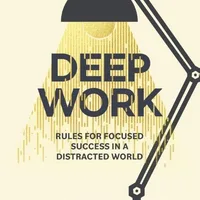
Deep Work — Cal Newport
Cal Newport's argument that deep focus is becoming simultaneously rarer and more valuable — and the complete framework for redesigning your environment and schedule to make it structurally available.
As an Amazon Associate, we earn from qualifying purchases — at no extra cost to you.
The practical frameworks help, but the deeper value is understanding why your attention fragments the way it does. That changes the nature of the solution from "try harder to focus" (which doesn't work) to "deliberately redesign your environment and schedule" (which does).

How to Practice Being Fully Present With the People You Love
The tools matter. But there's a dimension to this that no tool can supply on its own.
Genuine presence with people isn't just the absence of distraction. It's the active cultivation of curiosity — the specific decision to be interested in what's actually happening in front of you. And that requires more than a silenced phone.
A 2013 study by Andrew Przybylski and Netta Weinstein — cited prominently by Sherry Turkle in Reclaiming Conversation — produced a finding that stopped me cold when I first read it: the mere presence of a phone on the table — face-down, silent, generating no notifications — measurably reduced the depth of conversations. Participants felt less connected, disclosed less personally, and rated the interaction as shallower. The phone didn't ring. Its proximity introduced the continuous partial attention effect regardless.
This is actually clarifying information. When a conversation feels hollow, it's often not because the people in it have nothing real to say. It's because the environmental design is actively working against depth. And environmental design can be changed.
What genuinely deepens presence in relationships isn't only removing distraction — it's creating structures that invite depth. Conversation card games designed to bypass small talk and go somewhere meaningful do something in the room that willpower alone rarely manages. When there's a card on the table asking "What's something you recently changed your mind about?" or "What fear are you most proud of having faced?", the context itself signals: we're going somewhere that actually matters.

I've used these with people I've known for years and learned things I somehow hadn't in decades of casual dinners. The reason they work isn't mysterious — it's contextual priming. The prompt removes the social cost of depth by making depth the point of the exercise. It's a small structural change that consistently produces a large experiential difference.
How to Start Being More Present in Everyday Life — Three Steps Today
You don't need to overhaul your digital life this week. Three specific actions will change your experience of presence immediately.
1. Pick one relationship and give it completely phone-free attention for seven consecutive days. Not one hour. Seven days of all conversations with this person being fully phone-free — phone not just silenced, but in a different room entirely. Notice what shifts: what you actually hear, what they choose to share, how the quality of the time between you changes. Seven days will teach you more than reading about this topic ever could.
2. Add a structural presence anchor to your most important daily interaction. A presence anchor is a physical cue that signals to your nervous system: in this context, the phone stays away. It could be the moment you sit across from someone at a meal. It could be a specific chair you use only for focused reading. It could be the act of putting your phone in a drawer when you walk through the front door. The specific anchor matters less than the consistency with which you honor it — because every time you honor it, you're reinforcing the habit at the environmental level, not just the motivational one.
3. Use conversation cards with someone this week. We're Not Really Strangers, Vertellis, TableTopics — any of these creates structural depth in conversation that small talk doesn't naturally reach. The specific deck matters less than the principle: prompts that provide scaffolding for depth. If you haven't tried them because they sound awkward, that perception dissolves within the first few minutes of actually using them.
For the essential reading, start with Sherry Turkle's Reclaiming Conversation — it's the most thorough and urgent case I've found for why face-to-face presence is not a luxury but a necessity, and what we're concretely losing by treating it as optional.
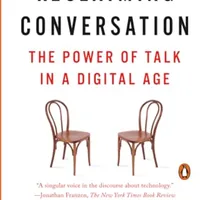
Reclaiming Conversation — Sherry Turkle
Sherry Turkle's five years of MIT research on how technology is reshaping our relationships and inner lives — the most thorough case for why face-to-face presence is a necessity, not a luxury.
As an Amazon Associate, we earn from qualifying purchases — at no extra cost to you.
Turkle spent years interviewing people across generations about how technology is reshaping their relationships and inner lives, and the picture she draws is both clear-eyed and galvanizing.
If you want to go deeper on the practice of attention itself, The Miracle of Mindfulness by Thich Nhat Hanh covers territory that the productivity genre rarely touches: the specific practice of returning attention to the present moment as a repeatable, trainable skill — not a state you achieve once but a movement you make thousands of times, getting progressively more natural.

The Miracle of Mindfulness — Thich Nhat Hanh
The specific practice of returning attention to the present moment as a repeatable, trainable skill — not a state you achieve once but a movement you make thousands of times, getting progressively more natural.
As an Amazon Associate, we earn from qualifying purchases — at no extra cost to you.
how to build a mindfulness habit that actually sticks
The Practice Behind the Design
William James also wrote something less famous but more precise: "The faculty of voluntarily bringing back a wandering attention, over and over again, is the very root of judgment, character, and will."
He was describing, half a century before anyone used the term for it, the specific practice that meditation systematically trains. And the critical word in his sentence isn't "sustained" — it's "bringing back." Presence is not a state you achieve and hold. It's a movement you make, repeatedly, imperfectly, with gradually decreasing friction and gradually increasing ease.
The person who notices their attention has drifted mid-conversation and chooses to return isn't failing at presence. That noticing and returning is the practice. The drift isn't the failure. The wandering isn't the failure. The choice to come back is the entire point — because every time you make that choice, the neural pathway strengthens a little. The capacity becomes slightly more available. The habit rebuilds itself from the inside.
"Design Your Evolution" doesn't require becoming someone who is effortlessly, perfectly present in every moment. It requires building environments, habits, and relationships that make returning to presence the path of least resistance — so that the accumulated weight of your full attention lands, more often and more reliably, on the people and moments that most deserve it.
You don't need to be perfectly present. You just need to start showing up.
So here's the question to sit with: Who in your life has been quietly waiting for your full attention — and what might actually change between you if they finally had it?
Was this helpful?
Continue Your Evolution
The Frozen Goal Problem: Why Tiny Wins Beat Grand Plans
Rejection Sensitivity: Why You Keep Assuming They're Upset
The Science of Nostalgia: Why Looking Back Helps
Sedikides and Wildschut found nostalgia boosts mood, meaning, and social connection — not mere sentimentality. Here's the science and how to use it.