Habits· 9 min read
Why Your Gratitude Practice Isn't Working
Most gratitude journals fail for the same four reasons. Here's what Robert Emmons' research actually shows — and the design that makes it work.
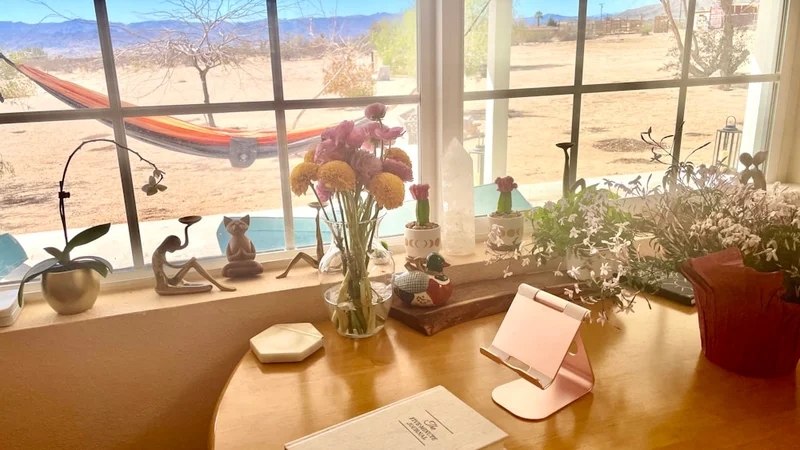
Your Gratitude Journal Isn't Working. Here's What the Science Says You're Doing Wrong
Three months into my daily gratitude practice, I felt exactly nothing.
Not worse. Not better. Just a mild, persistent sense that I was completing a chore that reasonable people had decided was good for you — like flossing — and receiving roughly the same emotional reward. Every morning: my coffee, my health, my family. Three bullet points. Done. Journal closed. On with the day, feeling precisely as I had sixty seconds earlier.
I assumed the problem was me. Maybe I wasn't naturally oriented toward appreciation. Maybe this particular practice only worked for people who were already fairly content. Maybe, at some structural level, my brain was built differently from the brains of people who found journaling nourishing rather than tedious.
Then I read Robert Emmons.
Emmons is a professor of psychology at UC Davis and the most rigorous gratitude researcher working today. He's been running randomized controlled trials — not self-report surveys, not feel-good testimonials, but actual controlled experiments with comparison groups — for over two decades. And the first thing you learn from his work is that most people's gratitude practice doesn't fail because they lack gratitude.
It fails because of how they're doing it.
Why Your Brain Is Actively Working Against Gratitude
Before you can build a gratitude practice that actually works, you need to understand what you're working against.
Your brain was not designed to appreciate what you have. It was designed to detect what's missing, broken, or threatening — and to weight those signals far more heavily than their positive counterparts. This isn't a personal failing. It's the neurological inheritance of roughly two million years of evolutionary pressure.
Psychologist Roy Baumeister and his colleagues documented this in their landmark paper Bad Is Stronger Than Good, reviewing study after study showing that negative events affect mood, cognition, and behavior more powerfully than equivalent positive ones. A harsh comment from your manager doesn't cancel out a genuine compliment. It leaves a deeper, longer-lasting trace in memory and emotional tone. Your nervous system was calibrated in an environment where missing the predator was fatal, while missing the beautiful sunset was just a minor miss. That asymmetry is still running in your hardware today — long after the predators are gone.
The implication for any gratitude practice is stark: you can't simply decide to notice the good things more. Your attentional default actively filters toward deficit, absence, and threat. The self-help industry often treats gratitude as a permission slip — you're allowed to feel good now — but that framing misses what the practice actually requires. Deliberate, consistent gratitude work is a specific neurological intervention designed to repeatedly override an entrenched evaluative default. Which means it needs considerably more precision than writing down three things before your first coffee.
What Twenty Years of Research Actually Found
Here's what Emmons' controlled trials found when participants practiced gratitude correctly.
Compared to control groups — and to groups who wrote about daily hassles or neutral life events — consistent gratitude practitioners showed significantly improved physical wellbeing, higher sleep quality, more frequent exercise, reduced reporting of physical symptoms, substantially higher reported life satisfaction, and greater optimism about the upcoming week.
All from a practice requiring fewer than ten minutes per day.
Atomic Habits — James Clear
The foundational book on habit design — explains why small design choices, not willpower, determine whether a practice survives past week three.
As an Amazon Associate, we earn from qualifying purchases — at no extra cost to you.
The mechanism Emmons identifies is attentional, not mystical. What gratitude practice does — when practiced with genuine engagement rather than rote habit — is systematically redirect attention toward what is genuinely present and good in your current experience. Not what you wish were true. Not a more optimistic interpretation of neutral events. What is actually, verifiably good in your life right now, and routinely overlooked because your brain's default evaluation system is running its deficit-scanning program.
This matters because gratitude practice is categorically different from positive thinking. Positive thinking involves replacing negative thoughts with positive ones regardless of whether those positive thoughts are accurate. What Emmons documents is something entirely different: the repeated, disciplined act of noticing what is genuinely present and good. Not manufactured contentment. Attention to real things that your negativity bias reliably crowds out.
That distinction is why the practice works. And why doing it carelessly produces nothing.
Sonja Lyubomirsky at the University of California, Riverside, extended Emmons' work to identify something even more specific: the four variables that determine whether a gratitude practice produces measurable well-being gains or gradually fades into an inert morning ritual you eventually abandon.
The Four Variables That Determine Whether Your Practice Works
This is where I was failing for three months — and where most people fail without knowing it.
Specificity. "I'm grateful for my health" produces almost no measurable psychological benefit. "I'm grateful that my knee stopped hurting enough that I ran five kilometers this morning without stopping" produces significant benefit. The difference is the level of concrete, sensory detail. Your brain's reward system responds to vivid, specific experiences — not to abstract category labels. When you write "my family," your brain processes a concept. When you write "the way my daughter grabbed my hand without saying anything when we were walking home from school yesterday," it processes an actual lived experience. Only the second one activates the neural circuitry that makes this practice worth the ten minutes.
Emotional depth. The why matters more than the what. Lyubomirsky's research shows that writing about why you're grateful for something — and what your experience would look like without it — generates substantially more psychological impact than simply naming what you're grateful for. Emmons describes this as engaging with the "gift nature" of experience: genuine gratitude involves a felt sense of having received something you didn't entirely earn, construct, or control. When you write into that feeling, even briefly, the practice becomes qualitatively different from a checklist exercise.
Novelty. Your brain's response to any repeated stimulus follows a predictable curve: initial response, diminishing returns, eventual habituation. This is hedonic adaptation, and it's why the same gratitude entries that felt meaningful in week one stop generating any emotional response by week six. Varying the practice — different prompts, different domains of life, different formats — is not an optional enhancement. It's the structural protection against the adaptation that flattens every practice that doesn't account for it.
Frequency. This is the finding that genuinely changed my practice. Lyubomirsky's research found that counting blessings once per week produced significantly greater well-being benefits than doing so three times per week. Not slightly greater. Significantly greater. The explanation is hedonic adaptation again: more frequent practice, for most people, crosses the threshold from deliberate noticing into rote recitation too quickly. Spacing sessions further apart preserves enough mental freshness that each one remains a genuine act of attention rather than a habitual motion you complete on autopilot.
Read that again, because it runs against every productivity-space instinct you have: doing it less often actually works better. The practice you'll be tempted to do daily is the one that works best done weekly.
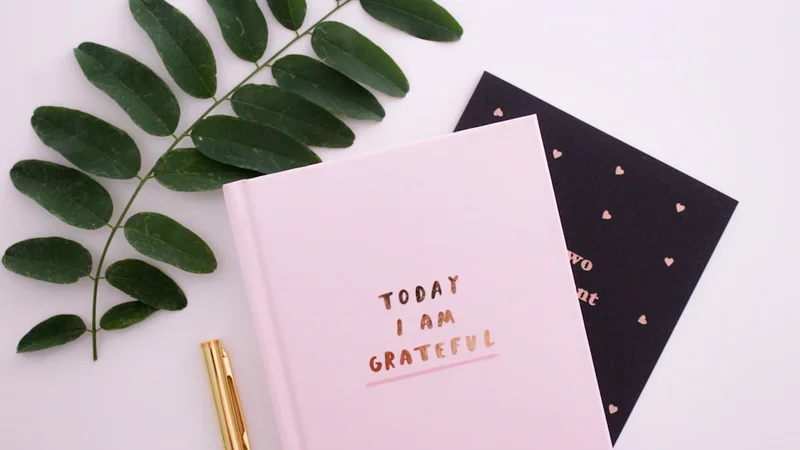
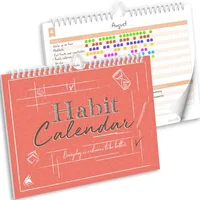
Clever Fox Habit Calendar Circle (24-Month)
A 24-month visual habit tracker built for weekly cadence — the structural tool for protecting your practice against the hedonic adaptation that quietly kills repetitive daily routines.
As an Amazon Associate, we earn from qualifying purchases — at no extra cost to you.
What My Actual Gratitude Practice Looks Like
I'll tell you exactly what I do, because I think the specifics matter more than the principles.
Three sessions per week: Monday, Wednesday, Friday. Always first thing in the morning, before I open anything with a screen. That last constraint is non-negotiable. The moment I check email or scroll through social media, my brain has already consumed its daily quota of the interesting and the urgent. The window for undistracted reflection closes fast — within minutes of the first notification.
I use a physical journal, and I'd push back against anyone who tells you digital is just as good. I've tested apps, phone notes, and a dedicated digital notebook. None of them produce the same quality of engagement. Writing by hand is slower than typing, and that friction is genuinely useful here. The reduced speed forces a longer pause at each word — you can't skim through a handwritten gratitude entry the way you skim through text on a screen, and that pause is where the actual work of the practice happens.

Moleskine Classic Notebook (Hardcover, Large)
The dedicated physical journal for this practice — hardcover, large format, 240 ruled pages. Get one that exists only for gratitude writing; the specificity of the object creates a context signal your brain learns to…
As an Amazon Associate, we earn from qualifying purchases — at no extra cost to you.
Three entries per session. Full sentences, not bullet points — because a full sentence requires you to construct a thought rather than just name an object. Each entry includes a specific detail and ends with a "because" clause: I'm grateful for [specific thing] because [genuine reason, in full]. I set a ten-minute timer. If I finish early, I don't close the journal. I sit with what I've written for the remaining time. This sounds almost embarrassingly passive and consistently produces more effect than the writing itself — there's something in the second pass of actually reading what you wrote with full attention.
One addition I made a few months ago that's worth mentioning: I end each session by identifying one person I'm genuinely grateful for, specifically because of something small they did that I never acknowledged. Not grand gestures. Small, specific ones that slipped by without thanks. Directing gratitude toward other people trains something that solo journaling alone doesn't quite reach — and it tends to make the session feel more grounded in actual relationships than in abstract self-improvement.

Philips SmartSleep Wake-Up Light HF3520
A sunrise alarm that removes the structural reason most people reach for their phone first thing — replaces the trigger without requiring willpower, protecting the screen-free morning the practice needs.
As an Amazon Associate, we earn from qualifying purchases — at no extra cost to you.
What Gratitude Practice Won't Do (The Honest Part)
This section exists because the research on gratitude is sometimes oversold in self-help contexts, and overclaiming produces overcorrection.
Gratitude practice won't resolve structural problems in your life. If you're in a genuinely damaging situation — a toxic work environment, a relationship that's steadily eroding you, financial circumstances that need concrete action — no amount of attention to the good things will fix what needs fixing. Emmons is careful about this in his own work: gratitude practice is a recalibration of your attentional baseline. It supports your functioning while you address real problems. It's not a substitute for the addressing.
It also won't work if it's purely mechanical. The three-bullet-points-before-coffee approach I ran for three months produced nothing because I was treating it as a task to be ticked, not as an act of genuine attention. The practice requires actual contact with what you're writing about — a real moment of noticing, not just its name on a page.
Shawn Achor, who spent over a decade researching and teaching positive psychology at Harvard University, describes gratitude as one of the highest-leverage happiness interventions precisely because it requires no external change in your circumstances. But he's also clear that passive "scanning for positives" — which is what most gratitude practices amount to in execution — is categorically different from the deliberate attentional retraining that produces lasting psychological shifts. The difference between those two things is roughly the difference between looking at a photograph of a place and actually standing in it.
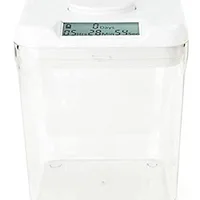
Kitchen Safe kSafe Time Locking Container
A time-locking container for your phone — the physical enforcement of the 'before any screen' rule, removing the decision entirely and making the screen-free morning structurally easy.
As an Amazon Associate, we earn from qualifying purchases — at no extra cost to you.
How to Start Your Gratitude Practice (The Specific Version)
If you want to build a gratitude practice that actually produces what the research describes, here's the design:
Step 1: Choose one or two days per week, not seven. Pick specific days and put them in your calendar as protected time. Resist the instinct to make this a daily habit. The research — particularly Lyubomirsky's work — suggests once a week is the sweet spot for most people; some find two to three sessions sustainable if each is approached with genuine freshness rather than routine. Trust the research over the productivity habit loop.
Step 2: Go analog. Make it dedicated. Get a physical journal that exists only for this practice — not a repurposed notebook you also use for grocery lists or meeting notes. The specificity of the object matters more than you'd expect for behavioral cuing; it creates a context signal that tells your brain what mode you're about to enter.
Step 3: Lead with precision, not categories. For each of your three entries, ask yourself: exactly what am I grateful for? Not "my relationships" — which specific moment, in which specific relationship, with what detail that you can actually see and feel when you recall it? The more sensory and particular the entry, the more neurological response it generates. Generality is the enemy of this practice.
Step 4: Add the "because" clause. Every entry ends with "...because [genuine reason you've actually thought through]." This single structural addition is, in both my experience and Lyubomirsky's research, the difference between a practice that produces measurable results and one that doesn't. It moves the practice from labeling to understanding. That shift is where the work lives.
Step 5: Vary your focus every few weeks. Rotate through different domains of life: one cycle focused exclusively on people and relationships; the next on small moments from the past 48 hours you'd otherwise have forgotten; the next on your own effort or capability or growth. This rotation is the mechanical protection against the hedonic adaptation that eventually flattens every repetitive practice. Schedule the rotation so you don't have to remember to vary it — it just happens.
The Practice Is the Design
Here's what I've come to think about gratitude practice after getting it wrong for three months and then, with considerably more care, getting it right.
It's not mood management. It's not a way to feel better on bad mornings. It's an attentional training practice — a systematic program for gradually recalibrating the evaluative default your brain runs. That default is deficit-scanning: designed for a world that no longer exists, calibrated toward gaps and threats, producing a persistent low-level undercurrent of what's wrong, missing, or not yet achieved.
A well-designed gratitude practice, done with the specificity and frequency the research supports, chips away at that default over time. Not by replacing it with forced positivity. By building the competing skill — the practiced capacity to notice what's genuinely present and good in your current experience with the same vividness and frequency that your negativity bias notices what's absent and threatening.
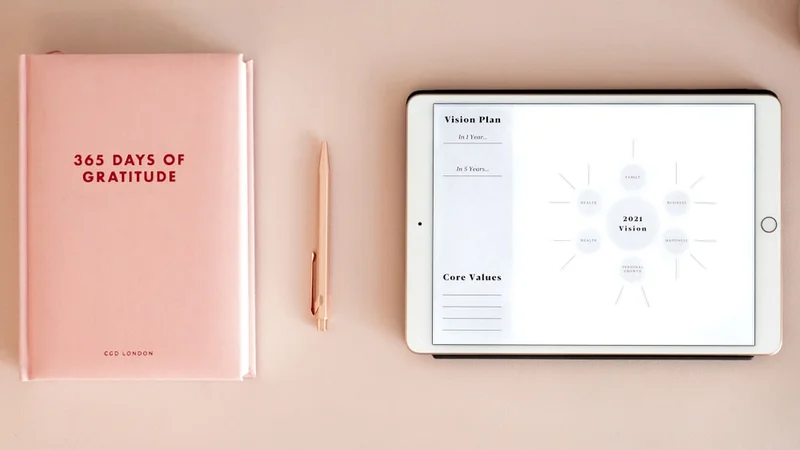
That is, in a very precise way, what "Design Your Evolution" means. Not waiting for your circumstances to improve before you engage fully with your life. Designing, deliberately and incrementally, the internal environment you operate from — one small, rigorously practiced habit at a time.
So here's the question I want to leave you with: if you've tried gratitude journaling before and it didn't work, which of the four variables was missing from your practice — specificity, emotional depth, novelty, or frequency?
Your answer probably tells you exactly where to start.
Related read: Name It to Tame It: The Affect Labeling Science
Was this helpful?