Mindset· 10 min read
Why You Make Your Worst Decisions When It Matters Most
Smart people make terrible decisions under pressure. Here's the neuroscience of high-stakes decision-making — and the practical system to get it right.
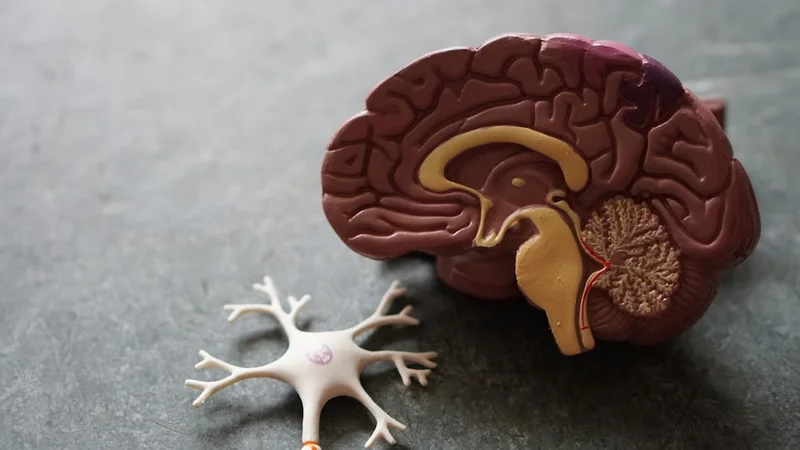
Why You Make Your Worst Decisions When It Matters Most
The meeting was three minutes away.
My phone buzzed. An email had landed that needed a response before I walked into that room — a negotiation point that would shape the next six months of the project. I skimmed it. Replied in thirty seconds. Pocketed the phone and walked in.
It was the wrong decision. Not because the question was genuinely complicated — in calmer conditions, I handle this kind of thing well. It was wrong because I made it while already carrying the cognitive equivalent of twelve open browser tabs. And under that kind of load, my brain didn't produce the best available answer. It produced the fastest one.
That thirty-second email cost us six weeks.
The strange thing? The research says this isn't a character flaw or a failure of intelligence. It's a design feature of the human brain — one that generates systematically poor outcomes in the exact conditions where you most need the opposite. Understanding why it happens doesn't just explain your past mistakes. It gives you a concrete lever to pull before the next high-stakes moment arrives.
The Decision Paradox Nobody's Addressing
Here's the uncomfortable truth that most productivity frameworks quietly skip: the situations that most require your best judgment are precisely the situations most reliably destroying your ability to produce it.
Think about the decisions that have actually mattered in your life — not the routine ones, but the ones you'd want to make with total clarity and maximum cognitive precision. A job offer with a 24-hour deadline. A confrontation with a colleague when tensions are already high. A financial call that has to happen before the market closes. A difficult conversation with your partner at 11pm after a brutal week.
These are also the conditions under which your decision-making is at its most compromised.
Daniel Kahneman spent decades studying this paradox. His dual-process framework, laid out with rigorous and accessible detail in Thinking, Fast and Slow, describes two cognitive systems operating simultaneously in every human brain. System 1 is fast, automatic, emotionally driven, and pattern-matching — the system evolution built for rapid threat response. System 2 is slow, deliberate, analytical, and computationally expensive — the system that produces careful, evidence-weighing decisions.
Under time pressure, stress, emotional activation, or heavy cognitive load, the balance shifts dramatically toward System 1.
Which means: when it matters most, you're running on the survival system — not the reasoning system.
Thinking, Fast and Slow — Daniel Kahneman
Kahneman's dual-process framework is the foundation of the article's argument. This is the book that explains why your judgment degrades exactly when stakes peak — a 30-year synthesis of decision research from the Nob…
As an Amazon Associate, we earn from qualifying purchases — at no extra cost to you.
Winston Weinberg, CEO of Harvey AI, addressed this directly in a recent Farnam Street conversation on decision-making under pressure in high-stakes professional environments. His observation was pointed: as timelines compress in consequential work, the premium on human judgment quality goes up — because the genuinely hard calls still land on people. And people, under pressure, are operating with a structural cognitive disadvantage that almost no one has been deliberately trained to address.
We celebrate fast decisions. We admire leaders who are "decisive." But we rarely talk about what's actually happening inside those thirty-second replies — and what it quietly costs.
The Exact Moment Your Brain Betrays You
You don't feel it happening. That's what makes it so expensive.
When stress hormones flood your system in a high-stakes moment, your prefrontal cortex — the brain region responsible for deliberate reasoning, impulse control, and the evaluation of competing options — measurably reduces its functional capacity. This isn't metaphor. It's quantifiable neural activity, documented across imaging studies in both clinical and performance populations — including Amy Arnsten's laboratory research at Yale Medical School. The very machinery that would normally catch your overconfident first instinct, weigh it against alternatives, and produce a more calibrated response is the machinery that cortisol compromises first.
What fills the gap is your amygdala: the brain's threat-detection system. Its job is to generate a response before the situation gets worse. Fast responses. Pattern-matched to the closest available historical template. Responses that evolved for outrunning predators, not for navigating quarterly negotiations or high-stakes conversations.
In practice, this means you're often not evaluating the current situation on its own terms. You're evaluating it against the closest situation from your past that feels similar — and your amygdala is voting hard for whatever seemed to work in that old scenario. Sometimes this produces the right call. Expert intuition is real, and we'll get to that.
But when the current situation is genuinely novel, when the historical template is a poor fit, or when the old pattern was learned from a biased or small sample — all of which happen constantly — the fast-matching system generates confident-feeling recommendations that are systematically, predictably wrong.
The confidence is the problem. Bad rapid decisions don't feel like guesses. They feel like clarity.
The Biases That Cost You the Most
There are hundreds of documented cognitive biases. Under pressure, a specific handful become disproportionately expensive.
Availability bias — overweighting recent and emotionally vivid events when estimating probability and risk — hits hardest in time-pressured situations. The data set your brain runs its calculations on isn't your full knowledge base. It's whatever can be retrieved fastest. Under pressure, fast retrieval skews toward emotionally intense and recent events. Your risk estimates are quietly running on a biased sample without your awareness or consent.
Confirmation bias follows immediately: once a first hypothesis is generated — which under time pressure is usually the one that pattern-matched fastest — the brain seeks information that validates it rather than tests it. Under genuine time pressure, you frequently only evaluate one hypothesis seriously. Which means you need that first hypothesis to be accurate. And it often isn't.
Then there's sunk cost fallacy: previous investment in time, money, or emotional energy becomes disproportionately influential in forward-looking decisions. The rational question — "does this still make sense given current information?" — gets corrupted by the emotional weight of what's already been committed. You stay in the meeting longer than the data warrants. You keep funding the failing strategy. You defend the position well past where defending it serves you.
Annie Duke spent years making high-stakes decisions under genuine pressure as a professional poker player before pivoting to decision science research. Her insight in Thinking in Bets clarifies something most people never seriously examine: the quality of a decision cannot be evaluated by looking at its outcome alone. A sound decision can produce a bad outcome due to variance. A flawed decision can produce a good outcome by luck.
Most people evaluate their decision-making by looking at results — which means they never actually discover whether their decision process is systematically broken. And you cannot fix what you cannot see.
Thinking in Bets — Annie Duke
Duke's central distinction — that a sound decision can produce a bad outcome through variance, and a flawed decision can succeed through luck — is the exact reframing the article argues you need to actually identify w…
As an Amazon Associate, we earn from qualifying purchases — at no extra cost to you.
What People Who Decide Well Actually Do
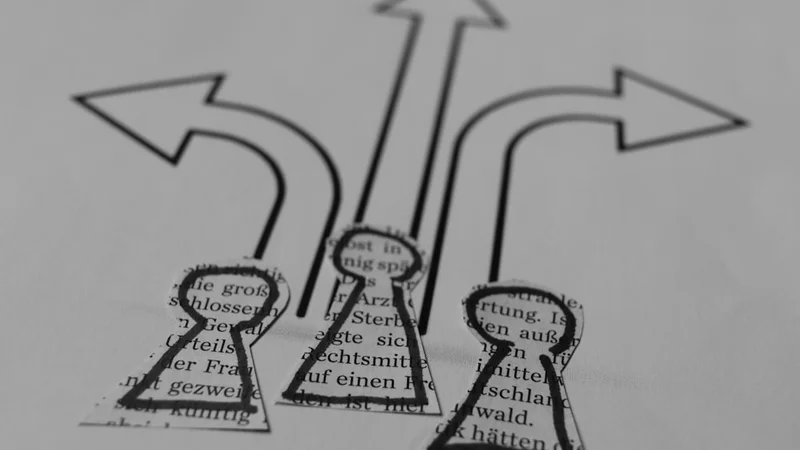
Gary Klein didn't study decision-making in controlled laboratory conditions. He studied firefighters making real calls inside burning buildings — choosing entry points, predicting structural failures, managing unpredictable variables with genuine stakes and zero opportunity for revision.
His Recognition-Primed Decision model, detailed in Sources of Power, found something that fundamentally contradicts the standard picture of expert decision-making. Expert firefighters don't run through a systematic list of options and evaluate them against a decision matrix. They don't have time. Instead, they pattern-match the current situation against a rich mental library built from thousands of hours of real experience — and because that library is more accurate and more richly populated than a novice's, the first option their System 1 generates is far more often a genuinely good one.
The implication isn't that experts are lucky or talented in some fixed, innate sense. It's that the quality of your rapid decisions under pressure is primarily determined before the high-pressure moment arrives.
It's determined by the quality of your mental models — the internal frameworks through which you understand how situations work and what typically follows from what. A person with a diverse, well-tested library of mental models will consistently generate better first-pass hypotheses under pressure than someone operating from a narrower pattern set — even under identical time constraints.
This is the lever most people never pull because it doesn't feel urgent. Reading decision science seriously, studying the mistakes of people you admire, running honest post-mortems on your own past choices — none of this has an obvious immediate payoff. But it's the primary long-term investment in the judgment quality that will determine the outcome of your most important calls.
The Pre-Commitment System That Actually Changes Things
Here's the finding that genuinely changed how I approach high-stakes moments: the single most effective way to improve your judgment under pressure is to make more of the relevant decisions before the pressure arrives.
Not more deliberation in the moment. More pre-commitment.
Pre-commitment means establishing specific behavioral rules in advance for predictable high-stakes situations. "If I receive an email requiring a response within thirty minutes on a topic involving significant budget, I won't reply before sleeping on it unless we're in the final day of negotiation." "If I feel my stress level rising above a certain threshold during a difficult conversation, I'll exit and return after twenty minutes." "If an opportunity requires a commitment before I've reviewed the fundamentals, the answer is no."
These rules look almost trivially simple. That's exactly what makes them powerful. A pre-committed rule eliminates the high-stakes in-the-moment judgment call entirely — converting a pressure-loaded decision into a low-stakes, pre-deliberated policy that executes automatically when the trigger condition appears.
The physiological dimension matters more than the purely cognitive literature typically admits. Williamson and Feyer's landmark study, published in Occupational and Environmental Medicine, found that after 17 hours without sleep, cognitive performance degrades to roughly the equivalent of a 0.05% blood alcohol level. Most high-performers regularly make their most consequential decisions in states of measurable impairment they would never voluntarily choose if they saw it clearly labeled.
Scheduling your most consequential conversations for your highest-readiness windows — not for whatever slot is open in the calendar — is one of the most concrete behavioral upgrades available to you. The decision doesn't change. The state in which you make it does.
How to Start Today: Build Your Decision System This Week
The changes that actually improve your decisions under pressure are small, structural, and compound over time. None of them require a dramatic life overhaul.
First: identify your three most costly recurring decision types. These are the specific situations where you've historically made calls you later regretted. The contexts that reliably trigger your worst judgment. Write them down explicitly. These are your targets for pre-commitment rules.
Second: write one specific behavioral rule for each. The format is strict — "When [specific trigger condition], I will [specific behavior]." Not "I'll try to." Not "I'll consider." A behavioral commitment that executes automatically when the trigger appears, removing discretion from the exact moment you can least afford to exercise it.
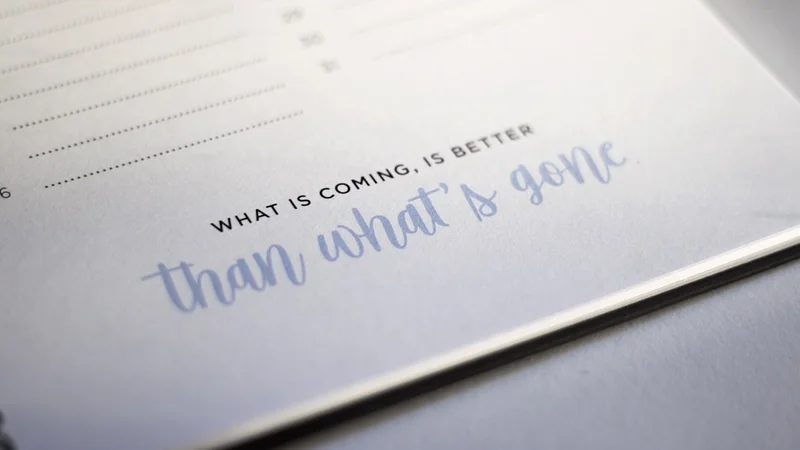
Third: start a decision journal. A dated, durable notebook — the Moleskine Classic Hardcover is ideal for this — where you log five things: the situation, the stakes, your reasoning at the time you decided, the option you chose, and eventually the outcome. Reviewed monthly, this creates the honest feedback loop that ordinary experience simply cannot.

Moleskine Classic Notebook (Hardcover, Large, Black)
The decision journal is the article's most concrete prescription: dated, five fields per entry, reviewed monthly. A durable hardcover notebook is the structural commitment that makes the practice survive past week three.
As an Amazon Associate, we earn from qualifying purchases — at no extra cost to you.
→ How to Enter Flow State: The Science Behind Peak Performance
Fourth: build your mental model library deliberately. One serious decision science or mental models book per quarter compounds significantly over two or three years. The Great Mental Models, Volume 1 by Shane Parrish is the best single-volume starting point — practical frameworks for clearer thinking across any domain, not abstract theory. The goal is expanding your pattern library before you need it.
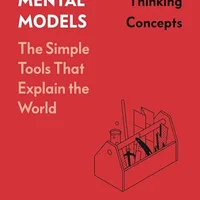
The Great Mental Models, Vol. 1 — Shane Parrish
Parrish catalogues the mental models — first-principles thinking, second-order consequences, inversion, probabilistic reasoning — that shape your System 1 pattern library before pressure arrives. The best single-volum…
As an Amazon Associate, we earn from qualifying purchases — at no extra cost to you.
Fifth: track your physiological readiness before high-stakes windows. Before any decision with consequences six months from now, run a brief honest check. Did you sleep adequately? What's your actual stress level right now? Are you deciding now because it's genuinely the right moment — or because the calendar says now and someone's waiting?
A readiness tracker like the Amazfit GTR 4 — which measures sleep quality, HRV, and recovery state daily — turns that gut check into actual data. You start seeing which days your cognitive capacity is genuinely high and which days you're operating at 70%. The shift from scheduling decisions by calendar availability to scheduling them by readiness is subtle and significant.
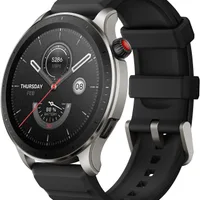
Amazfit GTR 4 Smart Watch (46mm, GPS, HRV, 14-Day Battery)
Stop scheduling decisions by calendar slot — start scheduling them by physiological readiness. A wrist-worn HRV and sleep tracker turns the gut-check into actual data, letting you see which days your cognitive capacit…
As an Amazon Associate, we earn from qualifying purchases — at no extra cost to you.
→ Why You Still Feel Tired After 8 Hours of Sleep
For the specific pre-decision practice — settling the nervous system before a high-stakes conversation — The Wim Hof Method offers a structured approach to building physiological coherence in under ten minutes. The research on coherence states and executive function is more robust than most productivity frameworks acknowledge.
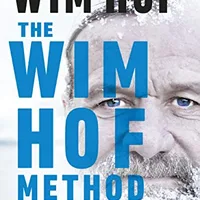
The Wim Hof Method — Wim Hof
The most-validated structured breathwork protocol available in book form. Hof's three-round breath-hold sequence, backed by eight university studies, measurably shifts autonomic state in under ten minutes — the exact…
As an Amazon Associate, we earn from qualifying purchases — at no extra cost to you.
None of this is complicated. The gap between your best and worst decision quality isn't primarily about intelligence. It's about state, system, and the pattern library you've built — all of which respond to deliberate, consistent practice.
The Version of You Who Decides Well Under Pressure
The cognitive science doesn't promise perfect decisions under pressure. That's not on the table.
What it does promise is something more realistic and considerably more useful: the systematic patterns producing your worst decisions are identifiable, the conditions degrading your judgment are manageable, and the mental models shaping your first-pass pattern matches are improvable through deliberate practice.
The version of you who makes better decisions when it matters most isn't a fundamentally different person. It's the same person, operating with a more carefully built pattern library, better-designed pre-commitment rules, and a more honest feedback loop on their own decision quality. Someone who decided — before the pressure arrived — how they would decide when it did.
That's what designing your evolution actually looks like in the domain that might matter most. Not becoming someone who never faces pressure. Becoming someone whose judgment holds up when pressure is exactly what's on the table.
What's the most expensive decision you've ever made under pressure — and looking back now, what was the actual mechanism of the failure?
→ The Real Reason You Procrastinate
→ Cognitive Dissonance: Why You Defend Bad Decisions
→ Your Real Problem Isn't Information — It's Attention
→ Solomon's Paradox: Why You Give Better Advice Than You Take
Was this helpful?
Continue Your Evolution
The Frozen Goal Problem: Why Tiny Wins Beat Grand Plans
Rejection Sensitivity: Why You Keep Assuming They're Upset
The Science of Nostalgia: Why Looking Back Helps
Sedikides and Wildschut found nostalgia boosts mood, meaning, and social connection — not mere sentimentality. Here's the science and how to use it.