Habits· 9 min read
What Real Self-Care Actually Looks Like
Most people's self-care doesn't actually restore them. Here's what psychological science says works — and how to build a real recovery system.
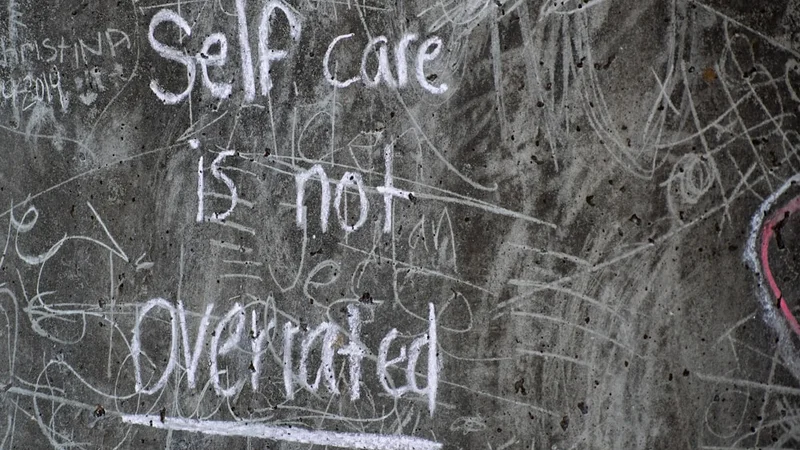
What Real Self-Care Actually Looks Like (Most People Are Doing It Wrong)
Picture a Sunday evening. You've survived the week. You draw the bath, light the candle, pour yourself something you've been looking forward to since Wednesday, and open Netflix with the quiet conviction that you've earned this. Classic self-care — the kind every wellness brand has been selling you for the last decade.
By Monday morning, you feel exactly as depleted as you did on Friday.
If that sounds familiar, here's the thing: you're not failing at self-care because you lack discipline or because you chose the wrong face mask. You're failing at it because what the wellness industry calls "self-care" and what psychological science defines as genuine recovery are two almost entirely different things. The gap between them is costing people something real — their sustained capacity to think clearly, feel regulated, and show up as the version of themselves they're actively trying to build.
The $4.5 Trillion Misunderstanding
The concept of "self-care" entered clinical medicine in the late 1950s as a framework for helping chronically ill and elderly patients maintain independent functioning. It was a medical concept built around a precise question: what activities help restore the functional capacities that disease depletes?
By 2018, it had become a $4.5 trillion global wellness industry. Somewhere in that journey, the original question got lost.
What replaced it was a far more commercially useful premise: if you're stressed, treat yourself. The logic has surface plausibility — if you're depleted, surely pleasure helps? — but the research doesn't support it as a recovery strategy.
Sabine Sonnentag, a work psychologist at the University of Mannheim who has spent more than two decades studying recovery from occupational stress, draws a distinction the wellness industry never mentions. Her Recovery Experience Questionnaire research separates hedonic recovery — pleasure-seeking behaviors that generate short-term positive emotion without restoring depleted capacities — from genuine psychological recovery, which specifically targets the capacities that sustained stress and work actually consume: executive attention, emotional regulation, physical energy, creative thinking.
A bubble bath feels good. So does a glass of wine. So does three episodes of whatever's popular right now. None of them specifically restore your prefrontal cortex's ability to make nuanced decisions, or your autonomic nervous system's ability to move out of low-grade threat activation. Feeling good in the moment and being genuinely restored are related concepts that are not, it turns out, the same thing.
Stillness Is the Key — Ryan Holiday
Holiday distils 2,000 years of Stoic, Buddhist and Confucian thought into the precise concept Sonnentag's research operationalises: stillness as a trained capacity, not a mood. The most accessible book in print on wha…
As an Amazon Associate, we earn from qualifying purchases — at no extra cost to you.
Burnout researchers Emily and Amelia Nagoski describe this gap through the biology of the stress cycle in Burnout: The Secret to Unlocking the Stress Cycle: the physiological machinery of the stress response — cortisol, muscle tension, elevated heart rate, shallow breathing — evolved to conclude through physical action. Prehistoric threats were resolved by running, fighting, or climbing; the body went through a physical completion sequence and returned to baseline. Modern stressors rarely allow that completion. You sit through a tense meeting, absorb the cortisol hit, and the meeting ends. But the physiology hasn't resolved. It's still running in the background while you scroll your phone on the couch and call it recovery.
What Self-Care Is Actually Supposed to Do
Here's the framing shift that changes everything: stress and depletion are specific. They're not a uniform low-battery state that any pleasant experience will top up.
When you work through a demanding cognitive task, you deplete executive attention. When you spend a day managing other people's emotional states, you deplete emotional regulation capacity. When you've been sedentary through eight hours of back-to-back meetings, you deplete physical energy. When you've operated without autonomy all day — following someone else's schedule, making decisions inside someone else's constraints — you deplete the sense of control that contributes directly to your self-efficacy and motivation.
These are different depletions. And they require different recovery mechanisms.
Most people's self-care routines are built around what sounds appealing after a hard week — which tends to be passive, comfort-oriented, and low-demand. The problem is that passive comfort is genuinely pleasant while delivering minimal restoration of the specific capacity you most need. You can spend an entire weekend on the couch and arrive at Monday still exhausted in the ways that actually matter, because what you did bore no particular relationship to what was depleted.
This is what the science is pointing at: genuine self-care is not a mood. It's a function. And it requires a diagnosis before a prescription.
The Four Mechanisms That Actually Restore You
Sonnentag's research identified four specific psychological mechanisms through which genuine recovery operates. Each addresses a different dimension of depletion — and they're not interchangeable.
Psychological detachment is the one most commonly absent. It doesn't mean physical distance from work. It means genuinely releasing cognitive and emotional engagement with work tasks — not checking email at dinner while technically "at home," but actually releasing the mental preoccupation with responsibilities and tomorrow's agenda until the next scheduled engagement. Research on detachment consistently shows it's among the strongest predictors of next-morning cognitive performance and emotional wellbeing.
Relaxation means actively reducing physiological and psychological activation. Not just being comfortable, but specifically targeting the parasympathetic nervous system through breathwork, gentle movement, time in natural environments, or deliberate stillness. The critical element is that it's targeted, not incidental.
Mastery is the one that surprises most people. It means engaging in skill-building or challenge activities outside of work that generate a genuine sense of competence and efficacy. This matters most for people whose work has chronically eroded their sense of control or capability. Learning a language, improving at an instrument, training toward a physical goal — these aren't distractions from recovery. For many people, they're the recovery mechanism nothing else can replicate.
Control is the specific perception of autonomy over non-work time: not just having free time, but perceiving that you're choosing what to do with it. Drifting through a Sunday afternoon following wherever notifications lead doesn't generate the control experience. Choosing a specific activity and doing it by your own design does. That distinction — chosen versus default — is more important to the recovery effect than the activity itself.
The most effective self-care practices score well on multiple mechanisms simultaneously. A solo walk in a natural setting, for instance, provides psychological detachment, parasympathetic relaxation, physical mastery, and genuine control. It's not coincidental that this kind of activity appears consistently at the top of wellbeing research across multiple methodologies — and it costs nothing.
Why Netflix Feels Good but Leaves You Empty
Mihaly Csikszentmihalyi spent decades on what he called experience sampling — having thousands of people report their actual in-the-moment wellbeing at random intervals throughout the day. What he found about passive leisure is one of the most counterintuitive findings in the wellbeing literature: television viewing consistently averaged in the slightly below neutral wellbeing range.
People choose these activities specifically for recovery. They look forward to them. And yet when they're in them — measured in the moment, not in anticipation — reported wellbeing is neutral to mildly negative. Often lower than during most active work tasks, and significantly lower than people predict before sitting down.
Research from Ariel Shensa and Brian Primack on screen time and mental health adds another layer: the relationship between passive social media consumption and markers of anxiety, loneliness, and low wellbeing is dose-dependent and consistent across demographic groups. Passive digital leisure isn't just not restoring you. There's growing evidence it's leaving you slightly worse than it found you.

Kindle Paperwhite (2024, 12th Gen)
The cleanest substitution for passive streaming: a single-purpose device that gives you the same bedtime ritual without autoplay or notifications — and targets all four of Sonnentag's recovery mechanisms at once.
As an Amazon Associate, we earn from qualifying purchases — at no extra cost to you.
This isn't a morality argument against watching TV. It's a calibration argument. If your primary recovery strategy is built around activities that research consistently shows produce neutral-to-negative wellbeing effects, you're running a recovery deficit every weekend and wondering why Monday feels impossible.
The practical shift isn't asceticism — it's priority. Treat the active practices (movement, nature, real-world engagement, skill development) as your recovery anchors. Keep the Netflix for what it's actually good at: entertainment, not medicine. Stop asking it to do a job it wasn't designed to do.
why you still feel tired after 8 hours sleep
The Self-Care Diagnostic: What Are You Actually Depleted Of?
Physician and researcher Saundra Dalton-Smith identified seven distinct types of rest that people need: physical, mental, emotional, social, sensory, creative, and spiritual. Her taxonomy has become genuinely useful because the underlying insight is correct: depletion is specific, and the right recovery matches the specific depletion.
Before you build a self-care system, answer a prior question honestly: what is actually running low?
If you end most weeks emotionally depleted from managing people, conflict, or others' stress, solitude and sensory quiet will restore you more than social plans — even pleasant ones. If you end most weeks cognitively overloaded from decisions, complex information, and unresolved problems, then open-ended time in nature or physical exercise will serve you better than more media consumption. If you've spent the week being passive and reactive — absorbed into other people's agendas, schedules, and demands — the recovery you most need involves genuine autonomy and self-direction, not more structured leisure.
Most people's self-care routines are built by mood and availability rather than diagnosis. The result is a practice that's inconsistently effective — sometimes it works, often it doesn't — because it's not matched to the actual depleted resource.
The diagnostic isn't complicated. At the end of a hard day, sit with three questions:
- What was the dominant demand on me this week — cognitive, emotional, physical, or autonomy?
- Which of Sonnentag's four recovery mechanisms would most directly restore that specific capacity?
- What activity, matched to the time I actually have, best delivers that mechanism?
how to manage daily anxiety without medication
How to Build a Self-Care System That Actually Works
Most self-care conversations end with a list of activities and the implicit assumption that you'll somehow fit them into an already-full life when you finally feel bad enough to need them. Here's a more useful frame.
Genuine self-care isn't a menu you pick from reactively. It's a designed recovery architecture — specific practices matched to specific depletions, protected in your schedule before depletion occurs, not reached for desperately on the far side of burnout. The timing matters more than most people realize: research consistently shows that people who recover before full depletion sustain higher performance and lower burnout rates than those who push to exhaustion and then scramble.
Four practical shifts make this concrete.
Audit before you prescribe. Spend two weeks tracking — not what self-care you do, but how you feel the day after different activities. Most people discover a meaningful mismatch between what they've been calling self-care and what actually leaves them restored. Your own data will tell you more than any list.

Clever Fox Habit Calendar Circle (24-Month)
A circular two-year tracker turns the audit into data you can see at a glance — which activities correlate with better next days vs which produce no measurable lift. The cheapest way to discover the mismatch this arti…
As an Amazon Associate, we earn from qualifying purchases — at no extra cost to you.
Make active recovery the anchor, not the reward. Movement, time in nature, mastery activities, real-world social engagement — these consistently outperform passive alternatives in next-day wellbeing research. Schedule them first. Passive rest fills the remaining time.

Liforme Original Yoga Mat
The indoor anchor for the active-recovery practice the article names: movement that scores on detachment, relaxation, mastery, and control simultaneously — the weather-proof alternative to a solo walk in a natural set…
As an Amazon Associate, we earn from qualifying purchases — at no extra cost to you.
Protect psychological detachment as non-negotiable. This is the mechanism most commonly absent and most consistently associated with burnout when missing long-term. Pick one daily window — dinner, a walk, the hour before bed — where work-related inputs are structurally blocked, not just hoped to be absent. The physical separation (phone in another room, apps with scheduled blocking) matters because the cognitive separation is genuinely difficult to achieve without environmental support.
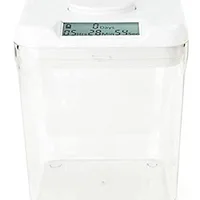
Kitchen Safe kSafe Time Lock Container
The article makes the precise argument the kSafe is engineered for: the physical separation matters because the cognitive separation is genuinely difficult without environmental support. Putting a phone in another roo…
As an Amazon Associate, we earn from qualifying purchases — at no extra cost to you.
Stop waiting until you're empty. Self-care scheduled into a full life performs fundamentally differently than self-care reached for on the far side of collapse. Design it in advance. Treat it with the same commitment you'd give a meeting with someone you respect — because you are that person.
why willpower never breaks a bad habit
The Person You're Actually Restoring
There's a version of the "Design Your Evolution" premise most people miss: you can't sustain growth on a depleted system. The compound interest of consistent habits, deepened skills, and expanding capacity all require a functioning foundation. Not perfect rest — functional recovery. The kind that actually replenishes the specific resources your goals, your work, and your relationships draw from.
The wellness industry has been telling you that self-care is something you earn after a hard week. The research says something closer to the opposite: genuine recovery is the maintenance that makes sustained contribution structurally possible. It's not the reward at the end of the effort. It's the infrastructure the effort is built on.
Jim Rohn used to say that you can't give what you don't have — and he meant it as a practical observation, not a moral one. Your most important work requires your best cognitive function. Your most important relationships require your emotional regulation. Your most important growth requires the energy and curiosity that depletion specifically kills.
So the question worth sitting with — not as a should, but as genuine curiosity: what is the one activity that, when you do it consistently, actually leaves you better the next day? Not more comfortable. Not more entertained. But genuinely more capable, more regulated, more like the person you're actively trying to become?
That's where your real self-care system starts.
Was this helpful?
Continue Your Evolution
The Frozen Goal Problem: Why Tiny Wins Beat Grand Plans
Rejection Sensitivity: Why You Keep Assuming They're Upset
The Science of Nostalgia: Why Looking Back Helps
Sedikides and Wildschut found nostalgia boosts mood, meaning, and social connection — not mere sentimentality. Here's the science and how to use it.