Habits· 10 min read
How to Sleep Better: The Science Most People Skip
Most sleep advice is generic. Here's what research actually shows about optimizing sleep quality — and the daily habits that make the biggest difference.
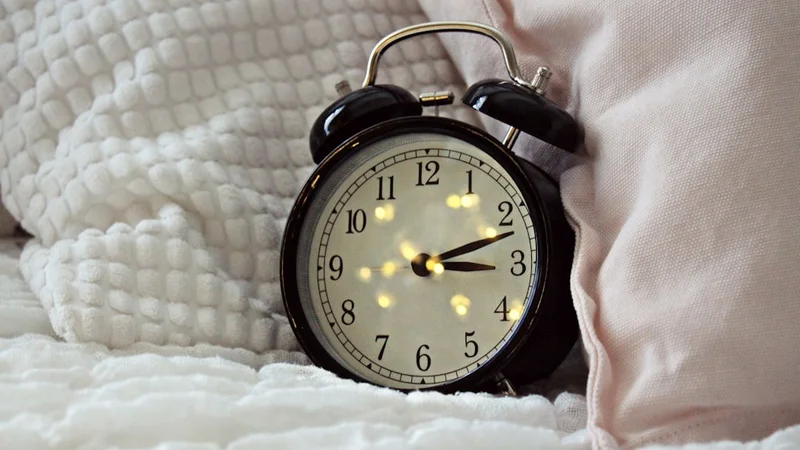
How to Sleep Better: The Science Most People Skip
My alarm went off at 6:30am and I'd technically slept seven hours. I did the math lying there. Seven hours. The recommended number. I'd hit the number.
I still felt like I'd spent the night in a bus station.
This went on for weeks. I wasn't staying up past midnight scrolling. I wasn't drinking heavily on weeknights. I was doing what you're supposed to do — and every morning felt like peeling myself off the floor rather than actually waking up. What eventually changed things wasn't a new supplement or a more expensive pillow. It was understanding something most sleep advice never bothers to explain: hours are the wrong metric. They've always been the wrong metric.
Why How Long You Sleep Tells You Almost Nothing
When Matthew Walker, a sleep researcher at UC Berkeley, says that after 17 consecutive hours awake your cognitive performance degrades to the equivalent of a 0.05% blood alcohol level — and after 24 hours reaches 0.1%, legally impaired in most countries — he isn't making a case for more hours. He's making a case for understanding what sleep actually is.
Most people's mental model of sleep is binary. You're awake, then you're not. You lose consciousness, and consciousness returns when the alarm sounds. Quality is determined by how many hours fit in between.
That model is incomplete. And it's why the standard advice so often fails.
Sleep architecture is the term researchers use for the cyclical structure of a night's sleep: five to six 90-minute ultradian loops, each containing distinct stages with distinct biological functions. Light sleep (stages N1 and N2) handles the transitions. Deep slow-wave sleep (N3) drives physical restoration, growth hormone secretion, and procedural memory consolidation — the kind that helps you remember how to do things. REM handles emotional processing, creative association, and episodic memory — the kind that helps you understand what things mean and what happened yesterday.
The distribution of those stages isn't uniform. Early cycles are dominated by deep sleep. Late cycles are dominated by REM.
This is where the hours math breaks down. If you go to bed at 1am and wake at 7am — six hours, not catastrophic on paper — you've captured most of your deep sleep but cut your REM nearly in half. You've protected physical recovery while largely abandoning emotional regulation and memory integration. You haven't just slept less. You've slept in a structurally different configuration with consequences that simple hour-counting doesn't reveal.
Cut sleep by 90 minutes from the back end of the night and you lose mostly REM. Do that consistently and you start to notice the cumulative effect: emotional reactivity that's slightly higher than usual, a creativity that feels dampened, a sense that things are harder to recall and process than they should be. Not dramatic enough to diagnose. Persistent enough to shape every day.
Walker's Why We Sleep is the most thorough popular synthesis of this research, and it's uncomfortable reading in the best possible way — because it makes the invisible consequences of poor sleep architecture impossible to dismiss.
The Internal Clock You're Disrupting Without Knowing It
Your sleep quality isn't primarily determined by what you do in the hour before bed. It's largely determined by what you do in the first thirty minutes after you wake up.
Russell Foster, a circadian neuroscientist at Oxford, has spent his career mapping how the body's circadian clock operates. The key finding is this: your circadian clock is synchronized primarily by light, and the precision of that synchronization determines the quality and timing of your sleep architecture hours later.
Morning bright light — ideally within thirty minutes of waking — reaches the retinal ganglion cells in your eyes, which send a direct signal to the suprachiasmatic nucleus, the brain's circadian pacemaker. That signal calibrates the clock, tells your body that day has begun, and sets a biological timer for the melatonin rise that will initiate sleep drive roughly 14 to 16 hours later. Without that clear morning signal, the clock drifts forward — and your evening melatonin timing drifts with it.
What disrupts the system on the back end is equally specific. Artificial light after sunset — particularly the short-wavelength blue light that phones, laptops, and LED overhead lighting emit — suppresses melatonin production by signaling "daytime" to your retinal photoreceptors. The suppression is typically 30 to 90 minutes. That doesn't sound dramatic. But that delay compresses your sleep architecture into the back end of the night, disproportionately eroding the REM-dense cycles that should dominate your final hours.
The fix isn't complicated. Morning sunlight, ideally outside, for ten minutes or more. And after 9pm, warmer and dimmer light wherever possible — a lamp instead of overheads, a screen a few degrees yellower. These are tiny behavioral changes with direct biological consequences that accumulate every night.
Foster's research converges with Andrew Huberman's at Stanford on one specific point: the morning light protocol isn't about mood or mindfulness. It's about circadian entrainment — the precise biological calibration of a 24-hour internal clock that determines when each sleep stage occurs and how deeply. Miss the morning signal consistently and you're running a miscalibrated clock. Everything downstream gets noisier.
The Temperature Lever That Almost Nobody Uses
Here's the sleep science that surprises people most consistently: your bedroom temperature may matter more than your mattress, your pillow, and most of the other things you've been optimizing.
Sleep onset requires your core body temperature to drop by approximately one degree Celsius. Your body initiates this actively — dilating blood vessels in your hands and feet to radiate heat outward, cooling from the core inward. Your extremities feel warm just before you fall asleep for this exact reason. You're not warming up. You're dispersing heat from your core.
A warm bedroom fights this process directly. When ambient temperature is high, your body struggles to dissipate heat efficiently. Sleep onset delays. The resulting sleep architecture is lighter and more fragmented than a cooler environment would produce — not because of stress or anxiety or screen time, but because of a straightforward thermodynamic conflict.
According to the Sleep Foundation's synthesis of bedroom temperature research, a finding consistent with multiple independent lab studies: a bedroom between 65 and 68°F (18 to 20°C) produces measurably better sleep quality than warmer settings. Not marginally better. Better in objective terms — sleep efficiency, deep-sleep percentage, number of awakenings.
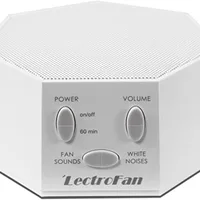
LectroFan Classic White Noise Machine
A cool bedroom is half the equation — masking the awakenings caused by ambient noise is the other half. White noise smooths out sleep architecture in environments where complete silence is impossible.
As an Amazon Associate, we earn from qualifying purchases — at no extra cost to you.
A programmable thermostat set to drop two or three degrees before your target bedtime is free. A fan is a cheap proxy. For people who run hot or sleep with a partner whose temperature preferences differ, temperature-regulating sleep systems — the ones that actively cool the mattress surface — actually deliver on their claims because the underlying physiology is straightforward.
This is also why a warm shower 60 to 90 minutes before bed reliably helps people fall asleep faster, despite the apparent paradox. The warm water draws blood to the skin. When you step out, heat radiates rapidly outward, accelerating the core temperature drop your body needs to initiate sleep. You're not warming up to sleep. You're engineering a faster cool-down.
Science-Backed Sleep Habits, Ranked by What They Actually Do
There's no shortage of sleep advice. Most of it is accurate. Almost none of it is ranked by actual effect size. Here's what the research shows when you ask which behavioral changes produce the largest measurable improvements:
Consistent wake time — seven days a week.
This is the intervention most people resist and the one with the strongest evidence behind it. The wake time is the most powerful circadian anchor you have — more important than consistent bedtime, because the wake signal is the clock's strongest resynchronizer. Chronobiologist Till Roenneberg, who coined the term "social jet lag" in a 2006 paper, documented how sleeping in by as little as 90 minutes on weekends produces measurable circadian displacement — and you feel it every Monday morning without knowing what's causing it.
Pick a wake time you can actually sustain. Keep it Saturday and Sunday. Give it two weeks. The shift in subjective energy and sleep quality that most people notice by day ten is more persuasive than any amount of reading on the subject.
Caffeine has a half-life of five to seven hours.
A coffee at 3pm is still 50 percent active in your system at 8 or 9pm. Caffeine works by blocking adenosine receptors — adenosine is the sleepiness-signaling molecule that accumulates throughout the day and builds sleep pressure. When caffeine blocks those receptors, your brain can't accurately read how tired it actually is. You fall asleep adequately — and then find yourself awake at 3am, because the adenosine that caffeine temporarily blocked doesn't disappear. It floods the receptors the moment caffeine clears.
This is a slow leak that has degraded more sleep than almost any other single variable in modern life. A noon cutoff is conservative. Fast metabolizers may not need it. But most people don't know which type they are — and the experiment costs nothing.
Alcohol is not a sleep aid. It's the opposite.
This might be the most counter-intuitive piece of sleep science, and it deserves to be stated plainly: alcohol is a sedative that fragments REM sleep so reliably that it produces the worst sleep architecture of any commonly used substance. It accelerates sleep onset — which creates the false impression of helping — and then fragments the second half of the night systematically. The grogginess you feel the morning after a couple of glasses of wine isn't the alcohol metabolizing. It's the REM deprivation. You spent the night in the lightest, most disrupted sleep stages while technically unconscious.
Complete darkness sends an unambiguous signal to your brain.
Even low-level light — a charging LED, a streetlight bleeding through thin curtains, a hallway glow under a door — activates retinal photoreceptors that signal daytime to alertness-governing brain regions. A dark bedroom isn't an aesthetic preference. It's a biological condition that directly affects melatonin production and sleep architecture depth.
How to Start Tonight: A Protocol You Can Actually Use
You don't need to fix everything simultaneously. Start with the changes that carry the highest evidence weight, give them two weeks, and assess honestly.
Step 1: Lock your wake time — and keep it through the weekend.
Pick a time you can maintain seven days a week. Set it as a recurring alarm. This single commitment, held consistently for two weeks, produces more measurable sleep improvement than most interventions combined. It's the one most people delay because it feels like a sacrifice. It's also the one that changes the baseline fastest.
Step 2: Get morning light within 30 minutes of waking.
Ten minutes outside is enough to deliver the retinal light dose that calibrates your circadian clock. If you live somewhere with dark winters or can't get outside, a 10,000-lux light therapy lamp placed at eye level while you have breakfast delivers an equivalent effect — and the difference between using one and not using one shows up in how reliably you feel sleepy at the same time each evening.
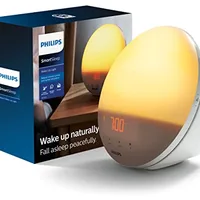
Philips SmartSleep Wake-Up Light HF3520
Where outdoor morning light isn't reliable — winter, shift work, dark mornings — a sunrise-simulation lamp at eye level during breakfast delivers the retinal light dose that calibrates the circadian clock. The Philips…
As an Amazon Associate, we earn from qualifying purchases — at no extra cost to you.
Step 3: Drop your bedroom temperature to 67°F before you sleep.
Thermostat, fan, or stripping back a layer. Open a window if the season allows. Your body will spend more time in deep sleep in a cooler environment — not because it's comfortable, but because the thermodynamics of sleep onset work in your favor.
Step 4: Eliminate the light after 9pm.
Blackout curtains if streetlight bleeds in. A sleep mask works as a same-night alternative. The difference is not subtle for most people — you'll notice it within the first few nights in the form of sleeping through until the alarm rather than drifting into lighter sleep in the final hours.
Step 5: Try magnesium glycinate before bed.
Of the sleep supplements with actual clinical evidence, this is the most studied and the most consistently useful. A 2022 systematic review in Nutrients found magnesium supplementation significantly improved subjective sleep quality — particularly sleep onset latency and overall sleep efficiency. Magnesium glycinate — not magnesium oxide, which has poor bioavailability — supports parasympathetic nervous system activation and reduces time to sleep onset. It doesn't sedate the way antihistamines or high-dose melatonin do. It's closer to removing a low-grade background tension that was making relaxation harder than it needed to be. 400mg, taken 30 to 60 minutes before target sleep time, is the dose with the most evidence.
One optional addition: a sleep tracker. Not to obsess over data — that creates its own problems — but to make the relationship between your daily behaviors and your actual sleep architecture visible. Two weeks of tracking makes abstract cause and effect concrete. When you see that every night you had alcohol, your deep sleep percentage dropped below 12%, the behavioral connection stops being information you know and becomes information you've seen. That shift in evidence changes things.
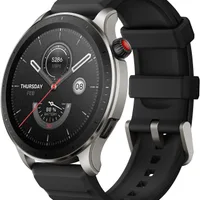
Amazfit GTR 4 Smart Watch
A sleep tracker isn't for obsessing over numbers — it's for making the cause-and-effect between yesterday's behaviours and tonight's deep-sleep percentage visible. Two weeks of data is enough to change the baseline.
As an Amazon Associate, we earn from qualifying purchases — at no extra cost to you.
The Foundation Everything Else Is Built On
Jim Rohn used to say that success is a few simple disciplines practiced every day. Sleep is where those disciplines either compound or quietly collapse before they start.
Every decision you make tomorrow — how you respond to a difficult conversation, whether you eat in a way that serves your energy, how long you can sustain focused work before the quality degrades — will be executed by a brain shaped by what happened last night. Not by your intentions. Not by your discipline. By the quality and architecture of the sleep your body actually got.
Walker's research and Foster's circadian biology converge on an uncomfortable shared conclusion: most people are chronically running on degraded sleep not because they've made a deliberate tradeoff, but because the subtle daily signals they're sending their circadian system — the inconsistent wake times, the light after sunset, the warm bedroom, the late coffee — are quietly working against a biological process that wants to work properly.
The body is designed to sleep well. The architecture is already there. Most of what stands in the way isn't a medical condition or a genetic predisposition. It's a set of daily inputs — mostly small, mostly invisible, mostly fixable — that you can start adjusting tonight.
Design your evolution. Start with the hours nobody sees.
What's the sleep habit you keep meaning to change but haven't committed to yet? And — honestly — what's actually in the way? Drop it in the comments. You might be surprised how many people have the same answer.
Was this helpful?
Continue Your Evolution
The Frozen Goal Problem: Why Tiny Wins Beat Grand Plans
Rejection Sensitivity: Why You Keep Assuming They're Upset
The Science of Nostalgia: Why Looking Back Helps
Sedikides and Wildschut found nostalgia boosts mood, meaning, and social connection — not mere sentimentality. Here's the science and how to use it.