Habits· 9 min read
The Real Reason You Procrastinate (It's Not Laziness)
Procrastination isn't a time management problem — it's an emotional regulation problem. Here's the psychology behind it and what actually works to stop it.
The Real Reason You Procrastinate (It's Not Laziness)
There was a video script I'd been meaning to write for six weeks. Not a bureaucratic chore — something I was genuinely excited about, a topic I'd been researching for months. Every morning I'd open my laptop with full intentions, sit with the blinking cursor for approximately forty-five seconds, and somehow find myself reading a Reddit thread about the best airports in Europe.
The disorienting part wasn't the avoidance itself. It was what I was avoiding. Lazy people skip the things they dislike. I was skipping the thing I wanted most. That contradiction nagged at me until I went looking for the actual research on why people procrastinate. What I found wasn't what I expected — and it changed almost everything about how I approach the work that matters.
The Cultural Story About Procrastination Is Wrong
The narrative most of us absorbed goes something like this: you procrastinate because you're undisciplined. Because you lack willpower. Because some character deficiency is quietly preventing you from doing what you know you should. The prescribed solution is, accordingly, more discipline — stricter deadlines, harsher self-accountability, a better time-blocking system, a new app.
This story isn't just incomplete. It's counterproductive in a specific, measurable way. When you believe procrastination is a willpower problem, you reach for willpower-based solutions. These tend to produce short-term compliance followed by a longer avoidance rebound, which deepens the conviction that you're fundamentally broken. A self-defeating cycle wearing the costume of self-improvement.
The research — and there's a lot of it now — tells a genuinely different story. Dr. Timothy Pychyl at Carleton University has studied procrastination for over twenty years. His conclusion is unambiguous: procrastination is not primarily a time management problem. It's an emotion regulation problem. Dr. Fuschia Sirois, a health psychologist at the University of Sheffield, has described it as "the primacy of short-term mood repair over the long-term pursuit of intended actions."
In plain English: you're not choosing distraction because you're lazy. You're choosing it because something about the task generates emotional discomfort, and your brain — optimized for short-term relief long before you had a to-do list — is choosing relief now over progress later.

Clever Fox Habit Calendar Circle
Stop tracking completion — start tracking initiation. How many consecutive days did you begin the avoided task without skipping? This 24-month visual circle is built for exactly that metric shift: each ring of consecu…
As an Amazon Associate, we earn from qualifying purchases — at no extra cost to you.
That's a structurally different problem than the one most people are trying to solve. It has a structurally different solution.
What's Actually Happening in Your Brain
When you sit down to begin a task and feel the pull toward something else, a specific neurological sequence is running in the background. Your brain performs a fast, mostly unconscious evaluation: what emotional state will engaging with this generate? If the answer includes meaningful anxiety, boredom, frustration, or self-doubt, your amygdala — the structure that evolved to protect you from threats — registers this as a signal worth acting on.
The behavioral result is avoidance. But it never feels like avoidance. It feels like suddenly remembering you haven't checked your email. Or realizing the desk needs tidying before you can focus properly. Or genuinely concluding that a different task deserves your attention right now. Your brain is extraordinarily inventive at generating rationales for its emotional decisions.
What makes this mechanism so persistent is that the relief it produces is real. Not imagined, not trivial — physiologically real. When you close the document and open something less threatening, your nervous system registers a genuine shift. The threat has been temporarily neutralized. The reward is immediate, tangible, and repeatable.
This is what Pychyl means when he calls procrastination a "present bias" problem. The emotional payoff of avoidance is now. The cost — the missed deadline, the unrealized goal, the quiet erosion of self-trust — is somewhere in the future. Your brain's reward architecture isn't built to weight future costs heavily against present relief. It's built to optimize the next few minutes.
Understanding this isn't just intellectually interesting. It's operationally important, because it means every strategy built around forcing yourself through the emotion is working against the mechanism, not with it.
The Five Emotional Triggers You're Probably Misreading
Procrastination doesn't feel identical across situations because it isn't triggered by the same emotion in every situation. Identifying which signal is running is the critical first step toward actually addressing it.
Anxiety about the outcome. This is the most common trigger, and the hardest to see clearly because it wears such convincing disguises. It looks like perfectionism — "I'll start when I've prepared more thoroughly." It looks like due diligence — "I just need to map it out first." It looks like reasonable prioritization — "I'll do it when I have a proper block of time." The emotion underneath is usually fear: fear of attempting something and doing it badly, fear of investing real effort and still falling short, fear of discovering that your honest best isn't good enough. The task isn't dangerous. But your relationship to its outcome is.
Boredom. Some tasks are cognitively flat — repetitive, unstimulating, demanding sustained attention with no interesting feedback. Your brain, essentially a novelty-detection machine shaped over millennia, resists sustained engagement with these regardless of your intentions or character. This type of procrastination gets mislabeled as laziness most often, but it's not a motivation failure. It's a stimulation mismatch.
Frustration. When a task is genuinely unclear, when you've hit a wall you can't immediately see past, or when progress feels painfully slow relative to effort invested, frustration accumulates. The avoidance that follows isn't giving up — it's relief-seeking from a specific discomfort. This is one of the most recoverable triggers, because identifying it points directly at the problem: the obstacle is the issue, not you.
Self-doubt. When you don't feel qualified for the task, when the domain is one where you can't reliably evaluate your own work, or when comparison to others is running quietly in the background, self-doubt generates enough ambient anxiety to make starting feel genuinely risky. The logic underneath: if I don't start, I can't fail yet. Napoleon Hill called this the fear of criticism, and he considered it one of the six primary fears that quietly undermine human performance. He was right about the mechanism, even if he didn't have the neuroscience vocabulary to name it precisely.
Resentment. The procrastination nobody discusses. When a task feels externally imposed rather than chosen — an obligation that conflicts with your actual values, something you feel you should do rather than want to do — a quiet, sometimes entirely unconscious resistance makes starting feel like capitulation. You're not avoiding because you're undisciplined. You're resisting because something about the task or its origins doesn't sit right, and your nervous system is registering the discrepancy.

Sony WH-1000XM5 Noise Cancelling Headphones
Temptation bundling creates a sensory signal that marks work mode as distinct from everything else. A dedicated focus playlist paired with these headphones builds that boundary at the auditory layer — the moment they…
As an Amazon Associate, we earn from qualifying purchases — at no extra cost to you.
Each of these states requires a different response. Applying generic willpower to all five is the equivalent of prescribing the same medication for five different diagnoses because the symptom — not starting — looks the same from the outside.
Why "Just Do It" Is Neurologically Backward
Here's a counterintuitive finding that tends to be quietly startling the first time you encounter it: motivation doesn't reliably precede action. It follows it.
Psychologists call this the action-motivation loop. The assumption embedded in "just do it" — and in most productivity advice — is that motivation is a prerequisite. That you need to feel ready, feel inspired, or feel capable before beginning. The neuroscience says the opposite is consistently true: once you begin, even imperfectly, even just for two minutes, your brain starts releasing dopamine in response to early progress signals. This neurochemical shift moves your emotional state from resistance toward engagement. The enormous friction that existed before you started often dissolves within minutes of beginning.
This means waiting to feel ready is waiting for a chemical state that only shows up after you've already started the action you're avoiding. You're not lazy. You're just waiting in the wrong order.
Bob Proctor built his entire philosophy around this understanding: action creates the conditions for motivation, not the reverse. Take the next step — not the perfect one, not the inspired one — just the next one. The movement itself changes the emotional state, not the other way around.
The practical implication rewrites the problem entirely. You don't need to fix your emotional state before you start working. You need to design conditions where starting is easy enough that your brain does it before the emotional resistance fully activates.
What Actually Works: Building Around Your Biology
The strategies that consistently reduce procrastination share a structural characteristic: they lower the emotional activation energy required to begin, without demanding that you override your feelings with willpower.
The two-minute rule. You're not committing to finishing anything. You're committing to starting — for exactly two minutes, then stopping if you want. The sole purpose is to trigger the action-motivation loop. Most of the time you won't stop at two minutes, because the resistance lives at the start of the work, not inside it. And on the days you do stop at two, you've maintained the identity of someone who engages with the task rather than avoids it. Identity follows behavior; behavior follows systems.
Temptation bundling. Pair something you genuinely enjoy with the task you're avoiding. A specific playlist you listen to only during this type of work. A particular coffee ritual that bookmarks the start of a session. The enjoyable element doesn't make the task easier — it adds an immediate emotional reward to beginning, which competes with the immediate emotional reward that avoidance currently offers. You're not fighting the mechanism. You're redirecting it. Behavioral scientist Katherine Milkman first coined the term "temptation bundling" in her Wharton research, and James Clear later popularized it in Atomic Habits — it remains one of the most underutilized tools in behavioral design.
Kitchen Safe kSafe Time Locking Container
The article prescribes 'phone in another room' as a high-leverage friction tactic. The kSafe is the next level: a time-locking container that physically prevents access until the timer reaches zero. The commitment dev…
As an Amazon Associate, we earn from qualifying purchases — at no extra cost to you.
Commitment devices. External accountability engages motivational circuits that operate independently of how you feel about the task in any given moment. Tell a specific person a specific intention — not "I'm going to work on the project this week" but "I'll have the first 500 words done by Thursday morning and I'm sending them to you." The social stakes — the discomfort of failing someone else's expectation rather than just your own — create a competing emotional pressure that frequently outweighs avoidance. T. Harv Eker built entire programs around this principle: the commitment you make in front of others rewires your internal follow-through.
Name the emotion before you move. This is the simplest and most underused intervention. Before reflexively opening a distraction, take thirty seconds to identify what you're actually feeling about the task. Anxiety. Boredom. Frustration. Self-doubt. Resentment. Research by Matthew Lieberman and colleagues at UCLA found that labeling an emotional state activates the prefrontal cortex, which partially interrupts the automatic avoidance response. You're not suppressing the feeling — you're processing it just enough to create a brief window for a different choice. It sounds almost absurdly simple. It works.
Environmental friction. Your environment is making choices on your behalf constantly, silently, without asking permission. A phone within reach means hundreds of automatic glances per session regardless of intent. A workspace identical to your entertainment space means no environmental signal distinguishing "work mode" from "relaxation mode." Increasing friction between you and avoidance — phone in another room, notification blockers running, a workspace with no entertainment associations — dramatically reduces the number of willpower decisions you need to make per hour. Every willpower decision you eliminate is energy redirected toward actual work.
How to Start Today
This isn't a pep talk. It's a five-step protocol you can run right now, with the task you've been putting off longest.
Step 1. Name the specific task — not a category, the actual one. You already know which it is. Write it down if it helps make it concrete.
Step 2. Sit with the thought of beginning it for ten seconds and notice what's actually there. Anxiety? Boredom? Frustration? Self-doubt? Resentment? You don't need to resolve it. You just need to see it clearly. Seeing it clearly is already doing something different from every previous time you've avoided it.
Step 3. Set a physical timer for two minutes and open the task. Not to do it well. Not to finish it. To begin. And use a physical timer if you can — reaching for your phone to set a timer puts you two taps from every distraction your brain is routing you toward.
Step 4. Stop tracking completion. Start tracking initiation. How many consecutive days did you begin without avoidance? This single metric shift rewires what your brain treats as success, and identity follows measurement faster than most people expect.
Step 5. Before your next session, remove three avoidance enablers from your physical environment. Replace them with one thing that makes starting easier than not starting — a cleared surface, the document already open, the tool you need already in your hand.
The Design Layer Underneath Everything
Procrastination is not a moral failing. It is not a personality type. It's a design problem — specifically, a mismatch between your current emotional architecture and the demands of the work you're trying to do.
The culture's response to procrastination has always been to demand more discipline from the person while leaving the design of their environment and systems completely unchanged. This is why most people who've tried every productivity framework, every accountability app, every "this time I really mean it" declaration still find themselves frozen at the start of the thing that matters most. The books that address the emotional layer — built on psychology rather than productivity theater — are a different category entirely.
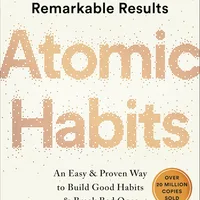
Atomic Habits — James Clear
James Clear is cited directly in the temptation bundling section, and the article closes pointing to books that address the emotional layer of behavior change rather than productivity theater. Atomic Habits is the can…
As an Amazon Associate, we earn from qualifying purchases — at no extra cost to you.
When you understand that the feeling is the mechanism, everything becomes a design question. What emotional trigger does this task activate? What immediate relief is competing with it? What environmental change would reduce the friction of beginning? What commitment structure would provide external motivation when internal motivation fails? These are answerable questions.
Designing your evolution doesn't mean engineering a version of yourself that never feels anxiety or self-doubt. Those feelings are part of doing anything that matters. It means designing systems where those feelings don't get to cast the deciding vote — where the path of least resistance happens, by design, to point in the direction you actually want to go.
The project you've been putting off doesn't need your discipline. It needs your honesty about what it makes you feel — and your willingness to build around that, rather than muscle through it one more time.
What's the one task you've been genuinely avoiding this week? And if you're honest with yourself — what emotion does it actually trigger when you think about starting it?
→ The Mere Urgency Effect: Why You Choose Busy Over Important
Was this helpful?