Habits· 10 min read
Why You're Still Stuck Even When You Work Hard (And How to Fix It)
Hard work isn't enough if you're inside a broken system. These 3 behavioral patterns keep hard workers stuck — and here's how to escape them.

Why You're Still Stuck Even When You Work Hard (And How to Fix It)

There's a specific kind of tired that has nothing to do with sleep.
It hits somewhere around 9 PM on a Thursday — four days into a week you've been genuinely working. Your tasks are ticked. Your calendar was full and you honored it. Nobody watching your day would have called you lazy. And yet you sit there with a quiet, nagging feeling that the thing you actually care about hasn't moved at all.
That's not burnout. It's not a motivation problem. It's something far more specific — and far more fixable.
The default response when you feel stuck is to add more. Another habit. A stricter routine. A 5 AM alarm. An accountability partner. The assumption buried inside all of these remedies is that what you're missing is more effort, more discipline, or a bigger sense of purpose.
That assumption is wrong for most people who genuinely work hard.
What behavioral researchers have consistently found — and what practitioners like Marc and Angel Hack Life have reinforced through years of working with people who are productive but stuck — is a pattern that goes deeper than effort: a behavioral architecture problem. Hard-working people who feel perpetually stuck aren't failing because they lack drive. They're failing because they have specific design flaws in their daily environment and behavioral patterns. Flaws that quietly redirect their effort away from meaningful progress even as the effort itself intensifies.
I spent about three years grinding inside exactly this kind of broken architecture. I was tired every evening. I had the distinct sensation of working. And I had very little to show for it on anything that genuinely mattered to me.
When I finally started reading seriously about behavioral design and habit loops, something reoriented.
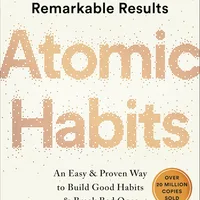
Atomic Habits — James Clear
The canonical modern guide to behavioural design and habit compounding — the exact reframe the article describes. If your effort has been running through the wrong machine, this is where the redesign starts.
As an Amazon Associate, we earn from qualifying purchases — at no extra cost to you.
The core insight — that most people try to force different outputs from a system they've never actually redesigned — wasn't motivational. It was diagnostic. I wasn't stuck because I lacked commitment. I was stuck because my effort was running through the wrong machine.
The question worth asking isn't how do I work harder? It's what's wrong with my design?
The Effort Trap: When Working Harder Makes Things Worse
Here's the uncomfortable idea most productivity content refuses to say out loud: effort amplifies whatever system it runs through. If your system is misaligned, more effort doesn't correct the trajectory. It accelerates you toward the wrong destination.
Think about it physically. If you're rowing a boat with a slow leak in the hull, rowing harder isn't a solution. You get more tired, you move more frantically, and eventually you're putting in tremendous effort while quietly sinking. The leak isn't fixed by the rowing. The two problems exist at entirely different layers.
That's what working hard inside a broken architecture actually looks like.
Jim Rohn — who understood this with a clarity most people never reached — made a distinction worth sitting with: the goal isn't to increase your effort. It's to increase your return on effort. The people who consistently compound progress over time aren't necessarily the ones who work the most hours. They're the ones who've built the right inputs into the right system and then let time and repetition do the heavy lifting.
The frustrating paradox is that effort, applied in the wrong configuration, produces something that feels like progress: busy days, checked boxes, depleted evenings. It also produces something that looks unmistakably like stagnation after a year of it.
More effort into a broken system is not a solution. It's a faster way to exhaust yourself in the same place.
Stuck Pattern #1: Your Environment Votes Every Day
Your environment is not neutral. It's not just the backdrop to your decisions — it's an active participant in them.
Every element of your physical space, your digital environment, and your social circle is either reinforcing the behavior of the person you're trying to become, or quietly pulling you back to the person you're trying to leave behind. Most stuck people have never audited this. They've added new habits to an environment that was specifically designed to produce old ones.
BJ Fogg, the Stanford behavioral scientist whose work has informed product design, public health campaigns, and coaching at scale, spent decades studying why behavior change succeeds and fails. His conclusion was blunt: environment beats motivation almost every time. When your surroundings are set up to make the right behavior frictionless and the wrong behavior effortful, you barely need willpower. When your environment requires constant willpower to act against its default settings, you'll lose that battle most days — regardless of how determined you were at 7 AM.
Here's what this looks like in practice. The person whose phone sleeps in another room makes better decisions the next morning. The person who sets up their workspace the night before — with only the one project that matters on the screen — works more deeply than the person who opens to an inbox and three unfinished tabs. The person who regularly spends time with people who are building things gets pulled forward by that social current whether they consciously feel it or not.
Jim Rohn put it plainly: "You are the average of the five people you spend the most time with." He wasn't speaking metaphorically. He was describing an environmental mechanism.
None of this requires heroic willpower. It requires deliberate design in advance — which is a completely different skill from discipline in the moment.

kSafe Time-Locking Container
The article specifically names the phone in another room as the environment lever. The kSafe puts a timed lock on the equation — no override, no willpower required. Defaults redesigned at the hardware level.
As an Amazon Associate, we earn from qualifying purchases — at no extra cost to you.
Stuck Pattern #2: You're Optimizing for Activity, Not Progress
Most hard-working stuck people are measuring the wrong things. They track hours worked, tasks completed, books read, pages written. These feel like progress metrics because they require effort and they're within your direct control. But they're input metrics. And inputs only produce outcomes if they're the right inputs, applied consistently enough to compound toward the actual goal.
Here's the distinction Darren Hardy draws in his work on compounding: the same amount of disciplined effort, directed at the right small inputs, compounds over time into results that look disproportionate to the daily effort. But effort directed at the wrong inputs — however disciplined — doesn't compound. It flatlines. You get better at running a treadmill.
I watched this play out with someone I'll call Daniel. He'd been trying to advance in his career for two years with almost no movement. He was reading constantly — a book a week, sometimes more. He tracked his reading in a spreadsheet with genuine pride. He felt productive. What he wasn't tracking was whether any of it was changing how he performed in the situations that actually mattered. Had his approach to difficult conversations shifted? Had his decision quality improved? Had anyone given him meaningful new responsibilities?
When we looked at his actual outcomes — the specific things that would signal real career movement — the answer was no. He'd been optimizing for "learning" without ever asking whether the learning was producing anything measurable. He switched to tracking three outcome-focused questions each week. Within four months, his manager had independently noticed the difference.
If you don't know which two or three inputs produce the outputs that matter in your specific situation, you're flying without instruments. Effort and direction are different things — and you need both.
Stuck Pattern #3: Your Brain Is Still Running Yesterday's Software
Here's the most uncomfortable pattern of the three, and the one most people are slowest to recognize.
Most of your behavior on any given day isn't consciously chosen. It's automatic — neural pathways firing below the threshold of deliberate thought, producing behavior you've rehearsed enough times that it no longer requires your active attention. This is mostly efficient and useful. But it's also the reason you keep doing things you've decided to stop doing, and keep not doing things you've decided to start.
Every behavior you've repeated consistently has carved a neural groove. The deeper the groove, the more automatically the behavior activates — often before conscious intention can intervene. You've experienced this. You decide to focus, and then somehow you're checking your phone. Not because you chose it. Because the groove ran first.
Seth Godin captures this with a metaphor that's worth keeping: paths become ruts through repetition. Once they're deep enough, you don't choose to walk in them. You just end up there.
Dr. Joe Dispenza puts it in terms that are worth sitting with: you cannot think your way to a new behavior if your body is still running the old one. Change isn't primarily a decision. It's a reprogramming — a deliberate practice of building new grooves through repetition while old ones weaken from disuse.
This is why motivation-based approaches fail so consistently. The motivation is genuine. The intention is real. But the competing grooves are older, stronger, and faster than any conscious intention. Until you've done the work of building new behavioral defaults through deliberate repetition in the right conditions, the old patterns will keep winning most of the time.
You're not broken. You're running old code.
How to Start Redesigning Your Architecture Today
Knowing the three patterns is useful. The following is what actually moves things.
Step 1: Audit before you add anything.
Before you adopt a new habit, add another tool, or overhaul your routine, spend one week honestly mapping your current architecture. What does your physical space make easy versus hard? What does your digital environment surface first when you open your laptop? Who are the five people you interact with most — and are those interactions expanding or quietly contracting your sense of what's possible?
Most people skip this step entirely and go straight to adding. The audit is the work. You cannot redesign a system you haven't clearly seen. A structured behavioral audit workbook can make this concrete — it forces you to externalize patterns that are too close and too familiar to see clearly on your own.
Step 2: Replace one default instead of adding a new habit.
Adding new habits to a broken architecture doesn't fix the architecture. It adds complexity to a broken machine. Instead, find one existing default — something you do automatically, without choosing it, that consistently redirects your energy away from what matters — and design a specific replacement for that exact cue. Keep it narrow. Specificity beats ambition at this stage.
Step 3: Measure outcomes, not effort.
Identify two or three concrete outcomes that would actually signal real progress toward your most important goal right now. Track those — daily if possible. The discomfort of not being able to check the box will reveal more about where you're genuinely stuck than any input metric ever could.

Clever Fox Habit Calendar Circle (24-Month)
The compound effect is invisible until tracked. This 24-month habit circle puts Darren Hardy's mechanism on your wall — up to 8 habits tracked daily across two years on one sheet. Materialises measuring outcomes, not…
As an Amazon Associate, we earn from qualifying purchases — at no extra cost to you.
The clearest practical articulation of this principle I've encountered is Darren Hardy's work on the compound effect — specifically the mechanism by which small, correctly chosen daily inputs produce results that look disproportionate to the effort after consistent application over time. It changes not just what you know, but what you pay attention to. That shift is the actual leverage.
Step 4: Give the new architecture time to compound.
This is where most redesigns stall. People make changes, don't see immediate results, and revert to the familiar broken system. But behavioral change follows a compounding curve, not a linear one. Results lag behind the inputs by weeks — sometimes months — before they accelerate.
The people who escape the stuck-while-working trap consistently report the same thing: nothing dramatic happened. They just built better inputs, stopped measuring the wrong things, and stayed long enough for the architecture to start working.

Kindle Paperwhite (2024, 16GB)
Five thinkers are cited in this article — Fogg, Rohn, Hardy, Godin, Dispenza. The Kindle hosts the entire reading list. Dispenza's neuroscience work in particular is a long, dense read that benefits from the built-in…
As an Amazon Associate, we earn from qualifying purchases — at no extra cost to you.
If you want to go deep on the neuroscience side of this — specifically why old patterns reassert themselves and the precise conditions under which new ones take root — Joe Dispenza's work on breaking habitual behavioral patterns is one of the most thorough explorations available. It's denser than a typical self-help read, and worth every page.

The Question Worth Taking Into This Week
The people I've watched genuinely escape the stuck-while-working trap all arrived at the same reframe eventually. They stopped asking am I working hard enough? and started asking is my design actually moving me in the right direction?
Hard work is necessary. It was never sufficient.
A brilliant work ethic running through a badly designed system produces exhausted, frustrated, hard-working people who haven't moved in years. The effort isn't the problem. The architecture is.
Designing your evolution means treating your life the way a skilled engineer treats a system: with diagnostic precision before prescriptive action. You don't pour more fuel into a misaligned engine. You find the misalignment first.
If your current daily architecture stayed exactly as it is — same environment, same inputs, same behavioral defaults — where would you be in three years?
If you like the answer, keep building. If you don't, you already know which layer to start with.
What's one environment or behavioral default in your current setup that you know is working against you — but you haven't changed yet? Drop it in the comments. Sometimes naming the thing is the first move.
Was this helpful?