Productivity· 9 min read
How Constraints Unlock Your Best Work
Science shows self-imposed limits make you more creative, productive, and focused. Here's how to design constraints that actually work for your brain.

How Constraints Unlock Your Best Work
Dr. Seuss wrote Green Eggs and Ham on a bet.
His publisher, Bennett Cerf, wagered $50 that Seuss couldn't write a compelling children's book using fewer than 50 unique words. Seuss took the bet, built the story inside that absurd cage, and produced one of the best-selling children's books of all time. He never collected the $50 — Seuss cheerily complained about the unpaid debt for the rest of his life, but Cerf never settled up.
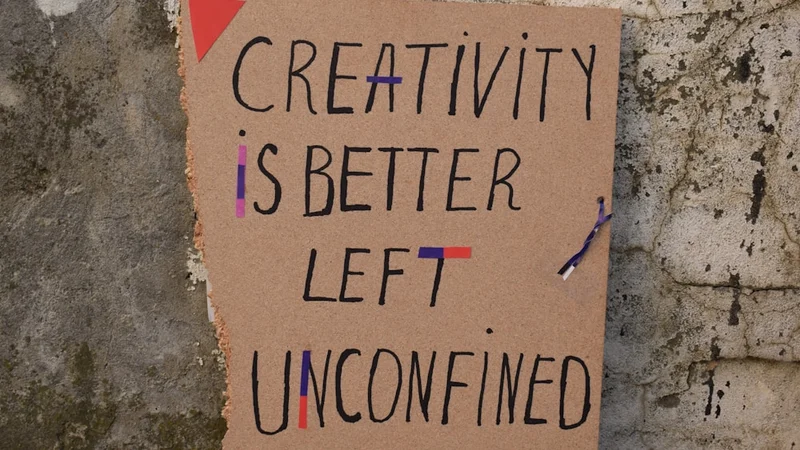
That story is a perfect data point for something most productive people get completely backwards. We treat limits as the enemy of good work. More time, more tools, more options — that's how you do your best thinking, right? Except the evidence keeps pointing the other way. And once you understand why creative constraints make your brain function better inside a box, you won't be able to unsee it.
The Paradox Your Brain Is Hiding From You
Here's a question worth sitting with: when was the last time you did genuinely excellent work under zero pressure, with unlimited time, and complete freedom to approach the problem any way you wanted?
Probably never. Or if it happened, it was a fluke.
Barry Schwartz spent years studying what happens when people have too many options, and what he found was uncomfortable enough to become a book — The Paradox of Choice. The central finding: more options consistently produce worse decisions, lower satisfaction, and higher anxiety. Not because people are irrational, but because the human brain treats every open option as a cognitive debt. You're paying mental interest on every possibility you haven't yet eliminated.

Sony WH-1000XM5 Noise Cancelling Headphones
When every open option becomes cognitive debt, the most leveraged first move is cutting the loudest one: ambient noise. A premium noise-cancelling headset physically caps what your prefrontal cortex has to filter.
As an Amazon Associate, we earn from qualifying purchases — at no extra cost to you.
When you sit down to a blank page with a blank schedule and the entire internet available, you're not free. You're drowning. The creative mind doesn't thrive in open water — it thrives against a wall.
Researcher Patricia Stokes studied Picasso's evolution across multiple periods of his work and concluded that his most creative leaps consistently followed the introduction of new constraints — new materials, new subjects, new self-imposed rules about what he would and wouldn't do. The freedom periods? Those produced competent work. The constrained periods produced the masterpieces.
This isn't a coincidence. It's architecture.
A constraint, at its simplest, is any deliberately imposed limit on time, resources, scope, or context — applied not to restrict what you make, but to focus how you make it.
Why Your Brain Works Better in a Box
The prefrontal cortex — the part of your brain responsible for planning, decision-making, and creative thought — is extraordinarily powerful. It's also extraordinarily lazy.
When you give it infinite space to operate in, it defaults to well-worn paths. The familiar approach. The safe choice. The way you've done it before. Neuroscientists call this default mode network activation — your brain running on autopilot to conserve energy.
Constraints force a different mode. When one path is blocked, the prefrontal cortex has to recruit more of itself. It starts making novel connections between things that don't usually talk to each other. Cognitive psychologists call this forced flexibility — the creative equivalent of pushing a river into a narrower channel to make the water run faster.
Patricia Catrinel Haught-Tromp's research at Rider University studied exactly this dynamic. Her team gave participants creative writing tasks with and without unusual constraints, then scored the outputs for originality. Constrained writing wasn't just easier to do — it was rated as significantly more creative by independent judges. The limits didn't reduce the work. They concentrated it.
The Jack White Principle is worth naming here. When Jack White co-founded the White Stripes, he made one deliberate, almost insane creative decision: no bass guitar. Just drums and guitar. Music critics assumed it was a budget limitation. It wasn't. He later explained that the constraint forced both instruments to work harder and occupy space differently. The absence of something created the sound. That specific absence — The White Stripes sound — made them one of the most distinctive bands of the early 2000s.
You're not Jack White. But the principle doesn't care. focusing your mind on what matters
The Four Constraint Types That Actually Work
Not all limits are created equal. Some constraints are just friction — administrative nonsense that slows you down without sharpening the work. Others are what Adam Morgan and Mark Barden, in their book A Beautiful Constraint, call constraints that actively generate creative energy rather than simply reduce your options.
Atomic Habits — James Clear
Morgan and Barden name the theory; Clear gives you the daily operating manual. Atomic Habits is the most-recommended companion to constraint thinking because the 1% lens and the identity-based habit model both transla…
As an Amazon Associate, we earn from qualifying purchases — at no extra cost to you.
Here's how to tell the difference, and how to use each type deliberately.
- Time constraints — a hard deadline that forces the brain to ruthlessly deprioritize the unnecessary
- Resource constraints — a cap on tools, materials, or vocabulary that builds creative discipline through scarcity
- Scope constraints — a single-sentence definition of exactly what "done" looks like, so projects can actually end
- Context constraints — fixed environmental conditions that prime a focused mental state automatically over time
Time Constraints are the most accessible and arguably the most powerful. The Parkinson's Law effect — work expands to fill the time available — is real and measurable. A task given two hours will consume two hours. Give that same task forty-five minutes and something interesting happens: your brain starts automatically deprioritizing the unnecessary. A tight time limit forces ruthless editing before you even start.
The Pomodoro Technique is built entirely on this principle — 25 minutes of focused work, then a five-minute break. What makes it work isn't the break. It's the hard stop. The countdown creates a pressure gradient that keeps you moving. If you've never actually tried timed sessions with a physical timer rather than your phone, you're missing a significant portion of the effect. A dedicated focus timer sitting on your desk, ticking audibly, has a different psychological weight than a phone countdown buried in your notifications. Resource Constraints are what Seuss was working with. Fifty words. One instrument. One color palette. Deliberately limiting what you have available forces you to work with what's actually in front of you — which eliminates the procrastination of waiting for perfect conditions.
A content creator I know banned herself from using stock photos for six months. The constraint was annoying at first. Then she started making simple graphics herself. Then she developed a distinctive visual style her audience recognized immediately. The resource limit became her brand.
Scope Constraints are about what the work is allowed to do. Instead of "write a great piece of content," the brief becomes "write something that solves exactly one problem in under 800 words." Instead of "become healthier," the constraint is "one walk per day, minimum ten minutes, for thirty consecutive days." Scope constraints combat the tendency to bloat — to keep adding until the work loses its shape.
Greg McKeown's Essentialism is built around a single scope constraint applied to your entire life: "less, but better." The book is worth reading closely, not because the idea is complicated — it isn't — but because McKeown systematically dismantles every justification your brain will use to resist narrowing your focus.

Kindle Paperwhite (2024, 16GB)
If you're going to read Essentialism, A Beautiful Constraint, and Atomic Habits, a distraction-free reader enforces its own scope constraint — no tabs, no apps, just the text.
As an Amazon Associate, we earn from qualifying purchases — at no extra cost to you.
Context Constraints are about where and under what conditions the work happens. Writing only at a specific desk. Thinking only during walks. Making creative decisions only before 10am. These environmental limits use associative memory to your advantage — over time, the constraint primes the mental state automatically. You sit down at the desk and the work mode loads, because that desk has never meant anything else.

What Happens When You Design Your Own Cage
Here's the part that most articles on this topic leave out: constraints only work if you choose them deliberately. Constraints imposed by someone else — a deadline you resent, a budget cut you didn't ask for — tend to produce anxiety, not creativity. The brain reads external limits as threats. Self-imposed limits are read differently. They're read as a game.
This distinction matters more than it sounds. The psychological research on autonomy and intrinsic motivation — Edward Deci and Richard Ryan's Self-Determination Theory — shows consistently that when you choose a limit rather than have it forced on you, you perceive the challenge as interesting rather than threatening. Your cortisol response stays low. Your engagement stays high. You do better work.
So the practical move isn't to wait for someone to constrain you. It's to build a constraint practice — a deliberate system of limits you design and own.
Start with a single experiment this week. Pick one project — something that's been sitting on your to-do list longer than it should. Then apply one of the four constraint types to it. A hard time limit. A resource cap. A scope definition. Or a context rule. Just one. Watch what happens to your focus, your output, and how you feel about the work when you're done.
daily habits that quietly drain your potential
How to Build a Constraint System That Compounds
The real benefit of constraints isn't any single session of focused work. It's what happens when you stack them over time. Each limit you survive makes the next one easier to choose. Each session where you prove to yourself that the cage made the work better adds data to a growing internal argument against the myth of unlimited freedom.
Greg McKeown calls this "the disciplined pursuit of less." Jim Rohn had a simpler version: "Work harder on yourself than on your job." Both are pointing at the same truth — that the most powerful development work you'll ever do isn't learning new tools or accumulating new resources. It's designing a tighter, cleaner operating environment for the mind you already have.
Practically, a constraint system for a knowledge worker might look like this:
Start with a time-blocked daily planner — one that forces you to assign work to specific time windows rather than running a floating to-do list. The constraint of "this work goes here and nowhere else" eliminates the constant micro-decisions about what to do next.
Add a distraction constraint. Not a vague intention to check your phone less — an actual blocker. Software that cuts off social media and news sites during work windows removes the decision entirely. You're not choosing not to check. You can't check. The difference in cognitive load is significant.
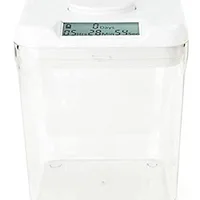
kSafe Time-Locking Container
"You're not choosing not to check. You can't check." The kSafe turns a software blocker into a physical one: drop the phone in, set the timer, and the lid does not open until the session ends.
As an Amazon Associate, we earn from qualifying purchases — at no extra cost to you.
Add a scope constraint to every project before you start: one sentence describing exactly what "done" looks like. Not a goal. A completion criterion. "The draft is done when it covers three points in under 1,000 words and has been read aloud once." Vague projects expand forever. Constrained projects end.
Finally, add a review rhythm. Once a week, look at what you completed and ask yourself which constraints helped and which just created friction. Adjust accordingly. The system isn't fixed — it's designed, tested, and evolved. That's the whole point.

The Limit Is the Point
There's a version of personal development that's really just accumulation. More habits, more tools, more frameworks, more goals. It looks like growth but often functions as avoidance — adding things so you don't have to decide which things actually matter.
Constraints are the corrective. They force the question you've been postponing: if you could only do one thing in this hour, what would it be? If you could only say one thing in this piece, what would you say? If you only had fifty words?
The people consistently doing their best work aren't the ones with the most options. They're the ones who've gotten very clear about what they're willing to give up — and who've built systems that make those trade-offs automatic rather than dependent on willpower.
goals vs. purpose: the difference that changes everything
Designing your evolution doesn't mean adding more. Sometimes it means drawing a clean line around less — and then seeing what grows inside it.
What's one constraint you could impose on your work this week that would make the output undeniably better? Leave it in the comments. Reading other people's answers to that question has a way of making your own answer obvious.
Related read: Why Unpredictable Rewards Build Stronger Habits
Was this helpful?