Habits· 11 min read
3 Daily Habits Quietly Draining Your Potential
Most people don't fail from big mistakes — they stall from three invisible daily patterns. Here's how to find and dismantle them.
3 Daily Habits Quietly Draining Your Potential
Two years ago, I had the best setup I'd ever built. Solid morning routine. A reading habit. A workout schedule I actually enjoyed. On paper, I was doing everything right.
And yet — nothing was moving. Not really. My projects crawled. My energy flatlined by 2 PM. I had daily habits draining my potential in ways I couldn't see, and my instinct was to fix the problem by adding more — more discipline, more systems, more hours. So I downloaded another productivity app, added another evening review ritual, stacked another book on the nightstand. It didn't help. If anything, I felt heavier. Like pushing a car with the parking brake still on.
It took an embarrassingly simple question from a friend to crack it open. She didn't ask what I was doing. She asked: "What are you doing that you don't need to be doing?"
That question sat with me for weeks. And when I finally answered it honestly, three habits — things I'd never questioned — were eating through my energy like termites in a wall. Invisible. Constant. Structural.
The Problem Nobody Talks About: Addition Bias
Here's something fascinating. Researchers at the University of Virginia published a study in Nature (2021) that found humans have a deep cognitive bias toward adding rather than subtracting. When asked to improve something — a recipe, a schedule, an essay, a Lego structure — people overwhelmingly chose to add elements. Almost nobody considered removing something.
Addition bias is the cognitive tendency to solve problems by adding new elements — more tools, more habits, more rules — rather than removing what isn't working. It explains why most people's self-improvement efforts make their lives heavier instead of lighter, and why subtraction rarely occurs to us as a strategy at all.
Think about what that means for your daily habits. Every productivity blog, every self-help book, every January resolution is about building more. Wake up earlier. Meditate. Journal. Cold shower. Read thirty pages. Exercise. Review your goals. The list grows. It never shrinks.
Jim Rohn used to say, "Success is neither magical nor mysterious. Success is the natural consequence of consistently applying basic fundamentals." But he also understood something most people skip over: you can't apply fundamentals if your day is clogged with noise. The fundamentals need room.
Bob Proctor put it more bluntly. He talked about paradigms — those clusters of habits and beliefs running on autopilot below your conscious awareness. Most people, he said, never examine them. They just keep layering new goals on top of old, unexamined patterns. It's like repainting a house with a cracked foundation.
You've probably felt this. That strange exhaustion that doesn't match your workload. The sense that you're busy but not productive. The frustration of knowing what to do but never having the bandwidth to do it well.
The issue isn't what you're building. It's what you haven't torn down.

Drain #1: The Constant Decision Queue
The first habit I discovered was one I'd been proud of. I called it "staying flexible." In practice, it meant I made almost no decisions in advance. What to eat. When to start deep work. Which project to tackle first. Whether to go to the gym in the morning or evening. I decided everything in real time, every single day.
I thought this made me adaptive. It actually made me exhausted before noon.
Psychologist Roy Baumeister's research on decision fatigue is well-documented at this point, but knowing about it and feeling it are different experiences. Every micro-decision — even the trivial ones — draws from the same cognitive reservoir you need for creative work, strategic thinking, and emotional regulation.
Here's what hit me hardest: I wasn't just making decisions. I was re-making them. The same choices, recycled daily, because I'd never locked anything down. Barack Obama famously wore the same suit every day to eliminate one category of decisions. That's not quirky — it's engineering.
What I changed: I spent one Sunday afternoon making a set of "default decisions." Same breakfast on weekdays. Gym at 6:30 AM, non-negotiable. Deep work block from 9 to 11:30. Specific days for specific projects. I didn't eliminate flexibility — I just made flexibility the exception rather than the rule.
The results weren't dramatic on day one. But by week three, I noticed something strange: I had energy left at 3 PM. Not coffee-fueled, jittery energy. The quiet, clear kind. The kind where you actually want to keep working because your brain isn't fried from a hundred invisible choices.
Drain #2: Emotional Absorption Without Boundaries
The second drain was harder to see because it felt like being a good person.
I was consuming other people's emotional weather — all day, every day. Not through deep conversations or meaningful support. Through passive channels. Group chats buzzing with complaints. News feeds engineered for outrage. Social media threads where strangers argued about things that had nothing to do with my life. A colleague who narrated every frustration out loud. A family WhatsApp group that ran like a 24/7 anxiety broadcast.
None of this felt like a "habit." It felt like life. But it was a habit — the habit of leaving every emotional door wide open and wondering why the house wouldn't stay warm.
Bruce Lipton's work on cellular biology offers a striking analogy here. Cells, he explains, exist in one of two states: growth or protection. They can't do both simultaneously. When a cell perceives threat — real or imagined — it shifts resources from growth to defense. Your psychology works the same way. When you're constantly absorbing low-grade emotional noise, your system stays in protection mode. Growth stalls. Not because you lack ambition, but because your internal environment is signaling danger.
What I changed: I didn't cut people off. I built membranes. Muted the group chats that drained me. Set specific times to check news — twice a day, fifteen minutes each. Started wearing noise-cancelling headphones during work blocks, not just for sound but as a social signal.
The hardest part? Guilt. I felt selfish for pulling back. But T. Harv Eker makes a point I keep coming back to: "If you want to move to a new level in your life, you must break through your comfort zone and practice doing things that are not comfortable." Setting emotional boundaries felt uncomfortable. It also felt like the first genuinely strategic move I'd made in months.
Digital minimalism and focus
Drain #3: The Perfection Rehearsal Loop
This one's sneaky. It disguises itself as preparation.
I'd spend twenty minutes planning how to write an email, then write it in four. I'd rehearse a conversation in my head six times before having it — and the actual conversation never matched any of the rehearsals. I'd outline a project plan so thoroughly that by the time I started building, I'd lost momentum and interest.
I wasn't preparing. I was performing perfection in my imagination — a closed loop that burned energy without producing output.
Napoleon Hill wrote about the danger of "over-caution" in Think and Grow Rich — the habit of spending so much time guarding against failure that you never move toward success. He called it one of the thirty major causes of failure. And he wrote that in 1937. The pattern hasn't changed. We've just added more sophisticated tools for rehearsing without shipping.
There's a term in psychology for this: cognitive simulation. Research from UCLA psychologist Shelley Taylor showed that people who mentally simulated the process of achieving a goal performed better than those who simulated the outcome. But there's a cutoff point. Beyond a certain threshold of mental rehearsal, performance actually drops. You've spent your cognitive budget on imagining the work, not doing it.
What I changed: I adopted a rule I call "two-minute launch." If a task can be started in under two minutes — opening the doc, writing the first sentence, sketching the first wireframe — I start it before I plan it. The planning happens inside the work, not before it.

Mooas Cube Flip Timer
The 'two-minute launch' rule needs a physical trigger. A flip timer is the opposite of over-planning — you flip it and START. No setup, no app, no decision. The physicality breaks the mental rehearsal loop the article…
As an Amazon Associate, we earn from qualifying purchases — at no extra cost to you.
This felt terrifying at first. Starting before I felt ready. Sending the email with a typo. Sharing the rough draft. But something Jim Rohn said kept echoing: "Don't wait until everything is just right. It will never be perfect. There will always be challenges, obstacles, and less-than-perfect conditions. So what? Get started now."
I discovered that imperfect output, shipped on time, taught me more than perfect plans left in notebooks.

Why These Three Drains Work Together
Here's what I didn't realize until I'd removed all three: they're connected. The decision queue exhausted my executive function. Emotional absorption depleted my resilience. The perfection loop consumed whatever scraps of energy remained. Together, they created a system of invisible friction that made every good habit harder.
| Drain | What It Costs You | The Fix |
|---|---|---|
| Constant Decision Queue | Executive function, morning clarity | Pre-decide defaults on Sunday; make flexibility the exception |
| Emotional Absorption | Resilience, nervous-system capacity | Build membranes — mute, schedule, signal boundaries |
| Perfection Rehearsal Loop | Momentum, creative energy | Two-minute launch — start before you plan |
It's like trying to run a marathon with three small pebbles in your shoe. No single pebble is the problem. But together, they change your gait, slow your pace, and make you want to quit by mile five.
Joseph Murphy wrote extensively about the subconscious mind's role in habit. He argued that habits running below awareness — what he called "subconscious patterns" — shape your outcomes far more than conscious effort. You can set all the goals you want. If your daily patterns are silently draining you, conscious effort alone won't close the gap.
This is the part most productivity advice misses. It's not about willpower. It's about infrastructure. Your daily habits are infrastructure. And some of that infrastructure has leaks.
Building better morning routines
How to Find Your Own Silent Drains
You probably don't have the same three drains I did. But you almost certainly have some. Here's the process I used to find them — and the one I still revisit every quarter.
Step 1: The Energy Audit. For one week, rate your energy on a 1–10 scale at four points each day: morning, midday, afternoon, evening. Don't change anything. Just observe. You're looking for patterns — consistent drops that don't correlate with workload.
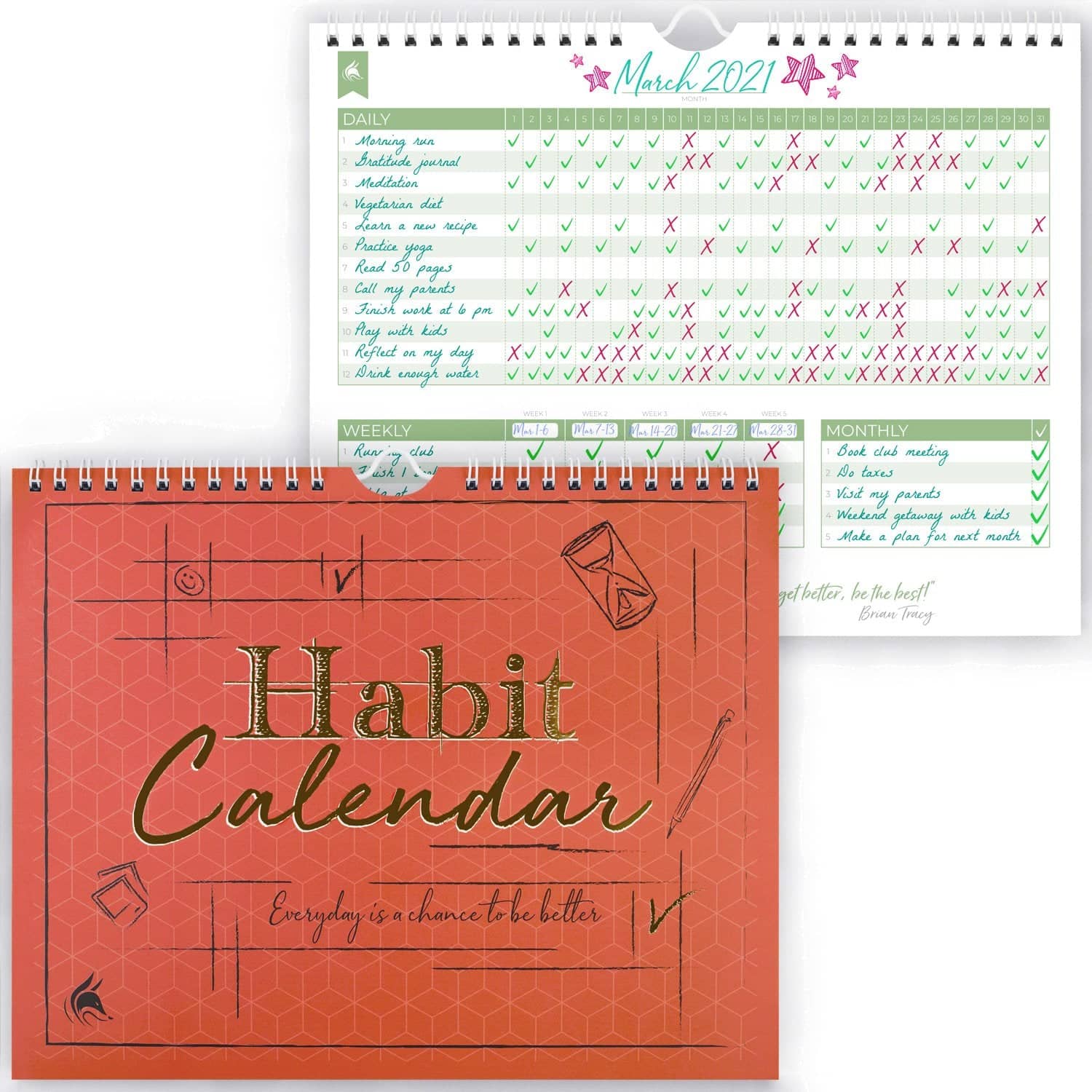
Clever Fox Habit Tracker Journal
Step 1 asks you to rate your energy 1-10 at four daily checkpoints for a week. A habit tracker journal is the exact tool for this — structured daily tracking with space for patterns. The article created the need; this…
As an Amazon Associate, we earn from qualifying purchases — at no extra cost to you.
Step 2: The Subtraction Question. Pick the lowest-energy point of your day and ask: "What am I doing in the two hours before this that I could stop, reduce, or automate?" Don't look for big obvious problems. Look for the small, repeated things you've never questioned.
Step 3: The Seven-Day Experiment. Choose one suspected drain and remove or reduce it for seven days. Not permanently — just an experiment. Track how you feel. If your energy shifts noticeably, you've found a real drain.
Step 4: Build the Membrane. For the drains you can't fully remove — you're not going to quit your family group chat — build boundaries around them. Specific times. Specific durations. A clear signal for when you're "in" and "out." The goal isn't elimination. It's intentional engagement instead of passive absorption.
Step 5: Review Quarterly. Drains change as your life changes. A habit that's neutral today might become a drain next year when your workload shifts. Build the review into your calendar.
Self-sabotage patterns and how to break them
The Counterintuitive Truth About Doing Less
Here's the part that'll sound wrong: removing these three habits made me more productive than any system I've ever added. No app did this. No course. No new morning ritual. Just... stopping things.
And that's the controversial claim I'll make: most people don't need more habits. They need fewer. The self-improvement industry sells addition because addition is a product. Subtraction is free, and you can't package it in a course.
Elio D'Anna, in The School for Gods, writes about the idea that a person's level of being determines their outer results. Not their effort. Not their strategy. Their being. And being isn't built by cramming more into your day. It's revealed by removing what obscures it.
That resonates with me now in a way it wouldn't have three years ago. I was so busy building the life I wanted that I forgot to dismantle the patterns keeping me from it.

Your Move
You don't need to overhaul everything this week. You don't need a new system or a new tool — though the right ones can genuinely help once the drains are patched. What you need is one honest look at where your energy is going and whether all of it is going where you chose.
Pick one drain. Just one. Run the seven-day experiment. See what happens when you stop pouring fuel into a tank with a hole in it.
Because here's what I've learned about designing your evolution: sometimes the most powerful move isn't building something new. It's finally noticing what's been quietly pulling you backward — and having the guts to let it go.
What's the one habit you suspect is draining you, but you've never questioned? I'd genuinely like to know.
Was this helpful?