Mindset· 10 min read
How to Stop People-Pleasing and Rebuild Self-Trust
Break free from chronic people-pleasing, reconnect with your own voice, and rebuild quiet self-trust — without becoming a jerk in the process.

How to Stop People-Pleasing and Rebuild Self-Trust
(Without becoming a jerk in the process.)
My friend Maya once said yes to catering her cousin's wedding while standing in a hospital parking lot, twenty minutes after her own father had come out of surgery. She doesn't even like catering. She had a full-time job, a toddler with an ear infection, and a freezer full of nothing. But the word "yes" slipped out of her mouth before her brain caught up, the way a sneeze escapes before you can cover it.
She told me this story over coffee three months later, laughing the kind of laugh that is not actually laughter. Then she said something that stuck with me: "I didn't agree because I wanted to. I agreed because I was scared of what would happen inside me if I said no." That sentence is the quiet heart of this whole conversation. Learning how to stop people pleasing is not about becoming cold or rude or brutally "authentic." It's about figuring out why the word "no" feels like a small betrayal, and then patiently teaching yourself that it isn't.
The Real Cost of Always Saying Yes
People-pleasing gets a bad rap as weakness, but it's closer to a survival strategy that outlived its usefulness. Somewhere along the way, you learned that keeping the peace kept you safe. Maybe a parent had a temper. Maybe affection was conditional. Maybe you were simply the "easy kid" and earned your gold stars by being agreeable. That wiring worked. It got you here.
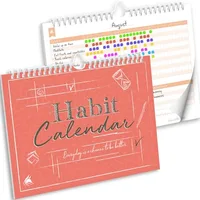
Clever Fox Habit Tracker Journal
Every unnecessary yes drains a little credibility with yourself — tracking those moments in a habit journal makes the pattern visible before resentment builds. Use it to log the three hotspots (email, eye contact, sil…
As an Amazon Associate, we earn from qualifying purchases — at no extra cost to you.
The problem is that the wiring doesn't update on its own. You grow into an adult who can afford to disappoint people, yet your nervous system still treats a wrinkled forehead like a tiger at the edge of camp. Researchers call this fawning, and it sits alongside fight, flight, and freeze as a core threat response. The 2023 review in Frontiers in Psychology on trauma-linked fawning is worth reading if you want the full picture (the full picture).
Dr. Gabor Mate has a line I come back to often: "When we have to choose between authenticity and attachment, we choose attachment every time." As kids, that's a fair trade. As adults, it quietly eats you. You say yes to the extra project, the dinner you don't want, the friend who drains you, the job that's slowly rewriting your personality, and then one Tuesday you find yourself crying in a parked car because a stranger at the drive-thru was kind to you for eight seconds.
You've probably felt a version of this. Not the parking lot tears, maybe, but the low hum of resentment that follows every "sure, no problem." Resentment is information. It's your self-trust sending you a receipt.
And the bill compounds. Each unnecessary yes drains an hour you can't get back, and more importantly, it drains a little credibility with the one person whose opinion of you shapes everything else: you. By the time most people come looking for a people pleaser recovery steps guide, they're not tired because of their schedule. They're tired because they've been performing a version of themselves that a younger, scared version of them thought was safest. That's a different kind of exhaustion, and no nap fixes it.
Why Self-Trust Breaks Before You Notice
Here's the counter-intuitive part nobody tells you: you don't lose self-trust by making mistakes. You lose it by overriding yourself. Every time your gut says "this is too much" and your mouth says "happy to help," you teach your inner voice that it doesn't get a vote. Do that a thousand times and your intuition stops showing up to meetings.
Atomic Habits — James Clear
Self-trust breaks not through big failures but through thousands of small overrides — the exact problem James Clear addresses when he argues that identity change happens through tiny, repeated actions, not intentions.…
As an Amazon Associate, we earn from qualifying purchases — at no extra cost to you.
Bob Proctor used to say that the mind takes whatever you feed it as truth. Feed it a steady diet of self-abandonment and it will eventually believe that your needs are negotiable. That's the quiet tragedy of the chronic people-pleaser. You are not failing to trust yourself because you are flawed. You are failing to trust yourself because you have been breaking promises to yourself for years, and the ledger finally came due.
Rebuilding self-trust, then, is not a mindset shift. It's a series of tiny, boring, kept promises.

The Fawn Response Is Not a Personality Trait
A lot of smart people get stuck here because they've decided they're "just a people-pleaser," the way someone might say "I'm just a Gemini." It becomes identity. And identity is stickier than behavior — Tony Robbins was right about that.
Drop the label. Seriously. You are not a people-pleaser. You are a person with a fawn response that activates under certain conditions. That's a huge difference. One is a fixed trait you drag around like a suitcase. The other is a pattern you can study, predict, and eventually outgrow. Bruce Lipton's work on epigenetics makes a similar point from the biology side: your patterns are not your prison sentence. The environment, including the one inside your own skull, shapes which programs run.
Start noticing when the pattern fires. For most people, it happens in three places: email, eye contact, and silence. A request lands in your inbox and your stomach tightens. Someone looks at you a beat too long and you volunteer an apology you don't mean. A pause in conversation stretches and you fill it with a yes you'll regret on the drive home. Catch yourself in one of those three moments this week and you've already done more work than most people who buy the book.
How to Stop People Pleasing Without Torching Your Relationships
Here's where the advice usually gets reckless. "Just say no!" "Set boundaries!" "Cut off anyone who doesn't respect you!" Cool. Very empowering. Also a great way to blow up a marriage and alienate your mother in the same weekend.

Full Focus Planner by Michael Hyatt
The 24-hour rule works because it gives your nervous system time to catch up with your values — but only if you actually use that buffer to consult something beyond the pressure of the moment. A weekly planner built a…
As an Amazon Associate, we earn from qualifying purchases — at no extra cost to you.
Real recovery is subtler. The goal isn't to become someone who refuses. The goal is to become someone whose yes actually means yes. Think of it like rebuilding the credit score of your own word. You do that with small, honest transactions, not by declaring bankruptcy on every relationship you have.
Try the 24-hour rule. For the next month, any request that isn't a medical emergency gets the same answer: "Let me check and get back to you tomorrow." That's it. You don't have to explain. You don't have to justify. You just borrow a day from the future so your nervous system has time to catch up with your values. Jim Rohn liked to say that discipline is the bridge between goals and accomplishment. This is that bridge, in its smallest possible form.
Watch what happens. Most of the fake yeses disappear on their own, because when you're not cornered, your real answer has room to breathe. The ones that survive a night's sleep are the real ones. Those, you can commit to without resentment.
How to Set Boundaries Without Feeling Guilty
Self-Trust Exercises That Actually Work for Adults
The internet is drowning in self-trust exercises that sound like they were written by someone who's never had a real job. Affirmations at the mirror. Journal prompts about your "highest self." Fine, if they help you. But for most adults I know, self-trust comes back through action, not adjectives.

Sony WH-1000XM5 Noise Cancelling Headphones
The 5-minute morning promise and the honest calendar audit both require a few minutes of genuine quiet — the kind that's hard to find if you're surrounded by the ambient noise that keeps the fawn response on edge. Noi…
As an Amazon Associate, we earn from qualifying purchases — at no extra cost to you.
Three exercises that actually move the needle, in order of difficulty:
The 5-minute promise. Every morning, make one tiny promise to yourself that takes under five minutes. Drink a glass of water before coffee. Stretch for ninety seconds. Write one sentence in a notebook. Keep it absurdly small. The point is not the habit. The point is that at 9 a.m., you have evidence that your word to yourself means something. Stack thirty of those and your inner voice starts showing up again.
The honest calendar audit. Pull up last week's calendar. For each commitment, write one word next to it: "yes," "no," or "maybe." "Yes" means you'd say yes again, fully. "No" means you agreed out of fear. "Maybe" is the squishy middle. No judgment, just data. Do this for a month and patterns emerge that no amount of journaling will surface. You'll see exactly where your fawn response is running the show.
The small no. Once a week, practice saying no to something genuinely low-stakes. A free sample at the grocery store. A chatty cashier. A survey. This sounds silly until you try it and realize your body resists even the tiniest refusal. The nervous system learns through repetition, and it cannot tell the difference between a trivial no and a life-changing one. Rehearse on the easy stuff so the hard stuff has muscle memory when it matters.
Rebuilding Self-Trust Habits: A Bridge to Action
If you're reading this and feeling the familiar itch to fix everything by Sunday, slow down. You didn't become a people-pleaser in a weekend, and you won't undo it in one either. Bruce Lee, of all people, said it best: "It's not the daily increase but daily decrease. Hack away at the inessentials." You're not adding a new personality. You're removing the static.

Kindle Paperwhite (2024)
The recovery framework in this section is built from voices like Gabor Maté, Bruce Lipton, and Jim Rohn — authors whose work goes considerably deeper than any single article can. A Kindle makes it easy to keep that re…
As an Amazon Associate, we earn from qualifying purchases — at no extra cost to you.
Here's how to start this week, in order:
- Pick one fawn hotspot. Email, phone calls, or in-person. Just one. That's your lab.
- Install the 24-hour rule in that zone only. Every request gets a "let me think and get back to you."
- Make one 5-minute promise to yourself each morning and keep it, no matter how small.
- Do a weekly honest calendar audit on Sunday evening with a cup of tea. Ten minutes, max.
- Say one small no out loud each week, somewhere it barely matters.
Keep a tiny notebook for this. Nothing fancy, just somewhere to tick off your kept promises and jot down the moments you caught yourself mid-fawn. If you want to go further, a good boundary-setting workbook can give you structure on the harder weeks.
The physical act of writing things down matters more than people think — a 2014 Princeton study showed that handwriting engages memory and self-awareness in ways typing never will.
Nighttime Anxiety and the 3 AM Brain
And when you mess up — and you will, probably this week — don't perform a big apology tour. Just notice it. Write it down. Try again tomorrow. Self-trust is not built by being perfect. It's built by coming back after you've broken your own word, without beating yourself up on the way home.
The Quiet Power of Saying No
You're Not Too Late, You're Just Getting Honest
Somewhere around month two, something quietly shifts. You'll be in a conversation and feel the old yes rising in your throat, and you'll pause. Not dramatically. Just a half-second. And in that half-second, you'll hear yourself think, "actually, no, I don't want to." That tiny moment is the whole point. That's your self-trust clocking back in.
You are allowed to be a kind, generous, warm person who also has preferences. Those things were never in conflict. They only felt that way because, somewhere along the way, you confused being loved with being convenient. You can unlearn that. Maya did — she's now the kind of friend who says "no, but thank you for asking" like it's a full sentence, because it is. She also finally learned how to stop people pleasing without losing any of the softness that made her her.
Designing your evolution starts here, in this unglamorous work of keeping small promises to yourself and letting your quiet voice get loud enough to be heard again. Nobody's going to throw you a parade for it. That's fine. You're not doing it for the parade.
So here's the question I'll leave with you, and I hope it rattles around a little for a few days before you answer it honestly: whose approval are you still quietly chasing that you actually stopped needing years ago, and what would change if you finally let yourself stop?
Was this helpful?