Mindset· 10 min read
The Science of Resilience: You're Stronger Than You Think
Resilience is the default human response to adversity. Here's what Bonanno's 30-year research reveals about bouncing back — and how to build more of it.
The Science of Resilience: You're Stronger Than You Think
Three years ago, a close friend lost her job, her relationship, and her apartment in the same four-month window. Not one of those things. All three.
When I asked her, six months later, how she was doing, she paused — then said something I didn't expect: "I'm actually okay. I don't know how. I thought I'd break. But I didn't."
She sounded almost guilty about it. Like psychological resilience — if that's even what she was allowed to call it — was a privilege she hadn't earned. A sign she hadn't grieved enough. Or worse: evidence that a wound was still waiting to open.
She was wrong. And the reason her surprise is so common — and so worth examining — comes down to one of the most consequential misunderstandings in all of popular psychology.
We have completely mislabeled what's normal.
Psychological resilience is the capacity to maintain or recover stable functioning after significant adversity — without requiring extended clinical intervention. Most people assume it's rare. Three decades of longitudinal research, led by scientists at Columbia University and the University of Pennsylvania, show it's actually the most common human response to hardship.
The Statistic That Upends Everything You Believe About Psychological Resilience
For most of the 20th century, clinical psychology built its model of adversity from a specific population: the people who showed up in clinical settings. Trauma survivors with PTSD. Bereaved individuals who couldn't function. People whose lives had been genuinely derailed by loss, disaster, or violence.
It made sense. That's who clinicians see.
The problem is that the people who don't show up in clinical settings — because they're managing — were invisible in the research. And that invisibility produced a distorted picture of what human beings actually do when hard things happen.
George Bonanno at Columbia University's Teachers College has spent three decades correcting that distortion. His methodology is longitudinal and rigorous: following large cohorts of bereaved individuals, crime survivors, accident victims, and post-9/11 populations and tracking their psychological trajectories over time using latent growth analysis.
His most consistent finding is not complicated. But it upended the field.
The most common response to even severe adversity is resilience.
Not PTSD. Not prolonged grief. Not clinical depression. Bonanno's data shows that somewhere between 35 and 65 percent of people exposed to genuine adversity — real loss, real threat, real trauma — show what he calls "stable high positive functioning" throughout and after the experience. They grieve. They struggle. But they don't stop functioning. They don't develop clinical disorders. And they don't require the extended recovery arc that the clinical literature had led everyone to assume was inevitable.
The people who do show significant disruption before recovering represent roughly 20–35% of adversity-exposed populations. The chronically impaired, who don't recover without intervention, sit at around 10–15%.
That's not the story the trauma narrative tells. But it's what the data shows.
The Upside of Stress
McGonigal's research is the literal thesis of this article: it is your mindset about stress, not stress itself, that shapes the outcome.
As an Amazon Associate, we earn from qualifying purchases — at no extra cost to you.
The reason this matters isn't academic. If resilience is rare and exceptional, then struggling is normal and bouncing back is a gift for the lucky few. But if resilience is the statistical majority response to adversity, the question shifts entirely: not "why am I struggling?" but "what's happening in my specific situation that's making my default response harder to access right now?"
That's a much more useful question. And it's the one the science actually answers.
The PERMA Model: Your Resilience Resources, Mapped
Martin Seligman at the University of Pennsylvania spent the first two decades of his career studying learned helplessness — the state in which repeated uncontrollable negative events train an organism to stop trying even when escape becomes possible. Then, in his mid-50s, he turned the question around entirely.
What does flourishing actually look like? What are the psychological building blocks that make it possible?
His answer is the PERMA model: Positive emotion, Engagement, Relationships, Meaning, and Accomplishment.
The PERMA model is widely cited as a wellbeing framework. But its most important implication is less discussed: it's a map of resilience resources.
Positive emotion matters not because it's pleasant to have, but because of what Barbara Fredrickson at the University of North Carolina calls the broaden-and-build dynamic. Negative emotions — fear, anxiety, grief — narrow your attentional focus toward the immediate threat. That's adaptive in a crisis. But positive emotions do something structurally different: they broaden your cognitive and behavioral repertoire. They expand the range of thoughts, actions, and connections available to you.
And through repeated broadening, they build durable resources: stronger relationships, richer knowledge, more flexible coping patterns.
This creates an upward spiral. The person who can sustain some genuine positive emotional experience during adversity — not denial, not toxic positivity, but real positive moments alongside real negative ones — is building psychological capital even while they're in difficulty.
Engagement — Csikszentmihalyi's flow state, the absorption in challenging activity — provides a different kind of buffer: the experience of being genuinely capable, of performing at the edge of your abilities in a way that generates intrinsic satisfaction that adversity can't easily reach.
Relationships may be the most consistently documented resilience predictor in the entire empirical literature. One reliable, caring relationship — one person who knows your actual situation and shows up — meaningfully improves outcomes across practically every adversity studied. Not a wide network. One reliable person.
Meaning is perhaps the deepest resource of all. The capacity to weave difficult experiences into a coherent narrative of self — to find the why that makes the what tolerable — is Viktor Frankl's core insight from the most extreme adversity conditions human beings have documented. In Man's Search for Meaning, he described watching some concentration camp prisoners maintain psychological integrity while others collapsed, and concluded that the variable was not the severity of conditions but the individual's capacity to find or create meaning within them.
Accomplishment — not trophy-collection, but the experience of pursuing and reaching valued goals — builds the self-efficacy that Bandura documented: the specific belief that your actions influence your outcomes. That belief alone is among the strongest independent predictors of resilience in the research.
How to build a morning routine that actually sticks
The person with robust PERMA has significantly more buffer for adversity than the person who lacks these resources — not because they feel less when hard things happen, but because they have more to sustain them through it.
The "Ordinary Magic" You Probably Already Have
Ann Masten at the University of Minnesota coined one of the most important phrases in resilience science: ordinary magic.
Her research tracking children through adverse developmental conditions arrived at a finding that cuts against everything the "exceptional resilience" narrative assumes. The factors that predict resilience are not extraordinary. They're boringly ordinary.
One stable, caring adult relationship. Basic cognitive and self-regulatory capacity. The belief that your actions influence your outcomes. A tendency to approach challenges rather than avoid them. The ability to make meaning from difficult experience. Access to competence-building institutions.
That's it. Not exceptional emotional strength. Not a rare psychological gift. Not a history of triumph over adversity that inoculated a person against future suffering.
The extraordinary thing about Masten's research is what it implies: resilience isn't the product of being exceptional. It's the product of having the basic developmental ingredients that make the default response available. When those ingredients are present — even partially, even imperfectly — the organism's natural tendency toward recovery reasserts itself.
This also explains why adversity itself — when it's manageable, escapable, and successfully navigated — makes the next adversity easier rather than harder. Richard Dienstbier's toughness theory and Donald Meichenbaum's stress inoculation research document the physiological mechanism: controlled, manageable demands that activate the stress response and allow successful coping produce a specific hardening of the neural and endocrine stress response systems. The HPA axis, like any system under repetitive trained demand, becomes more precisely calibrated and more efficiently recovering with appropriate challenge.
This is the biological explanation for what popular wisdom calls "toughness." It's not a character trait you either have or don't. It's a trainable physiological state.
What the Neuroscience of Resilience Actually Shows
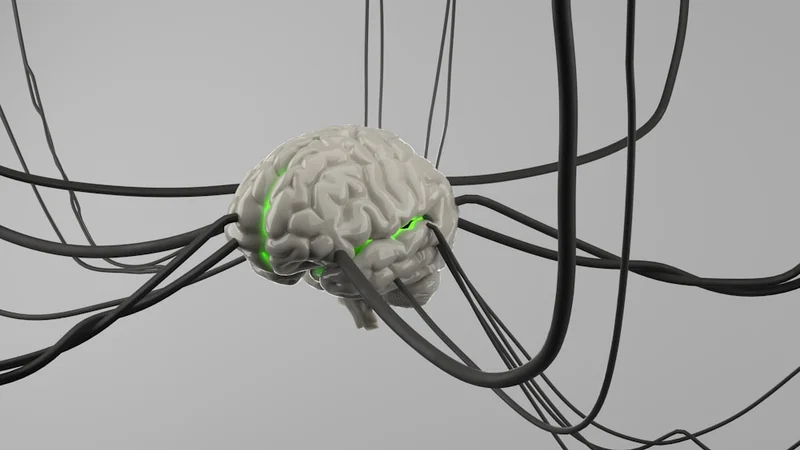
Steven Southwick at Yale University School of Medicine and Dennis Charney at the Icahn School of Medicine at Mount Sinai spent years studying the biological signatures of highly resilient individuals — people who had been through genuinely severe adversity and maintained or recovered robust function. They identified a set of neurobiological characteristics that consistently distinguish highly resilient individuals from equivalent adversity-exposed populations who struggled more.
Stronger prefrontal modulation of amygdala reactivity. The prefrontal cortex's capacity to regulate emotional response — to provide top-down input to the brain's threat-detection system — is the neural architecture of what we call equanimity. It's trainable through cognitive reappraisal practice: the deliberate reframing of activating situations from threatening to manageable or meaningful.
Higher hippocampal volume and neuroplasticity. The hippocampus, central to memory consolidation and contextual learning, is one of the few brain structures that continues generating new neurons in adulthood through aerobic exercise and BDNF stimulation. The resilient brain is, in part, a more structurally robust brain.
Robust vagal tone. The vagus nerve — the primary channel of parasympathetic nervous system regulation — governs the body's transition from mobilization to recovery after stress activation. Higher vagal tone means faster and more complete return to baseline. It predicts emotional resilience and is trainable through specific breathing practices.
More responsive dopaminergic reward signaling. The capacity to access genuine positive emotion — what Fredrickson's broaden-and-build dynamic requires — is, at a neural level, a function of dopaminergic system responsiveness. This is why meaningful engagement, novelty, and social connection aren't just nice to have. They're neurobiologically necessary.
The critical insight from Southwick and Charney's synthesis: each of these biological characteristics is associated with specific, trainable behaviors. Cognitive reappraisal practice, aerobic exercise, mindfulness training, and meaningful social connection don't just feel supportive in the moment. They produce measurable neurobiological changes in the direction of greater resilience.

Amazfit GTR 4 Fitness Smartwatch
HRV, sleep and stress tracking turn the abstract neurobiology of resilience into a measurable daily signal.
As an Amazon Associate, we earn from qualifying purchases — at no extra cost to you.
What Grows in the Dark: Post-Traumatic Growth
There's a finding in the resilience literature that gets underused because it sounds too much like a silver lining.
Richard Tedeschi and Lawrence Calhoun at UNC Charlotte have documented post-traumatic growth — not merely recovery from adversity, but genuine psychological development beyond the pre-adversity baseline — in consistent majorities of people who have been through significant difficulty and have done the cognitive work of processing it.
The domains they identify are specific: personal strength recognition ("I'm more capable than I thought"), new possibilities awareness ("this opened paths I wouldn't have considered"), deepened relationships ("what matters in connection became clearer"), richer appreciation for life ("ordinary experience carries more weight"), and changed existential understanding ("my sense of what matters has fundamentally shifted").
These aren't consolation prizes. In longitudinal studies, they represent measurable improvements in psychological wellbeing, life satisfaction, and functioning compared to pre-adversity baselines.
The critical nuance — and Tedeschi and Calhoun are explicit about this — is that post-traumatic growth doesn't emerge from adversity itself. It emerges from the processing of adversity. The effortful, sometimes uncomfortable cognitive work of making meaning from what happened, integrating it into a revised model of self and world, and allowing that revision to produce genuine reconfiguration rather than defensive recovery.
People who grow from difficulty are people who actively work to make sense of it. Not people who simply endure it. That distinction changes everything about how you approach hard periods.

Philips SmartSleep Wake-Up Light HF3520
Sleep and circadian recovery are the substrate for the memory consolidation and meaning-making that turns processing into post-traumatic growth.
As an Amazon Associate, we earn from qualifying purchases — at no extra cost to you.
Why writing things down changes your brain
How to Start Building Resilience Today
Resilience isn't a destination. It's a practice. And the research is unusually specific about what that practice looks like.
1. Audit your PERMA foundation. Which of the five elements is most depleted right now — positive emotion, engagement, relationships, meaning, or accomplishment? The answer tells you where to focus first. Resilience resources are built in advance of adversity, not during it. The work you do in the calm directly determines what you have available when things get hard.
2. Practice cognitive reappraisal daily. Not toxic positivity — genuine cognitive flexibility. When a difficult situation arises, ask: is there another interpretation of what's happening here that is also consistent with the facts? The prefrontal-amygdala regulatory architecture that Southwick and Charney identified as the neural signature of resilience is trainable. Deliberate reappraisal is the training.

Kindle Paperwhite (2024, 16GB)
Building reappraisal skill means reading the research-backed books on stress, ACT and resilience — a low-friction, distraction-free reading device makes the habit stick.
As an Amazon Associate, we earn from qualifying purchases — at no extra cost to you.
3. Protect the one relationship that matters most. One reliable, present relationship is more resilience-predictive than a wide network of surface connections. If that relationship exists in your life, invest in it now — before you need it to carry weight.
4. Use a structured journal for meaning-making. The post-traumatic growth that Tedeschi and Calhoun documented doesn't happen automatically. It happens through writing, reflection, and deliberate sense-making. A journal that prompts you to identify strengths, extract lessons from difficult experiences, and articulate what genuinely matters accelerates the cognitive processing that naturally produces growth.

Clever Fox Habit Calendar Circle (24-Month)
A visible, prompt-driven tracker converts the article's five resilience practices into a daily ritual.
As an Amazon Associate, we earn from qualifying purchases — at no extra cost to you.
5. Add aerobic exercise before everything else. Not because of the cardiovascular benefits (though those are real). Because the BDNF and hippocampal neurogenesis that regular aerobic exercise produces are among the most robustly documented neurobiological interventions for resilience and cognitive flexibility available to anyone. This is the single habit with the widest evidence base.
Daily habits of genuinely happy people
Design Your Evolution Through, Not Around, Adversity
Jim Rohn used to say that you can't change the seasons, but you can change yourself. The seasons in that observation aren't metaphorical.
Loss arrives. Difficulty comes. The conditions of a life — the professional setbacks, the relationship endings, the health challenges, the quiet grinding stretches — are not controllable in the way that the self-optimization industry sometimes implies. Anyone who's telling you otherwise is selling something.
What is within your design is the psychological architecture you bring to those conditions. The PERMA resources you build in the calm. The reappraisal practice that's been reshaping your amygdala's relationship with your prefrontal cortex. The one relationship you've invested in consistently. The meaning-making capacity you've been developing through deliberate reflection.
Bonanno's data doesn't mean adversity won't hurt. It means the human organism's default trajectory — your default trajectory — is through it. Not around it, not above it. Through it.
Atomic Habits
Resilience compounds through systems, not willpower — Clear's book is the practical companion to the mindset science.
As an Amazon Associate, we earn from qualifying purchases — at no extra cost to you.
My friend wasn't lucky and she wasn't suppressing her grief. She was resilient in the most ordinary, human, well-documented sense of the word. She had, over the course of a regular connected life, built what she needed — and it held when she needed it to.
The science says that's normal. The question is: what are you building right now, while the seasons are still quiet?
What's the adversity in your life right now that you haven't yet made sense of — and what do you think might shift if you did? Share in the comments below.
→ Posttraumatic Growth: How Crisis Can Change You
Related read: Self-Compassion Science: Why Kindness Builds Resilience
Related read: Post-Traumatic Growth: Why Hard Times Build You
Was this helpful?