Habits· 10 min read
Why Writing Things Down Changes Your Brain
Journaling isn't a soft self-care ritual — it's one of the most researched cognitive interventions available. Here's what the science actually shows.

Why Writing Things Down Changes Your Brain
It was 2:51 AM when I finally gave up trying to sleep.
I'd been lying there for the better part of an hour, running the same mental loop: a conversation that hadn't gone well, three things I hadn't finished, an email I kept meaning to write. My body was horizontal. My brain was running a board meeting. And no amount of breathing exercises or "letting go" was doing much about it.
What I didn't know then was that my brain wasn't being difficult. It was doing exactly what it was designed to do — maintaining active attention on unresolved situations until they're resolved. The problem wasn't my mind. The problem was that I hadn't given my mind anywhere to put those thoughts.
I'd been ignoring one of the most consistently researched cognitive tools in all of psychology. And it costs about the same as a decent cup of coffee.
Writing things down changes your brain. Not metaphorically — literally, measurably, at the level of immune function, sleep quality, intrusive thought frequency, and long-term physical health. What follows is the research that probably should have been in your high school curriculum but wasn't.

The 40-Year Research Programme Nobody Told You About
In 1986, James Pennebaker at the University of Texas handed a group of college students an unusual assignment. For four consecutive days, they'd write for 20 minutes. One group was told to write about trivial topics — how they'd spent their morning, what their dorm room looked like. A second group was told to write about a traumatic experience, but only the facts, no feelings allowed. A third group was told to write about the deepest emotional truth of whatever difficult experience they chose.
Six months later, Pennebaker found that students who had written about both facts and feelings visited the campus health centre significantly less often than either other group. Two years later, in a 1988 study conducted with immunologists Janice Kiecolt-Glaser and Ronald Glaser, Pennebaker's team measured something even more striking.
Specifically, they looked at T-lymphocyte mitogenic response — a measure of how vigorously your immune cells mobilise when challenged. The students who had written about both the facts and the feelings of their difficult experiences showed significantly stronger immune function than controls. (Pennebaker, Kiecolt-Glaser & Glaser, 1988)
Four days of 20-minute writing had measurably improved their physical health for months afterward.
That finding has since been replicated with recently unemployed professionals who secured new jobs faster after expressive writing sessions, medical students under exam pressure, people living with HIV, adults with rheumatoid arthritis, and Holocaust survivors. The effect holds across age, gender, culture, and the nature of the difficult experience. What varies is the magnitude, not the direction.
This isn't journaling as soft self-care. This is journaling as documented medical intervention.
If you want to try Pennebaker's protocol — and based on the research, you should — the only physical requirement is a private, unlined notebook that you'll write in without any sense of audience. Lines matter psychologically; they create an implicit expectation of neatness and correctness that interferes with honest expression. Unlined pages remove that pressure.

Moleskine Classic Notebook — Large Hardcover
Pennebaker specifically recommends unlined pages for expressive writing — lines create an implicit expectation of neatness that interferes with honest expression. This is the notebook the protocol was designed for.
As an Amazon Associate, we earn from qualifying purchases — at no extra cost to you.
Why Your Brain Won't Let the Day End
Here's the mechanism that Pennebaker's protocol actually fixes.
When something significant happens — a difficult conversation, a decision you haven't made, something you said and wished you hadn't — your brain encodes it as an unresolved experience. That experience exists in memory as fragmented sensory and emotional pieces: the feeling in your chest, the specific words that stung, the open question of "what does this mean?" hanging without resolution.
Your brain keeps those fragments under active processing. It returns to them, automatically, searching for resolution. You don't choose to replay Tuesday's conversation at midnight — your neural architecture does it, because that's what it's built to do with unresolved material.
Pennebaker calls this the suppression burden: the continuous cognitive and physiological resources your nervous system spends managing these unnarrated experiences. The fragments keep circling because they haven't been structured into anything. They don't have a beginning, a middle, or even a provisional ending. They're just raw.
Writing resolves this. When you narrate an experience — giving it sequence, causality, emotional acknowledgment — you convert fragmented memory into structured memory. The brain's indexing system processes it differently. The intrusive quality diminishes. Not because you've solved anything necessarily, but because the experience has been given form.
Here's the part that stops most people: writing about difficult things doesn't amplify them. It relieves them. The amplification people fear — "I'll make it worse by dwelling on it" — is actually what happens when you ruminate without narrating. Circular, unstructured replay worsens emotional intensity. Directed, honest writing reduces it.
how to build a morning routine that actually sticks
The Open Loop Problem: What's Keeping You Up at Night
There's a second mechanism that explains the 2:51 AM problem, and it has nothing to do with difficult emotions. It has to do with an incomplete task you wrote on a sticky note three days ago.
In the 1920s, Lithuanian psychologist Bluma Zeigarnik noticed that waiters could remember every detail of an unpaid order but forgot it completely the moment the bill was settled. The brain, she documented, maintains active attention to incomplete tasks. Finish something, and the mind releases it. Leave it open, and it keeps pulling processing resources to track it.
Roy Baumeister extended this into the most practically useful finding in modern sleep research. In a 2011 study with E.J. Masicampo, they interrupted participants mid-task and measured intrusive thoughts. Predictably, those people were plagued by thoughts of the unfinished work. Then the researchers tested a variation: what if participants just wrote a concrete plan for finishing the task? They didn't have to actually finish it. They just had to commit the plan to paper.
That was enough. Writing the plan produced the same cognitive relief as completing the task. (Masicampo & Baumeister, 2011)
The brain, it turns out, doesn't need you to close loops. It needs you to file them — to register "I have a plan for this; I know where this is going; you can stop tracking it now." A written plan satisfies the Zeigarnik mechanism even when the work remains undone.
This is why end-of-day journaling dramatically improves sleep quality for many people — not through relaxation, but through what researchers call cognitive offloading. You're telling your nervous system: everything that needs attention is on paper. You can stop holding it in working memory. It's safe to let go.
The simplest version of this: before bed, write tomorrow's three most important actions in behavioural, time-specific terms. Not "deal with the budget" — "send the budget draft to Sarah before noon." The specificity matters. Vague intentions stay open. Concrete plans close.

Four Formats, Four Functions — The Right Type Actually Matters
Here's where most journaling advice fails you: it treats journaling as one thing. It isn't. Different formats work through different mechanisms and produce different effects. Using gratitude journaling to process trauma won't work. Running Pennebaker's expressive protocol every morning as a "mindset boost" is working below capacity. The format-function match is the whole game.
Expressive Writing (The Pennebaker Protocol)
What it does: Processes unresolved emotional content, reduces suppression burden, improves immune function, decreases intrusive thought frequency.
How to do it: 20 minutes, completely private, no editing, no audience. Write about something that genuinely troubles you — not necessarily a major trauma. A difficult relationship dynamic, a fear you've been skirting, a decision you haven't made. Write both the facts and what you actually feel about them.
When to use it: When you're carrying something unprocessed. Not daily — it's intensive work. Run it for three to four days on a single topic, then rest. The relief accumulates over days, not during the session itself.
Gratitude Journaling
What it does: Shifts attentional bias toward positive experience, improves pre-sleep cognitive state, associated with consistent wellbeing gains in Emmons and McCullough's research.
How to do it: Three specific things you genuinely appreciate, described with sensory detail. Not "I'm grateful for my family" — "the way my daughter laughed when the dog knocked over her cereal bowl this morning." Specificity is what produces the effect. Generic gratitude produces generic results.
When to use it: Evening practice. A dedicated gratitude journal with structured prompts can significantly help if you're starting — it removes the blank page friction and gives the practice a consistent shape.

The Five Minute Journal — Intelligent Change
A dedicated gratitude journal with structured prompts removes the blank-page friction and gives the practice a consistent shape — exactly what the gratitude format needs to stick in the first month.
As an Amazon Associate, we earn from qualifying purchases — at no extra cost to you.
Reflective Journaling
What it does: Converts lived experience into explicit learning. Forces the kind of structured reflection that transforms raw experience into usable insight — what worked, what didn't, what you'd do differently.
How to do it: Three honest questions. What did I do well today? What would I do differently? What did I actually learn? Most people skip the third question because it's the hardest. It's also the one that matters most.
When to use it: End of significant days, end of weeks, after projects or important events. Not daily — that turns it into a performance rather than a reflection.
Intention Journaling
What it does: Converts ambiguous plans into specific behavioural commitments. Uses the Zeigarnik relief mechanism to free working memory for present-moment engagement throughout the day.
How to do it: Write the single most important thing tomorrow needs to contain. Make it concrete and time-specific. Then capture any other open loops you want to file — anything sitting in your mental RAM that doesn't have a designated place yet. A structured daily planner makes this format significantly more sustainable than a blank notebook.
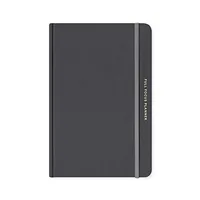
Full Focus Planner — Michael Hyatt
A structured daily planner makes intention journaling significantly more sustainable than a blank notebook — quarterly goal cycles plus daily intention pages with built-in cognitive offloading design.
As an Amazon Associate, we earn from qualifying purchases — at no extra cost to you.
why willpower alone never breaks a bad habit — the neuroscience of habit change
Why Your Tools Matter (This Is Not About Aesthetics)
People dismiss the question of which journal or pen to use as vanity. That's a mistake.
There's a consistent body of research on environmental design and habit formation showing that the friction and feel of a practice determines whether it sticks — particularly in the early weeks before automaticity has formed. Writing in a cheap spiral notebook you don't like the feel of creates a different psychological association than writing in something you specifically chose. The investment signals commitment. The tactile quality affects engagement. The ritual of opening it either invites the practice or resists it.
You don't need an expensive journal. But you do need one you don't hate opening. That distinction is worth taking seriously.
The same logic applies to pens. The mechanical pleasure of a pen that writes smoothly, at the speed your hand moves, reduces friction in a way that actually matters to daily practice. This isn't luxury. It's implementation design — the same principle behind every piece of research showing that making healthy habits easier to start increases follow-through.
How to Start Without Turning This Into a Project
The most common failure mode with journaling is treating it like a commitment before you've established whether it has value for you personally. You set up a dedicated journaling hour, buy four notebooks, announce it to your partner — and then miss day three and feel like you've failed.
Don't do that. Here's the minimum viable version instead:
-
Start with cognitive offloading tonight. Five minutes before bed, write down everything currently in your working memory — tasks, worries, decisions pending, questions without answers. Don't edit. Just empty. This single practice will likely change how you sleep within the first week.
-
Run one Pennebaker session. Pick something that's been sitting in the background of your mind for a while — not a catastrophe, just something unresolved. Write about it for 20 minutes, honestly, privately, no editing. Notice what happens to the intrusive quality of those thoughts over the following days.
-
Add specificity to any gratitude you're already doing. If you already keep a gratitude practice, make it more sensory and specific for one week. If you don't have one, try three genuine specificities before sleep tonight. Make them real enough that you can picture them.
-
Match your format to your actual need. Now that you've tried the basics, notice what you've actually been carrying. Unprocessed difficult experience? Expressive writing. Mental noise in the evenings? Cognitive offloading. Flat mornings? Intention journaling. The format is a tool — use the right one for the job.
-
Protect the practice physically. Keep your journal visible. Use a dedicated pen you like. Make the ritual small enough that it can survive a bad day — five minutes counts. Pennebaker's own book lays out the research behind all of this more fully, and if you want to go deeper on the science before committing to a practice, it's worth the read.
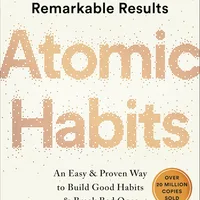
Atomic Habits — James Clear
The most accessible companion text on habit science — exactly the next-read the article invites after exploring Pennebaker's research on how writing converts experience into lasting change.
As an Amazon Associate, we earn from qualifying purchases — at no extra cost to you.
For the daily structure itself, a quality journal that you actually look forward to picking up makes more difference than most people expect. Once the habit is established, the container matters less — but in the first month, it matters a lot.

Clever Fox Habit Calendar Circle — 24-Month Habit Tracker
A visual, colourful habit tracker engineered for first-month adherence — the dopamine-friendly design that makes the difference between a practice that sticks and one that doesn't.
As an Amazon Associate, we earn from qualifying purchases — at no extra cost to you.
building a daily writing habit for clearer thinking
The Reason This Matters More Than It Looks Like It Does
Here's what 40 years of Pennebaker's research actually suggests beneath the immune function data and the sleep improvement numbers:
Unexamined experience doesn't become wisdom. It accumulates.
You can live an incredibly full life — work you care about, people you love, genuine experiences worth having — and still find yourself at 55 carrying the same unresolved questions, the same undischarged emotional static, the same open loops that have been running in the background since your thirties. Not because you haven't lived enough. Because you haven't processed enough.
Jim Rohn captured it simply: "There are three things to leave behind — your photographs, your library, and your personal journals. These will be more valuable to future generations than your furniture." He wasn't being sentimental. He was describing the actual architecture of deliberate growth: input plus reflection. One without the other is either information overload or undirected rumination. Both together is how experience compounds into something you can actually build on.
Writing converts amorphous experience into narrated insight. It turns what happened to you into something you can examine, learn from, and eventually let go of. That's not a soft practice. That's the oldest cognitive technology humans have ever developed.

Kindle Paperwhite 2024 (12th Gen, 16GB)
Jim Rohn called journals and libraries 'more valuable than furniture.' Kindle puts every book on the reading side of the input-plus-reflection equation in one weightless surface.
As an Amazon Associate, we earn from qualifying purchases — at no extra cost to you.
You're designing your evolution every day — whether you're noticing it or not. Journaling is the instrument that makes that design visible and intentional. It's the difference between change happening to you, and change being made by you, with full awareness of what you're building.
So here's the question worth sitting with: what's the one thing that's been circling in the background of your mind for the last few weeks — the thought that surfaces at inconvenient moments, the unresolved question you keep not quite answering? What would 20 minutes of honest writing about it actually do?
That's worth finding out before you decide whether you're "a journaling person."

Was this helpful?