Mindset· 10 min read
Your Brain Is Wired to Notice the Bad (Here's How to Fix That)
The negativity bias isn't a character flaw — it's a survival circuit your brain never updated. Here's the science and the practical reset.

Your Brain Is Wired to Notice the Bad (Here's How to Fix That)
Your performance review came back with nine glowing bullet points and one mild note — something about "could improve follow-through on secondary tasks." You spent the next three days thinking about that note.
Your partner said five kind things this week and one cutting thing during an argument. The cutting thing is the one that replays. You had a genuinely good day — great meeting, good lunch, an unexpected compliment — and a stranger cut you off in traffic on the way home. That's the part you tell someone about. This isn't pessimism. It isn't ingratitude. It's the negativity bias — something far more fundamental, and understanding it might be the most useful thing you do this month.
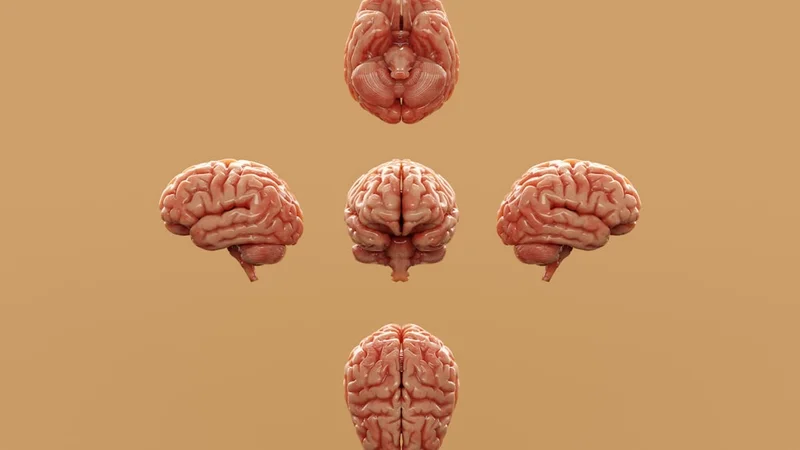
The Asymmetry That's Been Running in the Background Your Whole Life
In 2001, Roy Baumeister at Case Western Reserve University published a paper called Bad Is Stronger Than Good. He had reviewed empirical studies across domains — relationships, learning, emotion, financial decision-making, information processing — searching for a consistent pattern in how humans respond to positive versus negative events of equivalent intensity.
The pattern was everywhere, and it was unambiguous: bad beats good, consistently, by a significant margin.
One harsh word from a colleague outweighs several compliments. One bad day in a relationship has more measurable impact on relationship satisfaction than one good day. One financial loss hurts more than an equivalent financial gain feels good. You can spend years building a reputation and one public failure will hit harder than the whole accumulation combined.
This is the negativity bias: the systematic tendency of the human brain to give greater weight, attention, and memorial priority to negative experiences than to positive ones of equivalent objective intensity. And here's the part that matters most: it operates at the level of your biology, not your thinking.
You've probably felt this when it didn't make logical sense. A vacation that was 95% wonderful left a faint residue of a single bad evening. A project you're proud of still carries the faint imprint of one critical comment. The good stuff doesn't quite stick the way the bad stuff does.
There's a reason for that. And more importantly, there are specific, research-backed things you can do about it — not to become some relentlessly upbeat person who pretends the world isn't difficult, but to correct for an asymmetry that's been quietly making your experience of an objectively good life feel worse than it needs to.
Why Your Brain Treats Bad News Like a VIP Guest
The evolutionary logic is almost too simple. In the ancestral environment — the savanna, the forest, the genuinely dangerous world your ancestors navigated for most of human history — failing to notice a threat was potentially lethal. A rustle in the grass that turned out to be a predator, missed, was fatal. A potential food source, overlooked, was merely suboptimal.
Over hundreds of thousands of years, natural selection ruthlessly filtered for the brains that were hypervigilant to threat. The brains that treated danger as a VIP signal — stop everything, process this first, encode it deeply — survived and reproduced. The brains that were casual about threats became someone's lunch.
Rick Hanson, a psychologist and Senior Fellow at UC Berkeley's Greater Good Science Center who has spent his career sitting at the intersection of contemplative practice and neuroscience, describes the result with a metaphor that's impossible to shake: the brain is like velcro for negative experiences and teflon for positive ones.
Stillness Is the Key — Ryan Holiday
If Hanson's velcro metaphor lands, this is the philosophical companion — Ryan Holiday's synthesis of Stoic and Zen strategies for cultivating inner stillness in a brain wired for constant threat detection.
As an Amazon Associate, we earn from qualifying purchases — at no extra cost to you.
The mechanism is the amygdala — the brain's threat-detection and emotional memory hub. It responds to negative stimuli more rapidly than to positive stimuli. It flags them as worth storing, encodes them into long-term memory with greater priority and detail, and keeps them more readily accessible for future pattern-matching. The positive stuff gets processed, appreciated briefly, and largely passed through. The negative stuff gets tagged, archived, and cross-referenced.
Your amygdala doesn't know the "threat" is a mildly critical email. It processes it with the same infrastructure it would use for a predator at the perimeter. The system that kept your ancestors alive is the same system that ruins your Tuesday.
This is not a flaw in your character. It is the predictable output of an extraordinarily effective system — optimized for a specific context over hundreds of millennia — running in a context it wasn't designed for.
The Math That Makes a Good Life Feel Like a Neutral One
Paul Rozin and Edward Royzman at the University of Pennsylvania coined the term negativity dominance and identified four specific mechanisms by which negative information outweighs positive. Negative events produce larger emotional responses. We perceive negative stimuli as more differentiated (bad things feel more distinctly bad than good things feel distinctly good). Negative attributes contaminate positive contexts more easily than positive attributes neutralize negative ones — one questionable ingredient in a meal you've been enjoying can retroactively change your entire assessment of it. And negative events intensify faster as they approach us in time than positive events do — bad things tend to feel worse the closer they get, while anticipated good things don't correspondingly grow at the same rate.
The net effect of all four operating simultaneously is what you already know from experience: you can have a life that is, by any reasonable external measure, genuinely good — and still have a subjective experience of it that's colored predominantly by what's wrong.
Barbara Fredrickson at the University of North Carolina spent her career studying the counterweight to all of this: positive emotions. Her broaden-and-build theory documents something that wasn't obvious before she measured it. While negative emotions narrow your attention and behavior toward threat management — the tunnel vision of anxiety, the focused aggression of anger — positive emotions do something structurally different. They broaden your attentional field. They make you more cognitively flexible, more creatively connected, and more capable of building the social and psychological resources that make future challenges easier to navigate.

Philips SmartSleep Wake-Up Light HF3520
Fredrickson's research says positive emotions must show up in sufficient volume. A clinically-proven sunrise simulation gives the threat-detection system a positive signal before the day's demands begin.
As an Amazon Associate, we earn from qualifying purchases — at no extra cost to you.
Her research also identified a directional finding the popular press has oversimplified but that holds up in orientation: people flourish when their ratio of positive to negative emotional experiences exceeds something like three to one. Not because you need to suppress the negative. But because the positive needs to show up in sufficient volume to actually register against the negativity bias's thumb on the scale.
That ratio doesn't happen by accident. The negativity bias guarantees it won't happen by default. It requires design.
how to build a morning routine that actually sticks
The Three Practices That Actually Recalibrate the System
Here's where most advice about negativity bias goes wrong: it tells you to think more positively. That's like telling someone whose scale is broken to just believe they weigh less. The bias isn't a belief — it's an architectural feature of your neural processing. Addressing it requires practices that work at the same architectural level.
There are three that have the strongest evidence behind them.
Taking in the Good
Hanson's practice is called "taking in the good," and it's embarrassingly simple on the surface. When something positive happens — a genuine moment of satisfaction, a small win, a pleasant exchange — you deliberately stay with it for twenty to thirty seconds instead of processing it briefly and moving on.
That's the whole intervention.
But here's why it works: the brain's memory encoding systems don't distinguish between deliberate attention and spontaneous response when it comes to consolidation depth. If you voluntarily hold a positive experience in conscious awareness for twenty seconds, your brain encodes it with the same priority it automatically gives negative experiences. You're manually compensating for the asymmetry by giving positive material the processing time the brain naturally withholds from it.
Over time, this builds what Hanson calls positive neural structure — not toxic positivity, but a gradually recalibrated attentional system that no longer drops the good quite so reflexively. He's documented this across decades of practice and research, and the neuroplasticity research supports the mechanism completely.

Florensi Meditation Cushion (Zafu)
Hanson's 'taking in the good' requires deliberate stillness with positive experience. A dedicated cushion creates a physical cue for the practice — the brain encodes ritualized behaviour more reliably than free-floati…
As an Amazon Associate, we earn from qualifying purchases — at no extra cost to you.
The practice feels slightly awkward at first, because pausing to savor a small good thing isn't how most of us are wired to operate. But that awkwardness is itself a signal: you're doing something your default operating mode wouldn't.
Naming the Threat Response
Matthew Lieberman at UCLA has published extensive neuroimaging research on what happens when you simply name an emotional state.
When participants labeled what they were feeling — "I'm feeling anxious about this," "I'm irritated right now" — rather than suppressing or dwelling in the emotion, their amygdala activation measurably decreased and prefrontal regulatory engagement measurably increased. The act of naming creates psychological distance. You become the observer of the threat response rather than the threat response itself.
The practical version: when you notice the negativity bias activating — when a single piece of critical feedback has hijacked your attention, when one difficult interaction is coloring your whole read on an otherwise good day — name it explicitly. Not to dismiss it. To observe it: My brain is treating this as a threat right now. That makes sense. It's also probably not the whole picture.
That shift from inside the experience to observing the experience is, neurologically, the move from amygdala reactivity to prefrontal processing. It's accessible anytime, without tools, without preparation. It just requires the habit of noticing before reacting — which is its own practice.
Three Good Things
Martin Seligman at the University of Pennsylvania designed the "Three Good Things" exercise as part of positive psychology's early empirical toolkit, and it remains one of the most replicated behavioral interventions in the field.
The Happiness Trap (2nd Ed.) — Russ Harris
Lieberman's affect-labeling research is the lab version of what Russ Harris's ACT book teaches at scale: observing the threat response rather than fusing with it. Over 1 million copies, 30+ languages.
As an Amazon Associate, we earn from qualifying purchases — at no extra cost to you.
Each evening, write down three specific things that went well that day and their causes.
The specificity matters enormously. Not "I had a good day" but "I finished the proposal I'd been putting off, and it happened because I blocked two hours before checking email." Not "the meeting went fine" but "I made a useful contribution in the meeting because I'd actually prepared the night before."
Two things are happening simultaneously. First, you're training your attentional system to scan for positive material during the day — the Three Good Things practice creates an anticipatory search pattern that the negativity bias never created for good experiences. Your brain starts looking for material to bring to the evening exercise, which means it's actively seeking positive events rather than passively allowing the negative ones to dominate.
Second, the "causes" component builds what Seligman calls an optimistic explanatory style for positive events: the habit of attributing good things to stable, internal factors rather than luck or circumstance. The negativity bias, left unchecked, does the reverse — attributing bad events to stable, personal factors ("I'm just like this") and good events to transient, external ones ("I just got lucky"). Three Good Things systematically reverses that attribution asymmetry for positive experience.
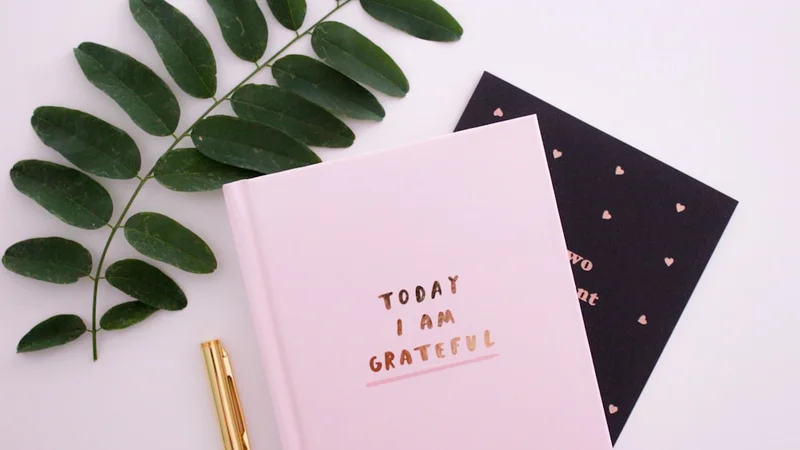
The research shows measurable decreases in depressive symptoms and increases in subjective wellbeing at six-month follow-up from just one week of this exercise. A dedicated journal designed for this purpose — rather than a blank notebook — reduces the setup friction that kills most new habits before they take.

The Five Minute Journal — Intelligent Change
Intelligent Change's Five Minute Journal is the canonical implementation of Seligman's Three Good Things — morning gratitude plus evening reflection in five minutes per side. Scientifically supported design.
As an Amazon Associate, we earn from qualifying purchases — at no extra cost to you.
How to Start Today
You don't need to overhaul your thinking. You need three small practices layered onto what you're already doing.
-
Morning (two minutes). Before you open your phone, identify one specific thing you're looking forward to today. Not a grand aspiration — a concrete, small thing. A conversation. A task you've been wanting to get to. A meal. This is attentional priming: you're giving your threat-detection system a positive signal to work with before the stream of news, messages, and demands begins. Two minutes. No phone first.
-
Midday reset (thirty seconds). When something good happens — and something will, even on a genuinely hard day — pause. Stay with it for twenty seconds. Don't process and move on. This is the taking-in-the-good practice executed in real time. You're manually compensating for the encoding asymmetry that the bias creates by default.
-
Evening (five minutes). Three Good Things. Specific. With causes. In writing. The written externalization matters: it removes the material from working memory — where the negativity bias has easy access — into a retrievable record your future self can return to on harder days.
None of these require pretending the negative doesn't exist. They're not suppression. They're not forced positivity. They're corrective mechanisms for a specific measurement bias that's been running in the background of your perception, unchecked, probably your entire adult life.
The negativity bias will still be there. It's architectural. But there's a meaningful difference between a brain that's slightly tilted toward threat and one that's severely tilted — and consistent practice genuinely shifts the tilt over weeks and months.
Shawn Achor's Harvard research documented this at scale: training people in three simple positive psychology practices — gratitude, journaling small wins, and mindful appreciation — produced measurable improvements in performance, creativity, and resilience within three weeks. Not because optimism is a magic variable, but because the brain's threat architecture is genuinely malleable when you give it something deliberate to work with.

Kindle Paperwhite 2024 (12th Gen, 16GB)
Achor's three-week protocol depends on continued exposure to the science — Kindle puts Hanson's Hardwiring Happiness, Seligman's Authentic Happiness, and Fredrickson's Positivity on one weightless reading surface.
As an Amazon Associate, we earn from qualifying purchases — at no extra cost to you.
the science of gratitude — and why most people do it wrong
You Can't Fix What You Don't Know Is Broken
Jim Rohn had a line I've come back to more times than I can count: You must take personal responsibility. You cannot change the circumstances, the seasons, or the wind, but you can change yourself.
The negativity bias is part of the wind. You didn't choose it. You can't eliminate it. And you can't stop it from operating. But there's a meaningful distance between knowing a bias exists and doing something about the asymmetry it creates — and that distance is exactly the gap this article was built to close.
Designing your evolution starts with an accurate map of your own mind. Not the idealized mind you wish you had, but the actual one — with its 300,000-year-old threat-detection hardware, its velcro for bad news, its teflon for good. Once you know about the tilt, you're responsible for accounting for it.
The three practices above aren't a personality transplant. They're a calibration tool. And calibration is something you can start tonight with a notebook and five minutes.
What's one good thing that happened to you this week that you've barely thought about since it happened?
Was this helpful?