Habits· 10 min read
Why Sleep Is Your Brain's Most Powerful Performance Tool
Sleep is your most powerful cognitive tool — and you're probably misusing it. Walker's neuroscience reveals what actually happens when you sleep.

Why Sleep Is Your Brain's Most Powerful Performance Tool
You're probably already tracking your calories, your steps, maybe even your heart rate variability. You have a morning routine. You've read the productivity books. You're optimizing.
And you might still be leaving the single most powerful cognitive advantage you have completely on the table. Not because you don't care about sleep — but because nobody ever told you what sleep actually is.
Here's the reframe that changes everything: sleep is not the recovery from the day's work. It is the biological mechanism through which the work of the day is processed, stored, and made available for tomorrow. Matthew Walker at UC Berkeley's Center for Human Sleep Science has spent 25 years building the empirical case that sleep is more effective at enhancing cognitive performance than any supplement, any nootropic stack, any productivity system currently available to human beings. His 2017 synthesis Why We Sleep forced a fundamental shift in how performance science thinks about rest — and most people still haven't caught up.
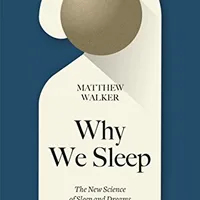
Why We Sleep — Matthew Walker (Paperback)
Direct authority anchor. The intro explicitly credits Matthew Walker and Why We Sleep as the empirical basis of the entire article — highest-intent placement in the piece.
As an Amazon Associate, we earn from qualifying purchases — at no extra cost to you.
That distinction between "recovery" and "active processing" is not semantic. It changes everything about how rationally you should be prioritizing sleep relative to everything else you're doing.
The Memory Consolidation Research That Should Shock You
Here's what your brain is actually doing when you sleep.
Learning creates new neural connections in the hippocampus — the brain's short-term memory structure. Think of it as a camera roll before the photos sync to the cloud: it holds new information temporarily, it's fragile, and it's continuously at risk of being overwritten. The cortex is the long-term storage: stable, durable, resistant to interference. The transfer from hippocampus to cortex is what turns today's learning into something you can access six months from now.
That transfer happens during sleep. During slow-wave sleep (NREM stage 3), newly encoded memories are replayed and gradually migrated to cortical storage. This process requires a specific neurochemical environment that only sleep produces — you cannot replicate it while awake. The brain during sleep isn't simply "less busy." It's running operations that are biologically unavailable during the waking state.
Walker's research documented two distinct functions in this process. Sleep before learning prepares the hippocampus to receive new information: sleep-deprived participants show up to a 40% reduction in their brain's ability to encode new memories compared to rested controls. Sleep after learning then executes the consolidation transfer. Both matter, independently. This means the student who pulls an all-nighter before an exam hasn't just made themselves tired — they've specifically impaired the encoding of what they studied and the consolidation of what they'd already learned. The sacrifice is twice as costly as it looks.
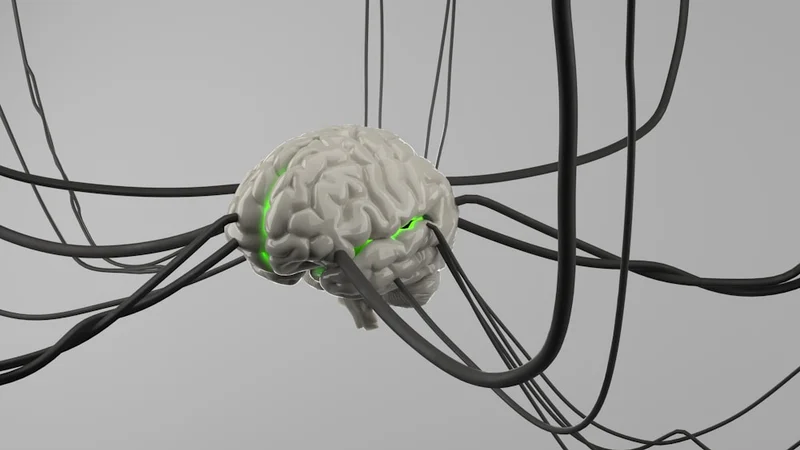
REM sleep — which fills the final two hours of a proper eight-hour night — does something different and equally important. It performs associative integration, connecting newly consolidated memories to the broader web of what you already know. This is the cognitive process behind the insight that arrives in the morning on a problem you went to bed confused about. The sleeping brain isn't resting. It's making connections that waking cognition is too narrowly focused to produce.
What Sleep Deprivation Does to Your Emotional Performance
The performance implications extend well beyond cognitive work and memory.
Walker's amygdala research produced findings that anyone who's had a bad week of sleep can immediately recognize. In sleep-deprived participants, the amygdala — the brain's primary emotional reactivity structure — shows 60% amplified reactivity to negative emotional stimuli compared to rested controls. Sixty percent. The prefrontal cortex, which normally provides top-down regulation and keeps emotional responses proportionate to actual circumstances, shows measurably reduced functional connectivity to the amygdala under sleep deprivation.
The behavioral result is the pattern that's familiar from experience: disproportionate irritability, reduced frustration tolerance, hair-trigger reactions to minor provocations that you'd handle without effort on a good day. This is not a character problem. It is not a stress management failure. It is the direct neurological consequence of removing the overnight emotional recalibration system that your brain depends on to maintain functional regulation.
Walker's "overnight therapy" hypothesis extends this further. REM sleep — during which dreaming is most vivid — involves the reprocessing of emotional memories in a neurochemical environment that is uniquely low in norepinephrine (the brain's primary stress-signaling molecule). This state appears to gradually reduce the emotional charge attached to difficult experiences, so the memory becomes accessible as knowledge without re-triggering the full distress that originally accompanied it.
This is the biology behind "sleeping on it." The softening of grief over time, the perspective that distance provides, the way a difficult conversation feels less raw after a night's sleep — sleep is the mechanism. Every night of adequate rest is a dose of emotional recalibration that no mindfulness app, no supplement, no amount of willpower can produce in its absence.
The Most Consequential Finding Nobody Talks About
Here's the data point that should change your relationship with sleep more than any other.
After 17 hours of sustained wakefulness — you woke up at 7am, it's now midnight — your cognitive performance is equivalent to a blood alcohol concentration of 0.05%. After 24 hours without sleep, the equivalent is 0.10%. Legally impaired by the standards of most jurisdictions in the world.
You probably wouldn't drive to an important meeting drunk. You might be doing the cognitive equivalent every day of the week.
But the finding I'd argue is more dangerous than the impairment itself is this one: people who have been sleeping six hours per night for two weeks show cognitive performance equivalent to someone who has gone 24 consecutive hours without sleep — and they rate their own sleepiness as only slightly above normal. They genuinely believe they've adapted.
They haven't. The subjective sense of having adapted to insufficient sleep is a cognitive illusion produced by the very impairment they're trying to assess. The brain's capacity to accurately evaluate its own performance is one of the first things that deteriorates under chronic sleep restriction. The most impaired people are the least equipped to recognize their impairment.

Amazfit GTR 4 Smartwatch (Sleep & REM Stage Tracking)
STRONGEST placement. Directly follows the article's most consequential finding — that chronic six-hour sleepers cannot accurately self-assess their own impairment. The remedy the reader is primed for is objective slee…
As an Amazon Associate, we earn from qualifying purchases — at no extra cost to you.
This is the most consequential finding in sleep science, and it has one specific implication: if you've convinced yourself that you function fine on six hours, you cannot trust that assessment. The cognitive instrument you're using to measure your performance is the instrument most damaged by the condition you're evaluating. Most productivity content is written by people who are chronically under-slept and have no idea how much capacity they've quietly surrendered.
The Architecture Your Alarm Clock Is Quietly Destroying
Sleep is not a uniform state that you enter at 11pm and exit at 7am. It's a precisely organized sequence of 90-minute cycles, and each cycle contains a specific distribution of sleep stages that shifts systematically across the night.
NREM slow-wave sleep (the deep, physically restorative stage associated with memory consolidation and immune function) is concentrated heavily in the first half of the night — cycles 1 and 2. REM sleep — the associatively rich, emotionally recalibrating, creatively integrative stage — is concentrated in the second half, cycles 4, 5, and 6. A full eight-hour night contains approximately 2 hours of REM sleep. Most of it comes in the final 90 minutes before you wake.
A six-hour night doesn't lose 25% of your REM sleep. It loses most of it.
The chronic six-hour sleeper isn't experiencing a proportional reduction in sleep benefits. They're specifically and disproportionately cutting the emotionally regulatory, creatively associative, consolidation-completing stage that defines much of sleep's cognitive value. This explains why the functional difference between six and eight hours of sleep is not a 25% performance gap — it's far larger, because the stages being sacrificed are not uniformly distributed.
Your Chronotype Is Genetic, Not a Discipline Problem
Charles Czeisler at Harvard's Division of Sleep Medicine documented that the human circadian rhythm varies by approximately two hours across a genetically determined range. Your biological clock — which governs sleep-wake timing, core body temperature rhythm, cortisol secretion, and the timing of your cognitive performance peak — is not infinitely adjustable by willpower.
Michael Breus operationalizes this variation as chronotypes: the lion (natural early riser), the bear (majority, aligned with the solar cycle), the wolf (natural evening type, genuinely performing better in late morning and afternoon), and the dolphin (light, fragmented sleeper with irregular patterns). These aren't preferences. They're genetic endowments with real biological substrates.

Philips SmartSleep Wake-Up Light HF3520 (Coloured Sunrise Simulation)
Chronotype/circadian section. The article argues your circadian rhythm is genetic and that morning light is the primary signal that sets it. A sunrise-simulation lamp delivers that circadian dawn signal indoors and an…
As an Amazon Associate, we earn from qualifying purchases — at no extra cost to you.
The wolf chronotype asked to produce analytically demanding work at 7am isn't undisciplined. They're operating at the point in their circadian cycle where their core body temperature, cortisol output, and neural activation are at their daily minimum — equivalent to performing across a time zone. Calling this a motivation failure is like calling altitude sickness a fitness problem.
Approximately 70% of the working population lives in what chronobiologists call "social jetlag" — a chronic misalignment between biological chronotype and socially imposed sleep-wake schedule. The consequences extend beyond feeling groggy: social jetlag is independently associated with elevated cardiovascular risk, metabolic dysfunction, and measurably impaired cognitive performance, over and above the effects of sleep duration alone.
You can't always redesign your schedule. But you can stop framing your biology as a character flaw, and you can design your most cognitively demanding work around the performance window your chronotype actually offers.
How to Improve Your Sleep Architecture Tonight
The practical changes that Walker's research most directly supports aren't always the ones that appear on standard sleep hygiene lists. Here's what the evidence actually shows:
- Temperature is the single most actionable variable. Your body needs to drop approximately 2-3°F in core temperature to initiate and maintain sleep. Most bedrooms are 3-5 degrees too warm. The target range Walker's research supports is approximately 65-67°F (18-19°C). Temperature-regulating bedding — cooling mattress pads, breathable materials — produces measurably better sleep architecture, not just subjective comfort.
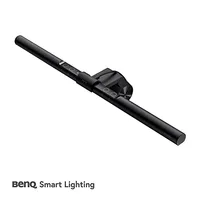
BenQ ScreenBar LED Monitor Light Bar (Warm/Cool 2700K-6500K, Auto-Dimming)
Reframed from raw temperature (catalog has no cooling/bedding SKU) to the article's broader evening wind-down: a warm 2700K, dimmable, glare-free light below screen level lowers the evening alerting signal that keeps…
As an Amazon Associate, we earn from qualifying purchases — at no extra cost to you.
-
Morning sunlight within 30 minutes of waking. Light exposure through the retinal photoreceptors that connect to the suprachiasmatic nucleus — your brain's master circadian clock — is the primary signal that sets your entire circadian rhythm. Ten to fifteen minutes of outdoor light early in the morning, even on a cloudy day, advances your sleep-wake timing and improves circadian consistency. It costs nothing and takes fifteen minutes.
-
The caffeine math you've probably been ignoring. Caffeine has a half-life of five to seven hours in most people. A 3pm coffee means roughly half of that caffeine is still active at 9pm. Even when caffeine doesn't prevent you from falling asleep, Walker's research shows it actively suppresses slow-wave deep sleep — producing the phenomenon of sleeping eight hours and waking up unrested. You get the quantity without the architecture.
-
Evening light management. Light exposure after sunset signals "daytime" to your circadian system and can delay melatonin onset by up to three hours. Blue-wavelength light from screens is the most potent of these signals — which is why two hours before bed on a bright screen reliably fragments the next day's performance.
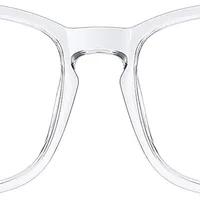
TIJN Blue Light Blocking Glasses (Square, Anti Blue Ray, TR90 Frame)
Article's evening-light step warns that blue-wavelength screen light delays melatonin onset by up to three hours. Blue-light glasses are the direct, affordable mitigation for unavoidable evening screen time. BR amber…
As an Amazon Associate, we earn from qualifying purchases — at no extra cost to you.
-
Consistent wake time above all else. This is the variable that most people underweight. Consistent wake time anchors your circadian rhythm more powerfully than consistent bedtime. Sleeping in on weekends to "catch up" recreates the functional equivalent of mild social jetlag twice a week, desynchronizing the circadian rhythm you've built during the week. The anchor is the morning, not the night.
-
Protect the sleep environment from interruption. The sleeping brain continues processing environmental input throughout the night. Light, sound, and temperature variation all produce micro-arousals that fragment sleep architecture even when they don't produce conscious awakening. Blackout curtains and acoustic management address the two most common environmental fragmentors.
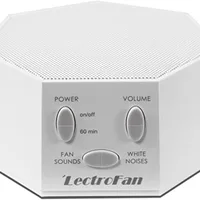
LectroFan Classic White Noise Machine (Global Power Edition, 20 Non-Looping Sounds)
Literal fit for the final action step: the article prescribes protecting the sleep environment from light/sound micro-arousals via 'blackout curtains and acoustic management.' A white-noise machine masks the traffic/n…
As an Amazon Associate, we earn from qualifying purchases — at no extra cost to you.
Sleep Is the Work, Not the Break From It
There's a specific kind of hubris embedded in how many high-performers think about sleep. The four-hour night is worn as evidence of dedication. The midnight work session is framed as sacrifice for something larger. The implication is that sleep is time borrowed from productivity.
Walker's data tells a different story. The brain that hasn't slept adequately isn't a slightly-less-optimal version of the rested brain. It's a structurally different cognitive system: less capable of encoding new information, less capable of consolidating what it already knows, more emotionally reactive, and less accurate in assessing any of these deficits. You can design the most sophisticated morning routine in the world, stack every evidence-based habit on top of each other, and still be optimizing a depleted system if you're shortchanging the one process that determines whether any of it sticks.
Designing your evolution requires the cognitive equipment that adequate sleep uniquely produces: the memory that holds, the emotional regulation that allows clear judgment, the creative association that produces genuine insight. The evolution you're designing happens in your brain. Sleep is when your brain actually does the evolving.
What's one thing about your sleep environment or schedule that you've been meaning to change but haven't? Start there tonight — not next Monday, not after this project. Tonight.
See also: Decision Fatigue: Why Your Morning Wrecks Deep Work
Was this helpful?