Mindset· 11 min read
Attachment Styles: The Hidden Pattern in Your Relationships
Anxious, avoidant, or secure? Your attachment style runs every close relationship you have. Here's what Bowlby's science says — and how to change it.

Attachment Styles: The Hidden Pattern Behind Every Relationship You've Ever Had

A friend of mine has ended the same relationship four times.
Not with the same person — four different people. Different cities, different careers, different last names. But the same story: she falls hard, they're emotionally unavailable in some fundamental way, she works harder to close the distance, they retreat further, and then comes the ending that costs her months to process. Last year she told me, half-laughing, half-exasperated: "I must just have terrible taste in men."
She doesn't have terrible taste. She has an attachment pattern. And once she understood what it actually was — where it came from, why it keeps running, and crucially, how to change it — the relationship she's now in looks nothing like the ones she'd been stuck in for a decade.
You probably know someone like her. If you're honest, you might be someone like her.
What Your Attachment Style Actually Is (And Why It's Quietly Running Your Relationships)
What is an attachment style? An attachment style is a psychological pattern — developed before you had words for it — that determines how you seek closeness under stress, how you respond when a partner seems distant, and which relational dynamics feel subconsciously familiar. Built from thousands of small interactions with early caregivers, it operates largely outside conscious awareness and shapes every significant relationship you form as an adult.
Here's a piece of intellectual history worth knowing, because it reframes everything.
In the late 1950s, British psychiatrist John Bowlby was doing something genuinely radical: arguing against Freud. Freud had proposed that the infant's bond with its mother was a secondary drive — derived from feeding, from the satisfaction of hunger. You love your mother because she feeds you. Bowlby looked at the same evidence and said: that's wrong. The need for closeness to a reliable caregiver isn't secondary to anything. It's a primary biological system that evolved because proximity to a protective figure directly increased survival odds in the environment where we spent most of our evolutionary history.
That's not a small distinction. It means the need to feel safe and seen by another person isn't dependency or weakness. It's wiring. It's as biological as hunger — and as persistent when it goes unmet.
Bowlby's central concept is the internal working model: a cognitive and emotional template built from repeated experience with early caregivers. This model answers two questions that get asked thousands of times in the first years of life: Are other people reliably available when I need them? And Am I someone who deserves that care?
The answers, encoded through thousands of small interactions before you had words for any of it, become the operating system through which you run every significant relationship you enter as an adult. Not consciously. Not deliberately. Automatically.
That's your attachment style.
Why You're Still Tired After 8 Hours of Sleep
The Four Adult Attachment Styles
Mary Ainsworth at the University of Virginia spent years watching how infants responded to a deceptively simple laboratory procedure: their caregiver would briefly leave the room and then return. What Ainsworth found was that babies' responses clustered into distinct patterns — and those patterns reliably corresponded to the caregiving history each infant had received.
Three patterns became four when Mary Main at UC Berkeley identified the disorganized pattern in 1990. Then Kim Bartholomew and Leonard Horowitz at Simon Fraser University translated these infant patterns into adult attachment styles in 1991, organizing them along two dimensions: how positive or negative your model of yourself is (am I worthy of care?) and how positive or negative your model of others is (can people actually be relied upon?). The four combinations produce four styles.
Secure (positive self, positive others): You're generally comfortable with closeness. You trust that people can be available for you without becoming dependent on them. You can ask for what you need directly. Conflict doesn't feel like an existential threat to the relationship. Around 50-60% of adults assess as secure, and the research — synthesized by Mario Mikulincer and Phillip Shaver in their comprehensive 2007 review — is consistent: securely attached adults report higher relationship satisfaction, more effective conflict resolution, lower rates of depression and anxiety, and better recovery from relational ruptures. Not because they're inherently superior people. Because their internal working model starts from a default expectation of safety.
Anxious / Preoccupied (negative self, positive others): Your attachment system is hyperactivated. You crave closeness and simultaneously fear abandonment — which produces a recognizable emotional signature: monitoring your partner's availability, amplifying bids for connection, interpreting silence as rejection. The painful irony is that the anxiously attached person tends to pursue closeness precisely with people whose unavailability triggers the hyperactivation. It isn't masochism. It's the attachment system recognizing a familiar pattern and running its usual program.
Dismissive-Avoidant (positive self, negative others): You've learned, through early experience, that relying on others produces disappointment. So you've built an infrastructure of self-sufficiency. You value independence, minimize the importance of close relationships, and become genuinely uncomfortable when someone wants more emotional closeness than you're comfortable offering. Under stress, you deactivate — retreating into work, projects, or simple withdrawal. The avoidant person doesn't love less. They've suppressed their attachment needs so thoroughly that they don't consciously register them. But later physiological research — most notably Spangler and Grossmann (1993) — told a different story: avoidant infants showed elevated cortisol and heart rate markers despite their outward indifference. The body kept score.
Fearful-Avoidant / Disorganized (negative self, negative others): This is the most complex pattern. You want closeness and you fear it simultaneously. Your early attachment figure was either a source of threat directly, or was so unpredictable that no coherent strategy emerged for getting your attachment needs met. The result is a combination of hyperactivation and deactivation — intense connection followed by sudden withdrawal, closeness that feels dangerous, distance that feels unbearable.
| Attachment Style | Self-Model | Other-Model | Core Fear | Behavioral Pattern |
|---|---|---|---|---|
| Secure | Positive | Positive | — | Comfortable with closeness; asks for needs directly |
| Anxious / Preoccupied | Negative | Positive | Abandonment | Hypervigilant; monitors partner; seeks reassurance |
| Dismissive-Avoidant | Positive | Negative | Engulfment | Self-reliant; withdraws under emotional pressure |
| Fearful-Avoidant | Negative | Negative | Both | Oscillates between intensity and withdrawal |

Which of these feels uncomfortably familiar?
If you're not sure where you land, the most accessible entry point in the research literature is Amir Levine and Rachel Heller's Attached — a synthesis of adult attachment science that has helped more people identify their pattern than any clinical tool I've come across.

Attached — Amir Levine & Rachel Heller
Named directly in the text as the most accessible entry point for identifying your attachment style.
As an Amazon Associate, we earn from qualifying purchases — at no extra cost to you.
The Signs That Show Up Before You Notice Them
Attachment style isn't most visible on date three, when everyone is performing their best self. It shows up in the texture of conflict. In what happens when a message goes unreturned for a few hours. In how you react when your partner needs space, or when they suddenly want more closeness than usual.
Here are some of the behavioral signatures the research has identified.
If you're anxiously attached, you'll notice:
- An emotional response to perceived withdrawal that feels disproportionate to the situation
- A tendency to seek reassurance that reduces anxiety temporarily but resets quickly
- Difficulty staying with yourself after a conflict rather than compulsively reaching for resolution
- A pattern of choosing people whose emotional unavailability confirms the belief that you're not quite enough
If you're dismissively avoidant, you'll notice:
- A feeling of being smothered when someone wants more contact than you're comfortable with
- A tendency to prioritize individual autonomy in moments that call for closeness
- Difficulty identifying or articulating what you're actually feeling
- A pattern of being drawn to people whose intensity confirms your belief that closeness always comes with costs
If your pattern is fearful-avoidant, the signature is often ambivalence itself — wanting the closeness you're simultaneously moving away from, oscillating between intensity and withdrawal in ways that confuse both you and the people who care about you.
The same pattern of staying in situations that no longer serve you — because you've already invested so much — is something worth examining closely.
The good news isn't just that you can now name the pattern. It's what the research says about whether you're stuck with it.

Kindle Paperwhite 2024 (16GB)
This article asks the reader to read several books — a Kindle is the high-ticket companion purchase for a reading-heavy mindset piece.
As an Amazon Associate, we earn from qualifying purchases — at no extra cost to you.
The Finding That Changes Everything: Your Attachment Style Can Shift
This is the part most people never hear, because it doesn't make for a simple self-help narrative.
The internal working model is not fixed. It is, in Bowlby's own framing, a working model — built to be updated by ongoing experience. The question is what kinds of experience actually update it.
The research on what attachment scientists call "earned security" — documented by Carol George at Mills College and Mary Main at UC Berkeley — shows that adults who had clearly insecure childhood attachment histories can develop fully secure attachment functioning in adulthood. Not by denying what happened early. Not by burying the original template under a layer of affirmations. But by developing what the researchers call a "coherent narrative" about early experience — the ability to reflect on a difficult attachment history with clarity and compassion, allowing the past to inform rather than control the present.
Phillip Shaver and Mario Mikulincer's longitudinal research confirms what the clinical picture suggests: attachment orientation shifts meaningfully in response to corrective relational experience. A consistent relationship with a securely-functioning partner. A therapeutic relationship with a therapist who provides the attunement and responsiveness the early environment didn't. A deliberate practice of the cognitive and behavioral patterns associated with secure functioning — particularly the willingness to seek support, tolerate vulnerability, and recognize that bids for connection are not inherently threatening.

Hold Me Tight — Dr Sue Johnson
Placed beside the EFT / Sue Johnson section where the text explicitly recommends Hold Me Tight before your next difficult conversation.
As an Amazon Associate, we earn from qualifying purchases — at no extra cost to you.
Sue Johnson, the co-developer of Emotionally Focused Therapy (EFT) at the University of Ottawa, spent four decades documenting what actually shifts attachment orientation in couples. Her approach works not by teaching communication techniques but by helping partners identify the attachment fears driving their conflict patterns — the "pursuer" running an anxious program, the "withdrawer" running an avoidant one — and creating new experiences of felt security within the relationship itself. EFT has the strongest evidence base of any couples therapy approach for producing durable change in both relationship satisfaction and attachment security.
If your pattern is anxious or avoidant, Johnson's Hold Me Tight is worth reading before your next difficult conversation with someone who matters to you.
How to Start Moving Toward Secure Functioning Today
You don't need years of therapy to begin shifting. Here are the most evidence-backed starting points, organized by what actually moves the needle.
- Name the pattern before it executes. The moment of maximum leverage is the moment before the automatic attachment behavior fires — before you send the fourth message in a row, or before you shut down entirely when your partner tries to get close. That window requires you to recognize the pattern in real time. Journaling specifically about your attachment — writing about moments when you felt the pull toward anxious protest or avoidant withdrawal, and tracing what triggered it — builds the metacognitive awareness that creates that window. You need to see the program before you can pause it.

Clever Fox Habit Tracker Journal
Directly supports action step #1 — journaling specifically about your attachment to build the metacognitive window before the pattern fires.
As an Amazon Associate, we earn from qualifying purchases — at no extra cost to you.
-
Practice naming the activation rather than acting on it. When you feel the familiar attachment anxiety spike, instead of either acting on it or suppressing it, try naming it specifically: "This is my attachment system activating. What is it telling me is happening?" This decentering move — observing the response rather than fusing with it — is the same skill that mindfulness-based interventions build, and the research is clear that decentering reduces both anxious and avoidant reactivity over time. It doesn't make the feeling disappear. It makes you the observer of the feeling rather than its passenger.
-
Seek out models of secure functioning. Your internal working model was built from experience, which means it can be updated by experience. This doesn't require a therapist or a securely-attached romantic partner — though both accelerate the process. It can mean paying deliberate attention to what secure functioning looks like in the people around you. The friend who asks for help without apologizing for needing it. The colleague who can disagree with someone and not treat the disagreement as a threat to the relationship. Noticing these moments, and beginning to adopt the behaviors even before they feel natural, is how experience starts updating the model.
-
Read the research written for people, not for clinicians. Diane Poole Heller's The Power of Attachment is one of the most practically useful trauma-informed attachment healing resources available — particularly for people whose early experiences were more complex than simply inconsistent caregiving. For a broader grounding in the science before you dive into the books, the American Psychological Association's overview of attachment research provides a solid, accessible starting point.
-
Consider EFT-informed couples work if you're in a relationship where both people are willing to look at this. The research doesn't just show that EFT improves relationship satisfaction — it shows that it genuinely shifts attachment orientation in both partners. Stan Tatkin's Wired for Love, written for couples rather than therapists, translates attachment neuroscience into the specific conversational practices that build the felt sense of security that earned security research shows is actually achievable.

Liforme Original Yoga Mat
Supports the somatic / body-based attachment repair section (step #6) — the nervous system holds the attachment history.
As an Amazon Associate, we earn from qualifying purchases — at no extra cost to you.
- For the attachment wounds that run deeper, Peter Levine and Diane Poole Heller's somatic approaches to attachment repair — which work through the body rather than only through cognition — are worth exploring. The nervous system holds the attachment history, and cognitive understanding alone doesn't always reach it.
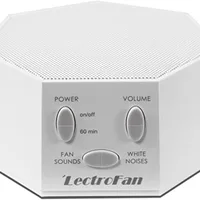
LectroFan Classic White Noise Machine (Global Power Edition)
Closes the somatic/nervous-system thread — supports down-regulating the body during attachment-anxiety spikes and improving sleep recovery after relational ruptures.
As an Amazon Associate, we earn from qualifying purchases — at no extra cost to you.

Why Hyper-Independence Is Secretly Holding You Back
Why the Best Support Doesn't Look Like Support
The Question Worth Sitting With
Here's the uncomfortable version of what Bowlby's research actually implies.
The love you express, the love you receive, the love you dismiss, the love you pursue at 2 AM — none of it is random. All of it is organized around a template that was constructed before you had language, let alone the ability to choose. Mary Ainsworth's genius was showing that the template was visible in a one-year-old's body: the way an infant either ran toward or stayed frozen when its caregiver walked back into the room said everything about what that infant expected from the people it needed most.
You're not a one-year-old anymore. But the template is still running.
That is not a reason to despair. It's a reason to look.
Designing your evolution — genuinely designing it, not just hoping for it — means eventually examining the operating system through which you're filtering every significant relationship in your life. Because the person who never examines their attachment template isn't freely choosing how they love. They're executing the only love algorithm their internal working model has ever known.
But that model is working. Not fixed. Not permanent. Not you.
It was the map that was drawn for you when you were too young to draw your own.
Now you're old enough.
So here's the question worth taking seriously: what does your current pattern tell you about the model you're working from — and is it still the map you'd choose today?
Was this helpful?