Productivity· 10 min read
Decision Fatigue: Why Your Morning Wrecks Deep Work
A 2011 study of 1,100 parole rulings shows how morning decisions drain the same cognitive resource your deep work needs. Here's how to protect it.
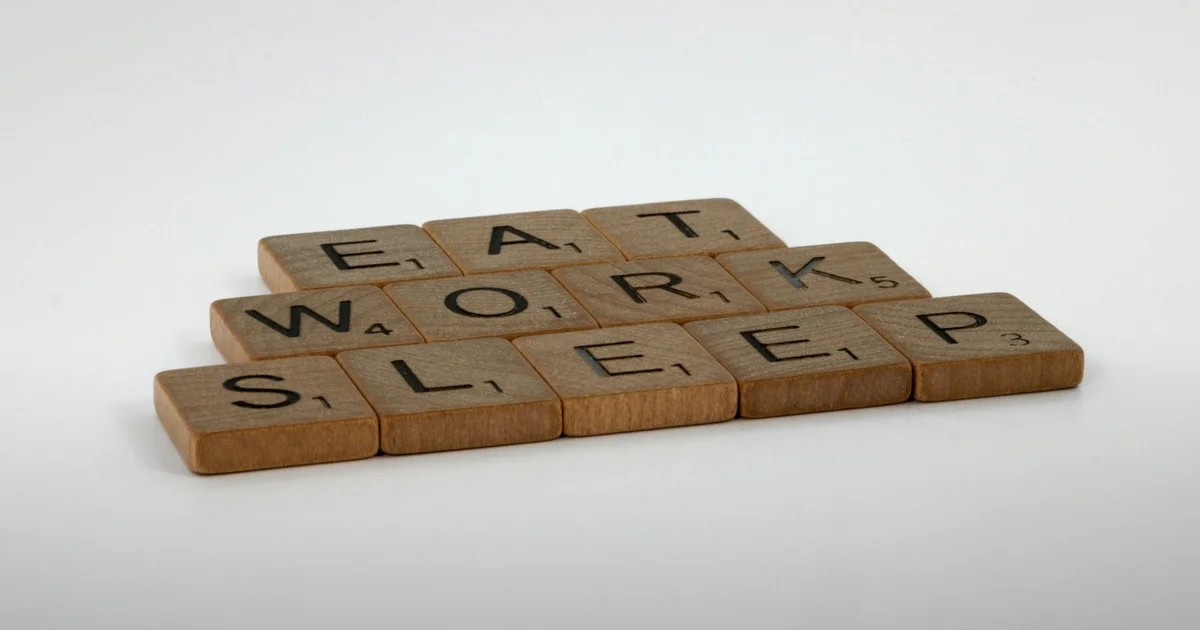
Decision Fatigue: Why Your Morning Wrecks Deep Work

Something strange happens to a lot of people around 10am.
Not tiredness — you've had your coffee. Not distraction — the phone's technically face-down. Something closer to fog. The kind that settles in right when you've finally carved out the time to do the one thing that actually matters: the writing, the problem you've been circling for three days, the thinking that can't be done in five-minute windows between meetings.
You stare at the screen. You reopen the email you just closed. You rearrange the tabs.
Here's what most people can't diagnose on their own: the problem has a name — decision fatigue — and it didn't start when you sat down to work. It started the moment you got up.
The Parole Board Study That Should Alarm You
In 2011, three researchers — Shai Danziger, Jonathan Levav, and Liora Avnaim-Pesso — published a study in the Proceedings of the National Academy of Sciences that had nothing, on the surface, to do with your morning routine.
They analyzed 1,112 parole board rulings made by Israeli judges across an ordinary workday. They tracked the timing of each ruling against the outcome. And what they found was genuinely unsettling.
At the start of each session, judges approved parole for roughly 65 percent of the cases brought before them. Generous, considered decisions. As the session wore on, that figure dropped steadily — steadily enough to be measurable, repeatable, and statistically significant across hundreds of cases. By the end of a session, just before a scheduled break, the approval rate had fallen to nearly zero.
After lunch? Back to 65 percent within the first few rulings.
The researchers ruled out case complexity and prisoner characteristics as explanatory factors. Their leading explanation was something far more uncomfortable: the act of deciding, repeatedly, depletes a finite cognitive resource. The specific difficulty or importance of each decision doesn't particularly matter. What matters is the cumulative volume of choices made, one after the next, without a genuine reset.
This phenomenon — decision fatigue — doesn't just afflict Israeli judges. It afflicts anyone who has ever arrived at their most important work of the day already running on empty. Including you. Probably this morning.
What Decision Fatigue Actually Means (And Why You've Been Misdiagnosing It)
Decision fatigue is the measurable decline in decision quality that follows repeated acts of choosing — regardless of how significant each individual choice feels. It is distinct from physical tiredness, emotional exhaustion, or motivational slump.
Here's where most people get the concept wrong, which is why most people's solutions don't work.
Decision fatigue is not the same as tiredness. You can be genuinely well-rested — eight hours, no alarm, no obligation until mid-morning — and still walk into your hardest cognitive work already depleted. You can feel objectively alert and still find your best thinking mysteriously unavailable, like reaching for something you're certain you put down somewhere nearby.
The distinction matters enormously, because the wrong diagnosis leads to the wrong fix.
Roy Baumeister and Kathleen Vohs, psychologists who have studied self-regulatory depletion in controlled laboratory settings, found that the phenomenon isn't simply fatigue in the everyday sense. It's specifically the cumulative cost of making choices — any choices — that depletes the cognitive resource involved in judgment, planning, and complex problem-solving. Rest helps tiredness. Caffeine helps alertness. Neither one replenishes decision-making capacity the way a genuine break from choosing does.
The implications are uncomfortable, because a typical morning is saturated with choices.
What to wear. Whether to shower before or after the gym. Which emails are actually urgent and which can wait. What to eat — and then, standing in front of the fridge with three reasonable options, which of those to actually prepare. Whether to text back that message. Which item to tackle first. Whether today's list needs revising before you begin. Whether that revision itself should wait.
None of these decisions feel expensive. That's precisely the trap.

Each one feels trivial. And in isolation, each one probably is. But the Danziger study suggests they accumulate in exactly the same way they accumulated for those judges: the depletion is cumulative, not episodic. Each small choice draws down the same account that your best work will later need to draw from. By the time you sit down to do something that genuinely requires your judgment, the balance is already lower than it should be — not because you've been lazy or unfocused, but because you've been deciding.
The "Productive Morning" Trap That's Costing You Your Afternoons
There's a specific version of this problem worth naming, because it's dressed up as a virtue.
Some people deliberately front-load their mornings with logistics, and it feels productive. You clear the inbox before anyone else is online. You sort the errands before the day picks up speed. You respond to every message so the afternoon is "free" to work. The dashboard says zero. The to-do list is shorter. You've accomplished things before 9am.
And then the afternoon arrives. The deep work doesn't.
The Danziger research explains the mechanism. Every act of decision-making you performed during your logistical blitz consumed the same finite resource that your afternoon was supposed to use. The work doesn't fail because you ran out of time. It fails because you ran out of cognitive budget — and you spent it early, on things that didn't need your best thinking, because they were there and they were easy.

Sony WH-1000XM5 Noise Cancelling Headphones
The 'productive morning' logistics blitz consumes the same cognitive budget your afternoon needs — a physical barrier that silences the environment protects the deep-work zone from the noise that pulls you back into s…
As an Amazon Associate, we earn from qualifying purchases — at no extra cost to you.
Cal Newport's Deep Work argues that genuinely demanding cognitive work requires not just time, but a particular quality of focused attention that can't be produced on demand and can't be recovered simply by clearing your schedule. What Danziger's research adds is the specific mechanism for why that quality of attention is so often already compromised before the work begins — not from prior hard work, but from prior small decisions. The compound effect is quiet, invisible, and devastating to creative and intellectual output.
The morning logistics trap is particularly vicious because it disguises itself as conscientiousness. You're not wasting time. You're being responsible. You're handling things. And all the while, you're quietly spending the cognitive fuel your best work actually requires.
Why "Just Push Through" Doesn't Fix It
The instinctive response to cognitive fog — try harder, focus more, will yourself through it — runs directly into the mechanism Danziger's team identified.
If decision fatigue were simply low motivation or low energy, forced effort might compensate. A deadline helps with motivation. Coffee helps with alertness. But the research on decision fatigue suggests the depletion operates at a different level: the capacity for nuanced judgment and complex cognitive work is temporarily diminished, not just the willingness to apply it.
This is why the parole judges didn't start approving worse cases as the morning wore on. They stopped approving cases. The default when cognitive resources are depleted, the research found, is to default to the lowest-effort, most conservative option available — which for a judge means denying parole. For you, it means answering the easy email instead of the one that requires real thought. Doing the task that asks least of you. Choosing the option that doesn't require choosing at all.
Willpower applied to a depleted system produces a predictable result. Prevention — changing the structure of the morning before the depletion occurs — is the only intervention that actually works.
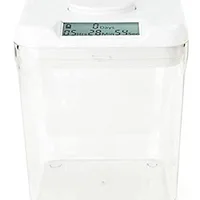
Kitchen Safe kSafe Time Locking Container (Medium)
Willpower applied to a depleted system fails; only structural prevention works. A timed lock box removes the phone — the single biggest decision-engine — before the first deep-work block, so the choice is made once in…
As an Amazon Associate, we earn from qualifying purchases — at no extra cost to you.
How to Protect Your Morning Cognitive Capacity: The Research-Based Approach
The logic of decision fatigue points to a single practical lever: reduce the number of decisions you have to make before your most demanding work, not by eliminating decisions from your life entirely, but by moving them to a different time window.
Here's how the research translates into practice:
- Pre-decide the night before — Choose tomorrow's outfit, plan breakfast, and write down your single most important morning task before you sleep.
- Protect your first work block from logistics — No email, no planning, no inbox for the first 60–90 minutes.
- Build a fixed morning sequence — Remove meta-decisions about how the morning runs before it begins.
- Batch logistics into a post-deep-work window — Handle small decisions after your best thinking, not before it.
- Audit your mornings honestly — For one week, write down every decision made in the first two hours of your day.
| Morning approach | Decisions before deep work | Cognitive budget at 10am |
|---|---|---|
| Default (email first, plan as you go) | 15–25 micro-decisions | Significantly depleted |
| Pre-decided (logistics moved to prior evening) | 3–5 micro-decisions | Near full |
| Fixed routine (same sequence daily) | 1–2 micro-decisions | Protected |
Pre-decide the night before. This is the most direct application of the Danziger finding. Decide tomorrow's outfit tonight. Choose tomorrow's meals — or at minimum, breakfast — before you sleep. Write down the single most important cognitive task for the morning and put it somewhere you'll see it when you wake up. Every decision made the night before is a decision that won't draw on tomorrow's cognitive account.
Protect your first work block from logistics. Email is a decision engine. Every message in your inbox is a small choice: respond, defer, delete, forward, flag, follow up. Opening your inbox before your deep work block has started is the rough cognitive equivalent of those judges beginning their rulings session already mid-morning rather than fresh. Your inbox doesn't disappear if you ignore it for 90 minutes. The quality of your thinking very much does.
Build a morning environment that removes decisions entirely. Barack Obama famously wore essentially the same style of clothes throughout his presidency — telling Vanity Fair in 2012, "I'm trying to pare down decisions. I don't want to make decisions about what I'm eating or wearing." Steve Jobs made the black turtleneck and jeans a uniform. The cognitive argument behind this practice isn't minimalism as an aesthetic — it's not spending decision-making capacity on choices that don't compound. A fixed, largely unchanging morning sequence — same time, same order, same first task — eliminates the meta-decisions about how the morning should run before the morning has even started.

Philips SmartSleep Wake-Up Light HF3520
A fixed, unchanging morning sequence eliminates meta-decisions about how the morning runs. A sunrise wake-up light removes the phone-as-alarm ritual entirely, so waking doesn't start the decision cascade before deep w…
As an Amazon Associate, we earn from qualifying purchases — at no extra cost to you.
Batch your logistics into a designated window. Rather than handling small decisions as they surface throughout the morning, designate a specific block for them — ideally after your first deep work session. Email review, planning, scheduling, responding to non-urgent messages: these all draw on the same resource your best work uses. Scheduling them second rather than first isn't procrastination. It's resource allocation. Research on surgical scheduling has found a similar pattern in a different domain: an analysis of a Swedish orthopaedic clinic found surgeons were significantly more likely to recommend a demanding operation earlier in a shift and right after a break than late in a run of back-to-back appointments — evidence that complex judgment calls fare better when made before the cognitive account has been drawn down (Persson, Health Economics, 2019).
Observe your mornings honestly for a week. Most people, asked to estimate how many small decisions they make before sitting down to their most important work, significantly underestimate the number. For seven days, note each decision made in the first two hours after waking — no judgment, just observation. The list tends to be longer and more varied than expected, and seeing it written down changes how seriously you take the morning window's protection.

Clever Fox Habit Tracker Journal / Calendar
'Audit your mornings honestly for a week' — a habit tracker makes the invisible decision count visible and reinforces the fixed daily sequence the research recommends.
As an Amazon Associate, we earn from qualifying purchases — at no extra cost to you.
How to Enter a Flow State: The Science of Peak Performance
The Structural Implication Most Productivity Writing Misses
Here's the part of the Danziger study that rarely makes it into the productivity conversation.
The research wasn't about the judges failing at their jobs or lacking professional integrity. They were experienced, well-intentioned professionals operating entirely normally given the structural conditions of their morning. The depletion happened to them regardless of how much they cared about making good decisions. It was structural, not personal.
Which means the solution isn't to care more or try harder. It's to change the structure.
Jim Rohn's well-known "law of sowing and reaping" captures the same idea: what you plant is what you eventually harvest, and there's no renegotiating that after the fact. The same logic applies here. Once the cognitive account has been drawn down through a morning of small decisions, the work of that afternoon is already planted. What you do before 10am is, to a greater degree than most people are comfortable acknowledging, planting the quality of thinking available for the rest of the day.
Designing your morning to protect cognitive capacity isn't a productivity hack in the conventional sense. It's an acknowledgment that the resource you're drawing on for your most important work is real, finite, and quietly consumed by things that never announce themselves as expensive — the outfit choice, the planning the plan, the inbox cleared before the work has started.
Deep Work — Cal Newport (Paperback)
The article explicitly cites Newport's Deep Work as the framework for why demanding cognitive work needs protected attention — the natural companion read for the structural argument.
As an Amazon Associate, we earn from qualifying purchases — at no extra cost to you.
Why Willpower Never Breaks a Bad Habit (And What Does)
How to Start Today: One Change Before Tomorrow
You don't need a morning overhaul. One structural change, applied consistently for a week, is enough to test the Danziger logic on yourself.
Tonight, before you sleep, write down the single most important cognitive task for tomorrow morning. Not a list — one task. The piece of work that genuinely requires your best thinking. Place it somewhere you'll see it when you wake up.
Tomorrow, before you open email or social media or the news, sit down and start that task first. Give it the first 60 to 90 minutes, before any logistics, before any inbox, before any planning.
Notice what the first 20 minutes feel like compared to a morning where you handled the small things first.
Why Your Brain's Most Powerful Performance Tool Is Sleep

The difference isn't motivational. It's not about discipline or willpower or being a morning person. It's structural. The parole judges who started their sessions fresh approved 65 percent of cases. The judges who continued straight from prior rulings approved nearly none. Same judges. Same cases. Different cognitive starting point.
You have something the judges in Danziger's study didn't have: the data. You know the mechanism. You know what your morning decisions are doing before you sit down to think.
That's what it means to design your evolution — not sweeping self-reinvention, just better structure applied to a resource most people don't know they're spending.
What's one decision you could move from your morning to the night before — and what would you do with that recovered cognitive space? Share your answer in the comments.
→ Why Your Day Runs on Autopilot — The Real Science
→ You Know the AI Is Wrong. You'll Do What It Says Anyway.
Related read: Self-Efficacy: The Belief That Predicts Follow-Through
Related read: Parkinson's Law: The Reason Every Task Takes Too Long
Related read: Why Morning Habits Stick Better: The Decision Science
Was this helpful?