Mindset· 10 min read
Self-Compassion vs. Self-Criticism: What Research Found
Kristin Neff's research shows self-compassion outperforms self-esteem for resilience — without making you complacent. The 3-part framework, explained.

Self-Compassion vs. Self-Criticism: What the Research Actually Found
The script runs before you've even fully processed what happened.
You missed the target. You said something you immediately regretted. You made a call in front of other people and it went badly. And within seconds — before you've had time to breathe — the voice starts. How could you do that? Again? What is wrong with you? You should know better by now.
Most people interpret that inner critic as integrity — and assume that anything gentler, like self-compassion, is just rationalization. Proof of standards demands harsh self-criticism. The thinking goes: people who go easy on themselves don't grow. The harsher the internal punishment, the more seriously you're taking the mistake. Suffering proportional to the error means you care enough to not repeat it.
For about twenty years, a psychologist named Kristin Neff ran controlled studies designed to test whether that intuition holds.
It doesn't.

The Assumption Neff Set Out to Test
In 2003, Neff published a paper in the journal Self and Identity that did something unusual: it turned self-compassion from a vague therapeutic concept into a measurable scientific construct. She developed and validated the Self-Compassion Scale — a psychometric instrument — and then used it across dozens of studies to examine the relationship between self-compassion and things that actually matter: resilience after setbacks, anxiety, depression, how long recovery takes, and crucially, motivation to improve after failure.
The cultural context she was working against was significant. Self-compassion sounds, to many ears, like self-indulgence. Like making excuses. Like the kind of thing someone says to feel better about not trying hard enough. It carries an almost Victorian undertone — that discomfort is the price of growth, and removing discomfort removes the engine that drives it.
Neff's original 2003 paper was designed to test that specifically.
The results were consistent across studies and across researchers who had no stake in the outcome: self-compassion predicted lower anxiety and depression, higher resilience after genuine failures, and faster psychological recovery — more reliably than self-esteem did. And it did all of this without self-esteem's known weakness: the tendency to collapse precisely when you most need it to hold.
What Self-Compassion Actually Is (Three Specific Parts)
Before you can evaluate the research, you need Neff's precise definition — because "being kind to yourself" is vague enough to mean almost anything, and the research concerns something specific and measurable.
Neff identified three distinct components that together constitute self-compassion, and all three are necessary. They're not interchangeable.
Self-kindness is the first. It means responding to your own pain, failure, or inadequacy with the same warmth and understanding you'd extend to a good friend going through the identical situation — rather than with harsh judgment or contempt. This isn't about dismissing what went wrong or pretending it didn't happen. It's about the quality of the response to what did happen.
Common humanity is the second — and it's the component most people overlook, or actively resist. The insight is structurally simple but genuinely difficult to internalize: struggle, failure, and imperfection are not evidence of your unique personal deficiency. They are part of the shared human experience, experienced by essentially everyone, at roughly equivalent frequency. The particular feeling that follows a significant mistake — I'm probably the only one who keeps making this kind of error — is, almost universally, factually wrong. Recognizing this changes the emotional weight of what you're carrying. Isolation is its own cost, separate from the mistake itself.
Mindfulness is the third. This means holding painful thoughts and feelings in balanced, steady awareness — seeing them clearly without either suppressing them into a false performance of being fine, or being completely swept away and spiraling. Not positivity. Not rumination. A kind of honest, stable acknowledgment: this happened, it's genuinely hard, and I'm going to figure out what to do next.
All three components together form what Neff's measurement scale has found to be substantially more predictive of resilience than high self-esteem across dozens of independent studies.
The Self-Esteem Trap
If self-compassion outperforms self-esteem as a predictor of resilience, why hasn't it replaced the decades of personal development advice focused on thinking better of ourselves?
Because self-esteem is seductive. It feels like it should work. And in some contexts — particularly when things are going well — it does. High self-regard isn't inherently a problem. The problem is what self-esteem typically requires to stay high, and what happens to it when things go wrong.
| Self-Compassion | Self-Esteem | |
|---|---|---|
| Works after failure | Yes | Typically no |
| Requires success to function | No | Often yes |
| Encourages honest self-reflection | Yes | Can trigger defensiveness |
| Risk of collapse under pressure | Low | Higher |
| Predicts long-term resilience | More reliably | Less reliably |
Most people's self-esteem is contingent. It rises when they succeed and falls when they fail. Which means it's most fragile at the exact moment you need psychological stability most: after a genuine, significant mistake, when the evidence for thinking well of yourself is thinnest. The very circumstance that most demands resilience is the one that most erodes the resource you've been told to rely on.
See also: Why contingent self-worth makes "good enough" feel elusive
Neff's research found that self-compassion sidesteps this structural problem entirely. It doesn't require a favorable evaluation of yourself to function. It requires only a kind and honest response to the difficulty itself — which is available whether you succeeded or failed, whether the outcome was good or terrible. The result is a source of psychological stability that actually holds up at the moments self-esteem tends to break.
There's a second problem with high self-esteem that Neff's work addresses directly: defensiveness. When self-esteem is threatened — as it is every time you make a significant public mistake — the psychological pressure to protect it can override honest assessment. You defend the decision. You minimize the error. You construct explanations that locate the cause anywhere but yourself. This is predictable and deeply human, but it's also the mechanism that makes learning from failure harder, not easier.
Self-compassion, which doesn't require maintaining a favorable self-evaluation, creates no such defensive pressure. Neff's research found that self-compassionate people were more willing to acknowledge their mistakes honestly, not less — because there was no self-image at stake in the outcome of that acknowledgment.

Liforme Original Yoga Mat
The self-esteem trap / defensiveness section — a grounding mindfulness surface for the balanced-awareness component (component three) of Neff's model.
As an Amazon Associate, we earn from qualifying purchases — at no extra cost to you.
The Motivation Myth
Here's the objection that comes up every time this research is mentioned in a room full of high-achievers. It's worth addressing directly, because it's the belief that keeps most people from testing what the data suggests.
Won't being kind to myself after a mistake make me complacent?
The logic seems airtight: remove the punishment, remove the deterrent. If the discomfort of self-criticism is what prevents repetition, then feeling better should increase the probability of repeating the mistake. It's the same logic behind "if you're having too much fun you're probably not working hard enough."
Neff's studies directly examined this. Across multiple research designs, self-compassionate people took equal or greater personal responsibility for their mistakes compared to self-critical people. They showed equal or higher motivation to improve. They were not more likely to repeat the failure. They simply pursued improvement without the enormous cognitive and emotional overhead of the shame spiral — which, as it turns out, is not a motivational state. It's a paralytic one.
Here's why. Harsh self-criticism — you idiot, you always do this, you never learn — doesn't generate useful information about what to change. It generates a defensive psychological reaction, then rumination, then shame. And shame is a state more concerned with how you appear than with what you actually need to do differently. That's a substantial amount of mental bandwidth consumed in a way that contributes nothing to the ostensible goal: not repeating the mistake.
Self-compassion doesn't skip the acknowledgment. It skips the spiral. The difference isn't whether you take the mistake seriously. It's what you do with your attention and energy in the hours and days after it happens.
See also: The hidden cost of perfectionism — and how to let go
The Specific Script That Runs After a Failure
Neff's three-component model isn't just explanatory. It translates directly into something you can test the next time the inner monologue starts.
It doesn't require a retreat. It doesn't require a meditation practice you don't currently have. It takes about two minutes, can be done anywhere, and the evidence for it spans two decades of independent peer-reviewed research.
First: name what happened without amplifying it. The tendency after a failure is to either suppress the feeling ("I'm fine, move on") or to catastrophize ("this is a disaster, this is who I am, this will always happen"). Neither produces useful information. The alternative is honest, simple acknowledgment: This went wrong. I feel genuinely bad about it. That's an appropriate response to what happened. Nothing more and nothing less.
Second: invoke the common humanity piece deliberately. The specific thought is something like: Other people go through this. This kind of mistake is part of the shared experience of being human, not evidence of a specific defect in me alone. It sounds simple. It lands differently in practice, particularly for people who have built an identity around not making the kinds of mistakes they just made. The isolation that follows significant failure is often the most painful part — and it's almost always factually unfounded.
Third: ask what you'd actually say to a close friend. Not what you'd want to say to make them feel better. What you would genuinely say if someone you cared about described exactly what happened and told you how they were feeling about it. The instruction is to then say that to yourself. Exactly that, with exactly that tone.

What Neff's research found is that this isn't just emotional first aid. It changes the information that's available to you after a failure. When you're not defending against shame, you can actually examine what happened — which is the only route to not repeating it. The self-criticism spiral doesn't produce that clarity. It produces a compulsive loop that revisits the feeling without examining the facts.
How to Start Today
You don't need to restructure anything. You need one concrete experiment, and then to observe what actually happens.
1. Track the inner script for one week. Before you try to change anything, notice how you talk to yourself after small, everyday mistakes — not catastrophic failures, just the daily friction of being a person who makes errors. Write down the actual language. Most people are surprised by both the consistency of the tone and how harsh the specific words are. Awareness before change.
2. Read Neff's own account of the research. Her book Self-Compassion: The Proven Power of Being Kind to Yourself is unusually readable for academic-adjacent material. She works through the specific objections — the complacency concern, the self-pity confusion, the cultural discomfort with the concept — with the same rigor she brings to the research. It's the most direct translation of the science into practice that exists.
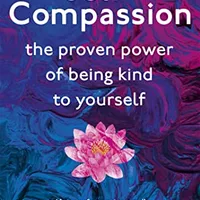
Self-Compassion: The Proven Power of Being Kind to Yourself — Kristin Neff
The 'Read Neff's own account of the research' step — the exact book referenced in the article body. Direct thematic match.
As an Amazon Associate, we earn from qualifying purchases — at no extra cost to you.
3. Use a dedicated journal with structure. Not a feelings diary. A structured practice: write what happened, write what you'd tell a close friend in the same situation, write one honest thing you can do differently. The structure matters because it routes you through all three components instead of just the first. A blank page tends to become rumination. A structured prompt tends to become useful.

Clever Fox Habit Tracker Journal (Habit Calendar Circle, 24-Month)
The 'Use a dedicated journal with structure' step — a structured practice tool that routes the writer through all three of Neff's components rather than open-ended rumination.
As an Amazon Associate, we earn from qualifying purchases — at no extra cost to you.
4. Try Tara Brach's RAIN method. Brach, a clinical psychologist and meditation teacher whose work has informed many practitioners of self-compassion, adapted and popularized a four-step practice — Recognize, Allow, Investigate, Nurture — building on an acronym originally coined by meditation teacher Michele McDonald. Brach's version operationalizes Neff's components in a slightly different sequence and is particularly useful for people who find the abstract framing difficult to work with. Her book Radical Acceptance is the clearest practical application I've encountered for people who aren't interested in a formal meditation practice but want the functional equivalent.
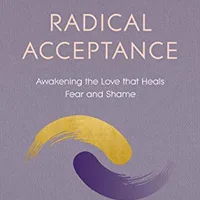
Radical Acceptance — Tara Brach
The 'Try Tara Brach's RAIN method' step — the exact book referenced. Operationalizes Neff's components for readers who want a practical, non-formal-meditation route.
As an Amazon Associate, we earn from qualifying purchases — at no extra cost to you.
5. Run a deliberate 48-hour experiment. After the next meaningful mistake, don't do the self-criticism spiral. Not because you're letting yourself off the hook — acknowledge what happened fully and honestly. But respond to yourself the way you would respond to someone you genuinely care about. Note what's different about your state at the 24-hour mark. Note what's different at 48 hours. The data from Neff's research suggests you'll find yourself more capable of examining what actually went wrong, not less.
See also: A daily writing habit for clearer thinking

Philips SmartSleep Wake-Up Light HF3520
The 'deliberate 48-hour experiment' / daily-reflection close — a gentle morning routine anchor supporting the calmer nervous-system state self-compassion cultivates. High-ticket anchor.
As an Amazon Associate, we earn from qualifying purchases — at no extra cost to you.
The Thing That Actually Shifts
Jim Rohn used to say you can't change your destination overnight, but you can change your direction. Self-compassion isn't about the destination. It's about the quality of attention you bring to the road while you're traveling it.
The research is clear enough at this point: self-criticism doesn't deliver what it promises. It consumes resources you need for actual improvement, produces a defensive posture that makes honest learning harder, and is most likely to fail you at the moments you need psychological stability most — which is also precisely when growth is most available to you, because failure contains information that success tends to hide.

Being kind to yourself is not the soft option. According to two decades of independent research using validated instruments, it's the more effective one. That distinction matters because most people who would benefit from this research are specifically the people most convinced they're supposed to be harder on themselves — not easier.
Designing your evolution means making deliberate choices not just about what you pursue, but about how you treat yourself while pursuing it. The inner monologue running in the background of all your effort isn't neutral. It either costs you something, or it doesn't.
What's the thing you've been most relentlessly self-critical about in the past month? And if a close friend told you exactly the same story about themselves — with the same details, the same stakes, the same outcome — what would you actually say to them?
That's the gap the research is pointing at.
→ Why Rejection Hurts Like Physical Pain — Neuroscience
Was this helpful?