Mindset· 10 min read
Why You Stop Seeing Warning Signs: Normalization of Deviance
Repeated deviations become invisible. Vaughan's Challenger research explains normalization of deviance — and how to catch it in your daily life.

Why You Stop Seeing the Warning Signs (The Science of Normalization of Deviance)
The check engine light had been on for six weeks.
I knew what it probably meant — or told myself I did. Just that finicky sensor, the one the mechanic had mentioned could throw false readings. The last time it came on, nothing was wrong. The time before that, same story. So I kept driving. Commute after commute, the amber glow burned steadily in the corner of my dashboard. And then, without any specific moment of decision, I stopped seeing it altogether.
The engine seized on a Tuesday afternoon, forty minutes from home. The problem wasn't the sensor.

That sequence — deviation tolerated, safety confirmed, alarm quieted, catastrophe arrived — is what sociologist Diane Vaughan spent years trying to explain. She called it normalization of deviance: the gradual process by which repeated exceptions to a standard, each one tolerated without visible consequence, become absorbed into what a person or organization treats as acceptable. The original rule doesn't disappear on paper; it simply stops existing in practice. And while the phrase might sound like something invented for engineering post-mortems, it's actually one of the most quietly destructive patterns in human decision-making. It shows up in the way you sleep, the way you work, the way you spend money, and anywhere else you've been bending a rule "just this once" for longer than you can accurately remember.
What NASA Knew — and Why It Didn't Stop Them
Vaughan is a sociologist, not an engineer. She spent years reading internal NASA documents, interview records, and pre-launch decision logs to understand how an organization staffed with extraordinarily careful people made the choice to launch the Challenger shuttle on January 28, 1986 — knowing full well that the O-rings, the rubber seals on the solid rocket boosters, had shown erosion on previous missions.
Her The Challenger Launch Decision (University of Chicago Press, 1996) landed quietly in academic circles but deserves a far wider audience. Because what Vaughan found wasn't negligence. It wasn't arrogance, or pressure from above, or a single rogue decision. It was something more disturbing and more human than any of those things.
The O-rings had shown erosion or damage on roughly half of the twenty-four shuttle launches that preceded Challenger — including eight of the nine flights in 1985 alone. Nearly half. Each time, the shuttle returned safely. And each time it did, a decision had to be made: is this acceptable, or isn't it? Each time the shuttle came back intact, the O-ring erosion — originally classified as outside the bounds of acceptable risk — was quietly redefined as an acceptable deviation, because the available evidence pointed firmly in one direction: anomaly occurred, flight succeeded, therefore anomaly does not preclude flight.
No single step in that chain looked reckless. Each decision was made by real engineers consulting real data. But the standard itself was moving. What had once been a clear violation was being absorbed, point by point, into the category of normal operating conditions. By the time the Challenger launch decision arrived, flying with known O-ring concerns wasn't a departure from accepted procedure.
It was the accepted procedure.
The Challenger disintegrated 73 seconds after liftoff. All seven crew members were killed. The NASA Rogers Commission Report that followed documented in painstaking detail how an organization of careful, qualified people had collectively stopped treating a known hazard as a hazard at all.
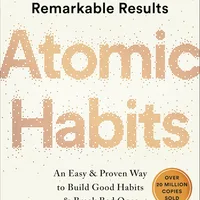
Atomic Habits — James Clear (Paperback)
Follows the NASA/Challenger section, where the mechanism is introduced: standards move one unchallenged exception at a time. Clear's core argument — that outcomes are the lagging measure of repeated small choices — is…
As an Amazon Associate, we earn from qualifying purchases — at no extra cost to you.
The Mechanism: How Safe Becomes Normal
Here's what makes Vaughan's research genuinely uncomfortable: this doesn't require stupidity. It doesn't require bad faith or negligence or even unusual pressure. It happens to careful, principled people operating in reasonable conditions.
The mechanism is almost embarrassingly simple. When you tolerate a deviation from a standard and nothing bad happens, you receive a very clear, very immediate signal: this was okay. Not a theoretical signal — an actual one. The shuttle flew. You made it through the week. The headache went away on its own. The performance review came back fine. Whatever you'd been quietly worried about didn't materialize.
The human brain, which is largely in the business of learning from recent feedback, takes note. If this exception didn't cause a problem last time, the cognitive effort of treating it as an exception next time starts to feel unjustified. The internal threshold shifts, imperceptibly, toward the behavior you're already doing.
This is meaningfully different from confirmation bias, which is about selectively interpreting evidence to support what you already believe. Normalization of deviance is something else: the standard itself shifts through repeated tolerated exceptions, until the original threshold doesn't exist anymore — not in writing, maybe, but not in practice either.
Jim Rohn had a phrase I keep returning to: "You can't change your destination overnight, but you can change your direction overnight." Normalization of deviance is what happens when your direction changes slowly enough that you never notice the destination has changed too.
Where This Shows Up in Your Daily Life
You might be thinking: I'm not building a space shuttle. Why does this apply to me?
It applies because the mechanism doesn't care about the domain. It only cares about the feedback loop.
Sleep. You started running on six hours of sleep because of a particularly brutal deadline. The deadline passed. But you survived it, mostly — you were tired, but nothing collapsed. So six hours became the working assumption. Then five and a half. You haven't felt genuinely rested on a Monday morning in longer than you can accurately name, but nothing dramatic has happened. That's the deviation that's been normalized.
Work habits. You started checking email first thing in the morning during a crisis week, when responsiveness was actually critical. The crisis resolved. But you'd been responsive during it, and that felt good, so you kept the behavior. Now every morning begins reactive instead of intentional — your best thinking hours spent triaging other people's priorities — and you can't quite remember deciding to change that.
Fitness. The gym became "just this week" when the travel schedule got heavy. Then just this month. Then the membership renewal came up and you paid it anyway, because canceling felt like admitting something. The actual visits have become so infrequent they're exceptional. But the exception has become the rule, and the rule has become invisible.
In each case, the move from standard to deviation to new normal happens without a moment you can point to. That's precisely what makes it so difficult to catch. You didn't choose to lower your standard. You just repeatedly chose not to enforce it. And eventually, the gap between where the standard lives in your head and where it lives in your actual life becomes permanent — and feels like the way things have always been.

Philips SmartSleep Wake-Up Light HF3520
Sits directly after the 'Where This Shows Up in Your Daily Life' section, whose first named example is sleep drift — six hours became five and a half, and nothing visibly collapsed. A sunrise alarm attacks the wake ha…
As an Amazon Associate, we earn from qualifying purchases — at no extra cost to you.
The Difference Between Lucky and Safe
This is where Vaughan's research cuts deepest, and it's the insight I find hardest to sit with.
The thing that accelerates normalization of deviance isn't bad luck. It's good luck. Every time you get away with a deviation, the signal you receive is that the deviation was acceptable — not that you got away with something. Those two interpretations produce radically different behavior in the future. One keeps you appropriately cautious. The other erodes your caution, precisely because the absence of consequence has the structure of evidence.
Chris Clearfield and András Tilcsik explored this fingerprint across industries in Meltdown — financial systems, hospitals, aviation, nuclear facilities — and found the same pattern everywhere: a period of tolerated exceptions, a growing false sense of safety, and then a failure that felt sudden to everyone involved but had been visible in the data for years, if anyone had been treating it as signal rather than noise.
T. Harv Eker has a blunter way of putting this: "How you do anything is how you do everything." The standards you quietly bend in one area are a more accurate report of your actual operating values than the ones you'd describe out loud. And those actual values — not the aspirational ones — are what compound over time.
Near misses don't raise your alertness level. They lower it. The more times you've driven on a tire you know is worn down and arrived safely, the harder it becomes to feel genuine urgency about replacing it. The growing stack of safe arrivals looks like evidence that you were right not to worry — when it's actually evidence of something much less reassuring.

Amazfit GTR 4 Smart Watch (46mm, Black)
Placed after 'The Difference Between Lucky and Safe' — the article's sharpest claim is that near-misses lower alertness because 'nothing bad happened' feels like evidence. Objective sleep/HR/stress logging is the coun…
As an Amazon Associate, we earn from qualifying purchases — at no extra cost to you.
How to Actually Catch Normalization of Deviance Before It Catches You
The cruel thing about this pattern is that by the time it's obvious, it's already cost you something. The entire mechanism depends on being invisible in real time — that's what makes it work.
Catching it requires a deliberate practice of looking backward rather than simply forward. Not constantly, but on a schedule. Here's what that looks like in practice:
Write down your actual standards — not your aspirational ones. The real versions. The ones you'd enforce if someone you deeply respected was watching. Then look at what you actually did last week, for each of those things. The gap between the two is your current deviance map. It's often uncomfortable to read. That discomfort is information, not failure.
Treat "nothing bad happened" as suspicious, not reassuring. This is the most counterintuitive part of Vaughan's work, and the hardest to internalize. When you've been getting away with something consistently, that's exactly when the research says you should be most alert — not least. The absence of consequence is the condition under which standards erode fastest. If you've been skipping recovery days and haven't gotten injured, you haven't proved it's fine. You've entered the most dangerous segment of the curve.
Set a recurring review for your non-negotiables. Not a reminder to do them — a review of whether the definition of "non-negotiable" has quietly shifted. Monthly works. The question isn't "Did I do it?" It's "Have I started treating the exception as normal? And if so, when did that start?"
Find someone who knew your old standard. This is the most underrated tool in this whole conversation. The people around you every day adapt to your new normal just as gradually as you do — they can't see the drift either, because they're inside it too. Find someone who hasn't seen you in six months and ask them honestly what's changed. Their answer will be the most accurate measurement of drift available to you, because they're comparing you to a snapshot that predates the new normal.
Related read: The cognitive biases secretly running your life
How to Start Today
Here's an audit that takes less than ten minutes and will probably make you slightly uncomfortable in a productive way.
Step 1. Pick three standards you set for yourself at some point in the past year. Sleep hours. Exercise frequency. Time without a screen. A budget category. Whatever actually matters to you. Write down the original version — not what you do now.
Step 2. Write down what you actually did last week for each of those three things. Be specific.
Step 3. Where there's a gap, ask: When did the first exception happen? What was the reason? Did that reason ever go away — or did the exception just stay while the reason left?
Step 4. For each deviation that's been normalized, make a deliberate decision — not a default. You can restore the original standard. You can consciously update it to a new one that better fits your actual life. Either is legitimate. What isn't legitimate, in terms of designing your life on purpose, is letting the standard change without noticing.
Step 5. Get a physical notebook — actual paper — and write the current version of each standard at the top of a dedicated page. Then log exceptions explicitly: date, what you deviated from, reason.

Clever Fox Habit Calendar Circle (24-Month)
The single most literal placement in the article. Step 5 says: 'Get a physical notebook — actual paper — and write the current version of each standard at the top of a dedicated page. Then log exceptions explicitly: d…
As an Amazon Associate, we earn from qualifying purchases — at no extra cost to you.
You're not trying to never make exceptions. You're trying to stop exceptions from becoming invisible.

The Real Danger Is Comfort
There's a counterintuitive insight embedded in Vaughan's research that took me a while to fully absorb: the most dangerous moment in any system isn't when things are visibly going wrong. It's when things have been going fine for a while.
A string of good outcomes doesn't mean the risk has decreased. It often means the risk has increased — because the signal the system was built to respond to (the anomaly, the warning, the deviation) has been redefined as normal operation, and there's no longer an alert threshold to trigger.
That's not a problem unique to aerospace engineering or financial institutions. It's a problem for any human being who has been getting away with something long enough to stop noticing it's a deviation at all.
The thing about the check engine light isn't that it was always serious. Sometimes it really is just the sensor. But the reason I stopped seeing it — truly stopped, in a way where it took conscious effort to notice it again — is the same reason NASA engineers stopped treating O-ring erosion as cause for alarm: repeated exposure to a warning without consequence gradually trains the pattern-recognition system to reclassify the warning as background noise.
Related read: How to build a morning routine that actually sticks
Designing your evolution, in Vanulos's sense of that phrase, doesn't just mean adding new capabilities and better habits. It means actively maintaining the integrity of the standards you've already set — not because rules matter for their own sake, but because the gap between who you intend to be and who you're actually being tends to close in one direction or the other, and normalization of deviance is how it closes without you ever making a conscious choice.
The good news is that making the drift visible is most of the work. Once you can see it, you can decide about it. And deciding about it — even if the decision is to consciously accept a lower standard for a season — is the difference between designing your life and having it designed for you.

Kitchen Safe kSafe Time Locking Container (Medium)
Closes on 'The Real Danger Is Comfort'. Ties back to the article's second drift example — checking email first thing began as a crisis behaviour and never left. A time-lock box is a physical commitment device: it re-i…
As an Amazon Associate, we earn from qualifying purchases — at no extra cost to you.
What's one standard you set at some point in the last year that you'd be slightly reluctant to honestly measure right now? That reluctance is probably exactly where to look.

Was this helpful?