Productivity· 10 min read
The Mere Urgency Effect: Why You Choose Busy Over Important
Researchers found we pick urgent tasks over important ones — even knowing better. Here's the science of urgency bias and how to outsmart it.
The Mere Urgency Effect: Why Your Brain Keeps Choosing Busy Over Important
It was 6 PM on a Tuesday, and I'd been "working" for nine hours straight.
Emails answered. Slack messages cleared. Three small fires handled before noon. A colleague's quick question turned into a 40-minute detour. A form I'd never heard of, submitted just before someone else's deadline. A meeting that could have been three sentences in a thread.
At the end of it, I looked at the one task that actually mattered that week — a strategy document that could change the direction of the project — and it was exactly where I'd left it at 9 AM. Untouched. Still blank.
I didn't feel lazy. I felt exhausted. The problem was that none of that busyness was the work.
If that sounds familiar, there's a name for it: the mere urgency effect. And it's not a discipline problem or a scheduling failure. Researchers discovered something genuinely uncomfortable — you can know which task matters more, be told explicitly that it offers a bigger reward, and still choose the urgent one. Not because you've forgotten your priorities. Because urgency is doing the choosing for you, below the level where deliberate reasoning has a chance to weigh in.
What Researchers Actually Found
In 2018, Meng Zhu, Yang Yang, and Christopher Hsee published a paper in the Journal of Consumer Research titled "The Mere Urgency Effect". Their research design was methodical and, frankly, a little uncomfortable to read if you recognize yourself in the results.
Across a series of controlled experiments, they gave participants a choice between two tasks: one framed as urgent but yielding a smaller reward, and one that was more important but had no time pressure and would yield a larger reward. In some conditions, participants were explicitly told which task offered the higher payoff. In others, they could easily calculate for themselves that the non-urgent task was the better use of their time.
It didn't change the outcome.
Participants chose the urgent task at rates that couldn't be explained by miscalculation or confusion. They weren't misreading the instructions or misjudging the value of each option. When Zhu, Yang, and Hsee directly asked participants which task they believed was worth more, many correctly identified the non-urgent one — and still picked the urgent task when given the choice.
Their explanation is simple and uncomfortable in equal measure: urgency functions as an independent pull on attention and behavior, separate from any deliberate assessment of value. A task that feels time-pressured doesn't just compete for attention — it demands a response in a way that a genuinely important but open-ended task quietly never does.
The mere urgency effect is the cognitive tendency to choose a task with a time constraint over one that is objectively more important — even when the value difference is explicit and known. Urgency acts as an independent attentional pull, separate from any deliberate reasoning about worth.
This is the gap between what you know matters and what you actually do about it — and the research sits squarely inside it.
Greg McKeown, in Essentialism, draws a distinction worth keeping close: the difference between being productive and being effective. Productive means outputs. Effective means the right outputs. The mere urgency effect is, functionally, the documented psychological mechanism that keeps people churning through the former while the latter waits in a tab they keep meaning to open.
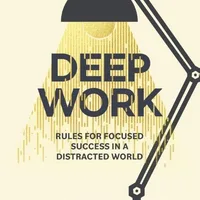
Deep Work — Cal Newport (Paperback)
McKeown's distinction between productive and effective is the whole problem in one line — Newport's Deep Work is the field manual for choosing the right outputs over more outputs.
As an Amazon Associate, we earn from qualifying purchases — at no extra cost to you.
Why Quick Completion Makes the Problem Worse
Here's the part of the research that really landed for me: Zhu, Yang, and Hsee found the urgency effect strengthened when the urgent task was easy to complete quickly.
Think about what that means in practice. A short email reply. A Slack response. A two-minute approval form. These aren't just minor distractions — they're exactly the conditions that amplify the bias. When a task is urgent and completable right now, the pull toward it isn't simply about attention. It's about the anticipation of a fast, clean sense of progress.
Finishing something — anything — produces a small but real feeling of accomplishment. Zhu, Yang, and Hsee described this as a false sense of productivity. The problem is that this feeling doesn't distinguish between finishing something that mattered and finishing something that was simply there, demanding to be done.
Your nervous system registers both as "done." But only one of them was worth doing.
This is why days full of urgent activity can feel genuinely productive in the moment and genuinely hollow by the end of them. The completion signals were real. The value of what got completed wasn't there to match.
If urgency isn't the only force quietly running your task list, the real reason you procrastinate is worth understanding too — it's not the willpower failure it feels like.
It also explains something counterintuitive: the more responsiveness and throughput your work environment rewards — the faster you answer, the quicker you turn things around — the more it's quietly optimizing you for urgency and away from importance. Not through anyone's deliberate intention. Through the mechanics of how a completion-rewarding system shapes behavior over time.
Why Knowing Better Doesn't Fix It
This is where most people push back. "I know I'm doing this. I just need to be more disciplined about it."
The research suggests otherwise.
Zhu, Yang, and Hsee's participants knew the important task was worth more. Many said so explicitly. And they still chose the urgent one. This isn't a knowledge problem, and it's not a discipline problem. It's a pre-deliberate problem — an automatic cognitive response that runs before any intentional prioritization has a chance to kick in.
Think of it this way: urgency creates what functions almost like a reflexive motor response. The notification arrives, the deadline approaches, the urgent item appears at the top of the queue — and something in the processing chain has already moved toward it before you've made any conscious decision to engage.
Nir Eyal, who spent years researching the mechanisms behind distraction for his book Indistractable, arrives at essentially the same conclusion through a different route. His argument is that managing what pulls you away from your priorities isn't primarily an information problem. It requires structural changes to the conditions in which you encounter work in the first place. Knowing that screen notifications pull attention doesn't fix the pull — turning off the notifications does.
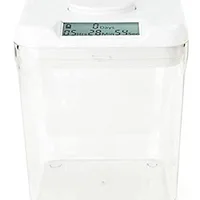
Kitchen Safe kSafe Time Locking Container (Medium)
Eyal's point is structural, not informational: you don't out-think the notification pull, you remove it. A time-lock box makes 'phone away for the first block' a physical precommitment, not a willpower test.
As an Amazon Associate, we earn from qualifying purchases — at no extra cost to you.
The same logic applies to urgency. You can't think your way out of a pre-deliberate automatic response. You have to redesign the environment so the automatic response doesn't get triggered in the same way — or at least, not first.
That shift in framing matters more than it might seem. If the problem were ignorance, the solution would be information: read the right book, learn the right framework, remember to prioritize. But if the problem is a documented cognitive bias that operates below deliberate reasoning, the solution has to meet it at that level — structurally, not intellectually.
The Eisenhower Matrix Gap
You've probably seen the quadrant. Urgent and important in the top left. Important but not urgent in the top right — the so-called "strategic quadrant." The classic advice is to spend more time there, working on the important stuff before it becomes urgent.
Correct advice. And, in practice, consistently ignored.
What the mere urgency effect research clarifies is why the matrix doesn't do more real-world work: telling someone which quadrant deserves more attention doesn't interrupt the cognitive pull that sends them toward urgent items every time they open their task manager. The Eisenhower Matrix is a categorization tool. It helps you see where priorities should theoretically sit. It doesn't counteract the automatic momentum that makes urgent tasks feel like the natural starting point.
This is also why the power of saying no matters so much — protecting your calendar from urgent-but-low-value requests is what makes room for the important quadrant in the first place.
This is not a knock on the matrix. It's a precise diagnosis of what it can and can't do. And that precision matters, because the fix has to operate at a different level than awareness — at the level of structure and sequence, not just categorization.
How to Start Today
The research doesn't hand you a single system. But based on Zhu, Yang, and Hsee's findings, a few specific interventions work at the right level — not by making you more aware of your priorities, but by creating conditions where important work gets chosen before urgency has a chance to auto-respond.
1. Name your most important task before you open anything urgent.
Before email, before Slack, before your task manager — write down the one thing that would make today matter if it were the only thing you finished. Physical paper is better than digital for this step because nothing can interrupt a piece of paper with a notification badge.
This isn't a productivity ritual for its own sake. It's a deliberate pre-commitment: you're telling your brain what's important before the urgency queue loads and makes that choice for you.
A structured daily planning pad — specifically one that forces you to name a single most important task before listing anything else — acts as a bias-interruption device. You're not just organizing your day. You're creating a moment of deliberate reasoning before the reflexive urgency response gets to run first.
2. Schedule your important work as the first block on your calendar, before any reactive tasks open.
Zhu, Yang, and Hsee's research suggests the urgency effect compounds once you're already in reactive mode — already responding to things, already accumulating completion signals. Once you've been handling urgent items for an hour, the momentum runs strongly in that direction.
If your important work is scheduled for after the urgent queue, you've handed urgency the first block of your best hours. Time-blocking the important task at the very start of the day isn't a scheduling preference — it's a structural pre-emption of the bias.
3. Audit urgency as a signal, not a command.
When something arrives with a deadline, a notification badge, or the word "urgent" in the subject line, practice a brief pause and a specific question: who decided this was urgent, and for whom? Many things that present as urgent are someone else's planning failure or timeline — not yours. The notification badge triggers anxiety regardless of what it actually contains or whether it requires your attention at all.
Training this audit reflex doesn't eliminate urgency from your environment. It creates a small but reliable gap between the urgency stimulus and your response — enough space for deliberate reasoning to actually show up before you've already responded.
4. Break your important work into the smallest possible unit.
One of the reasons urgent tasks win beyond their urgency is that they're small and completable right now. The important task often feels large, ambiguous, and therefore easy to defer. It doesn't offer the same quick completion signal.
This mirrors what the research on habit formation shows: habits run on context, not willpower — the same environmental redesign that beats urgency bias is what makes important work automatic instead of effortful.
The fix is to make the important work mimic the structural advantage of urgent work: define the smallest possible first step. Not "write the strategy document" — "write the opening paragraph." Not "start the project" — "open the file and write three sentences." You're creating a completion signal for your own important work, one that can compete with the quick wins the urgent queue is offering.
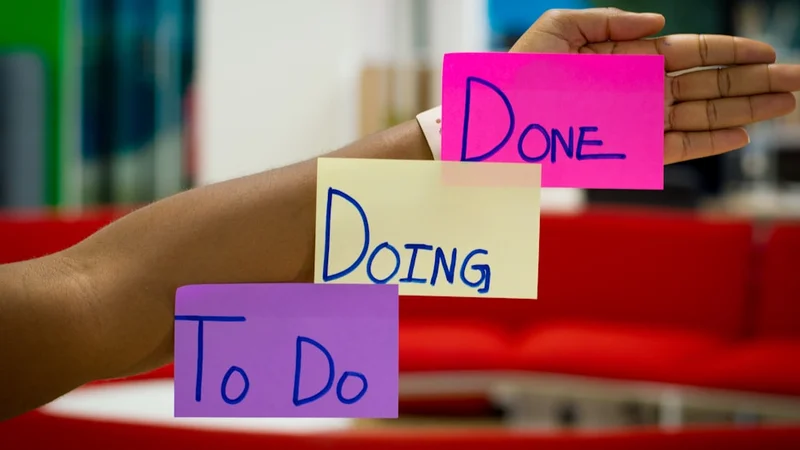
Urgency Is a Signal About Timing, Not Value
Here's the reframe the research makes possible, and it's worth sitting with.
Urgency tells you a task is running out of time. That's all it tells you. It says nothing — literally nothing — about whether the task deserves your attention, your best hours, or any of your finite cognitive energy today. Yet by the mechanism Zhu, Yang, and Hsee documented, urgency has been quietly making that value judgment on your behalf, every day, for as long as you've had an inbox and a task list.
Jim Rohn observed that the things that are easy to do are also easy not to do. The mere urgency effect research adds a specific, empirically tested corollary: the things that are easy to do and urgent will reliably crowd out the things that matter, regardless of how clearly you can identify which ones those are.
Your important work will rarely announce itself with the same force as an unread notification. It will sit there, quietly, while the urgent queue insists. And the research is clear: that's not a failure of character. It's a documented feature of how human cognition responds to urgency framing — tested in controlled conditions, replicated across experiments, and operating in your working day whether you're aware of it or not.
Which means you can design around it.
The actual task — the real act of designing your evolution — isn't to want important things more than urgent ones, or to feel differently about your inbox, or to summon enough willpower to override an automatic cognitive response. The task is to build a daily structure where the deliberate choice — "what matters most today" — runs before the automatic response — "what's most pressing right now" — has had a chance to make the decision instead.
You already know what your important work is. The real question is whether your morning is designed to give that knowledge a chance to act first.
What's the one task sitting on your list right now that you already know matters more than anything that arrived in your inbox today?
Sources: Meng Zhu, Yang Yang, and Christopher Hsee, "The Mere Urgency Effect," Journal of Consumer Research, Vol. 45, Issue 3, 2018. Dwight D. Eisenhower's urgency–importance framework, popularized by Stephen R. Covey in The 7 Habits of Highly Effective People (1989). Greg McKeown, Essentialism: The Disciplined Pursuit of Less (2014). Nir Eyal, Indistractable: How to Control Your Attention and Choose Your Life (2019). Jim Rohn, as cited across multiple motivational archives including jimrohn.com.
Was this helpful?