Habits· 12 min read
How to Switch Off From Work: The Transition Ritual

How to Switch Off From Work: The Transition Ritual
You're at dinner. Your family is talking — someone just made a joke — and you're half a second behind every response because your mind is still at the office. You're replaying that meeting that went sideways at 4 PM. Constructing the email you never sent. Mentally reorganizing tomorrow's task list.
Your body clocked out. Your brain didn't get the memo.
This is one of the most widespread, least-diagnosed problems in modern work. You close the laptop — or walk out of the building — but the job follows you home like a stray dog that knows where you live. And according to research in occupational health psychology, that inability to switch off from work isn't just annoying. It's linked to lower well-being and lower work engagement, particularly when job demands are high.
Here's what the science says, and how to build a 10-minute ritual that helps.
Why Your Brain Doesn't Clock Out Automatically
The brain doesn't respect your schedule. That's not a character flaw — it's how the mind handles unfinished business.
Problems you solve feel satisfying and quickly forgettable. The ones you didn't solve? Those tend to loop. In the shower, at dinner, at 2 AM. Psychologists often point to the Zeigarnik effect here: unfinished tasks seem to occupy a kind of background process in your mind, running quietly whether you want them to or not.
Work is perfectly engineered to generate those loops. There's always one more email, one more issue, one more conversation you should have had. The inbox never reaches zero. The project is never fully done. So the background processes keep spinning.
Zeigarnik effect and unfinished tasks
The blurring of physical boundaries makes it worse. A smartphone that connects you to the office at 9 PM, a home office that doubles as your living space — your brain never receives a clean environmental signal that the day is over. So it treats the day as not over.
What the Research Actually Says About Psychological Detachment
Psychological detachment from work means the mental experience of not thinking about work-related problems during your off-job time. It is not the same as physical absence from the office, nor is it relaxation or simply keeping busy. Specifically: your mind stops processing work tasks. You are not mentally solving anything.
In 2007, occupational health psychologists Sabine Sonnentag and Charlotte Fritz published a study in the Journal of Occupational Health Psychology that introduced the Recovery Experience Questionnaire. Across samples totaling 930 people, they showed that four distinct recovery experiences can be told apart — psychological detachment, relaxation, mastery, and control — and that these were moderately related to job stressors and psychological well-being.
A later study by Sonnentag, Binnewies and Mojza, published in the Journal of Applied Psychology in 2010, followed 309 human service employees over 12 months. High job demands predicted emotional exhaustion, psychosomatic complaints, and lower work engagement over time — and psychological detachment acted as a buffer against those effects.
Some caveats are worth stating. Much of this research relies on self-report questionnaires, which carry known limitations such as response bias, and the samples are often European knowledge or service workers who may not represent everyone. Effect sizes are moderate, not dramatic. Ruminating on work, replaying bad emotions on repeat, is the pattern most likely to get in the way of recovery.
The core idea is simple: your evening mental state is a resource. Most people spend it by default.
The Four Recovery Experiences
Sonnentag and Fritz identified four experiences that support recovery from work demands. Understanding them lets you design your evening deliberately rather than hoping it unfolds well.
Psychological detachment: The mental off-switch. Not thinking about work, not checking work messages, not mentally solving work problems while pretending to watch television.
Relaxation: Low-activation positive states — reading fiction, a slow walk, a bath, a meal cooked at leisure. Not anxiety-inducing news or compulsive scrolling.
Mastery: Engaging in something demanding outside work — a language, a musical instrument, a complex recipe. Counter-intuitively, exerting mental effort in a domain with no professional stakes helps some people detach more completely than passive rest alone.
Control: Having real choice over how you spend your off-job time. Even small amounts of self-determined activity restore a sense of autonomy that demanding work environments habitually erode.
| Recovery Experience | What It Is | Examples |
|---|---|---|
| Psychological Detachment | Mentally not processing work | No notifications; no mental rehearsal of meetings |
| Relaxation | Low-activation positive state | Fiction, a slow walk, cooking at leisure |
| Mastery | Demanding activity outside work identity | Language learning, instrument, complex recipe |
| Control | Self-determined choice over leisure | Any activity chosen freely, without obligation |
One thing wellness culture tends to get wrong: it over-emphasises passive relaxation as the only valid recovery mode. For some people, a passive evening spent not doing much produces low-grade restlessness rather than restoration. If that sounds like you, the mastery component may be worth taking seriously.
How to Switch Off From Work: Building the Transition Ritual
The problem with psychological detachment is that it doesn't happen automatically. Your brain needs a signal — a clear, repeatable cue that means: this is where work ends.
For office commuters, that signal used to be structural. The train ride, the drive home, the physical act of changing clothes — all of it functioned as an accidental decompression chamber between work identity and home identity. But also, accidentally, a 30-minute psychological boundary between roles.
Remote workers lost that chamber. Many hybrid workers never reliably had it. A transition ritual recreates it deliberately.
A good ritual needs to be specific, repeatable, and associated with closure. Vague intentions don't signal anything to your nervous system. Consistent actions do.
Step one: Write the closing list. Before closing your laptop, spend three minutes writing down everything still open — tasks incomplete, decisions pending, things you're carrying mentally. Once those items are reliably recorded elsewhere, your brain has less reason to keep holding them in working memory. A dedicated paper notebook works well here because the physical act creates a cleaner sensory break.
Step two: Say it aloud. Quietly, to yourself: "Work is done for today." This sounds slightly absurd until you try it. A verbal commitment, even a private one, creates a behavioral line in a way that internal resolve rarely does. Some people pair it with a small physical action — closing a specific notebook, switching off a desk lamp, putting a work tool away in a drawer.

Philips SmartSleep Wake-Up Light HF3520 (sunset simulation + reading lamp)
As an Amazon Associate, we earn from qualifying purchases — at no extra cost to you.
Step three: Change the audio environment. Work has a sonic texture — notifications, ambient pressure, the particular sound profile of a home office at full speed. Walking away while listening to something entirely unrelated interrupts that texture cleanly. If your brain stays particularly active, a quality pair of noise-cancelling headphones can create a noticeable sensory reset between modes.

Sony WH-1000XM5 Noise Cancelling Headphones
As an Amazon Associate, we earn from qualifying purchases — at no extra cost to you.
Step four: Move. Five minutes of walking, ideally outside. Not for a fitness goal or a step count. Just to give your body a different environment that reinforces the mental shift.
Step five: Land somewhere. Before you return to your family or settle into the evening, pause. Ask yourself one question: what do you actually want from tonight? Not a productivity goal — a human one. One conversation you're looking forward to. One thing you want to do for its own sake. This small act of intention redirects attention away from what you're leaving and toward where you're arriving.
What about days when the ritual breaks — a late finish, a work dinner, travel? Keep a single element. The closing list takes two minutes, even from a phone. The verbal declaration can happen in a taxi or a hotel bathroom. Rituals don't need to be perfect to work; they need to be consistent enough for your brain to recognize the signal. One reliable anchor beats waiting for perfect conditions that never quite arrive.
evening routine habits for sleep and recovery
The Commute as a Ready-Made Transition
If you commute — even part of the time — the ride has more recovery potential than most people use.
The instinct is to treat it as productive time: emails, industry podcasts, work planning ahead. The commute isn't wasted when you're staring out the window. It might be doing exactly what your brain needs — wandering without pressure, processing without a deadline attached.

Kindle Paperwhite 2024 (16GB)
As an Amazon Associate, we earn from qualifying purchases — at no extra cost to you.
If you want to make it intentional, the rule is simple: if it would earn you professional credit, it isn't recovery. Use the ride for a novel read aloud, a topic you're curious about purely for its own sake, or genuinely nothing at all.
How to Start Today
You don't need a complete system. You need one consistent signal.
Pick a single ending action you'll repeat every workday for the next two weeks. One thing. A five-minute walk around the block before re-entering the house. Changing one item of clothing as a physical marker that your role has shifted.
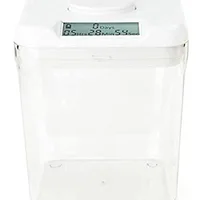
Kitchen Safe kSafe Time Locking Container (Medium)
As an Amazon Associate, we earn from qualifying purchases — at no extra cost to you.
Repeat it at the same time, in the same sequence, until it feels automatic. Then, if you want, add a second element.
To know if it's working, you don't need a metric. Ask yourself each morning: did I wake up still carrying yesterday? After two weeks, the answer will be obvious.
The space between work and the rest of your life isn't dead time — it's design material. Most people leave it to chance, taking whatever is left after work is done and calling it an evening.
A transition ritual doesn't ask for discipline or willpower. It asks for ten minutes and a decision that your recovery is worth protecting. The research on psychological detachment points in a consistent direction: this investment tends to pay back well. A better evening tonight, and a steadier version of yourself tomorrow.
What does the end of your workday currently look like — and what would you change about it first?
Was this helpful?