Habits· 12 min read
Keystone Habits: Does One Habit Really Change Others?
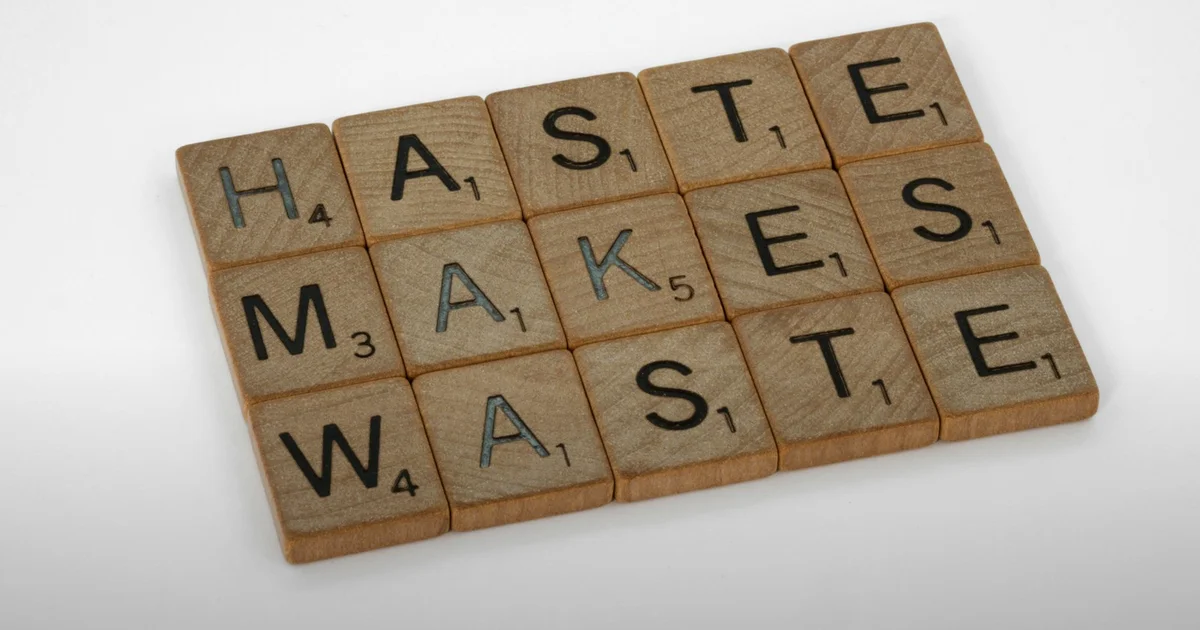
Keystone Habits: Does One Habit Really Change Others?
Picture someone, call her Sarah, who starts going to the gym three times a week. That's the only change she plans. But six months later, she's stopped drinking during the week, is cooking dinner at home almost every night, and has cut her impulse purchases nearly in half. She never set any of those goals. She just showed up and lifted weights.
This sounds like a motivational story, and it is. It also describes something psychologists call behavioural spillover — the tendency for one positive change to pull other areas of life along with it. Charles Duhigg gave it a memorable name in his 2012 bestseller The Power of Habit: the keystone habit. The idea is that certain habits, once established, quietly catalyze changes across entirely unrelated domains of your life.
The concept spread fast. It's now standard advice in productivity books, morning routine videos, and habit-tracking apps. But the honest version of this question — does the evidence actually support it, and if so, which habit should you start with — deserves a real answer. The answer matters because it changes the whole strategy: instead of rebuilding everything at once, which almost never works, you'd pick one carefully chosen lever and trust the process to do the rest.
What the Research Actually Found About Habit Spillover
Duhigg drew on real science, but he's a journalist rather than a researcher. The term "keystone habit" is a compelling metaphor, not an established category in academic psychology. What the research shows is more specific, and more useful, once you look at it directly.
Between 2006 and 2007, Megan Oaten and Ken Cheng at Macquarie University published three separate studies, each testing a different self-regulation program: regular physical exercise (British Journal of Health Psychology, 2006), a regular program of academic study (2006), and financial monitoring (Journal of Economic Psychology, 2007). The programs ran for roughly two to four months. Afterwards, participants were tested on tasks unrelated to their training, including a laboratory self-control task, and reported on behaviours such as spending, eating, and emotional control. Participants who stuck to their programs improved on those unrelated measures too, relative to their own earlier baseline or to a control group.
In the exercise study, participants reported smoking, drinking alcohol and caffeine less, eating healthier food, and managing emotions better. In the financial monitoring study, participants improved on the self-control task and on other behaviours as well. The specific domain didn't seem to matter much. What mattered was consistent effort.
The mechanism Oaten and Cheng proposed is this: self-regulation works like a muscle, a generalised capacity that strengthens with repeated practice rather than a skill tied to one domain. Learning to override an impulse at the gym — to finish the last set when you'd rather not — appears to make you better at overriding impulses elsewhere. The context changes. The underlying operation doesn't.
This is the core finding underneath the keystone concept. It's not the type of habit that generates spillover. It's sticking to something challenging long enough for self-regulation to strengthen. Think of it less like a keystone holding an arch together, and more like strength training for a capacity you use everywhere without realising it.
The Power of Habit — Charles Duhigg (Paperback)
As an Amazon Associate, we earn from qualifying purchases — at no extra cost to you.
Where the "Keystone" Label Gets Misleading
Duhigg's most famous keystone example — Paul O'Neill's focus on worker safety at Alcoa — is a case study of organisational redesign, not personal habit change. O'Neill didn't start journaling and find himself running better quarterly reviews. He restructured an entire reporting system and accountability culture. It's a different mechanism wearing the same label.
When the keystone frame is applied to individual behaviour change, it can set expectations that don't match how the spillover effect actually works. People start meditating or journaling, wait for their finances and relationships to automatically improve, and then feel like they failed when nothing cascades the way Duhigg's anecdotes suggest.
The spillover effect is real, but it's a tendency, not a guarantee. It seems to work best when the anchor habit:
- genuinely challenges your self-regulation — not just a pleasant ritual you already enjoy
- runs on a consistent, near-daily schedule rather than a loose weekly cadence
- produces a concrete, observable result you can verify
A ten-minute morning meditation is pleasant, but it may not push your self-regulation hard enough to generate meaningful spillover. Training for a 5K, committing to a daily writing practice, or running a weekly budget review will require a different kind of sustained effort.
There's also a limit to what these studies can show. The samples were small volunteer groups, so the most motivated people may have been the ones who enrolled. Some of the improvement across domains might reflect underlying motivation rather than the regulatory training effect alone. The science is genuinely promising. It's also not final.

Amazfit GTR 4 Fitness Smartwatch
As an Amazon Associate, we earn from qualifying purchases — at no extra cost to you.
Choosing the Right Anchor Habit
Since spillover seems to come from practising self-regulation — not from any specific habit type — the best keystone habit is the one you'll actually sustain, at a difficulty level that matters. Three filters help narrow it down.
It should be harder than comfortable. An easy habit doesn't build the regulatory muscle. If you're on autopilot by week two, you're maintaining a behaviour, not training a capacity. You want something that genuinely requires effort to show up for, especially on a tired weeknight.
It should have a measurable output. Not "I'll be more disciplined" but "I'll complete three sets at the gym" or "I'll write 200 words before 9 AM." You need clear evidence you did it. Vague intentions produce vague results — and they're harder to build a streak around.
It should occupy a fixed time slot. A habit that occurs at the same time each day — or in response to the same reliable cue — builds stronger automaticity than one you do "when you get around to it." Structure also makes it easier to stick with the program long enough for any benefit to show up.
Worth noting, too, is what the research timeline actually implies. The behavioural changes Oaten and Cheng observed didn't appear after two weeks. The exercise program ran for two months; participants were then tested a month later. That's two to three months of genuine, near-daily effort before you can fairly evaluate whether spillover has started to emerge. Most habit attempts collapse at weeks three or four — precisely the point where capacity is beginning to build but has not yet transferred to other domains. Knowing this in advance is genuinely useful: the feeling that nothing has changed is almost never evidence that nothing is changing.
For most people, the real candidates narrow to three: daily exercise, a consistent wake time, or a daily creative or learning practice — writing, a language streak, a musical instrument. All three score well on all three filters. Exercise is the habit most directly tested in the research and is a reasonable default. But if your sleep is chronically chaotic, fixing your wake time first may suit you better than running ever would.
One counterintuitive note: you don't have to start with the "best" habit. You have to start with the one you'll actually stick to. A consistent sleep schedule maintained for six months will outperform a perfect morning exercise routine abandoned after three weeks.

Philips SmartSleep Wake-Up Light HF3520
As an Amazon Associate, we earn from qualifying purchases — at no extra cost to you.
How to Start Today
Step 1: Choose one habit, not two. Use the three filters above and pick the single habit with the best combination of sustainability and sufficient difficulty. If you're torn between two options, choose the one that feels slightly harder.
Step 2: Define its smallest viable version. If you're starting an exercise habit, that's twenty minutes three times a week — not ninety-minute daily sessions. Your keystone habit needs to survive a busy Tuesday, a work trip, and a low-motivation week. Make it small enough that skipping it would feel embarrassing.
Atomic Habits — James Clear (Paperback)
As an Amazon Associate, we earn from qualifying purchases — at no extra cost to you.
Step 3: Track it physically. A habit journal or printed grid on your desk creates a psychological commitment that an app notification often can't match. The physical act of marking a box closed is its own small reinforcement — a daily vote for the person you're becoming.

Clever Fox Habit Calendar Circle (24-Month)
As an Amazon Associate, we earn from qualifying purchases — at no extra cost to you.
Step 4: Give it a few months before judging. Oaten and Cheng's programs ran roughly two to four months, so don't expect a cascade in week three. Most people quit at week four and conclude the method doesn't work. They're right that nothing has changed yet. They're wrong that nothing was going to.
Step 5: Log adjacent changes when they appear. Keep a brief weekly note — two or three sentences is enough. You're not trying to engineer a cascade; you're making it observable when it naturally arrives. The moment you notice you've been eating differently without deciding to, that's evidence worth keeping.
The Quiet Case for Starting in One Place
There's a less dramatic truth underneath all of this: evolution rarely requires a full rebuild. It usually begins in one place, takes hold there first, and then spreads sideways through your life in ways you couldn't have scripted.
That's not motivational poetry — it's what the data suggests, held lightly. Pick one thing. Make it hard enough to matter. Do it on a schedule. Give it a few months. Then notice what else starts to reorganise without being asked.
What you're really practising isn't running, or budgeting, or writing. You're practising the skill of keeping a promise to yourself. And that skill — once it genuinely exists — doesn't stay contained. That's how you design your evolution: not by rebuilding yourself all at once, but by choosing one honest commitment and trusting the process to reshape what's around it.
Have you experienced this? A single habit that quietly shifted something you weren't trying to change — what was it? Share it in the comments below.
Was this helpful?