Recommendations· 18 min read
Best Habit Books 2026: Which One Is Actually Right for You
Atomic Habits, Tiny Habits, Power of Habit — which is right for you? Compare 6 top habit books and find the one that fits your situation.
As an Amazon Associate, I earn from qualifying purchases. Prices and availability may vary.
The Wrong Habit Book Can Cost You More Than the Price of the Right One
Here's the situation most people don't talk about: the habit book category is the most crowded shelf in self-help — and one of the most consequential. Pick the wrong book for where you actually are, and you close it in chapter four, conclude that behavior change science doesn't apply to you, and stay stuck in the same patterns for another year. Pick the right one, and you describe it later as the framework that finally made everything click.
That gap — between the wrong book and the right one — is almost never about quality. The books we're comparing here are genuinely excellent. It's about fit. Each of them was written from a different starting point, addresses a different type of reader, and solves a different version of the habit problem. Atomic Habits and The Power of Habit are both considered essential — but they answer different questions. The person who keeps starting and quitting needs something different from the person who's never even started. The person rebuilding after a personal crisis needs something different from the analytical reader who wants to understand the neuroscience before touching a single habit.
This comparison exists because we've seen what happens when the wrong book lands in the wrong hands. It's not a failure of the reader. It's a mismatch of context.
Here's what we know about the behavioral science behind this: the single biggest predictor of sustained habit adoption isn't motivation level — it's whether the entry point to the behavior is calibrated to the person's current situation. BJ Fogg at Stanford's Behavior Design Lab spent two decades studying habit failure and landed on a deceptively simple conclusion: most habits fail not because the person lacks willpower, but because the habit was designed too big for where they were starting. That insight also applies to the book you choose to learn from. Starting too advanced creates the same friction as starting too ambitious.
We also know that habit books work differently depending on which type of failure you're solving. If your problem is architectural — you don't know how to design a habit that survives contact with real life — you need a systems-level guide. If your problem is emotional — fear of failure is making you procrastinate even the starting — you need a book that works on the psychology underneath the behavior. If your problem is momentum — you had consistency before but lost it and can't get back — you need something that addresses the compound effect of small consistent action rather than the architecture of habit formation from scratch.
We've structured this review around exactly that distinction: not "which is the best habit book" but "which is the best habit book for your specific situation right now."
How We Selected and Compared These Books
We evaluated habit books across four dimensions that matter for real-world outcomes — not sales ranks or social media ubiquity.
Scientific foundation: Does the framework trace to peer-reviewed research in behavioral psychology, neuroscience, or motivation science? We excluded books that cite studies loosely or use research as decoration rather than as the actual structural basis of the system.
Practical architecture: Does the book give you a concrete system you can implement within a week of reading it — or does it leave you inspired but directionless? Inspiration without implementation infrastructure doesn't change behavior.
Failure mode specificity: Does it address a specific, identifiable reason why habits fail — and does that reason match your situation? Generic habit books that try to solve every habit problem equally well tend to solve none of them deeply enough.
Readability without sacrifice: Can a non-academic reader access the full depth of the framework? Some of the most rigorous behavioral science is packaged in unreadable prose. We weighted for the books where clarity doesn't come at the expense of depth.
What we deliberately left off the list: books that are primarily motivational without behavioral architecture, books that haven't held up to replication in the decade since publication, and books where the "research base" is primarily the author's personal anecdote.
Top 6 Habit Books of 2026
1. Atomic Habits — James Clear
Who it's for: Anyone who has never read a serious habit book and wants the single best place to start — and anyone who has read other habit books but never found a framework comprehensive enough to unify the pieces.
Why we chose it: James Clear spent years synthesizing the behavioral psychology of habits into the most complete, actionable framework currently available in popular form. Atomic Habits works because it addresses every layer of the habit problem simultaneously: the identity layer (you don't build habits, you build the identity of someone who does those things), the process layer (habit loops, implementation intentions, temptation bundling), the environmental layer (designing your surroundings so that the desired behavior is the path of least resistance), and the measurement layer (habit tracking as a motivational mechanism rather than a guilt device). The "1% better every day" framing is memorable, but the actual depth is in the design system — and it's the most complete publicly available version of that system.
The behavioral benefit is specific: Atomic Habits gives you the vocabulary and architecture to diagnose why a habit failed, not just the motivation to try again. That's the difference between a one-time fix and a lifelong skill.
Pros:
- The most comprehensive habit framework in popular literature — covers identity, process, environment, and tracking in one integrated system
- Concise without sacrificing depth: 320 pages that replace 10 patchwork books
- Every chapter ends with actionable implementation — not just concepts
Cons:
- If you've already built a strong habit practice and are looking for cutting-edge behavioral neuroscience, this may feel like review material after the first 100 pages
- The identity-based framing, while powerful, can feel abstract to readers who want a step-by-step protocol first
Atomic Habits — James Clear (Paperback)
The article names Atomic Habits the correct first habit book for most readers — the integrated identity+process+environment+tracking system.
As an Amazon Associate, we earn from qualifying purchases — at no extra cost to you.
2. Tiny Habits — BJ Fogg
Who it's for: The person who has tried to build habits — repeatedly — and keeps failing to start. If you've designed ambitious morning routines that lasted three days, written habit plans that never left the notebook, or found yourself paralyzed between knowing what to do and actually doing it, this is the book.
Why we chose it: BJ Fogg is a behavioral scientist at Stanford whose research program literally studies why people fail to adopt behaviors they genuinely want to adopt. His conclusion, after two decades: the design is wrong, not the person. Habits fail not because of insufficient willpower or motivation but because they're designed too large relative to the available motivation at the moment of execution. Tiny Habits addresses this with a specific recipe structure: Anchor (after I do X, an existing behavior) + Tiny Behavior (I will do the smallest possible version of the habit) + Celebration (I will immediately do something that generates positive emotion). The celebration component is the piece that most habit frameworks miss — positive emotion following a behavior is the mechanism by which the brain encodes it as something worth repeating. Fogg's recipe makes that encoding reliable, not dependent on momentum you don't yet have.
Pros:
- Directly solves the starting problem that most habit frameworks assume you've already solved
- The recipe format is immediately usable — you can design your first Tiny Habit within 20 minutes of reading chapter 3
- The motivation wave model explains why willpower-based approaches fail without judgment
Cons:
- If your habits are starting — and the challenge is sustaining them over months — Tiny Habits addresses design but doesn't go as deep into the long-game architecture as Atomic Habits
- Some readers find the celebratory component ("Shine" in Fogg's terminology) awkward in practice, particularly for introverted or self-critical personality types
Tiny Habits — BJ Fogg (Paperback)
Recommended for repeated starters who keep failing to begin — Fogg's Anchor + Tiny Behavior + Celebration recipe solves the starting problem.
As an Amazon Associate, we earn from qualifying purchases — at no extra cost to you.
3. The Power of Habit — Charles Duhigg
Who it's for: The reader who wants to understand the mechanism before they build anything. If you've always felt that practical advice without theoretical grounding feels like a recipe with missing steps, this is your entry point.
Why we chose it: Duhigg is a journalist, not a scientist, and that turns out to be exactly what makes this book uniquely valuable: he takes the neuroscience of habit formation — the basal ganglia's role in chunking repeated behavior sequences into automatic routines, the cue-routine-reward loop that Ann Graybiel's lab at MIT's McGovern Institute identified, the role of the prefrontal cortex in habit initiation versus habit execution — and renders it through stories that make the mechanisms feel visceral rather than academic. The Claude Hopkins advertising story, the Tony Dungy football story, the Alcoa safety culture story — each of them illustrates a different dimension of how habit loops operate in individuals, in teams, and in organizations. More importantly for the reader who needs conceptual scaffolding first: once you understand why habits work the way they do at the level of the brain, every practical technique from other books makes sense in a way it didn't before.
Pros:
- The best explanation of the neurological habit loop available in popular form — Graybiel's research has held up through replication and Duhigg's account of it is accurate
- Keystone habits — the concept of habits that trigger positive cascades in other behaviors — is the most underutilized idea in personal development
- Organizational habit change section is uniquely valuable for readers in leadership roles
Cons:
- Lighter on personal implementation architecture than Atomic Habits or Tiny Habits — you'll finish understanding habits deeply but with less of a personal action plan
- Some of the organizational case studies (particularly the Procter & Gamble sections) will feel less relevant to readers focused entirely on personal behavior change
The Power of Habit — Charles Duhigg (Paperback)
For the 'why before how' reader — Duhigg renders the cue-routine-reward neuroscience (Graybiel/MIT) through narrative.
As an Amazon Associate, we earn from qualifying purchases — at no extra cost to you.
4. Good Habits, Bad Habits — Wendy Wood
Who it's for: The analytically-minded reader — or anyone who has grown skeptical of popular habit advice and wants the research without the storytelling wrapper. This is the book for the person who thinks in frameworks and wants to know what the science actually says, separate from what the bestseller list has amplified.
Why we chose it: Wendy Wood has spent over three decades studying a dimension of habit formation that the popular books largely overlook: context-dependent automaticity. Her core finding — that habits are ultimately encoded not just in behavior routines but in the specific context in which those routines occur — explains a phenomenon every habit-builder has experienced and most habit books don't adequately address: why a habit that felt solid for three months completely collapsed when you moved apartments, changed jobs, or went on vacation. The environmental context wasn't decoration; it was structural. Wood's research also produced the most counterintuitive habit finding in recent memory: for well-established habits, motivation and intention have almost no predictive relationship with behavior. You're not executing your morning exercise routine because you feel motivated; you're executing it because the environmental cues triggered the automaticity. This means both that motivation is largely irrelevant once a habit is consolidated, and that disrupting the context disrupts the habit regardless of motivation level.
Pros:
- The most research-dense of the group without sacrificing readability — Wood writes with clarity and the research she cites is from her own 30-year program, not cherry-picked studies
- The context-dependency insight reframes why disruption events destroy habits and what to do about it — essential knowledge that most habit books leave out
- Friction reduction as habit design principle gets deeper treatment here than anywhere else
Cons:
- Less narrative warmth than Duhigg or Clear — some readers find the evidence-first structure slower to engage with emotionally
- Not the book for someone who wants to build one new habit this week; it's the book for someone who wants to build a rigorous long-term understanding of behavioral automaticity
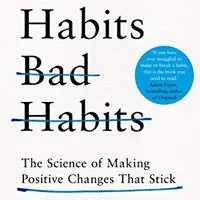
Good Habits, Bad Habits — Wendy Wood (Paperback)
For the analytical/skeptical reader — Wood's 30-year research on context-dependent automaticity (the most research-dense of the six).
As an Amazon Associate, we earn from qualifying purchases — at no extra cost to you.
5. The Now Habit — Neil Fiore
Who it's for: The person whose habit failure isn't architectural — you know what to do and roughly how — but something underneath keeps making you delay, avoid, or find reasons not to start. If procrastination is the actual blocker, and the habit problem is really an emotional avoidance problem wearing the costume of a scheduling problem, this is the book.
Why we chose it: Neil Fiore's insight — and it's a genuinely underrated one in the habit literature — is that procrastination is almost never about laziness or poor planning. It's a protective response to fear: specifically, fear that starting and failing will produce evidence of inadequacy. The perfectionism-procrastination connection Fiore maps is the same one that Brené Brown's shame research later confirmed: the person who procrastinates on beginning a habit isn't avoiding the work, they're avoiding the verdict. The Now Habit's Unschedule — the counterintuitive technique of scheduling leisure and recovery first, then filling in work — dismantles the guilt-and-urgency cycle that makes procrastination self-reinforcing. More importantly for habit building specifically: if you've been failing to start habits because starting feels like setting up a new way to fail, fixing the procrastination mechanism fixes the starting mechanism. The other books on this list assume you're ready to start; The Now Habit helps you become ready.
Pros:
- The only major habit-adjacent book that addresses the psychological root of starting failure rather than the architectural surface
- The Unschedule is one of the most practically distinctive time-design tools in the productivity literature — immediately applicable
- The "inner child" framing may feel dated but the underlying fear-of-failure model is psychologically accurate and evidence-consistent
Cons:
- If your habit failure is architectural (you want to start but don't know how to design a habit that sticks), this book won't give you the behavioral design tools of Atomic Habits or Tiny Habits
- Published in 1988 and updated in 2007 — some cultural references and framing feel dated, though the core psychological model remains sound
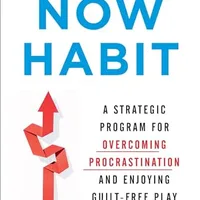
The Now Habit — Neil Fiore (Paperback)
For the procrastinator/perfectionist whose habit failure is emotional, not architectural — Fiore's Unschedule dismantles the guilt-urgency cycle.
As an Amazon Associate, we earn from qualifying purchases — at no extra cost to you.
6. The Compound Effect — Darren Hardy
Who it's for: The person who is rebuilding. Not building for the first time, not stuck at the starting line, but someone who had consistent habits — in fitness, focus, relationships, finances — and lost them. The person who knows exactly what they need to do and needs to rebuild the flywheel of small consistent daily action from a standing start.
Why we chose it: Darren Hardy's contribution to the habit literature is narrower than the others on this list, and that narrowness is precisely its strength. The Compound Effect is not interested in habit architecture or procrastination psychology or neuroscience. It's interested in one principle: the momentum mathematics of small consistent action over time. Hardy documents with relentless specificity what happens when you close the gap between knowing and doing at the level of daily micro-actions — not dramatic transformations, but the daily 1% improvements whose accumulated effect produces the results that everyone observes but few trace back to their cause. For the reader who lost their habits after a job change, a health crisis, a period of grief, a move, or any other disruption event, this book delivers something specific: the motivational architecture for beginning again at a sustainable pace. It respects where you are while orienting you clearly toward where consistency leads.
Pros:
- The most direct book on this list for the reader whose primary challenge is re-establishing basic behavioral consistency
- The daily tracking system is simple, sustainable, and doesn't require pre-existing habit infrastructure to work
- Hardy's own story of rebuilding (documented throughout) makes the emotional landscape of starting-over feel understood rather than glossed over
Cons:
- Lighter on behavioral science than Wood, Fogg, or Duhigg — the framework is based more on Hardy's business experience than on peer-reviewed psychology, which may frustrate analytically-minded readers
- The book's primary strength — motivational momentum — can feel like not enough for readers seeking mechanistic understanding of why the compound effect works neurologically
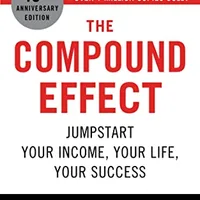
The Compound Effect — Darren Hardy (Paperback)
For the rebuilder restarting after disruption — Hardy's momentum mathematics of small consistent daily action.
As an Amazon Associate, we earn from qualifying purchases — at no extra cost to you.
Quick Comparison: Which Book Fits Your Situation
| Book | Best For | Primary Problem Solved | Approach |
|---|---|---|---|
| Atomic Habits — James Clear | Most readers; first habit book | No integrated system | Comprehensive framework |
| Tiny Habits — BJ Fogg | Repeated starters who keep failing | Can't make yourself start | Behavioral design |
| The Power of Habit — Charles Duhigg | "Why before how" readers | Missing conceptual foundation | Neuroscience narrative |
| Good Habits, Bad Habits — Wendy Wood | Analytical, skeptical readers | Context disruption collapses habits | Research-dense |
| The Now Habit — Neil Fiore | Procrastinators and perfectionists | Fear of failure blocks starting | Psychological root cause |
| The Compound Effect — Darren Hardy | Rebuilders after disruption | Lost momentum; need to restart | Motivational momentum |
FAQ
Should I read Atomic Habits if I've already read The Power of Habit?
Yes — they solve different problems. Duhigg's book gives you the neuroscience and the mechanism; Clear's book gives you the personal implementation system. Most people who've read both report that The Power of Habit made Atomic Habits more meaningful (you understand why the techniques work), while Atomic Habits made The Power of Habit more actionable (you have a system to apply the understanding). If you've only read one, the other is still worth your time.
Which habit book is best if I've never read any of these?
Atomic Habits is the correct first habit book for most people. It's comprehensive, it's accessible, and it gives you an integrated system rather than a single insight. The only exceptions: if you've tried building habits multiple times and keep failing to start (start with Tiny Habits), or if you're rebuilding after a period of disruption (The Compound Effect first).
Is Tiny Habits really better than Atomic Habits for beginners?
For most beginners, Atomic Habits is the right starting point — but "beginner" is doing a lot of work in that sentence. If you're a beginner who has never tried to deliberately build a habit, Atomic Habits gives you the fullest toolkit. If you're a beginner who has tried and failed at least twice to start a habit, Tiny Habits addresses the specific failure mode — habit design that's too ambitious relative to available motivation — that generic beginner resources don't.
Can I get the benefits without reading the whole book?
For most of these books, the answer is no — not fully. The frameworks are cumulative: the insight in chapter 8 depends on understanding what was established in chapters 3 and 5. You can get the surface-level takeaways from summaries, but the behavioral shifts that readers report — the "finally clicked" moments — consistently come from reading the full argument. That said: if time is a real constraint, The Power of Habit can be read selectively (the individual habit chapters, then the keystone habit chapter) with most of the personal-development benefit intact.
Do any of these books work for building professional skills, not just personal habits?
All of them do, but in different ways. Deep Work by Cal Newport (not on this list — it addresses a different domain) handles professional skill development most directly. Among these six, The Compound Effect is the most naturally applicable to professional performance because of its business context. Atomic Habits has an entire chapter on career and skill application. Good Habits, Bad Habits includes research specifically on organizational behavior that applies directly to professional consistency.
Conclusion: The Right Book for Where You Are Right Now
If you read this far and you're still not sure which book to buy, here's the honest answer: Atomic Habits is the correct first purchase for most people. It's the most complete system, the most clearly written, and the most likely to give you frameworks you'll still be using five years from now. It's not the right first book for everyone — if you keep failing to start, go to Tiny Habits first — but it's right for the broadest range of readers.
The deeper truth, though, is that each of these books solves a specific failure mode that the others don't. The ideal habit library isn't six books read in sequence — it's the one or two books matched to the exact friction point you're currently stuck at. That's what designing your evolution actually means: not following the most popular protocol, but identifying where you are and choosing the tool built for that location.
If you've been struggling to turn knowledge about habits into actual behavioral change, Why Willpower Never Breaks a Bad Habit covers the neuroscience of why effort-based approaches fail — and what the automaticity research says actually works. And if procrastination is the real reason your habits never get off the ground, Why Procrastination Tips Fail (And What the Science Actually Shows) maps the emotional architecture underneath the behavior.
The book is the beginning, not the solution. But the right book at the right moment changes everything.
Which of these books matches where you are right now — and has one of these frameworks already changed how you think about building habits? Drop a comment below.
Was this helpful?