Mindset· 9 min read
Illusion of Control: Why Letting Go Gives You More
Ellen Langer's 1975 lottery-ticket study found people overestimate control over pure chance. Here's the research — and why letting go actually helps.
Illusion of Control: Why Letting Go Gives You More
There's a particular kind of exhaustion that has nothing to do with how hard you worked.
You've felt it. The meeting is tomorrow, so you review your notes one more time — just to be safe. The medical result is pending, so you refresh the patient portal every twenty minutes, as if looking at the same loading screen will somehow accelerate the lab. You bought a raffle ticket and chose the number yourself, picking the digits that felt right, and you're inexplicably more certain yours will win than if someone had simply handed you a random one. And underneath all of it runs a belief so constant and so quiet it rarely gets examined: that your vigilance, your preparation, your personal involvement is actually shaping an outcome that was never yours to shape in the first place.
Ellen Langer, a psychologist at Harvard University, gave that belief a name in a 1975 paper she published in the Journal of Personality and Social Psychology. She called it the illusion of control.

What Ellen Langer's 1975 Lottery Study Actually Found
The experiment is deceptively simple, which is part of why it's held up so well.
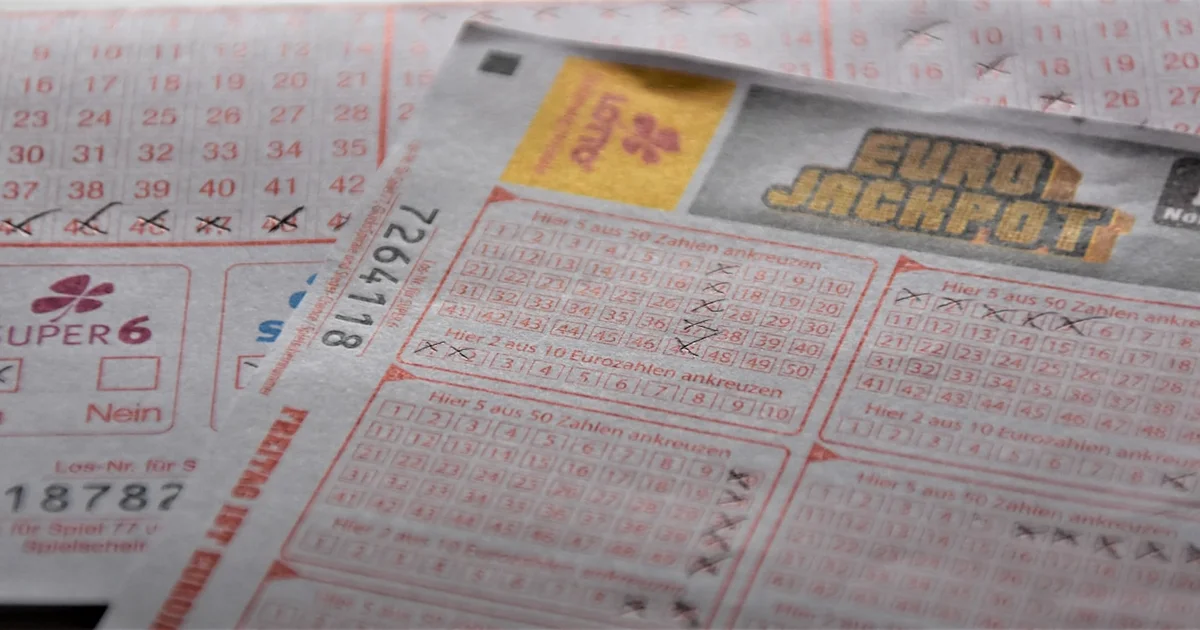
Langer set up a lottery and assigned participants to one of two conditions. Some were allowed to personally select their lottery ticket number — they could pick any digits they liked. Others were simply handed a random number. Identical prize. Identical odds. The only variable was whether the participant had exercised personal choice.
Then she offered everyone the chance to sell their ticket back or swap it for a different ticket with objectively better winning odds.
People who had chosen their own number demanded roughly four times the amount of money to give up their ticket compared to people who'd been handed one at random — a mean selling price of about $8.67 versus $1.96 in the original study. Even more striking: when offered a straight trade for a ticket with better odds, the self-choosers were significantly more reluctant to make the swap.
Think about that carefully. Better odds. And they still hesitated.
In a companion experiment, Langer had participants roll dice in a gambling scenario. Those who physically threw the dice themselves wagered significantly more money than participants who had someone else throw on their behalf. The mere act of throwing — the sensation of active involvement — made people feel they had more causal influence over where the dice landed, even though the dice have no memory of whose hand released them.
Langer's explanation was precise. She identified a set of what she called skill-related cues — things like personal choice, active involvement, competition, and familiarity — that, when present in a genuinely chance-governed situation, reliably activate the brain's "I have influence here" machinery. That machinery evolved to track real skill and real causation. But it doesn't come equipped to distinguish between a situation where competence actually matters and one where it doesn't.
The result is a specific, measurable, and consistently reproducible bias: people overestimate their personal causal influence over outcomes that pure chance governs. Not occasionally, under unusual conditions. Consistently, across different study designs, different populations, and different stakes.
The Happiness Trap (2nd Edition) — Russ Harris
Right after the Langer lottery study — introduces the ACT idea that struggling to control inner experience backfires; the counterpart is acceptance, not passivity.
As an Amazon Associate, we earn from qualifying purchases — at no extra cost to you.
Why Skill-Cues Hijack Your Judgment
This is worth pausing on, because the mechanism isn't a failure of intelligence. It doesn't disappear when you know about it. The same illusion showed up in Langer's studies regardless of how educated, analytical, or statistically literate the participants were.
The brain's control-detection system is considerably older than formal reasoning. It evolved to answer one practical question: when I do something, does something useful happen? That feedback loop is essential for learning anything. You act. Something follows. You update your model of the world. Without it, every new situation would be a blank page.
The problem is that this system operates on heuristics, not formal logic. When you personally select a lottery ticket number, you activate the same neural circuitry that fires when you're genuinely acquiring a skill. You chose → therefore you may have influenced the outcome. The system doesn't pause to ask whether the causal chain is actually real. It pattern-matches, finds enough similarity to a skill situation, and flags the outcome as partially yours.
This is why it's useful to be precise about what Langer found, and what she didn't.
The illusion of control is something different from Julian Rotter's concept of locus of control. Rotter introduced that concept in his foundational 1966 monograph on internal versus external control of reinforcement — which is your general, dispositional belief about who or what tends to determine outcomes across the major domains of your life. Rotter's work is about a broad internal orientation: do I generally believe my actions shape what happens to me, or do I tend to attribute outcomes to luck and external forces? That's a trait, a tendency, measured across many situations over time.
The illusion of control, by contrast, is narrower and more precise. It's about a specific, measurable overestimation of your causal influence in one particular chance-governed event — completely independent of your general orientation. You can carry a strong, healthy internal locus of control — a genuine belief that your choices and efforts shape your life — and still fall cleanly into the illusion of control when you're holding a lottery ticket you chose yourself. The two operate at different levels.
Understanding this distinction matters for a practical reason. Correcting the illusion of control in chance-governed situations doesn't require you to become fatalistic, or to abandon your sense of personal agency. It doesn't mean you stop believing in the value of preparation and effort. It means you get more accurate about which situations your preparation can actually influence — and which ones were already determined before you sat down to prepare.

Kindle Paperwhite (2024, 16GB, Black, Without Ads)
High-ticket anchor placed in the locus-vs-illusion section — a low-friction way to read the mindset literature that reframes control.
As an Amazon Associate, we earn from qualifying purchases — at no extra cost to you.
The Hidden Cost You Probably Haven't Named
Here's the part that doesn't get talked about enough when people discuss this research.
The illusion of control isn't primarily a statistical error. It's an energy expense.
When you believe you have genuine influence over a situation, you naturally attempt to exert that influence. You review more. You plan more contingencies. You check more often. You run scenarios. You carry a background hum of vigilance toward an outcome that isn't actually responding to your vigilance. The checking, the re-checking, the strategizing — all of it feels productive because it has the texture of diligence and engagement. But a lot of it is effort draining into something that can't convert it into a different result.
There's an old piece of folk wisdom, echoed everywhere from the Serenity Prayer to modern coaching rooms: put your energy into the things you can change, and make peace with the things you can't. Stated plainly like that, it sounds obvious. But the illusion of control is exactly what makes that distinction so difficult in practice — because your brain is actively obscuring which category any given situation belongs to. So you end up applying serious effort to outcomes that won't respond to it, while feeling vaguely guilty that you're still not doing enough.
Research into worry and overthinking consistently finds that a significant portion of what people experience as unproductive rumination is effort directed at genuinely uncontrollable outcomes. The attempt feels active and responsible. But it's functioning like a hidden tax on your attention — collected from an account you can't actually spend. Susan Nolen-Hoeksema's research on rumination documented this pattern extensively: the more you think about uncontrollable outcomes, the worse you feel — without solving anything.
There's a clean experiment you can run on yourself right now. Think of the last thing you spent significant mental energy preparing for, worrying about, or trying to manage. Ask one question: Was there a specific action I could take that would have changed the outcome? Or was I processing something that was already determined by variables outside my reach?
Most people are surprised by how often the honest answer is the second one — and how rarely they've named it clearly enough to stop.

What Letting Go of the Illusion of Control Actually Means
Most writing on this topic frames "letting go of control" as a kind of surrender — an acceptance of powerlessness, a relinquishing of agency, a philosophical shrug in the direction of chaos. That framing is almost exactly wrong.
Langer's research is specific: the illusion of control operates in situations that are genuinely chance-governed. The counterpart to the illusion isn't passivity — it's precision. It's developing a more accurate read on which situations your effort actually converts into outcomes, and which ones it doesn't.
Think of it in terms of attention as a resource. You have a roughly fixed pool of mental energy on any given day. The illusion of control is a slow leak — effort draining into situations that can't process it. Closing that leak doesn't leave you depleted. It leaves you with the same energy now available for the decisions and actions where your influence is real, where preparation actually changes the probability of a different result.
This is why people who practice releasing false control often report feeling not less engaged, but more. Not less ambitious — calmer about the specific ambitions they're carrying. The vigilance doesn't disappear. It gets redirected.
Marcus Aurelius returned to this distinction again and again in his private notebooks, the ones we now call Meditations. His recurring question wasn't whether to act — it was whether a specific situation was one where action would change anything. He wasn't teaching detachment from outcomes. He was teaching precision about where effort produces return and where it doesn't. The Stoics understood the energy equation that Langer would document experimentally nearly two millennia later.
Stillness Is the Key — Ryan Holiday
Placed immediately after the Marcus Aurelius / Meditations paragraph — the Stoic precision-of-effort theme the article explicitly invokes.
As an Amazon Associate, we earn from qualifying purchases — at no extra cost to you.
The research adds something useful that philosophy alone couldn't provide: evidence that the bias is systematic and predictable. Because it's systematic, it's identifiable. Because it's identifiable, it's correctable — not through willpower, but through the specific habit of asking a better question before spending effort.
What makes this particularly interesting is how it compounds. A single instance of false control isn't very expensive. It's the accumulation — the daily low-level effort spent managing outcomes that were never yours to manage — that builds into the chronic background exhaustion a lot of people carry without being able to name its source.
How to Start Today
This isn't about adopting a new philosophy or adding a practice to your routine. It's about one specific cognitive habit that Langer's research implies: catching yourself, mid-effort, working hard to influence something that won't respond to it.
Here's what that looks like in practice.
1. Run the control audit. Whenever you notice yourself anxious, preoccupied, or effortfully managing an outcome, ask one question: is there a specific action I can take right now that would actually change this result? If yes — take it. If no — name it out loud. "I'm trying to control something I can't control." The naming interrupts the loop. Not permanently, but long enough to redirect.
2. Write the two-column list. Get it out of your head and onto paper. One column: things about this situation I can directly influence through specific actions. Other column: things determined by variables I don't control. Most people find the second column runs longer than expected — every single time they do it honestly.

Clever Fox Habit Calendar Circle (2-Year Tracker)
Placed at the 'write the two-column list' action step — a physical journal for the control audit the article walks through.
As an Amazon Associate, we earn from qualifying purchases — at no extra cost to you.
3. Redirect effort to the genuine controllables. Once you've identified what you can actually influence, put your attention there — specifically, not generally. Not "try harder." The one concrete action with a real causal link to a different result. Specificity matters here because vague effort is indistinguishable from false-control effort in the way it feels, and you want the difference to be legible.
4. Set a defined check-in window. One of the most energy-expensive forms of false control is continuous monitoring — refreshing, revisiting, rechecking. The outcome doesn't change based on how frequently you look at it, but your stress level does. Set one check-in at a specific time and commit to doing nothing between now and then. The constraint is the point.
5. Notice Langer's skill-cues in real time. Whenever you feel especially invested in an outcome because you personally chose it, personally prepared for it, or personally showed up for it — ask whether that involvement is a real causal factor or a trigger for the illusion. Your preparation may genuinely matter. The question is whether the feeling of control is tracking the fact of control. Those two things are not the same thing.

Kitchen Safe kSafe Time Locking Container (Medium, White Lid + Clear Base)
Placed at the 'defined check-in window' / stop-refreshing step — a literal commitment device for the continuous-monitoring behavior the article names as the most energy-expensive form of false control.
As an Amazon Associate, we earn from qualifying purchases — at no extra cost to you.
Design Your Evolution
Here's what Langer's data keeps pointing at beneath the statistics: most of us are quietly spending a portion of our best mental energy maintaining a belief that isn't serving us.
Not because we're irrational. Because the brain's control-detection system is doing exactly what it evolved to do — it just wasn't calibrated for lotteries, pending emails, and conversations other people will have however they'll have them.
"Design Your Evolution" isn't a slogan about managing everything. It's about designing the parts of your life where design actually converts — where your effort changes the probability of a different result — and having the clarity to stop applying design-level attention to outcomes that were already determined before you opened your notes.
The freedom in that isn't resignation. It's precision. It's the energy that was leaking through the illusion, redirected to the places where it actually works.
What's one thing you're currently monitoring, preparing for, or anxiously managing that a genuinely honest two-column audit would land in the "not controllable" column? Drop it in the comments — I'd genuinely like to read it.

Was this helpful?