Mindset· 9 min read
Knowing Life Is Short Isn't Enough — What Stanford Found
Stanford psychologist Laura Carstensen found that perceived time horizon — not age — decides which goals feel real. Here's what that means for yours.
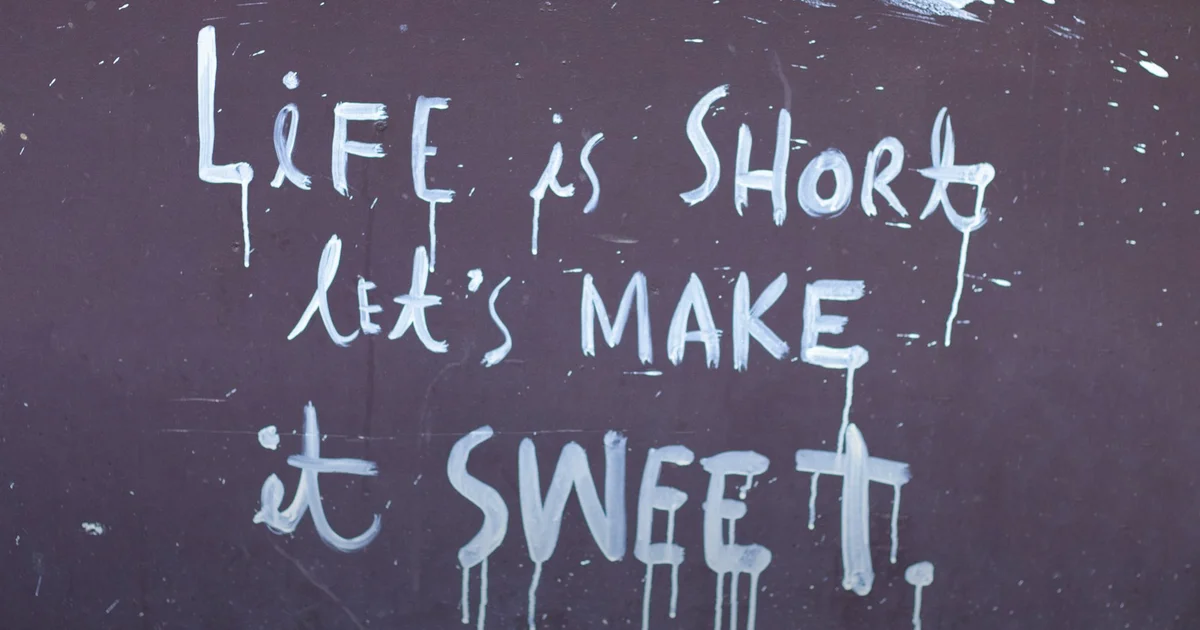
Why Knowing Life Is Short Isn't Enough — And What a Stanford Psychologist Found That Actually Works
There's a specific moment that most people have experienced at least once — the one where life suddenly feels genuinely, uncomfortably short. It usually happens late at night: after a funeral, a difficult diagnosis in someone close to you, or just an ordinary Tuesday where the weight of time becomes unusually clear. For a few hours, you see exactly what matters. The project you've been delaying for two years. The relationship you keep meaning to invest in. The thing you've been calling "someday."
And then morning comes. The email queue fills up. The commute starts. By noon, the clarity is mostly gone — and "someday" slides quietly back to the bottom of the list, where it has lived for years.
This isn't a discipline problem or a motivation problem. There's a specific psychological mechanism at work, and a Stanford researcher spent three decades mapping it. Her findings change the question entirely — from how do I remember that life is short to how do I make that knowledge feel real enough to actually rearrange what I'm doing.

The Strange Gap Between Knowing and Actually Feeling It
Oliver Burkeman opens Four Thousand Weeks with a provocation that stops most readers cold: the average human lifespan, expressed in weeks, is a number small enough to fit on a single page. You can hold it in your hand. Most people, upon reading it, feel a brief but genuine recalibration — a moment where the math makes the abstraction concrete.

Four Thousand Weeks: Time Management for Mortals — Oliver Burkeman
Burkeman makes the abstraction concrete — your entire life expressed in weeks, small enough to fit on a page. It's the exact 'brief recalibration' the article opens with.
As an Amazon Associate, we earn from qualifying purchases — at no extra cost to you.
And then, typically, the moment passes.
Marc and Angel Chernoff wrote recently about the painfully clear truths that people hold intellectually while somehow never letting them actually rearrange their days. They're right. But diagnosing the problem isn't the same as explaining why it persists in smart, reflective people who genuinely know better. Laura Carstensen — a psychologist at Stanford University and founding director of the Stanford Center on Longevity — has the more precise answer, and it's not what most people expect.
The issue isn't that we forget life is short. We don't forget. We simply don't feel it as real information in the moments when decisions get made. And that gap, between the concept and the felt reality, turns out to be everything.
What a Stanford Psychologist Spent 30 Years Figuring Out
Carstensen's research began with an observation that initially looked like a simple aging effect. As people grew older, they consistently reported a shift in what they cared about. Older adults preferred emotionally meaningful relationships over expanding their social network. They prioritized depth over breadth. They were less interested in accumulating new knowledge for its own sake, and more drawn to experiences that felt genuinely good right now.
The easy interpretation was that age itself produced this — some combination of accumulated wisdom, reduced energy, and a biological slowing of ambition.
Carstensen suspected the explanation was simpler, and stranger.
Her team ran a decisive test. They compared typical older adults with two other groups: younger adults with an apparently open-ended future, and younger adults who were living with a health condition that made their time horizon genuinely uncertain. If age were the driver, the health-compromised young adults should look nothing like the older group.
They looked nearly identical.
The younger people facing an uncertain future showed the same prioritization shift as the older adults. They preferred emotionally meaningful experiences and present-moment depth over expansive future-oriented goals. And the critical variable wasn't their actual health status, their prognosis, or their age.
It was simply how much time they perceived themselves to have left.
Carstensen named this finding socioemotional selectivity theory — and the core insight is this: your perceived time horizon, more than your age, your income, your personality type, or your stated values, quietly determines which goals feel worth pursuing and which don't. Contract the perception of available time, and the goal set reorders. Expand it, and expansive, acquisition-oriented goals flood back in.
The Implication Nobody Says Out Loud
Here's what socioemotional selectivity theory implies that most articles about it never quite state directly.
The goal-reordering that people experience when facing a foreshortened future — the sudden clarity about what actually matters, the narrowing toward depth and meaning, the sense of finally knowing what's worth the time — isn't some privileged form of wisdom that only arrives through suffering. It's a cognitive output of a specific input: the vivid, felt perception that your time is genuinely and specifically limited.
Which means you don't have to wait for a health scare or a milestone birthday to access it. You can, in principle, get there deliberately.
The problem with phrases like 'life is short' and carpe diem is that they've been repeated so often they've become ambient noise. They're technically in the background all the time, and actively heard almost never. Carstensen's research suggests the mechanism that actually triggers the goal-reordering isn't familiarity with the concept of limited time — it's a specific, uncomfortable, personal encounter with your own particular finitude.
There's a measurable difference between thinking yes, life is short, I agree with that and actually sitting with the question: How many productive years do I realistically have left? And if that's the real number, is what I'm doing this month a reasonable answer to it?
The second version is what changes things. The first one just makes you nod along to a Marcus Aurelius quote.
Why Your Goals Are Still Designed for a Life Without an End Date
Here's a useful diagnostic. Look — not at what you intend to prioritize, but at what you actually spend your discretionary time on when the choice is genuinely yours. The projects you keep refining but not shipping. The relationships you keep meaning to invest in. The thing you've been calling "next year" for multiple years running.
Most of us are running a goal set implicitly designed for an infinite life. Keep building, keep accumulating, keep expanding, keep optimizing, keep deferring the meaningful thing until the urgent thing gets handled. None of those goals are wrong in isolation. But they were chosen in the absence of a real time constraint — and Carstensen's research suggests they look quite different once that constraint is vivid.
The palliative care nurse Bronnie Ware documented this pattern from the other direction. Her book The Top Five Regrets of the Dying records what patients in the final weeks of life actually said when asked what they wished had been different.
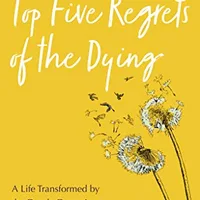
The Top Five Regrets of the Dying — Bronnie Ware (2nd Edition)
The primary source the article cites for the 'deferral, not risk' regret pattern — a palliative-care nurse's record of what people actually wish they'd done differently.
As an Amazon Associate, we earn from qualifying purchases — at no extra cost to you.
The most common regrets weren't about risks taken or mistakes made. They were about things deferred — the creative work left unstarted, the relationship left unrepaired, the life half-lived while waiting for the right moment to begin it fully.
Carstensen's research gives those regrets a structural explanation. The goals that feel most urgent at the end weren't absent from consciousness earlier. They were crowded out by goals that only feel important when you're living as if you have unlimited time. The inbox. The next promotion. The optimization of something that was already working well enough. The indefinite preparation for a thing you haven't started.
The intervention Carstensen's work points toward isn't a productivity system or a new prioritization framework. It's simpler, and more uncomfortable: make the time constraint feel genuinely real, and watch what moves.
The Thought Experiment That Actually Moves the Needle
Most articles on mortality and goal-setting offer the "one year to live" thought experiment. I'd argue Carstensen's research suggests that framing is actually too extreme to be useful. Nobody is productive when they think they have twelve months. The grandiosity of the scenario lets you treat it as fiction.
The version with real cognitive traction is more specific and more mundane.
It goes something like this: taking an honest view of your own health, your genetics, the reasonable actuarial expectation for someone in your circumstances — what's your genuine best estimate of how many productive decades you actually have left? Not the optimistic one. The honest one. And if that's the real number, what does your current year look like against it?
The discomfort that arises in the first minute of sitting with that question is the mechanism. Not rumination. Not anxiety spiraling. Just a clear, briefly-held encounter with the real constraint — long enough to let the question surface naturally: Is this actually what I'd be doing if that number were vivid to me every week?
Most people find that one or two things shift in priority almost immediately. Not everything — not in a chaotic way. More like a quiet reordering where something that had been waiting at the bottom of the list for years suddenly looks different when held against the actual budget.
How to Use This — Starting This Week
This is where most discussions of mortality and meaning ask you to overhaul your life. Carstensen's research doesn't support that, and I don't think it's what actually helps. The finding was that perceived time horizon does the cognitive work. Which means the practice is about updating the perception, not redesigning everything at once.
-
Run the number. Open an actuarial life expectancy calculator — not a motivational one, a real one — input your actual health profile, and look at the result. Divide by the number of years you'd consider a genuinely productive decade. Write that number somewhere you'll see it for one week. This is the uncomfortable part. It's also the part that does the work.
-
Audit one current goal. Pick a goal you've had in some version for two or more years. Ask not whether it's a good goal, but whether it would still be your highest-priority use of time if that number were vivid to you weekly. A well-structured values workbook can help anchor this audit — specifically one built around meaning and legacy rather than generic goal-setting templates.
-
Name the thing you keep deferring. Most people have one. Sometimes it's a creative project; sometimes it's a relationship; sometimes it's stopping something that's been consuming their best energy for years. If you keep a life-design journal or a legacy notebook, this is the entry worth dating, writing in full, and returning to in 30 days.

Moleskine Classic Notebook — Large, Hardcover, Plain, Black (240 pages)
The life-design / legacy notebook for the deferred-thing entry worth dating, writing in full, and returning to in 30 days — durable enough to be a genuine legacy object.
As an Amazon Associate, we earn from qualifying purchases — at no extra cost to you.
Carstensen's research suggests this deferred thing is often what moves first when the time perception shifts — because it's already been evaluated by some part of you that was already accounting for the constraint, and found important.
-
Build the reminder into your environment, not just memory. The reason "life is short" doesn't stick is that it competes with everything urgent for attention, and it always loses. A deliberate monthly check-in — even fifteen minutes with the mortality question re-asked honestly — is more likely to maintain the perception shift than a single insight, no matter how vivid it felt when you first had it.
-
Notice what you're not deferring. The research isn't all narrowing and cutting. Carstensen found that people with a genuinely vivid time horizon also stop deferring pleasure and connection — not recklessly, but intentionally. If you've been saving the good bottle of wine for a special occasion, waiting until you're further along to take the trip, or meaning to call the person back "when things slow down," that pattern is worth examining too.
Are Your Goals Actually Yours? Find Out Before It's Too Late
What Actually Changes When the Time Horizon Feels Real
What's unusual about socioemotional selectivity theory, compared to most research on motivation, is that it doesn't ask you to add anything to your life. No new system. No extra discipline. No willpower reserve you're going to start tapping differently.
It just asks you to let information you already have — your own mortality — be real for long enough to actually influence how you make decisions.
That's a different kind of work than most self-improvement frameworks ask for. It's less comfortable than building a morning routine, and harder to gamify than tracking a habit streak. But Carstensen's data suggests it's also more powerful as a goal-reordering mechanism than almost anything else in the research on human motivation.
The people who report the clearest sense of what matters, across age groups and life circumstances, share one thing: they've made a genuine rather than theoretical reckoning with the fact that they're operating under a finite budget. Not resigned — clarified. The goal list didn't get longer or more ambitious. It got shorter, and more energized.
That's not what a brush with mortality usually gets credited with producing. But it's what Carstensen's research shows — and it's accessible, in smaller doses, without the brush.
Satisficing: Why Good Enough Beats Maximizing
Design Your Evolution isn't a slogan about becoming a different person. It's a claim about the specific, deliberate act of choosing which direction your limited time should move you — and choosing that before the defaults and urgencies of ordinary life make the choice for you.
Carstensen's research suggests most people never consciously make that choice. Not because they lack ambition or awareness. Because the time horizon never feels real enough to make the choice feel genuinely necessary.
The question worth sitting with — not solving in the next five minutes, just genuinely sitting with — is this:
If the version of you at the very end of your life could send one clear message back about what was actually worth the time you spent on it, what do you think it would say?
That version of you doesn't have the abstraction problem. They know how it came out. And according to Laura Carstensen's thirty years of research, you can borrow a little of that clarity right now — just by letting the time horizon feel slightly more real than you usually allow it to.
What would change if you did?
Was this helpful?