Mindset· 10 min read
The Gaslighting Effect: Why You Start Doubting What You Know
Robin Stern's research on gaslighting explains why you start doubting what you clearly remember — and how to rebuild trust in your own perception.

The Gaslighting Effect: Why You Start Doubting What You Know

There was an email. You know there was. You read it three times before replying, saved it to a folder, and acted on what it said — that's precisely why the project went in the direction it did. Then your manager looked you in the eye in a team meeting and said, "I never sent that. I don't know where you got that idea."
You checked the folder after the meeting. The email was gone.
That is not a normal bad day at work. That is workplace gaslighting — something more specific, and for a long time, we didn't have a clean clinical name for it. We do now. And understanding it might be one of the more useful things you do for your own sanity this year.
What Gaslighting Actually Is — And Where the Word Came From
The term comes from a 1938 Patrick Hamilton stage play called Gas Light, adapted into a 1944 George Cukor film starring Ingrid Bergman and Charles Boyer. The plot: a husband systematically manipulates his wife into believing she's losing her mind. He moves objects and denies moving them. He dims the gaslights in their Victorian home — to search the attic for hidden jewels — then calmly insists the flickering she sees isn't happening. The specific horror of the film isn't Boyer's cruelty. It's watching Bergman's character lose grip on her own perception because no one in her immediate world will validate what she's clearly experiencing.
Robin Stern, a psychoanalyst and co-founder of the Yale Center for Emotional Intelligence, published
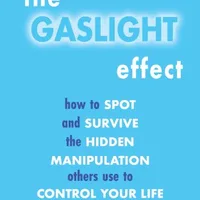
The Gaslight Effect — Robin Stern (Paperback)
Directly names Robin Stern's foundational 2007 book — the clinical source the entire article is built on.
As an Amazon Associate, we earn from qualifying purchases — at no extra cost to you.
in 2007 and brought the term into clinical use. Stern's definition is precise: gaslighting is a manipulation pattern — often unconscious rather than deliberately calculated — in which one person's confident, persistent denial of another's clearly perceived reality eventually causes the target to abandon trust in their own memory and judgment altogether.
That word, "pattern," is doing a lot of work. The term gets thrown around loosely now. Someone disagrees with you — "gaslighting." Someone misremembers a conversation — "gaslighting." That's not what Stern means. She means repeated, consistent behavior targeted at your confidence in your own perception specifically. Not at your feelings. Not at your work performance. At your ability to accurately register what is happening around you.
Understanding that distinction matters, because it changes how you respond.
how toxic relationships quietly erase who you are
The Three Stages of the Gaslight Effect
Stern's framework identifies a specific three-stage progression that nearly every person in her clinical practice had moved through — sometimes without noticing they'd crossed from one stage to the next.
Stage one: Disbelief. The first time it happens, you think it's a misunderstanding. Maybe they forgot. Maybe you communicated unclearly. You feel slightly unsettled but you're still anchored in your own memory. This is the stage where most people make their first tactical error: they assume the issue is a communication problem, so they try harder to communicate. They explain more thoroughly. They over-justify.
Stage two: Defense. By the time you're spending significant mental energy trying to prove your version of reality — to your manager, to HR, to yourself — you've already entered stage two. The energy required to mount a continuous defense is enormous. You start saving every email. You document every conversation. You replay exact words in your head at 2 a.m., looking for the version of events where it all makes sense. You begin asking people who weren't there, "does this seem weird to you?" with a frequency that would have embarrassed you six months ago. You're still fighting, which is something — but the fight is now costing you sleep, and you're not winning.
Stage three: Depression. This is where Stern's framework earns its clinical weight. After enough cycles of defending a reality that never gets validated, many people simply stop. Not because they've concluded they were wrong — but because surrender is less exhausting than the fight. Deferring to the other person's version of events becomes the path of least resistance. And that's the point at which you stop being a person who has an unreliable boss, and become a person who genuinely doesn't trust their own perception anymore.
The gap between stage two and stage three is narrower than most people expect. Exhaustion closes it faster than any deliberate decision.
Why Workplace Gaslighting Hits Differently
the science of burnout and how to actually recover from it
Gaslighting exists in personal relationships too, and in those contexts it's been extensively documented. Lundy Bancroft's
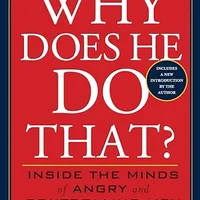
Why Does He Do That? — Lundy Bancroft (Paperback)
Text names Bancroft's book when contrasting personal-relationship reality-denial with the workplace form.
As an Amazon Associate, we earn from qualifying purchases — at no extra cost to you.
was written primarily for domestic situations — but its descriptions of systematic reality-denial, particularly the mechanics of how the person doing it maintains confident authority even in the face of clear evidence, will feel disorienting in its familiarity to anyone who's encountered this at work.
The workplace version carries a specific weight that personal-relationship gaslighting doesn't, and that weight comes down to one word: institutional.
When your manager says something didn't happen, their claim isn't just their word against yours. It carries the implied authority of their title, their longer tenure, their access to information you might not have, and the unspoken possibility that HR, if it came to that, would default to their version. You're not fighting another person's memory. You're fighting the structure around them.
This asymmetry does something interesting to the psychology of stage two. Because the institutional weight on the other side is real, defending yourself starts to feel not only exhausting but faintly irrational — "why am I fighting this hard over something no one else seems troubled by?" The isolation is almost always part of the pattern. Other colleagues who witnessed the same events have already learned that disagreeing publicly costs more than silence costs. You look around the room and find no one meeting your eyes.

There's also this: gaslighting is categorically distinct from burnout. Burnout, as Christina Maslach's research defines it, is a syndrome of chronic exhaustion, cynicism, and reduced efficacy produced by a sustained mismatch between work demands and available resources. Burnout depletes you broadly. Gaslighting does something more surgical — it targets your epistemic confidence specifically, your trust in your own ability to accurately perceive and remember what happens around you. You can be fully rested, highly capable, and objectively correct — and still have your reality successfully eroded. The two can coexist, but treating one won't automatically fix the other.
Six Signs You're Misreading as Personal Weakness
Here are the behaviors people experiencing ongoing gaslighting typically attribute to themselves — their anxiety, their poor memory, their tendency to misread situations, their emotional immaturity:
-
You apologize constantly for things you don't actually believe you did wrong, because arguing about it takes more out of you than the apology does.
-
You replay conversations in your head for hours after they happen — not because you're anxious by nature, but because you're trying to fact-check your own memory in real time.
-
You feel somehow worse after explaining your perspective clearly, not better, because you can see that clarity was never the issue.
-
You've started hedging everything. "I think I remember the meeting saying..." rather than "the meeting said." The hedging isn't uncertainty; it's protective coloring.
-
You've begun asking people who have no direct information — your partner, a friend, a sibling — for reassurance about situations they weren't present for. What you're actually asking them for is a witness to your sanity.
-
You've stopped volunteering your observations in settings where you used to feel confident. Not because you're less perceptive. Because you've been conditioned to expect your perceptions to be dismissed.
None of those are character flaws or signs of fragility. They are documented responses to sustained, systematic pressure on your reality-testing capacity. Stern's clinical observation is that intelligent, self-aware, high-functioning people are often more susceptible to this specific progression, not less — because they're genuinely open to being wrong, and that intellectual humility gets turned against them.
The Notebook Strategy: Why a Written Record Changes Everything
Here's the counter-intuitive thing about recovering from gaslighting: you can't think your way back to trusting yourself.
That sounds strange, because our instinct when confused is to think harder about the confusion. But Stern's observation about stages two and three is that the fight to trust your own mind gets progressively harder to win alone the longer it continues — because the very faculty you'd use to win the fight is the thing that's been compromised.
What breaks the cycle isn't more analysis. It's external anchoring.
The most practical tool is also the most unglamorous one: a dated notebook.

LEUCHTTURM1917 Medium A5 Dotted Hardcover Notebook (Black, 251 numbered pages)
The 'Notebook Strategy' section's central tool: a dated, timestamped physical record to externally anchor perception. Numbered pages reinforce the 'undeniable dated record' argument.
As an Amazon Associate, we earn from qualifying purchases — at no extra cost to you.
Not a complicated system. A simple record: what happened, when it happened, who was present, what was said in as close to exact words as you can capture, and how you felt in the immediate aftermath. Written down the same day if possible. Timestamped.
The reason this works is specific. When someone tells you in a meeting that the conversation you're describing never happened, your brain has two options: trust your memory or trust the denial. In isolation, over time, the denial tends to win — partly because it's delivered with institutional confidence, and partly because memory genuinely does blur and degrade over weeks and months. Your dated note from three weeks ago doesn't degrade. It says exactly what happened, written down before anyone had the chance to tell you it didn't.
This isn't primarily about building a legal case, though a thorough record could eventually become one. It's about giving your brain a stable external reference point when your internal reference points are under pressure. The record is proof for yourself first.
Practical format: write in pen, not on a shared device. Date every entry. Include small details that only someone actually present would know — the specific phrase someone used, the time of day, who else was in the room, what you were wearing. Details do more work than summaries, because summaries can be second-guessed.

When to Stop Managing This Alone
Before we get to actionable steps, a clarification: there's a point at which continuing to manage a gaslighting situation independently stops being resilience and starts being a second form of harm.
That point is different for everyone, but the signs are recognizable. If you're losing sleep over it regularly. If it's affected your work quality in ways you can see. If you've started avoiding interactions that should be routine. If you've noticed yourself becoming smaller — quieter, less certain, less present — in environments where you used to feel capable.
At that point, the notebook is necessary but not sufficient. You need a second person who has no stake in the outcome: a therapist who works with workplace conflict, a trusted mentor completely outside the organization, or at minimum a close friend who will tell you what they actually think rather than what will make you feel better in the short term.
Stern's research across clinical cases shows consistently that recovery from stage three is faster with a skilled, neutral witness than without one. This isn't a comment on your capacity. It's a comment on the nature of the damage: when your trust in your own perception has been methodically eroded, trying to rebuild it entirely alone is like trying to straighten a compass that someone's been holding a magnet next to. You need the external reference point to be human, not just written.
building emotional intelligence and self-awareness at work
How to Start Trusting Yourself Again
Henry Cloud and John Townsend's

Boundaries — Henry Cloud & John Townsend (Paperback)
Text names Cloud & Townsend's book to frame boundaries as a definition of where your responsibility ends — directly tied to 'you are not responsible for managing another person's comfort with your accurate memory.'
As an Amazon Associate, we earn from qualifying purchases — at no extra cost to you.
is usually recommended in the context of personal relationships, but its core framework applies directly here: a boundary is not a wall you build to keep someone out. It's a definition of where your responsibility ends and theirs begins. You are not responsible for managing another person's comfort with your accurate memory of what happened.
Here's what the research suggests for rebuilding trust in your own perception:
Start the record today. Not to prove anything to anyone else yet. To give yourself a baseline you can return to.
Find one person entirely outside the situation. Not a colleague who also reports to the same person. Someone with no institutional stake in the outcome. Share one specific incident — not the whole pattern, just one concrete thing. Watch their reaction. That reaction is data.
Stop asking for retroactive validation and start testing the present. When something happens that you know happened, write it down immediately — before anyone has a chance to tell you it didn't. You're not replaying the past anymore. You're catching the present in real time.
Recognize that stage three is reversible, but it doesn't reverse itself. You have to decide, at some specific moment, that your perception is worth defending. Not arguing about publicly, not escalating to HR prematurely — just privately deciding that what you observed was real, that you'll write it down, and that you won't update your memory based on confident assertions alone.
If the pattern is severe or longstanding, get professional support. Robin Stern spent years in clinical practice with people whose experiences were exactly this. Her consistent finding: the path back to self-trust is faster with a skilled witness than without one. That's not a sign of weakness. It's accurate pattern recognition.
Designing Your Perception
There's an observation in psychological research that most people find uncomfortable: gaslighting succeeds not because the target is weak, but precisely because they're trying to be fair. They're leaving room for the possibility that they could be wrong. They're giving the benefit of the doubt, staying open to other explanations, assuming good faith. Those are, in other contexts, exactly the right instincts.
The design challenge isn't to stop being fair-minded. It's to recognize that genuine fairness has a prerequisite: you have to start from your own accurate perception, not from a doubt that someone else planted.
Jim Rohn used to say you can't hire someone to do your push-ups for you. The same logic applies here, slightly differently: you can't outsource the work of trusting your own mind. A dated record, a trusted outside witness, a good therapist — those are tools. The actual work is interior. It's deciding, repeatedly, that what you perceived is worth acting on until you're shown specific, external evidence that you were mistaken.
That's not stubbornness. That's the baseline from which every other kind of clear thinking starts.
What's one situation from the last six months where you found yourself second-guessing something you originally felt certain about — and looking back now, do you think that doubt came from evidence, or from pressure?
Was this helpful?