Mindset· 10 min read
How Toxic Relationships Quietly Erase Who You Are
Toxic relationships quietly erase who you are through gaslighting and coercive control. Here's the science of identity loss and how to find yourself again.

How Toxic Relationships Quietly Erase Who You Are
She told me about the coffee.
Her partner had mentioned once — offhandedly, almost gently — that she made bad coffee. Within two weeks, she'd stopped making it entirely. Not because he'd asked again. Not because there had been a fight. She just... stopped. Because somewhere in those two weeks, how he feels about my coffee had become a thing she couldn't stop thinking about. A small radar dish had quietly rotated from pointing outward to pointing at him — scanning for signals, making adjustments, avoiding friction.
That's how it starts in a toxic relationship. Not with a dramatic boundary crossed. Not with a moment so obvious it demands a response. Just with a small accommodation that feels like nothing — because it is nothing. Except it isn't. Because that small accommodation is the first tile in a pattern that, laid end to end, eventually covers everything you used to call yourself.

The Architecture of Erosion
Here's the counterintuitive truth that makes toxic relationships so psychologically distinct from merely difficult ones: the most damaging ones don't feel like damage while they're happening. They feel like love. Like trying harder. Like being a better partner. The erosion is invisible precisely because every individual step looks like a reasonable response to a specific situation.
Sociologist Evan Stark at Rutgers University spent three decades studying controlling relationship dynamics. His landmark 2007 work Coercive Control reframes what most people call a "relationship problem" as a liberty problem — the systematic removal of a person's freedom to choose, think, and relate according to their own values and desires. The coercive control pattern doesn't require dramatic incidents. It accumulates through hundreds of small constraint events: a comment about your friends, a preference stated as a requirement, an emotional reaction that trains you to avoid certain topics. Each one forgettable. The pattern — devastating. The National Domestic Violence Hotline's documentation of coercive control makes clear that it's one of the most consistent predictors of long-term psychological harm in intimate relationships.
What makes the research so clarifying is what it rules out. You don't need to be hit. You don't need to be screamed at. The most psychologically effective erosion happens in relationships that, viewed from the outside, look like care. A partner who needs to know where you are at all times can be described — is often described, including by the person inside it — as someone who just loves you deeply.
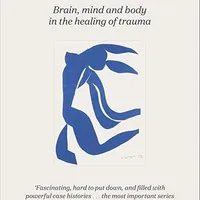
The Body Keeps the Score — Bessel van der Kolk
Van der Kolk's landmark book on trauma is referenced directly in this article — the primary source for the neurobiological account of how chronically threatening relationships rewire the threat-detection system. Essen…
As an Amazon Associate, we earn from qualifying purchases — at no extra cost to you.
Jim Rohn used to say that you become the average of the five people you spend the most time with. He meant it as inspiration. In the context of a coercively controlling relationship, it's a warning: the person you spend the most time with isn't just influencing your habits — they're influencing your perception of reality itself.
How to Set Healthy Boundaries Without Guilt
Why It Feels Like Adaptation, Not Loss
The human attachment system was not designed with toxic relationships in mind. It was designed to keep you close to your caregivers under conditions of threat — and it is exquisitely non-discriminating about who counts as a caregiver.
When your primary relationship becomes a source of unpredictability, your nervous system does exactly what it evolved to do: it prioritizes maintaining the bond above almost everything else. You scan your partner's mood more carefully. You modulate your behavior to reduce friction. You interpret their emotional states as information you're responsible for managing. None of this feels like a system failure. It feels like being attentive. It feels like emotional intelligence.
The problem is that this attunement process runs on a finite budget. Whatever cognitive and attentional resources get redirected toward monitoring and managing your partner's emotional state are resources pulled from somewhere else — specifically, from the internal reference system that ordinarily tells you what you want, what you feel, what you find acceptable. Over time, the internal compass doesn't break. It just gets less and less consulted. And a compass that isn't consulted is, functionally, gone.
This is what people who have left controlling relationships describe when they say "I didn't recognize myself." They're not speaking metaphorically. The neurological self-monitoring processes that constitute identity — the ongoing background comparison between current behavior and stored values — genuinely atrophied from disuse. The self is still there. But it's become quiet, dim, uncertain of its own signals.

Habit Tracker / Reflection Journal — Clever Fox Habit Calendar
The first recovery step is to start consulting the compass again — asking yourself small, low-stakes questions and waiting for your own answer. A structured habit and reflection journal makes that practice concrete an…
As an Amazon Associate, we earn from qualifying purchases — at no extra cost to you.
The Science of Gaslighting: What It Actually Does to Your Memory
The word "gaslighting" has become so overused that it's almost lost its clinical precision. Which is a shame, because the actual psychology is specific and disturbing in ways the casual usage doesn't capture.
Robin Stern's 2007 analysis of gaslighting dynamics documents a three-stage psychological trajectory. In stage one, you notice inconsistencies — the event your partner insists didn't happen, the thing they claim they never said. You dismiss this as misremembering on your part. Normal enough. In stage two, you begin second-guessing your emotional responses — apologizing for being hurt by things that were genuinely hurtful, wondering if your reactions are "too sensitive." In stage three, you've lost confidence in your own perception as a reliable guide to reality. You've transferred epistemic authority — the capacity to decide what is real — to the person manipulating you.
That phrase, epistemic authority, is worth sitting with. It means you're no longer treating your own experience as a valid data source. You're outsourcing the question "what happened?" to someone who benefits from your uncertainty.
The memory research makes this concrete. Gaslighting targets explicitly the consolidation of autobiographical memory — the brain's construction of a coherent narrative of experience. When someone consistently challenges your account of events, not once but persistently, the brain's memory reconsolidation mechanisms actually update stored memories to incorporate the challenge. You don't just doubt the memory; you partially rewrite it. What you experienced becomes what you were told you experienced.
This is not a character flaw. It is how memory works. Elizabeth Loftus's decades of research at UC Irvine — including landmark studies on the misinformation effect — demonstrate that human memory is reconstructive rather than reproductive, and that social pressure is among the most reliable predictors of memory distortion. The person in a gaslighting dynamic is not weak. They're running perfectly normal cognitive software in a context specifically designed to exploit it.


Kindle Paperwhite (2024, 16GB)
Step 4 is to read the research — not to pathologize, but to de-shame. A Kindle gives immediate access to van der Kolk, Judith Herman, Robin Stern, and Peter Levine: the foundational research that re-frames this experi…
As an Amazon Associate, we earn from qualifying purchases — at no extra cost to you.
Hyperattunement: When Your Radar Points at the Wrong Target
Bessel van der Kolk's body-based trauma research, consolidated in The Body Keeps the Score, offers the most precise neurobiological account of what happens to the nervous system in chronically threatening close relationships. The threat-detection and social monitoring systems — the amygdala, the insula, the anterior cingulate cortex — become chronically over-activated in relation to the specific person perceived as the source of danger and unpredictability.
Here's what this looks like from the inside: you become extraordinary at reading that one person. You notice micro-expressions. You feel the shift in energy when they enter a room before they've said a word. You can identify in three seconds whether it's going to be a good evening or a difficult one. You develop, without trying, a nearly clinical understanding of their emotional patterns.
This would be an impressive skill in a therapist. In a partner, it's a symptom.
Because the same neurological resources that are now deployed toward reading your partner used to be deployed toward reading yourself — your own preferences, your own energy levels, your own desires. That attentional reallocation doesn't happen consciously. You can't notice it happening because the noticing itself requires resources that have been redirected.
How to Regulate Your Emotions Without Suppressing Them
Van der Kolk's insight is that the body encodes the adaptation before the mind names it. Many people who eventually recognize the dynamics of their relationship report that their body knew long before they did — persistent fatigue, tension they couldn't locate, a background sense of anxiety that felt sourceless. The somatic system was already recording the costs that the conscious mind was busy rationalizing away.
The Identity That Gets Lost — and Where It Actually Goes
Judith Herman at Harvard Medical School, in Trauma and Recovery, was among the first clinicians to document the specific identity disruption that results from prolonged interpersonal stress in close relationships. She describes what she calls complex traumatic stress — characterized not just by hyperarousal and intrusion but by something more fundamental: a loss of coherent self-narrative.
The person doesn't experience themselves as traumatized. They experience themselves as confused. Uncertain. Difficult to please. Oversensitive. The explanatory framework that the controlling partner provides — "you're the problem here, you're too much, you're not enough" — gets internalized not because the person is gullible but because they are in an environment in which that framework is consistently and persistently reinforced, and the alternative framework (the partner is systematically manipulating them) feels too large and too destabilizing to hold.
What's important to understand — and this is where the research is genuinely hopeful — is that the self that gets quieted in this process is not destroyed. It is suppressed by an adaptive process that can be reversed. Peter Levine's somatic experiencing framework identifies the body as both the primary location of the frozen adaptive responses and the pathway back to self-connection. Re-attention to one's own physical sensations, preferences, and internal signals — the things that hyperattunement to the partner had overridden — gradually restores the internal reference system that authentic self-knowledge requires.
The recovery isn't linear. And the destination isn't a return to who you were before. Research on post-traumatic growth by Richard Tedeschi and Lawrence Calhoun at UNC Charlotte documents that survivors of interpersonal trauma who receive adequate support frequently report meaningful positive changes — in their sense of personal strength, relationship priorities, and clarity about what actually matters. Not in spite of what happened. Sometimes, eventually, because of what they had to develop to survive it.

Liforme Original Yoga Mat
Peter Levine's somatic experiencing framework — explicitly referenced in this article — identifies the body as both the location of frozen adaptive responses and the pathway back to self-connection. A daily yoga pract…
As an Amazon Associate, we earn from qualifying purchases — at no extra cost to you.
How to Start Today
Recovery from identity erosion isn't a single decision. It's a direction you choose, then choose again, then choose again. Here's where to begin:
1. Name the pattern without requiring certainty. You don't need to diagnose the relationship or prove anything. You just need to notice: Am I spending more energy managing how someone else feels than attending to how I feel? That asymmetry is enough information to act on.
2. Start consulting the compass again. The internal reference system recovers through use. Ask yourself small, low-stakes questions and actually wait for your own answer: Do I want this? What do I think about that? Not what you're supposed to want. What you actually notice in your body when the question lands. The practice feels trivial. It isn't.
3. Rebuild your external reality-testing. Gaslighting erodes the ability to trust your own perception. One of the most effective antidotes is regular, honest conversation with people who knew you before the toxic relationship — people whose version of events you have independent reason to trust. Not to validate grievances, but to reconnect with the version of yourself that exists in someone else's consistent memory.

Meditation Cushion Zafu
The body holds the adaptive patterns independent of what the mind understands. A meditation cushion creates a literal physical anchor for the daily practice of re-attention to your own sensations — the precise mechani…
As an Amazon Associate, we earn from qualifying purchases — at no extra cost to you.
4. Read the research, not to pathologize, but to de-shame. Understanding the specific psychological mechanisms — gaslighting, coercive control, hyperattunement — removes the narrative that something is wrong with you for not having seen it sooner. These are documented, studied processes that operate on normal human psychology. You weren't weak. You were in a well-designed trap.
5. Consider somatic work alongside cognitive work. Talking about what happened is necessary. But the body holds the adaptive patterns independent of what the mind understands. Practices that restore body-based self-connection — yoga, somatic experiencing, even regular walks where you deliberately attend to your own physical sensations rather than external inputs — address the layer of recovery that insight alone can't reach.

There's a version of personal development that presents the self as a project — something to be optimized, expanded, upgraded. That version assumes you've got a stable self to work with.
But designing your evolution requires, first, that there's a you present to do the designing — a self with access to its own perceptions, values, and desires. Toxic relationship dynamics specifically target this foundational condition. The work of recovery isn't weakness; it's the prerequisite for anything that comes after.
You're not starting over. You're finding out who was there all along, waiting to be consulted again.
What's one question you stopped asking yourself — and when did you stop?
Was this helpful?